Four Seasons Hotel Seattle



Michelin Guide New Hotels New Hotel · Michelin Selected · La Liste Top Hotels
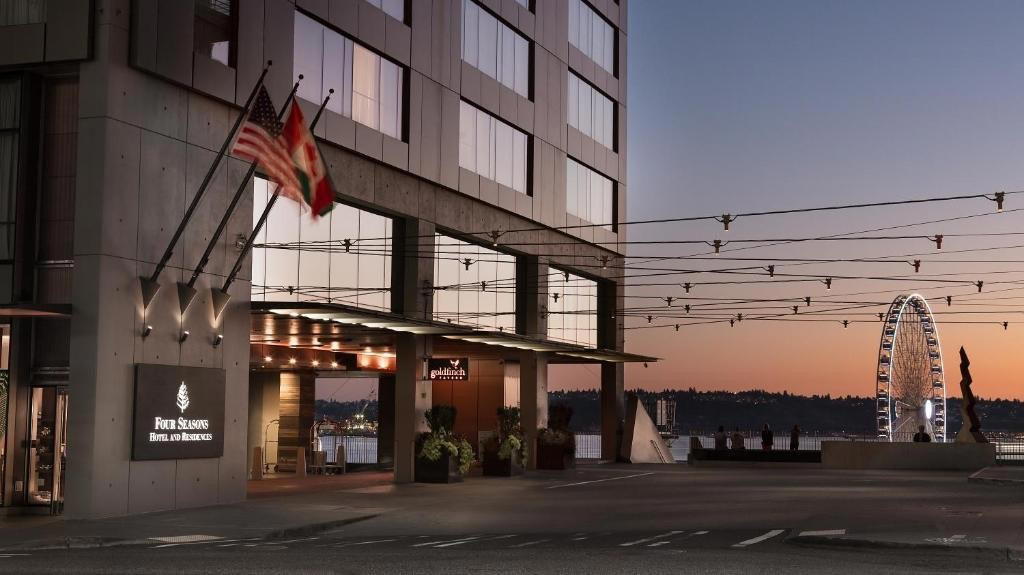
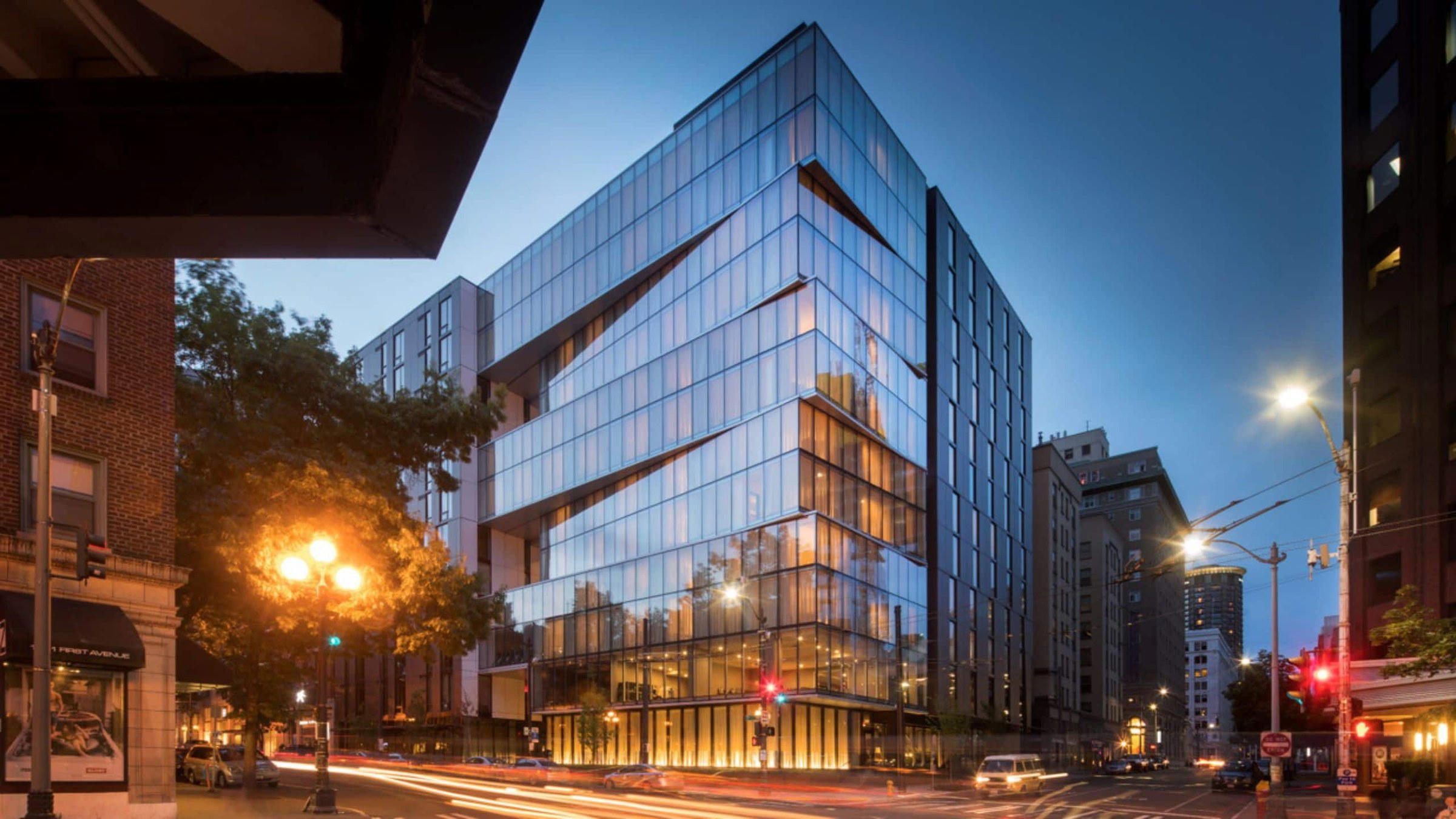
Positioned in a modern glass tower at 99 Union Street, Four Seasons Hotel Seattle places guests within a five-minute walk of Pike Place Market, the Seattle Art Museum, and Benaroya Hall. The property's 147 rooms and 13 suites open onto floor-to-ceiling views of Elliott Bay and Puget Sound, while Goldfinch Tavern anchors the dining program with Pacific Northwest ingredients. La Liste ranked the hotel at 90.5 points in its 2026 Top Hotels list.

Pearl is the En Primeur Club membership app — saves, bookings, and concierge access live there. Same editors, same standards.
- Address
- 99 Union St, Seattle, WA 98101
- Phone
- (206) 749-7000
- Website
- fourseasons.com
- Directions
- Get directions
Downtown Seattle's Vertical Perch
There is a particular logic to how the upper tier of Seattle hotels has organized itself around the waterfront corridor. Properties competing at the Four Seasons price point tend to separate along one axis: views or neighborhood access, rarely both. Four Seasons Hotel Seattle, occupying the lower ten floors of a 21-story glass tower at 99 Union Street, makes a credible claim to both. Floor-to-ceiling windows frame Elliott Bay, Puget Sound, and, on clear days, the Olympic Mountains beyond, while the front door sits roughly a five-minute walk from Pike Place Market, Benaroya Hall, and the Seattle Art Museum. La Liste placed the property at 90.5 points in its 2026 Leading Hotels ranking, which positions it in the upper band of evaluated city hotels globally.
Seattle's luxury hotel market has historically been smaller and less competitive than comparably sized West Coast cities, which means properties at this tier compete as much against traveler expectations carried from other destinations as against local peers. Visitors arriving from properties like Hotel Bel-Air in Los Angeles or The Fifth Avenue Hotel in New York City will find the Four Seasons occupies a different register: urban, glass-forward, and oriented toward the working civic core rather than a garden enclave or residential neighborhood. That distinction shapes the entire stay.
What the Rooms Actually Offer
The 147 guest rooms begin at 449 square feet, which the property notes are among the largest standard configurations available in downtown Seattle. That claim is consistent with how the local market is structured: many of the competing downtown hotels, including Lotte Hotel Seattle and Hotel 1000, offer narrower room footprints as a consequence of their building formats.
The design vocabulary across the 147 rooms and 13 suites works from Pacific Northwest materials: natural textures, locally sourced finishes, and a mural above the signature bed that references the tonal palette of Puget Sound water. Marble bathrooms come with deep-soaking tubs and glass-enclosed rain showers, along with L'Occitane Almond products and mirrors fitted with integrated TV screens. On the technology side, rooms carry 55-inch flat screens with casting and streaming capability, Bluetooth-equipped Bose Soundbars, and USB ports throughout. Gratis Wi-Fi is standard. These are amenities you find across the Four Seasons network globally, which is part of the brand's consistency argument at its price tier.
Sixteen reproductions from classic Northwest artists, drawn from the Seattle Art Museum's collection, appear in guest rooms, a collaboration that makes the art program more legible as a curatorial statement than as decorative gesture. It also reinforces the hotel's proximity argument: the Seattle Art Museum is within a few minutes on foot.
The Dining Rhythm at Goldfinch Tavern
Pacific Northwest dining has always carried a logic rooted in seasonal availability and local sourcing, a posture that predates the national farm-to-table movement by decades. The region's seafood, produce, and foraging culture give a kitchen real material to work with, and Goldfinch Tavern operates within that tradition. The restaurant functions as the hotel's anchor dining space, and its name references the state bird of Washington, a local detail that lands less as tourism branding and more as a baseline orientation toward place.
Families traveling with young children will find one policy worth noting: kids under five eat complimentary all day at Goldfinch Tavern. In a hotel at this price point, that represents a meaningful practical offset. The concierge also coordinates pre-packed picnic orders for guests planning to spend time outdoors, with breakfast and lunch options available for next-day pickup. Pike Place Market, Waterfront Park, and the surrounding neighborhoods give those picnics obvious destinations.
The meal-pacing culture at this tier of hotel dining tends toward unhurried service, with staff attuned to the rhythms of guests who may be moving between business engagements and leisure time. That flexibility, where a late breakfast can extend into mid-morning without visible pressure, is a structural feature of how Four Seasons properties globally approach food service, and Seattle is no exception.
Pool, Spa, and the Amenity Gap in Seattle
Outdoor pools are scarce in Seattle's downtown hotel inventory, a consequence of climate expectations rather than any design ambition. Four Seasons Hotel Seattle maintains an outdoor infinity pool, which the property correctly identifies as rare for the city. Whether that carries appeal depends heavily on timing: Seattle's comfortable outdoor season runs roughly from late June through early September, and the pool functions differently against a grey January sky than against the long-light evenings of July.
The Spa at Four Seasons Hotel Seattle draws its design references from the Northwest's natural environment, a common framing in Pacific-facing luxury properties that becomes meaningful when the treatments and space genuinely reflect it. The 24-hour fitness center adds operational flexibility for guests whose schedules don't conform to standard gym hours, a feature that matters more in a business-oriented downtown property than it might at a leisure resort. For comparison, properties like Canyon Ranch Tucson or Kona Village, A Rosewood Resort are built around wellness as a primary experience; Four Seasons Seattle treats it as a service layer within a broader urban offer.
Location as the Core Argument
Downtown Seattle luxury hotels fall into two broad groups: those that use their position as a gateway to the waterfront and cultural core, and those that trade on neighborhood character in areas like Capitol Hill or Belltown. The Four Seasons sits firmly in the first group. Seattle Art Museum, Benaroya Hall, and Pike Place Market are all within a five-minute walk. Seattle-Tacoma International Airport is approximately 20 minutes by car under normal conditions, making arrivals and departures less logistically fraught than at comparable properties in denser urban grids.
The hotel operates a town car service within a two-mile radius, which covers the downtown core, the waterfront, and most of the neighborhoods a first-time visitor would prioritize. For guests extending stays into the broader city, neighborhoods like Capitol Hill and Fremont require a car or rideshare, but the Four Seasons' immediate geography is dense enough that many stays require very little ground transport at all. For context on how other Seattle properties situate themselves across different neighborhoods and price registers, our full Seattle guide maps the options across the city.
Travelers calibrating against other Four Seasons properties in the United States will find Seattle occupies a distinct niche. Four Seasons at The Surf Club in Surfside is a resort property with a very different seasonal logic. Seattle's version is a working city hotel, oriented toward the rhythms of a port and tech economy, with leisure layered in through its cultural neighbors rather than built into the fabric of the property itself. That distinction makes it a different proposition depending on what a traveler is actually looking for from a stay.
Other Seattle alternatives at different scales and price points include Fairmont Olympic Hotel, which carries a different architectural register and sits in a slightly different part of downtown, and Hotel Sorrento, a smaller independent property on First Hill with a distinct character. For travelers who prioritize neighborhood immersion over downtown centrality, Hotel Ballard and Ace Hotel Seattle offer genuinely different entry points into the city. The Four Seasons makes the most sense for travelers whose itinerary is built around the downtown cultural core, or for whom brand consistency and room-scale reliability matter enough to anchor the choice.
Planning Your Stay
The hotel is located at 99 Union Street, Seattle, WA 98101, placing it in the heart of downtown with direct pedestrian access to the central waterfront. Seattle-Tacoma International Airport is approximately 20 minutes by car. The town car service covers a two-mile radius from the property. Guests planning outdoor excursions should place picnic orders with the concierge the day prior. The property's 147 rooms and 13 suites are distributed across the first ten floors of a 21-story tower, with room sizes starting at 449 square feet.
Reputation First
Comparable venues nearby, for context on price, style, and recognition.
| Venue | Cuisine | Price | Awards | Notes |
|---|---|---|---|---|
| Four Seasons Hotel SeattleThis venue — the venue you are viewing | Luxury urban waterfront hotel with Pacific Northwest touches. | Not listed | Michelin Guide New Hotels New Hotel · Michelin Selected | Not listed |
| The Edgewater Hotel | Over-water luxury property blending rock 'n' roll legacy with Pacific Northwest charm. | $200–300 | Not listed | Seattle Waterfront |
| Fairmont Olympic Hotel - Seattle | Historic luxury landmark blending 1924 Italian Renaissance architecture with contemporary modern amenities and refined service standards. | $300–500 | La Liste Top Hotels · Virtuoso Luxury Hotel Partner | Central Business District |
| Palihotel Seattle | Eclectic boutique in historic building with Pacific Northwest influences | Not listed | Michelin Selected | Pike Place Market |
| Hotel 1000, LXR Hotels & Resorts | Contemporary luxury urban hotel with Pacific-Rim and woodsy design elements, high-tech infrastructure, and curated local experiences. | $300–500 | 1 Michelin Key | Central Business District |
| Hotel Ändra Seattle - MGallery Collection | Scandinavian-inspired boutique hotel honoring Seattle's heritage with relaxed urban luxury and a commitment to responsible hospitality. | Not listed | Michelin Selected · World Travel Awards | Belltown |
Recognition history
Dated appearances from independent guides and award organizations, with the underlying list record or original source where available.
Michelin Guide New Hotels New Hotel
Michelin Guide New Hotels
Michelin Selected
Michelin
La Liste Top Hotels
La Liste
Forbes 4-Star
Forbes
Continue exploring
More in Seattle
Hotels in Seattle
Browse all →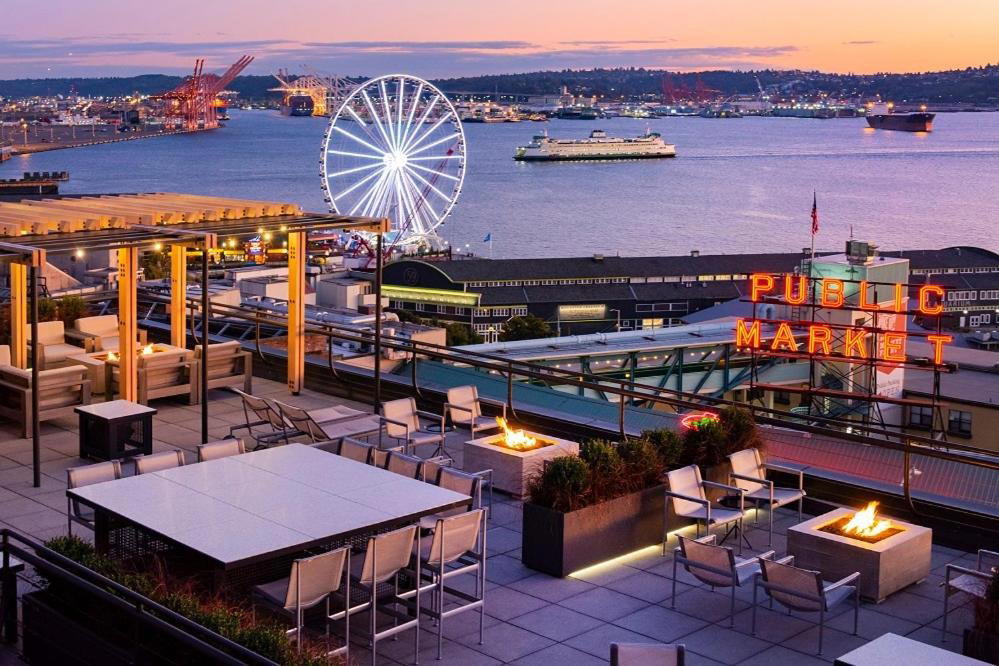
Bars in Seattle
Browse all →
Restaurants in Seattle
Browse all →

Details
- Elegant
- Sophisticated
- Scenic
- Modern
- Romantic Getaway
- Business Trip
- Family Vacation
- Anniversary
- Rooftop Pool
- Panoramic View
- Waterfront
- Pool
- Spa
- Fitness Center
- Room Service
- Concierge
- Valet Parking
- EV Charging
- Business Center
- Waterfront
- Skyline
- Wheelchair Accessible
- Step Free Entrance
- Elevator
- Accessible Restroom
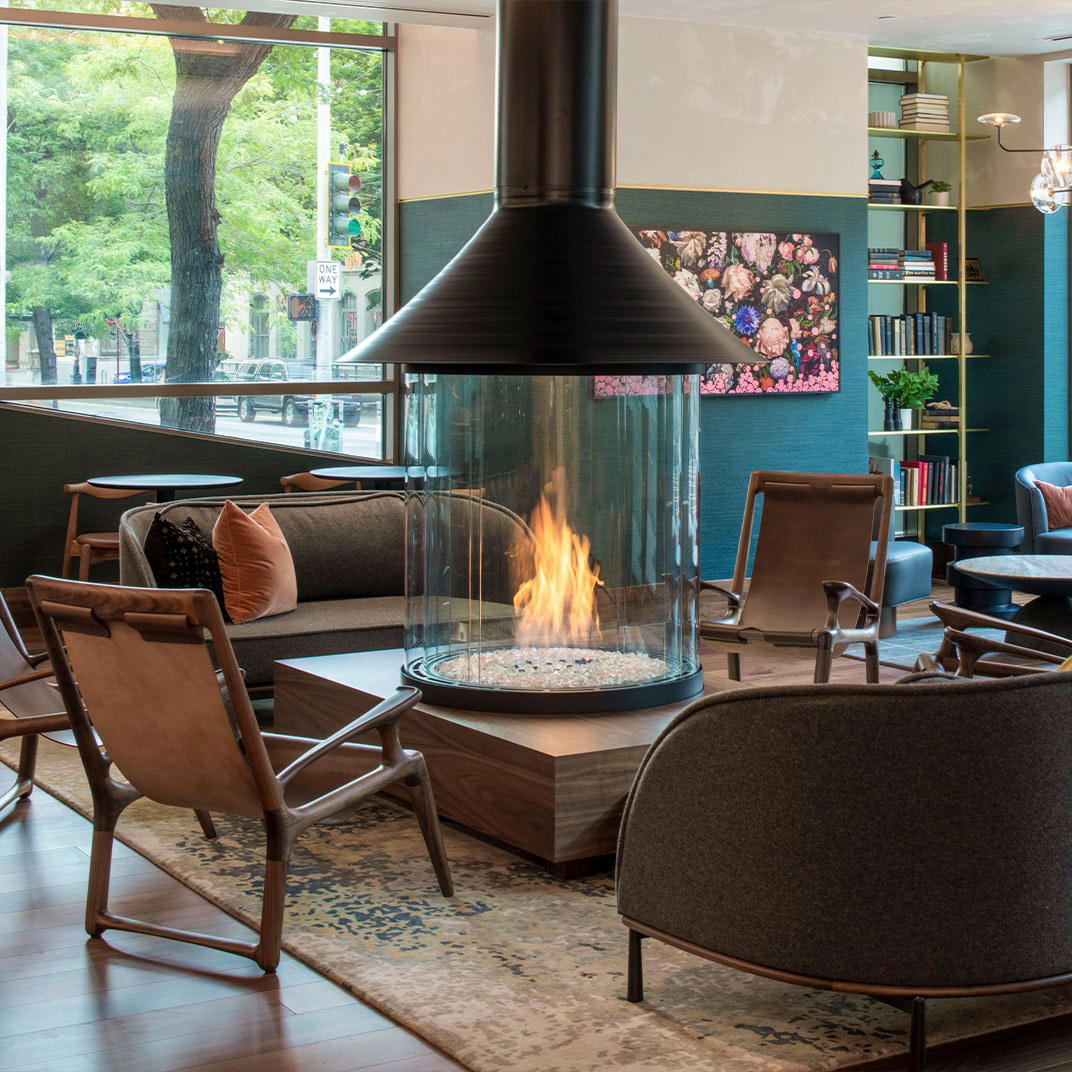
Elegant and serene with natural light from floor-to-ceiling windows, cozy fireplaces, and relaxing spa-like atmosphere.