Lenox

Bon Appétit The 20 Best New Restaurants #17
Our verdict
Lenox brings Afro-Latin cooking to Seattle's Belltown, where Chef Jhonny Reyes interprets Puerto Rican, Cuban, and Harlem flavors through a Pacific Northwest lens. The restaurant occupies a specific and underrepresented position in Seattle's dining scene, a place where Caribbean and African-American culinary traditions meet local ingredient culture with evident intention and skill.

Pearl is the En Primeur Club membership app, where members save venues, book tables and use the concierge.
Where Belltown Meets the Caribbean
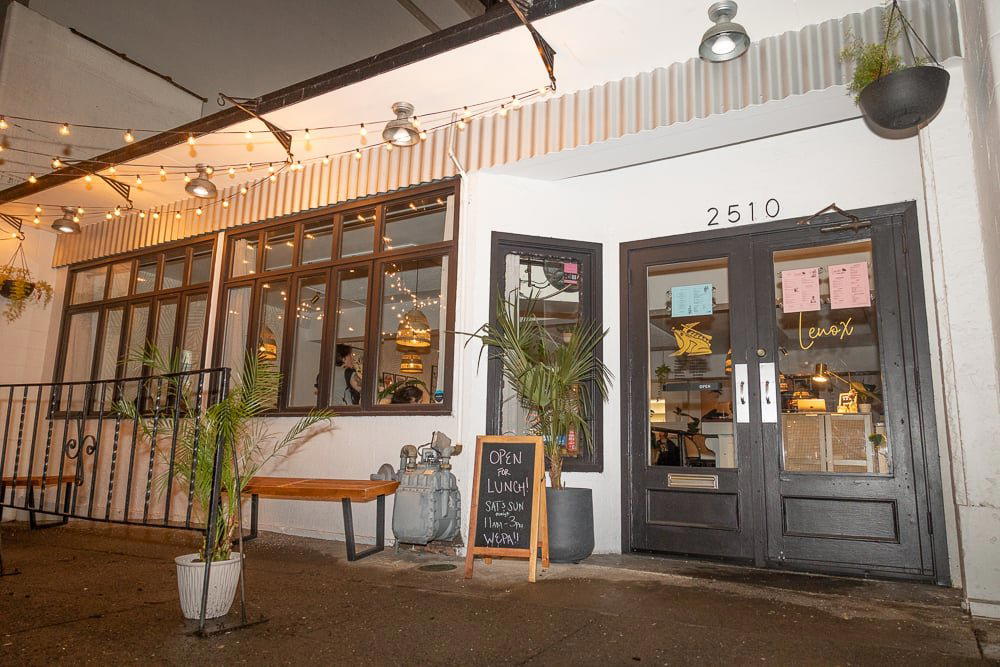
First Avenue in Belltown is one of Seattle's more restless corridors, bars and music venues pressed up against newer restaurant openings, the neighborhood perpetually in transition between its grittier past and its increasingly polished present. Against that backdrop, Lenox at 2510 1st Ave occupies a position that stands apart from much of what surrounds it. The cooking here is Afro-Latin, drawing on Puerto Rico, Cuba, and the food traditions of Harlem, filtered through the agricultural context of the Pacific Northwest. That combination exists almost nowhere else in the city's dining scene.
Seattle's restaurant culture has long skewed toward Pacific Rim influences and hyperlocal ingredient sourcing. Venues like Archipelago and Atoma have built their identities around Northwest produce and seafood, while Joule applies Korean-American sensibility to the same local sourcing logic. What Lenox does is bring a different culinary inheritance into that same conversation, one that connects the African diaspora, island cooking, and urban American food traditions to the Pacific Northwest's ingredient vocabulary.
The Logic of the Plate
Afro-Latin cuisine as a category covers enormous ground. Puerto Rican cooking carries Spanish, African, and Taíno roots; Cuban food moves between African-derived techniques, Spanish structure, and Chinese influence absorbed through centuries of immigration; and Harlem's food culture represents the northern migration of Southern Black cooking, transformed by urban life and the layering of Caribbean communities arriving through the twentieth century. Chef Jhonny Reyes works across all three registers, treating them not as separate sections of a menu but as parts of a coherent culinary argument.
What distinguishes this approach from direct Caribbean or Latin American cooking is the deliberate engagement with Pacific Northwest produce. The region's seafood, its Cascadian mushroom varieties, its stone fruits and brassicas, these become the medium through which Afro-Latin flavors are expressed rather than replaced. The result is food that reads as genuinely of both places rather than a transplant from one into the other.
Comparable cross-cultural integrations happen elsewhere in American fine dining. Atomix in New York City navigates Korean culinary tradition against a high-technique Western framework; Lazy Bear in San Francisco recasts American comfort cooking through a modernist lens. Lenox operates at a different register and with a different inheritance, but the underlying project, using one culinary tradition's grammar to illuminate another, belongs to the same serious conversation in contemporary American cooking. Nationally, venues like Emeril's in New Orleans have long demonstrated how African and Caribbean culinary DNA runs through American restaurant culture, even when it goes uncredited.
Pacing and Ritual at the Table
Afro-Latin cooking traditions carry their own table rituals, and the way a restaurant like Lenox paces a meal is worth considering before you sit down. Caribbean and Southern-inflected cooking tends to be generous and layered, dishes arrive with depth rather than minimalism, sauces carry history, and the meal has a cumulative warmth rather than a procession of isolated moments. This is not the studied restraint of a Japanese omakase or the formal sequencing of a tasting menu in the French tradition, as practiced at places like The French Laundry in Napa or Alinea in Chicago.
At Lenox, the ritual is different: the point is communion with a specific culinary lineage, not a choreographed progression through technique. The ideal way to approach the meal is unhurriedly, with attention to the layers within individual dishes rather than the sequence between them. Flavor is built into the cooking rather than revealed across multiple courses, which means the attentive diner finds complexity within a single plate rather than across an arc of twenty.
Seattle has a number of restaurants that reward this kind of attention to cooking philosophy. Altura brings a similar seriousness to Italian regional tradition, while Canlis has spent decades building its own version of occasion dining in a New American frame. Lenox sits apart from both, it is not occasion dining in the traditional sense, and it is not regional Italian. It is a restaurant making a case for Afro-Latin cooking as a serious and underrepresented strand of American culinary culture.
Belltown as Context
The neighborhood matters here. Belltown's food scene has always been eclectic by Seattle standards, it absorbed the city's early fine dining ambitions and later became the seedbed for more casual, chef-driven openings. Placing an Afro-Latin restaurant in Belltown rather than, say, the Central District (historically Seattle's Black neighborhood) or Capitol Hill (the city's more experimental dining corridor) signals a particular kind of ambition: to place this cooking in conversation with Seattle's broader restaurant scene, not to silo it within a specific community context.
For visitors building a broader picture of Seattle's restaurants, Lenox fills a gap that the rest of the city's dining scene does not address. The full Seattle restaurants guide maps the wider picture, and Lenox sits within it as a genuinely distinct data point. Those planning multi-day visits can cross-reference the Seattle hotels guide, bars guide, wineries guide, and experiences guide for a fuller itinerary.
Planning Your Visit
Lenox is located at 2510 1st Ave in Belltown, walkable from Seattle's downtown core and within easy reach of the waterfront. Given the restaurant's focused concept and the attention it has drawn for bringing a specific and underrepresented culinary tradition to the city, booking ahead is advisable, restaurants at this level of intentionality in mid-sized American cities often run at capacity on weekends. Checking current hours and availability directly through the restaurant is the most reliable approach, as operating schedules for independently run venues shift seasonally. For international visitors familiar with how diaspora-driven cooking has found serious footing in cities like New York (where Le Bernardin sits at one end of the ambition spectrum) or Hong Kong (where 8½ Otto e Mezzo Bombana demonstrates how transplanted culinary traditions can anchor a city's fine dining scene), Lenox represents a comparable seriousness of purpose applied to Afro-Latin heritage in an American Pacific Northwest context. Those looking for farm-driven precision dining in the Healdsburg mode, such as Single Thread Farm, will find a different register here, but the underlying commitment to culinary identity is the same.
Frequently asked questions
Where do I go for Lenox?
Lenox is located at 2510 1st Ave, Seattle, WA 98121, Seattle.
What awards or recognition does Lenox have?
Lenox has received recognition including: Lenox is an Afro-Latin restaurant in Seattle's Belltown, featuring expressive and thoughtful cuisine by Chef Jhonny Reyes. The menu is an interpretation of flavors from Puerto Rico, Cuba, and Harlem, rooted in the chef's heritage and shaped….
What do people recommend at Lenox?
Regulars point to dishes that reflect Chef Jhonny Reyes's interpretation of Puerto Rican, Cuban, and Harlem flavors, preparations that carry clear heritage markers rather than generic fusion. The kitchen's approach is rooted in Afro-Latin tradition shaped by Pacific Northwest sourcing, so expect that tension to show up on the plate. Specific menu items rotate, so checking directly with the restaurant before visiting is advisable.
Do I need a reservation for Lenox?
Given Lenox's focus on thoughtful, chef-driven Afro-Latin cuisine in Belltown, a neighborhood where strong concepts fill quickly, a reservation is the practical choice. The restaurant's format, centered on expressive cooking by Chef Jhonny Reyes, draws a consistent crowd. Contact Lenox at 2510 1st Ave directly to confirm current availability and booking options.
What's the defining dish or idea at Lenox?
The organizing idea at Lenox is Chef Jhonny Reyes's reading of Afro-Latin food as a living tradition rather than a fixed regional cuisine. His menu pulls from Puerto Rico, Cuba, and Harlem, three distinct culinary lineages with overlapping African roots, and filters them through Pacific Northwest ingredients. That triangulation is what separates Lenox from standard Caribbean-leaning restaurants in Seattle.
How does Lenox handle allergies?
Afro-Latin cooking at the level Lenox operates involves layered preparations, marinades, slow-cooked bases, and seasoning blends, where allergen cross-contact is a real consideration. The kitchen's heritage-driven approach means many dishes are not straightforwardly substitutable. Guests with dietary restrictions should contact the restaurant at 2510 1st Ave in Belltown ahead of their visit to discuss specific needs.
Is Lenox in Seattle the only Afro-Latin restaurant drawing on both Caribbean and Harlem culinary traditions?
Lenox occupies a specific position in Seattle's dining scene: Chef Jhonny Reyes's menu explicitly bridges Puerto Rican and Cuban cooking with Harlem's Afro-American culinary thread, a combination that reflects his personal heritage rather than a borrowed concept. Most Caribbean-leaning restaurants in the Pacific Northwest anchor to a single national tradition. That three-way framing, rooted in the chef's background and shaped by local sourcing, makes Lenox's scope in Seattle's Belltown notably specific.
Cuisine and Recognition
| Venue | Cuisine | Price | Awards |
|---|---|---|---|
| LenoxThis venue (the venue you are viewing) | Afro-Latin Puerto Rican | $50–100 | Bon Appétit The 20 Best New Restaurants #17 |
| Canlis | Modern American Fine Dining | $200–300 | Star Wine List · James Beard Award Semi Finalist |
| Joule | Korean-Fusion Steakhouse | $50–100 | James Beard Award Outstanding Bar Program |
| Altura | Italian-Inspired Pacific Northwest Tasting Menu | $150–200 | Not listed |
| Ba Bar | Authentic Vietnamese Street Food | $20–30 | Not listed |
| Bakery Nouveau | Bakery | $10–20 | Not listed |
Recognition history
Dated appearances from independent guides and award organizations, with the underlying list record or original source where available.
Bon Appétit The 20 Best New Restaurants #17
Bon Appétit