Populus Seattle



1 Michelin Key · AHEAD Awards AHEAD Americas Lobby Shortlist · AFAR Best New Hotels
Occupying a landmarked 1907 building in Pioneer Square, Populus Seattle is the second carbon-positive hotel in the United States, following its sister property in Denver. Its 120 rooms pair modern interiors with a warm retro sensibility, while Salt Harvest restaurant and the Firn rooftop bar anchor a program that engages seriously with Pacific Northwest food and the city's redeveloped waterfront.

Pearl is the En Primeur Club membership app — saves, bookings, and concierge access live there. Same editors, same standards.
- Address
- 100 S King St, Seattle, WA 98104
- Phone
- (206) 309-1100
- Website
- populusseattle.com
- Directions
- Get directions
- Booking
- Book on the hotel's website
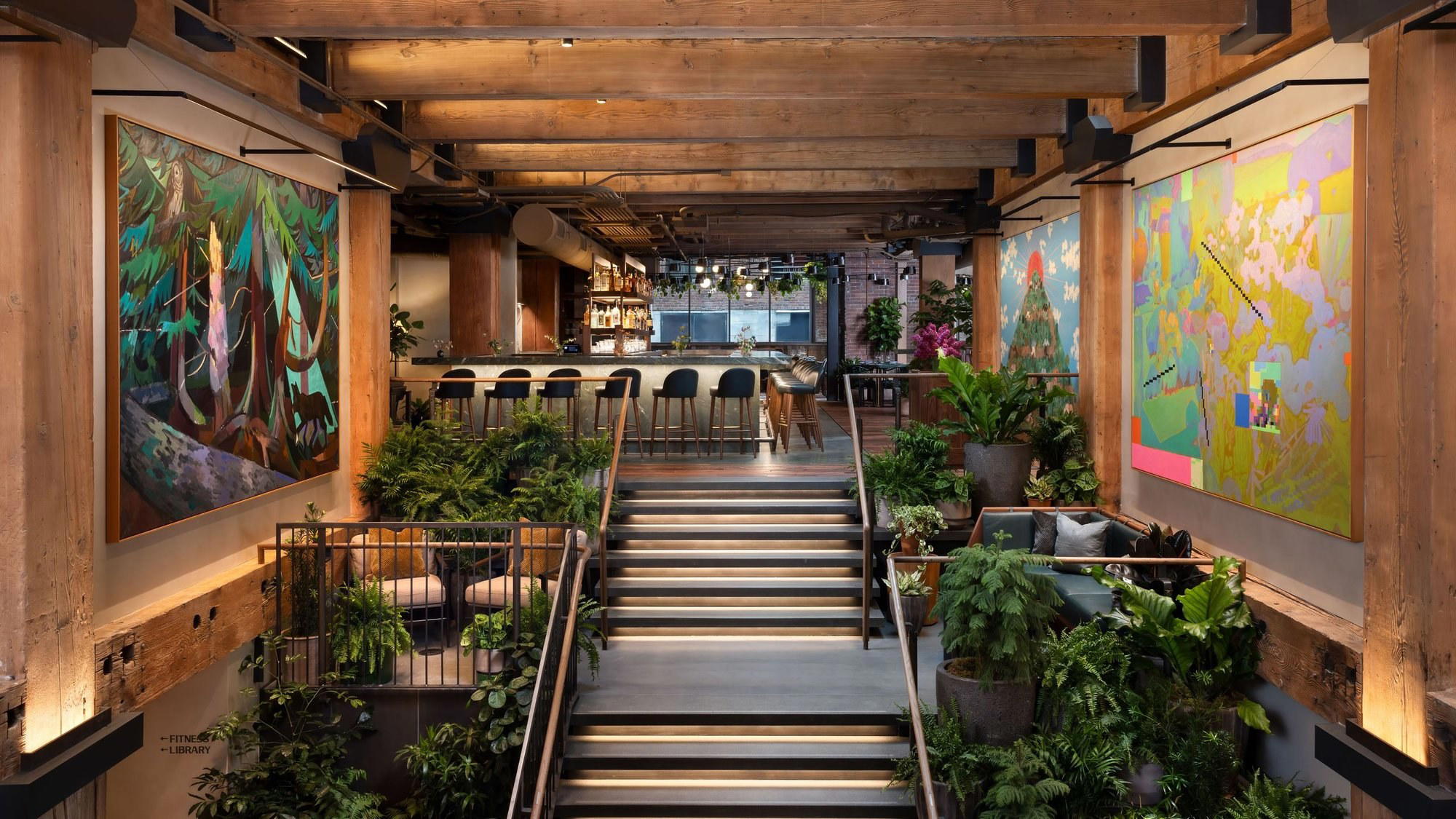
Pioneer Square and the Architecture of Accountability
Pioneer Square is Seattle's oldest neighborhood, and its built fabric tells you more about the city's ambitions than almost anywhere else in the Pacific Northwest. The district's cast-iron facades and brick warehouses survived the Great Seattle Fire of 1889 in part and have been selectively rehabilitated ever since, making it a testing ground for adaptive reuse at a time when that phrase has moved from preservation niche to mainstream hospitality strategy. The 1907 building at 100 S King St fits that pattern precisely: rather than demolishing and rebuilding, Populus converted existing structure into a 120-room hotel, keeping embodied carbon lower from day one. That decision is not incidental to the hotel's identity. It is the foundation of it.
Populus Seattle carries the designation of the second carbon-positive hotel in the United States, a category defined by active environmental accounting rather than passive conservation measures. The first was Populus Denver, which established the brand's framework. Where many hotels stop at energy efficiency and procurement sourcing, carbon-positive status requires outward action: Populus plants a tree for every hotel stay, shifting the ledger from mitigation to net contribution. In the broader market for sustainability-positioned luxury, this places Populus in a distinct tier. Properties like Post Ranch Inn in Big Sur have long operated with environmental commitments embedded in their identity, and Sage Lodge in Pray draws its character from a similar relationship with landscape stewardship. Populus Seattle enters that conversation from an urban angle, arguing that carbon accountability does not require a remote setting.
Rooms, Rate, and What $254 Actually Means in This Market
At a rate around $254, Populus Seattle occupies a mid-to-upper position in a city where the competitive set ranges considerably. The Four Seasons Hotel Seattle sits at the premium ceiling, while Hotel 1000 and the Lotte Hotel Seattle occupy overlapping territory in the downtown core. Against that field, Populus is priced to attract guests who want considered design and an environmental credential without paying full luxury-tier rates. The Ace Hotel Seattle addresses a similar design-conscious traveler at a lower price point, while the Fairmont Olympic Hotel pulls toward classic grandeur at a higher one. Populus sits between those poles deliberately.
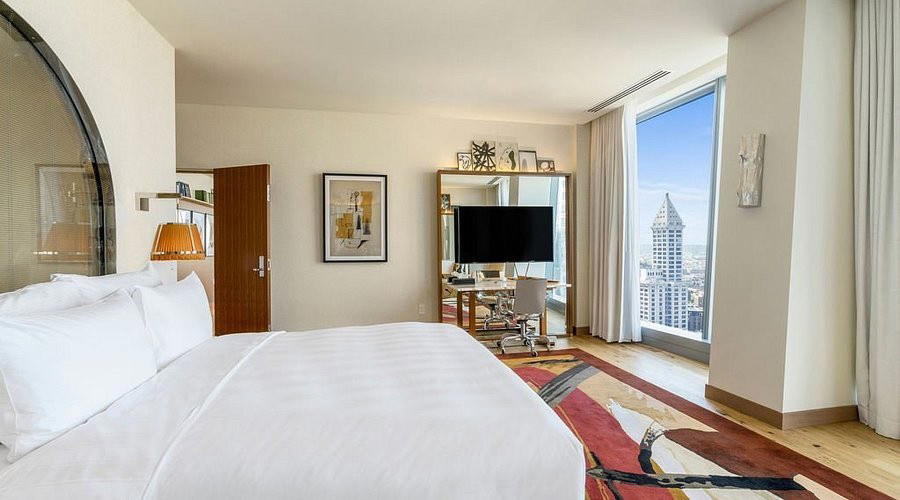
The 120 rooms and suites lean modern with what the property describes as a warm retro edge, a pairing that suits the Pioneer Square context: the neighborhood has never been about sleek minimalism, and the building's bones push back against anything too austere. Comforts are described as substantial rather than theatrical, which is an honest position in a market where some properties over-promise on amenity stacking. For travelers who compare Seattle options across the full spectrum, see Hotel Ballard, Hotel Five, and 11th Avenue Inn Bed and Breakfast for contrasting formats at different scales.
Salt Harvest, Firn, and the Case for Rooftop Views on the Waterfront
Pacific Northwest cuisine has a clear identity in the national conversation: Dungeness crab, Copper River salmon, foraged mushrooms, and a produce calendar defined by short, intense seasons. Salt Harvest, Populus Seattle's restaurant, operates within that tradition, serving upscale Pacific Northwest fare in a format that makes the hotel a dining destination rather than just a place to sleep. The commitment to regional sourcing is consistent with the hotel's broader environmental positioning, where the supply chain is as much a part of the carbon story as the building itself.
Above the restaurant, Firn is the open-air rooftop bar, positioned to show off Seattle's redeveloped waterfront. The waterfront transformation has been a significant civic project for Seattle, shifting the working port edge into public-facing space, and a rooftop at this address captures that transition from an advantageous angle. Rooftop bars in cities undergoing waterfront redevelopment tend to accrue cultural weight quickly, because they become proxies for the city's sense of its own change. Firn benefits from that timing. The ground floor rounds out the food and beverage program with a café that addresses Seattle's coffee culture, a detail that matters in a city where the standard for coffee is higher than almost anywhere else in the country.
Location as Program: What Pioneer Square Puts Within Reach
The hotel's pedestrian-friendly location is part of its carbon-positive arithmetic, reducing transportation dependency for guests who can reach major Seattle landmarks on foot. Lumen Field and T-Mobile Park are close, making Populus a logical base for event travelers. Pike Place Market and the downtown core are within reach, covering the visit structure that most first-time and returning Seattle travelers follow. Pioneer Square itself adds a layer that hotels further north in the city cannot replicate: the neighborhood's gallery density, the underground tour infrastructure, and the concentration of architecture from the post-fire rebuild period all sit outside the front door.
For travelers mapping Populus against sustainability-driven properties they may know from other American markets, the reference points are instructive. Amangiri in Canyon Point and Canyon Ranch Tucson operate environmental commitments through remote landscape settings. SingleThread Farm Inn in Healdsburg ties its environmental identity to agricultural practice. Populus Seattle's version is urban and archival: the carbon case rests on what was preserved rather than what was created from scratch, and on a city grid that allows guests to move without renting a car. That is a different argument, and in a city with Seattle's public transit investment, it holds.
Planning Your Stay
Populus Seattle's 120-room count means the property is neither boutique nor large-scale conference hotel. Booking ahead is advisable for peak Seattle travel periods, particularly summer months when the city draws significant leisure and festival traffic, and during the NFL and MLB seasons when Lumen Field and T-Mobile Park fill the neighborhood. The $254 rate positions the hotel within reach of travelers who might otherwise look at the Raffles Boston or The Fifth Avenue Hotel in New York City tier in other markets, though Populus's offer is distinct in its environmental framing rather than purely in its luxury positioning. For a broader view of where Populus sits in Seattle's dining and hotel scene, our full Seattle restaurants guide maps the city's wider options. Guests drawn to properties where architectural history and sustainability practice intersect will also find resonance at Troutbeck in Amenia, where a historic estate has been brought back with comparable care for what was already there.
What It’s Closest To
Comparable venues nearby, for context on price, style, and recognition.
| Venue | Cuisine | Price | Awards | Notes |
|---|---|---|---|---|
| Populus SeattleThis venue — the venue you are viewing | Biophilic design blending historic industrial elements with modern Northwest hospitality. | $200–300 | 1 Michelin Key · AHEAD Awards AHEAD Americas Lobby Shortlist | Not listed |
| Four Seasons Hotel Seattle | Luxury urban waterfront hotel with Pacific Northwest touches. | Not listed | Michelin Guide New Hotels New Hotel · Michelin Selected | Seattle Waterfront |
| Lotte Hotel Seattle | Luxury urban hotel with Philippe Starck design | Not listed | 1 Michelin Key · Virtuoso Luxury Hotel Partner | Central Business District |
| Hotel 1000 | luxury urban resort with PNW essence | $300–500 | 1 Michelin Key | Central Business District |
| Tulalip Resort Casino | Luxury casino resort with Native American influences and modern elegance | $100–200 | Forbes Recommended | Tulalip |
| Thompson Seattle | Sleek modern boutique hotel embodying downtown Seattle's refined edge. | Not listed | Michelin Selected · Forbes Recommended | Pike Place Market |
Recognition history
Dated appearances from independent guides and award organizations, with the underlying list record or original source where available.
Michelin 1 Key
Michelin
AFAR Best New Hotels
AFAR · AFAR 40 Best New Hotels 2026
AHEAD Awards AHEAD Americas Lobby Shortlist
AHEAD Awards · AHEAD Americas Awards 2026 Shortlist - Lobby
Full recognition history (6 entries)
AHEAD Awards AHEAD Americas Sustainability Shortlist
AHEAD Awards · AHEAD Americas Awards 2026 Shortlist - Sustainability
AHEAD Awards AHEAD Americas Hotel Conversion Shortlist
AHEAD Awards · AHEAD Americas Awards 2026 Shortlist - Hotel Conversion
Michelin 1 Key
Michelin
Continue exploring
More in Seattle
Hotels in Seattle
Browse all →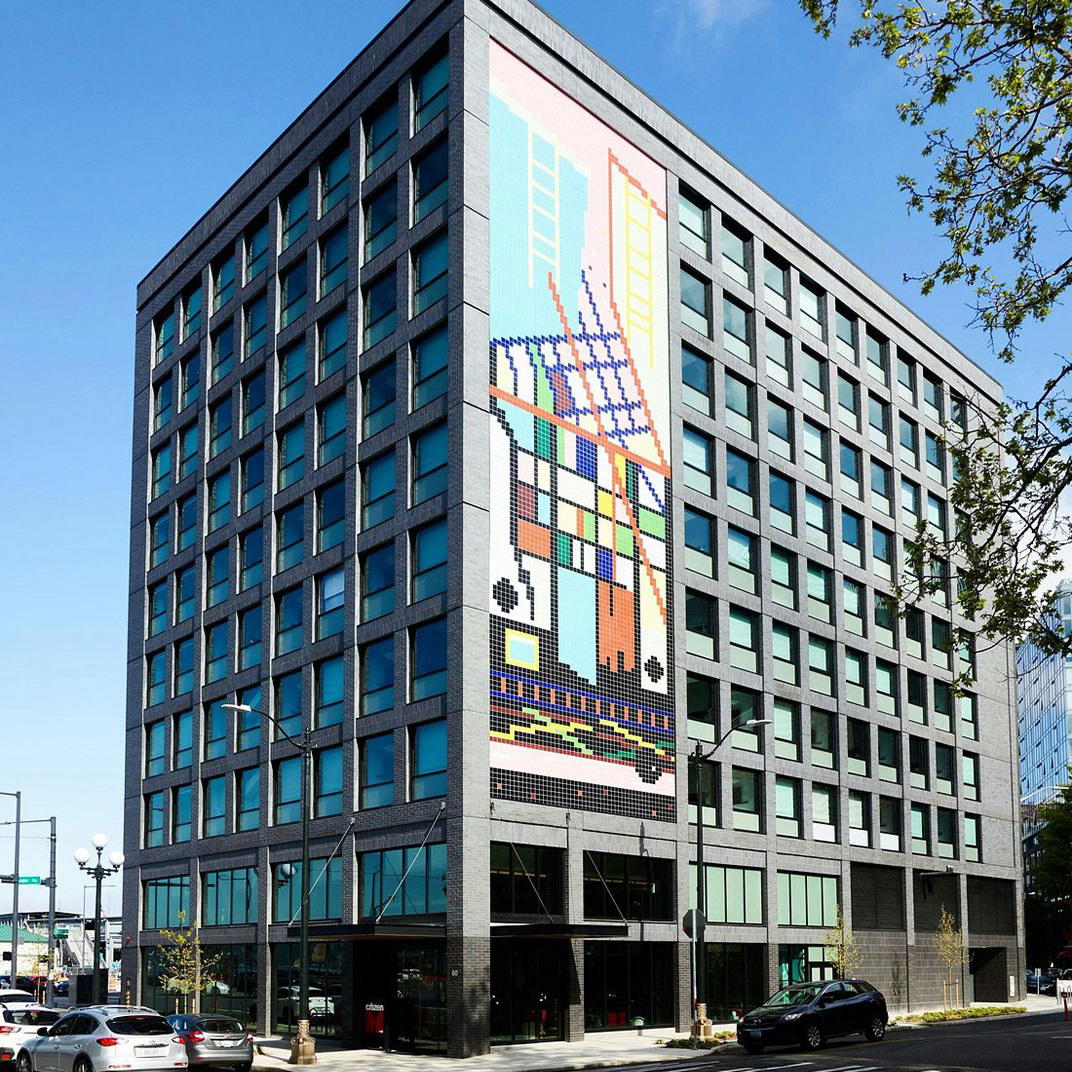
Bars in Seattle
Browse all →
Restaurants in Seattle
Browse all →
Details
- Modern
- Elegant
- Scenic
- Sophisticated
- Industrial
- Business Trip
- Weekend Escape
- Rooftop
- Terrace
- Panoramic View
- Wi Fi
- Fitness Center
- Room Service
- Concierge
- Valet Parking
- Restaurant
- Bar
- Meeting Rooms
- Skyline
- Street Scene
- Wheelchair Accessible
- Elevator
- Step Free Entrance
- Accessible Restroom
- Accessible Parking
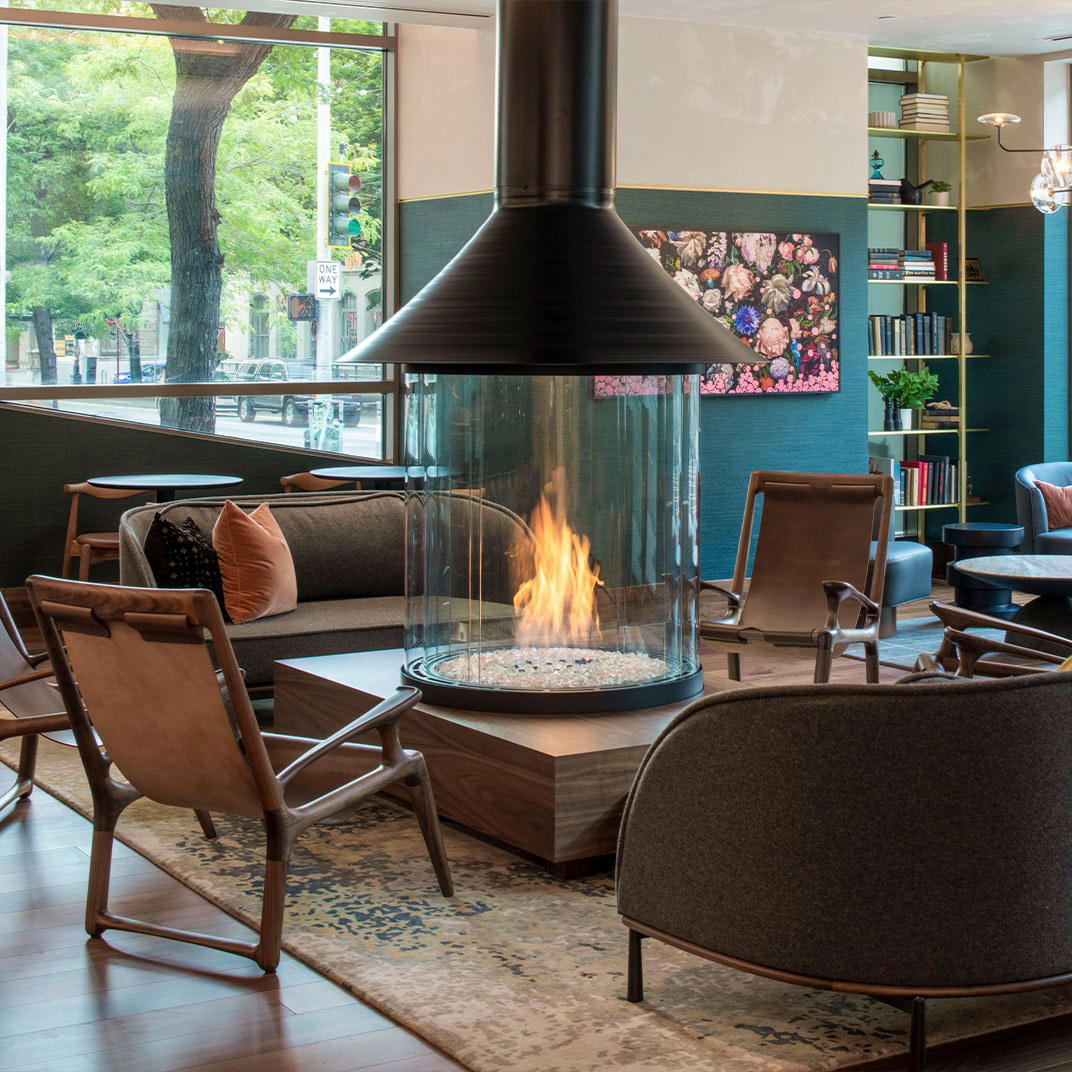
Warm lighting with rich textures, exposed brick, reclaimed wood, and curated artwork creating a refined, inviting atmosphere.