Our verdict
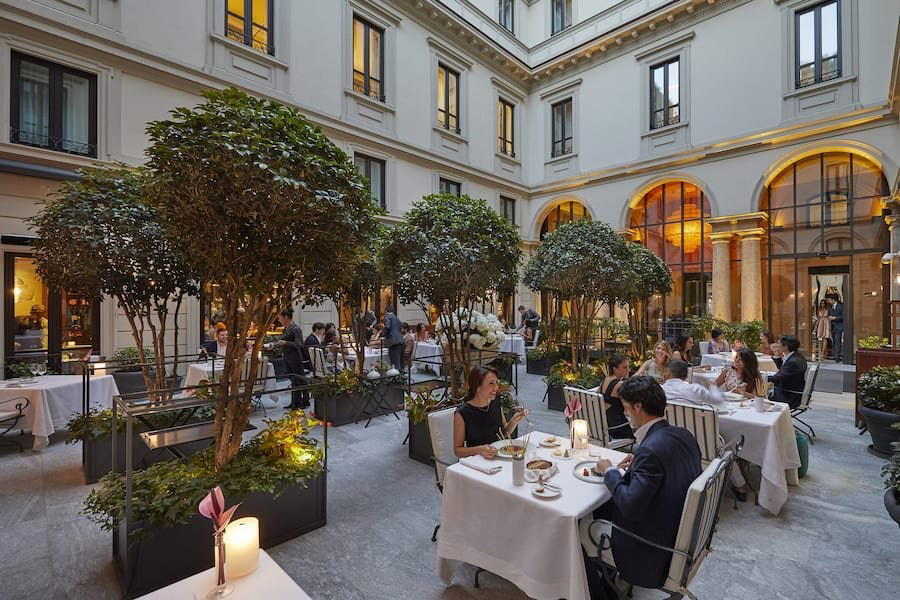
On Via Monte Napoleone, Milan's most decorated shopping street, Marchesi 1824 has operated as a patisserie and café since the early nineteenth century. Ranked in Opinionated About Dining's Cheap Eats in Europe list in both 2023 (#75) and 2024 (#91), it occupies a rare position: a historic Italian pasticceria that has reinvented itself without abandoning its founding register. Open Monday through Saturday from early morning, it draws locals and visitors in roughly equal measure.

Pearl is the En Primeur Club membership app, where members save venues, book tables and use the concierge.
Two Centuries on Monte Napoleone
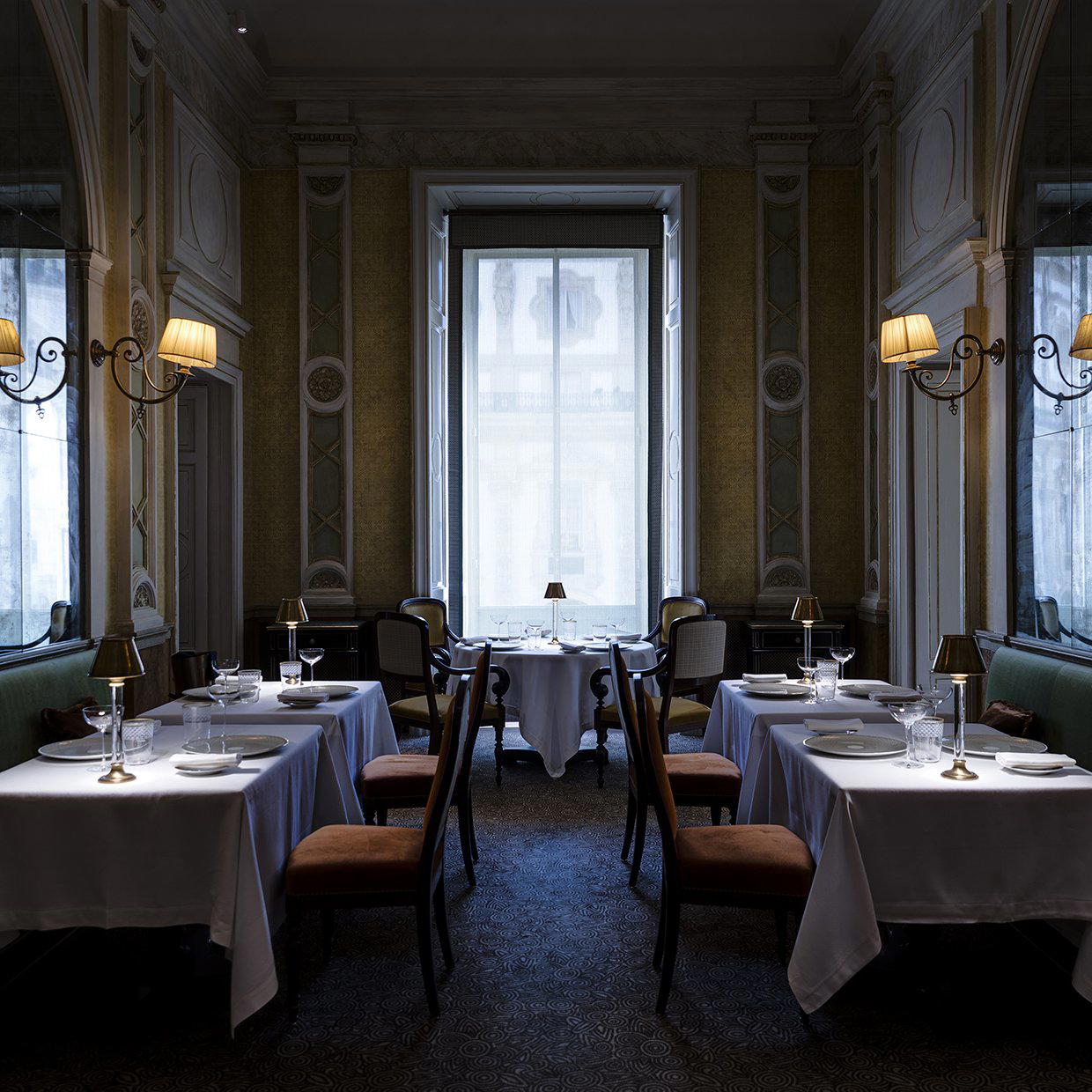
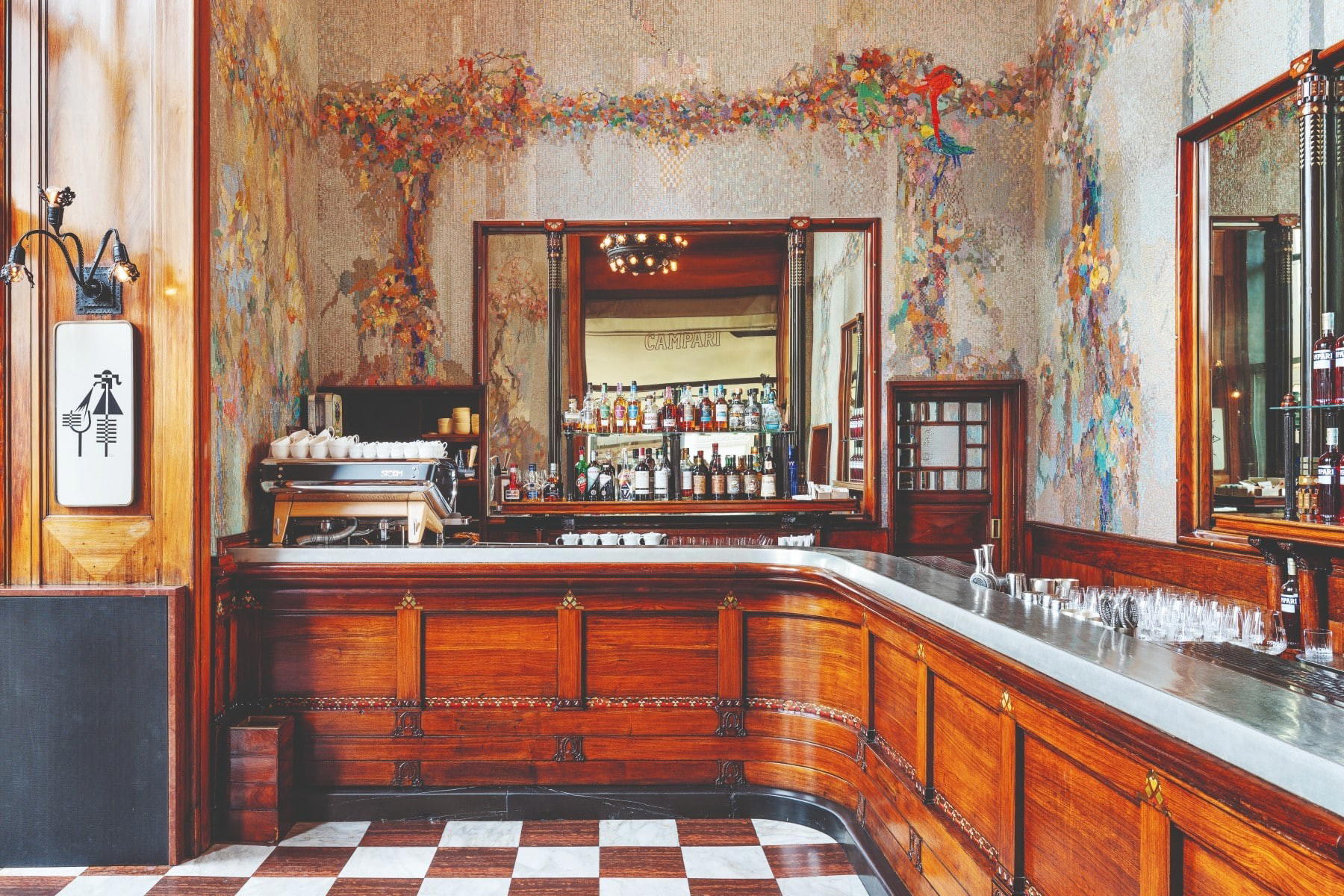
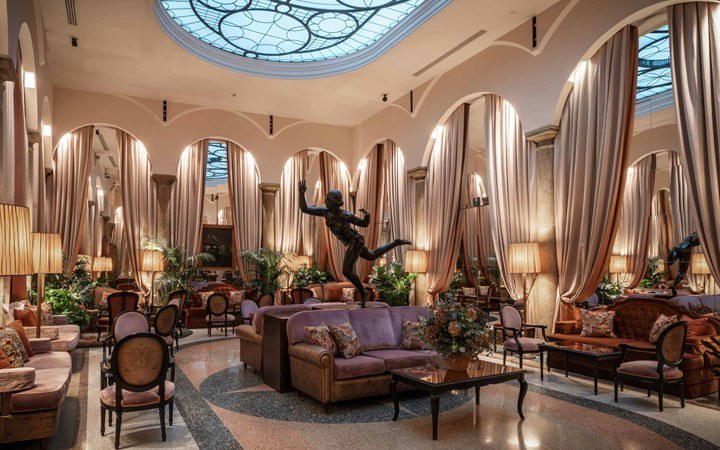
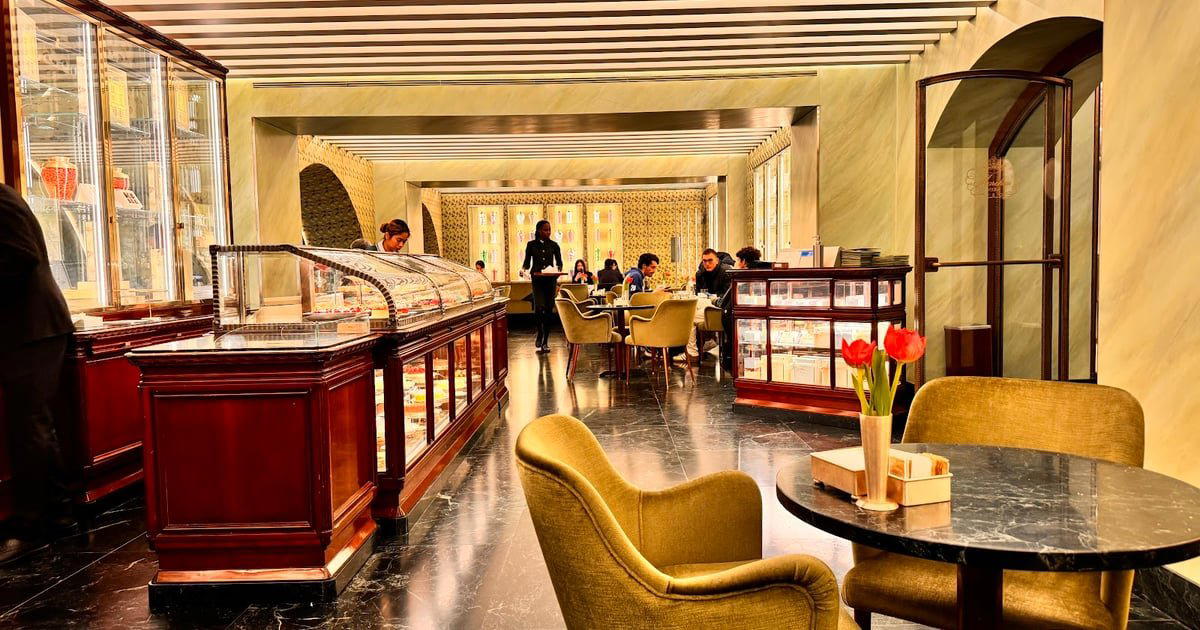
Via Monte Napoleone is leading understood as a street that sells permanence. The boutiques lining it trade in heritage as much as product, and the light that comes through the tall windows of the buildings along this stretch of Milan's fashion quadrilateral has a quality that feels deliberately preserved. Marchesi 1824 fits that context without effort. A patisserie at this address since the early nineteenth century, it occupies a building whose proportions and interior language have always signalled something more than a quick stop for coffee. The marble surfaces, the ordered displays of pastry, the quiet that holds even when the room is full: these are not recent design decisions. They are the accumulated weight of nearly two hundred years of operation in one of Europe's most scrutinised streets.
That longevity places Marchesi 1824 in a specific category within Italian café culture. Italy's historic caffè-pasticcerie, the establishments that have operated continuously across generations, occupy a different register from the wave of third-wave coffee shops and contemporary pastry operations that have reshaped European breakfast culture over the past fifteen years. Marchesi belongs to the former group by origin, but its recent trajectory complicates any simple reading of it as a static institution.
The Reinvention That Preserved the Form
The arc of Marchesi 1824's recent history is the arc of a certain kind of Italian heritage brand: acquisition, careful repositioning, then a question about what has been kept and what has changed. Prada Group acquired Marchesi in 2014, and the move drew immediate attention from the food and design press because it was legible as a cultural statement as much as a commercial one. A luxury fashion house acquiring a nineteenth-century Milanese patisserie in the middle of the quadrilatero della moda read as a deliberate act of neighbourhood consolidation.
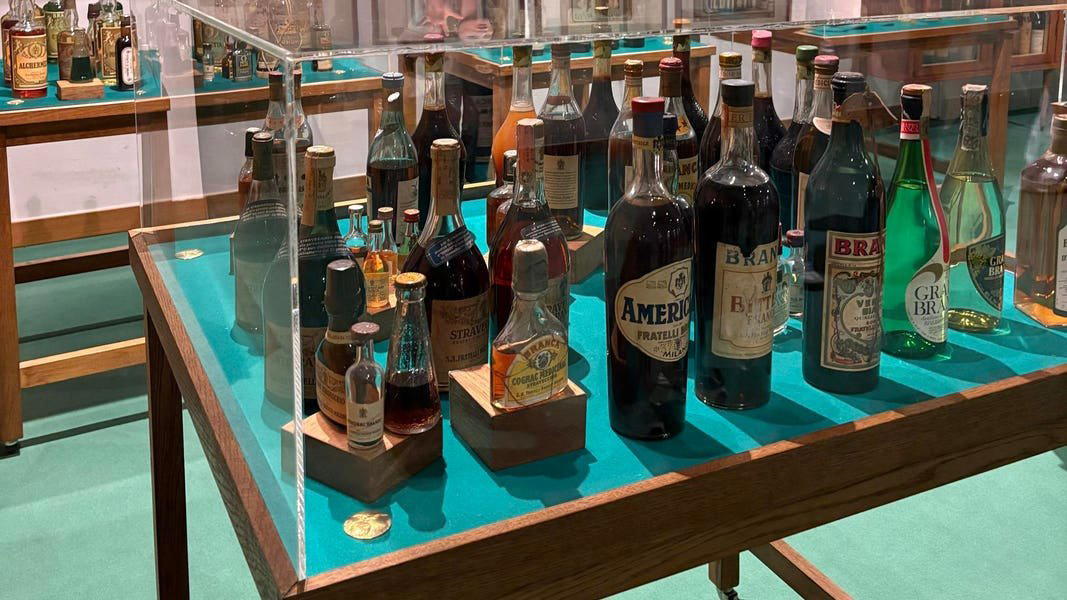
What followed was a renovation programme that extended Marchesi's footprint while keeping the visual vocabulary of the original space largely intact. The green and gold palette, the glass cases, the format of a place where you might stand at the bar for an espresso or sit for a more extended breakfast: these remained. A second location opened on Corso Magenta, near Santa Maria delle Grazie, signalling that the brand was being extended rather than simply preserved. The question any serious diner or café habitué asks at this point is whether the product quality survived the transition, and the Opinionated About Dining rankings suggest it did. Appearing on OAD's Cheap Eats in Europe list in 2023 at position 75 and in 2024 at position 91 indicates sustained recognition, even as the ranking position shifted slightly. OAD's methodology relies on surveyor input from experienced diners rather than anonymous public voting, which makes a placement in that list a more specific signal than a general review aggregate.
What a Patisserie at This Address Actually Means
Milan's patisserie culture sits at an interesting intersection. The city has never been primarily a pastry capital in the way that Lyon, Vienna, or Tokyo can claim that distinction. Lombard café culture is defined more by the espresso bar and the aperitivo hour than by elaborate pastry traditions. Within that context, an establishment like Marchesi has always occupied a slightly exceptional position, offering a level of pastry craft that reads more as northern European or French in its precision than as a typical Milanese pasticceria. That positioning has sharpened under its current ownership, with the product range and presentation carrying a clarity of intent that places it in a peer conversation with patisseries in other European cities rather than simply competing within the Milan café market.
For a comparison of how serious patisserie operations function at the high end in other cities, the work being done at a tes souhaits in Tokyo and Blé Sucré in Paris offers a useful frame. These are operations where craft discipline and product consistency define the offering, and where the address functions as a statement. Marchesi operates in that same register, with the added complexity of a two-hundred-year institutional history running underneath the contemporary execution.
Milan's fine dining scene, anchored by operations like Enrico Bartolini, Cracco in Galleria, Andrea Aprea, and Seta, is built around a different price point and a different meal occasion. Marchesi does not compete in that tier. What it offers is a specific kind of morning or midday pause that those restaurants cannot provide: the ability to stand at a marble counter on one of Italy's most observed streets, order a coffee and a piece of pastry, and have that transaction feel considered rather than transactional.
Other serious Italian tables worth knowing, from Osteria Francescana in Modena to Dal Pescatore in Runate, Enoteca Pinchiorri in Florence, Uliassi in Senigallia, Quattro Passi in Marina del Cantone, and Atelier Moessmer Norbert Niederkofler in Brunico, all occupy a different meal format. Marchesi is the kind of place you visit before or between those commitments, not instead of them.
For a broader orientation across the city, see our full Milan restaurants guide, as well as our guides to Milan hotels, Milan bars, Milan wineries, and Milan experiences. For a different kind of Milan table altogether, Égalité represents the more contemporary end of the city's restaurant conversation.
Know Before You Go
Address: Via Monte Napoleone, 9, 20121 Milano MI, Italy
Hours: Monday to Friday 8:30 am – 6:00 pm | Saturday 9:00 am – 6:00 pm | Sunday Closed
Category: Patisserie / Café
Recognition: Opinionated About Dining Cheap Eats in Europe, #75 (2023), #91 (2024)
Booking: Walk-in format; no reservation required for café service
Leading timing: Weekday mornings before 10:30 am for the lightest foot traffic on Via Monte Napoleone
Frequently asked questions
Who is the chef at Marchesi 1824?
The chef associated with Marchesi 1824 is Various.
What days is Marchesi 1824 closed?
Hours at Marchesi 1824: Hours: Monday 8:30 am–6 pm Tuesday 8:30 am–6 pm Wednesday 8:30 am–6 pm Thursday 8:30 am–6 pm Friday 8:30 am–6 pm Saturday 9 am–6 pm Sunday Closed.
What dish is Marchesi 1824 famous for?
Marchesi 1824 built its reputation on Milanese pastry classics, most notably its panettone, which sits at the centre of the city's holiday confectionery conversation. The house also draws regulars for its breakfast pastries and chocolates, consistent with the patisserie format it has maintained at Via Monte Napoleone, 9 since 1824. Two consecutive appearances on the Opinionated About Dining Cheap Eats Europe list (ranked #75 in 2023, #91 in 2024) confirm the operation's standing beyond pure heritage cachet.
Is Marchesi 1824 focused on a specific cuisine style?
Where exactly is Marchesi 1824?
Marchesi 1824 is located at Via Monte Napoleone, 9, 20121 Milano MI, Italy, Milan.
Reputation Context
| Venue | Cuisine | Price | Awards | Notes |
|---|---|---|---|---|
| Marchesi 1824This venue (the venue you are viewing) | Historic Italian Patisserie | $50–100 | Not listed | Not listed |
| Enrico Bartolini | Modern Italian Fine Dining | $300–500 | 3 Michelin Stars · World's 50 Best #85 | Creative |
| Cracco in Galleria | Modern Italian Fine Dining | $150–200 | 1 Michelin Star · World's 50 Best #33 | Modern Cuisine |
| Andrea Aprea | Modern Italian Fine Dining | $200–300 | 2 Michelin Stars · La Liste Top Restaurants | Modern Italian, Italian Contemporary |
| Seta | Modern Italian Fine Dining | $150–200 | 2 Michelin Stars · La Liste Top Restaurants | Modern Italian |
| Contraste | Modern Italian Fine Dining | $150–200 | 1 Michelin Star · La Liste Top Restaurants | Progressive Italian, Modern Cuisine |
Recognition history
Dated appearances from independent guides and award organizations, with the underlying list record or original source where available.
Opinionated About Dining Cheap Eats in Europe Ranked #39
Opinionated About Dining
Full recognition history (3 entries)
Opinionated About Dining Cheap Eats in Europe Ranked #91
Opinionated About Dining
Opinionated About Dining Cheap Eats in Europe Ranked #75
Opinionated About Dining