On Auguststraße in Berlin's Mitte district, Luna D'Oro occupies the intersection where European culinary technique meets the market-driven produce culture that defines the city's most serious kitchens. Positioned alongside Berlin's creative fine-dining tier, it draws comparisons to neighbours working in the €€€€ bracket, though with its own distinct relationship to ingredient origin and preparation discipline.
Pearl is the En Primeur Club membership app — saves, bookings, and concierge access live there. Same editors, same standards.
- Address
- Auguststraße 24, 10117 Berlin, Germany
- Phone
- +4930400698100
- Website
- claerchensball.haus
- Directions
- Get directions
 Saves & bookings on Pearl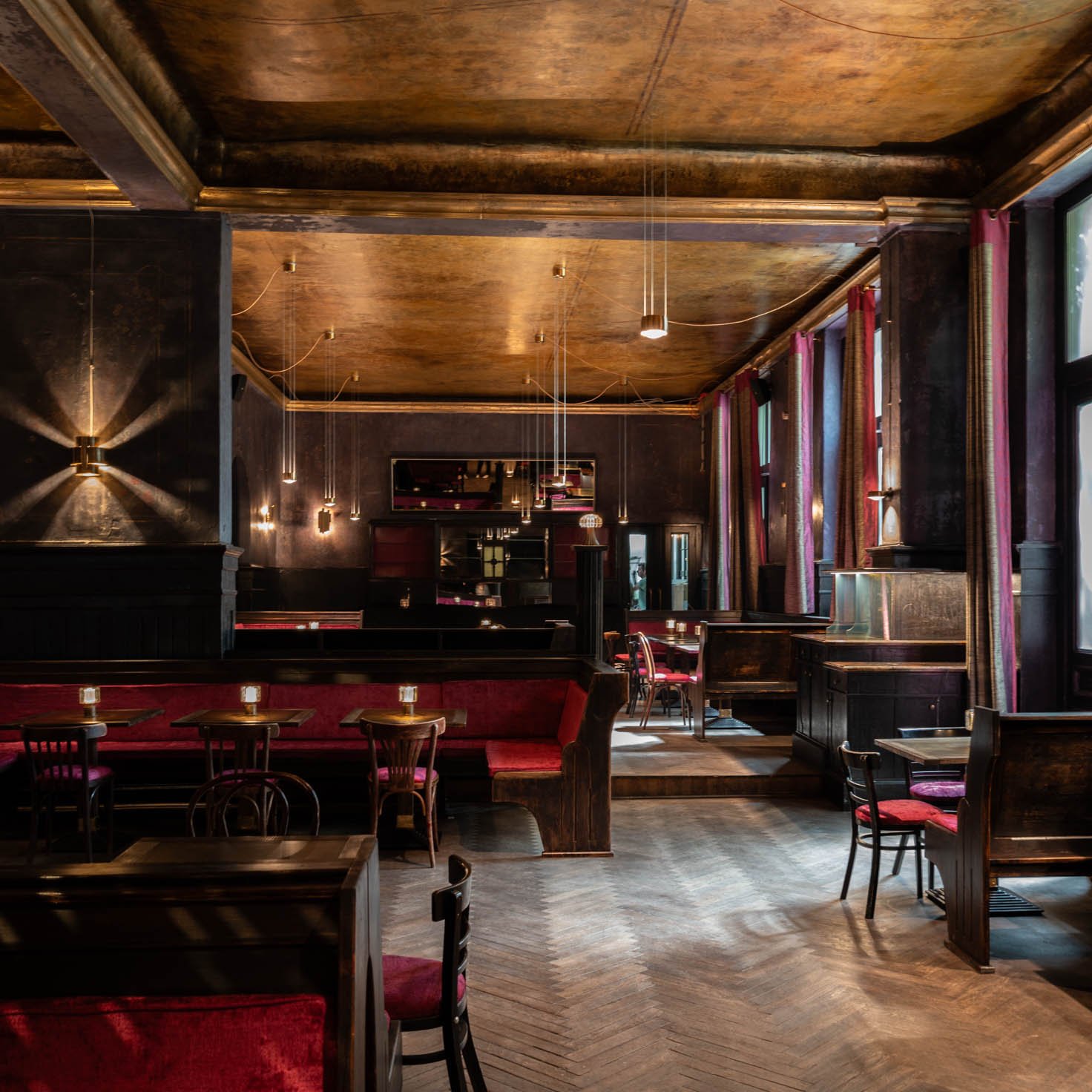
Auguststraße and the Logic of Place
Auguststraße 24 sits in the gallery corridor of Mitte, a stretch of Berlin that has spent three decades accumulating cultural seriousness without fully resolving its identity. Former industrial units share facades with contemporary art spaces; the neighbourhood moves between tourist-facing and deliberately local in the same city block. Restaurants that succeed here tend to read the room accurately: they neither over-perform for visitors nor retreat into insider obscurity. The address carries weight, and any kitchen operating from it inherits both the opportunity and the obligation to be positioned correctly against what the street expects.
Luna D'Oro holds that address. In a city where fine-dining ambition now clusters across several distinct neighbourhoods, the Mitte location places it in direct conversation with a scene that prizes precision over warmth, concept over comfort, and provenance over spectacle. That context matters more than any single detail about the room or the menu, because it tells you what the kitchen is measuring itself against before a plate arrives.
Where Berlin's Fine-Dining Tier Sits in 2025
Berlin's serious restaurant scene has matured in a particular direction over the past decade. Venues like Nobelhart & Schmutzig formalised the hyper-regional German ingredient argument, building menus around Brandenburg produce with a rigour that excluded anything grown beyond a defined radius. Rutz worked a different angle, pairing modern European technique with wine programming serious enough to drive the dining decision independently. FACIL operates from within a hotel structure but maintains a creative European identity that competes on purely culinary terms. CODA Dessert Dining carved out an entirely different category, restructuring the savory-to-sweet progression so completely that the format itself became the story.
What connects this peer group is a shared refusal of the generic. Each has staked a legible position, and Berlin diners at the €€€€ tier have grown accustomed to knowing what they're arriving for before they book. Luna D'Oro enters that conversation from Auguststraße with the Italian register suggested by its name, which in the current Berlin context functions as an editorial statement: Italian-inflected kitchens in Germany occupy a complex position, caught between the country's deep emotional attachment to Italian food at every price tier and the harder critical question of what a serious Italian-coded restaurant can say that a German kitchen working with the same ingredients cannot.
Local Ingredients, Imported Logic
The editorial angle that defines interesting Italian-inflected work in northern European cities right now is not authenticity in the documentary sense. It is the productive friction between technique developed in one culinary tradition and produce sourced from an entirely different agricultural context. This is the space where credible work happens: a kitchen that has absorbed the structural logic of Italian cooking, its respect for ingredient primacy, its economy of intervention, and then applies that logic to what is actually growing in Brandenburg or Mecklenburg in a given season.
Across the broader German fine-dining circuit, that intersection has produced some of the country's most discussed menus. JAN in Munich works a French-accented version of the same argument. Schwarzwaldstube in Baiersbronn draws on Black Forest produce through a classical French lens. Vendôme in Bergisch Gladbach and Victor's Fine Dining by Christian Bau in Perl each demonstrate how imported method and local material can generate something that belongs to neither tradition exclusively. The pattern holds across the country: the kitchens doing considered work are those where the technique has a clear origin story and the produce has a clear geographic one, and the menu is the record of what happened when they met.
For a restaurant at Luna D'Oro's address to participate in that conversation credibly, the sourcing decisions need to be legible on the plate and the technique needs to be specific enough to be traced. A generically Italian-sounding menu with undifferentiated European produce tells the diner nothing. A menu that commits to a particular regional Italian methodology, applied to ingredients with an identifiable northern German or Brandenburg provenance, makes an argument the diner can evaluate.
The Broader German Fine-Dining Frame
Berlin is not the apex of Germany's fine-dining geography in terms of Michelin concentration. That centre of gravity sits elsewhere: Aqua in Wolfsburg holds three stars, as does Waldhotel Sonnora in Dreis. Restaurant Haerlin in Hamburg anchors the north. Schanz in Piesport and Bagatelle in Trier operate in the Mosel context. ES:SENZ in Grassau sits in the Bavarian Alps. The geography of serious German cooking spreads across smaller cities and rural destinations in a way that is unusual by European standards, and Berlin's role in that map is more about creative experimentation than institutional recognition.
That actually benefits a venue like Luna D'Oro. The Berlin diner at the serious end of the spectrum is less invested in star counts than in whether a restaurant is doing something defensible and distinct. The city's critical culture rewards concept clarity and ingredient honesty more reliably than it rewards technical ambition for its own sake. For a restaurant working an Italian-inflected frame on Auguststraße, that is a more forgiving evaluation environment than it would be in Munich or Hamburg, where the expectations run in more conventional directions.
For international comparison, the tension between imported technique and local sourcing shows up in different forms at Le Bernardin in New York, where French classical seafood discipline is applied to Atlantic and Gulf Coast product, and at Atomix in New York, where Korean structural logic meets fine-dining produce sourcing in a way that has attracted sustained critical attention. The approach is not Berlin-specific; it is a global pattern in serious kitchens, and the restaurant's Auguststraße address positions it to participate in that conversation locally.
Planning Your Visit
Auguststraße 24 is walkable from the Rosenthaler Platz U-Bahn stop, placing the restaurant in the heart of a neighbourhood dense with gallery openings and late-evening foot traffic. Visitors to Berlin's serious dining tier typically combine a Mitte dinner with a broader evening in the area; the gallery corridor is most active Thursday through Saturday. For the full context of Berlin's current restaurant scene across neighbourhoods and price tiers, the restaurant is recommended for reservations, and its price point is about $35 per person. Opening hours are Monday to Wednesday and Sunday from 5 to 11 PM, and Thursday to Saturday from 5 PM to midnight.
Compact Comparison
Comparable venues nearby, for context on price, style, and recognition.
| Venue | Cuisine | Price | Notes |
|---|---|---|---|
| Luna D'OroThis venue — the venue you are viewing | Mitte, Modern Traditional German | $$ | Not listed |
| Diener Tattersall | Not listed | $$ | Charlottenburg, Traditional Berlin Hausmannskost |
| Ratskeller Kopenick | Köpenick, Traditional German | $$ | Not listed |
| Schnitzelei Mitte | Mitte, Modern German Schnitzel | $$ | Not listed |
| Julchen Hoppe | Mitte, Traditional Berlin German | $$ | Not listed |
| Stulle mit Brot | Not listed | $$ | Charlottenburg, Berliner Stullen & Soup Shop |
Continue exploring
More in Berlin
Restaurants in Berlin
Browse all →
Bars in Berlin
Browse all →
Hotels in Berlin
Browse all →

At a Glance
- Romantic
- Elegant
- Classic
- Cozy
- Sophisticated
- Date Night
- Special Occasion
- Group Dining
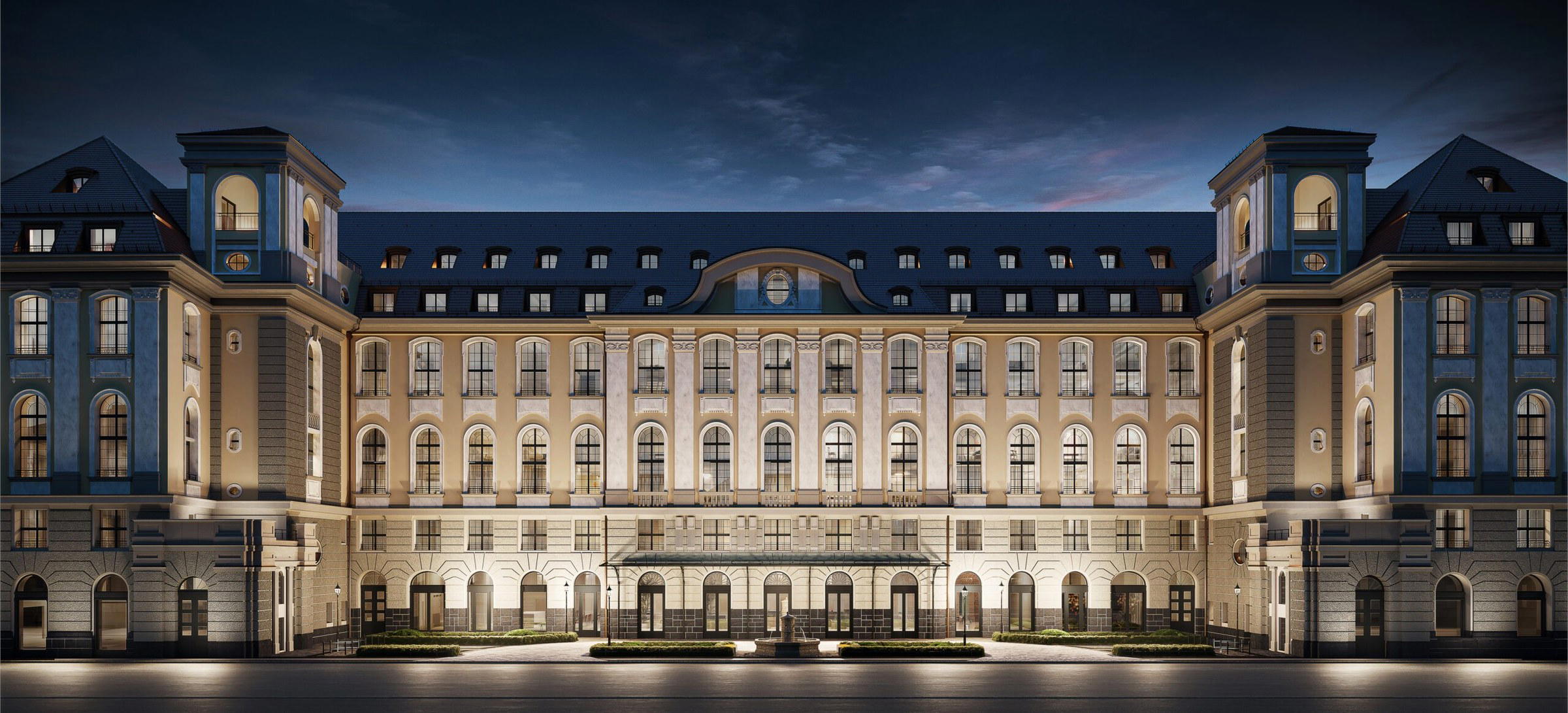
- Historic Building
- Extensive Wine List
Current opening hours
- Monday
- 5–11 PM
- Tuesday
- 5–11 PM
- Wednesday
- 5–11 PM
- Thursday
- 5 PM–12 AM
- Friday
- 5 PM–12 AM
- Saturday
- 5 PM–12 AM
- Sunday
- 5–11 PM
Hours can change for holidays and private events. Last verified .
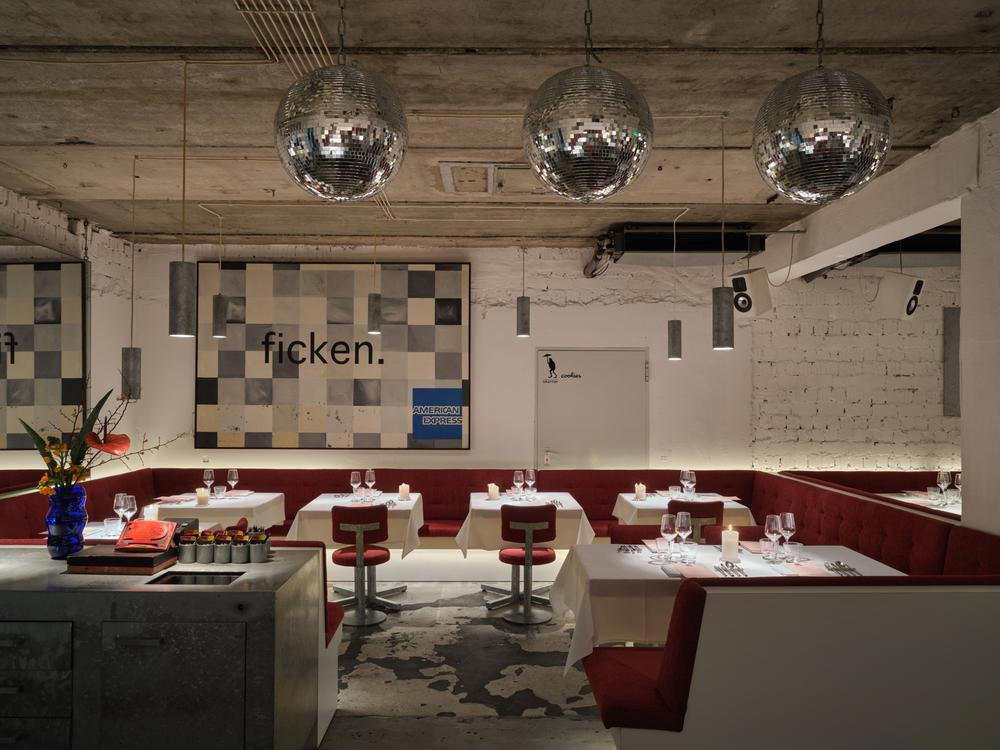
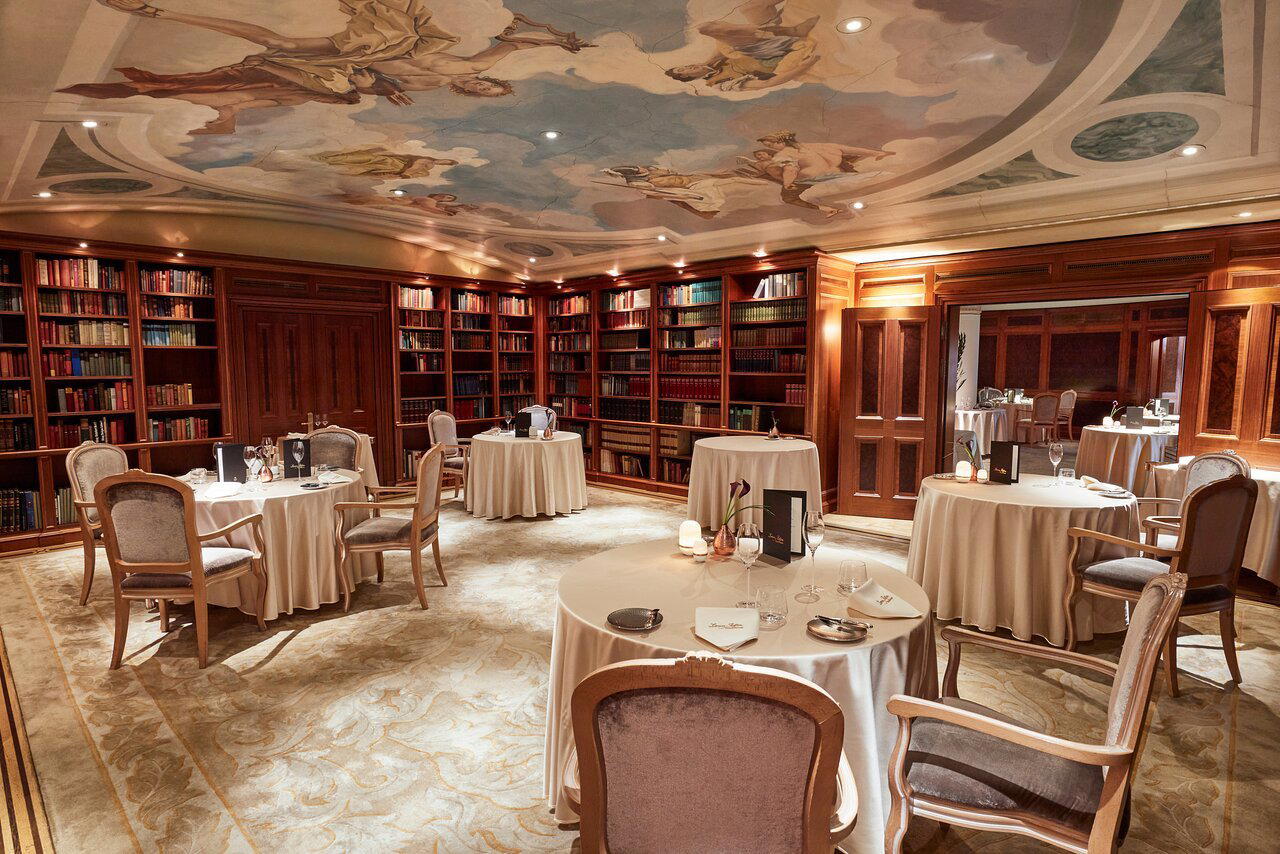
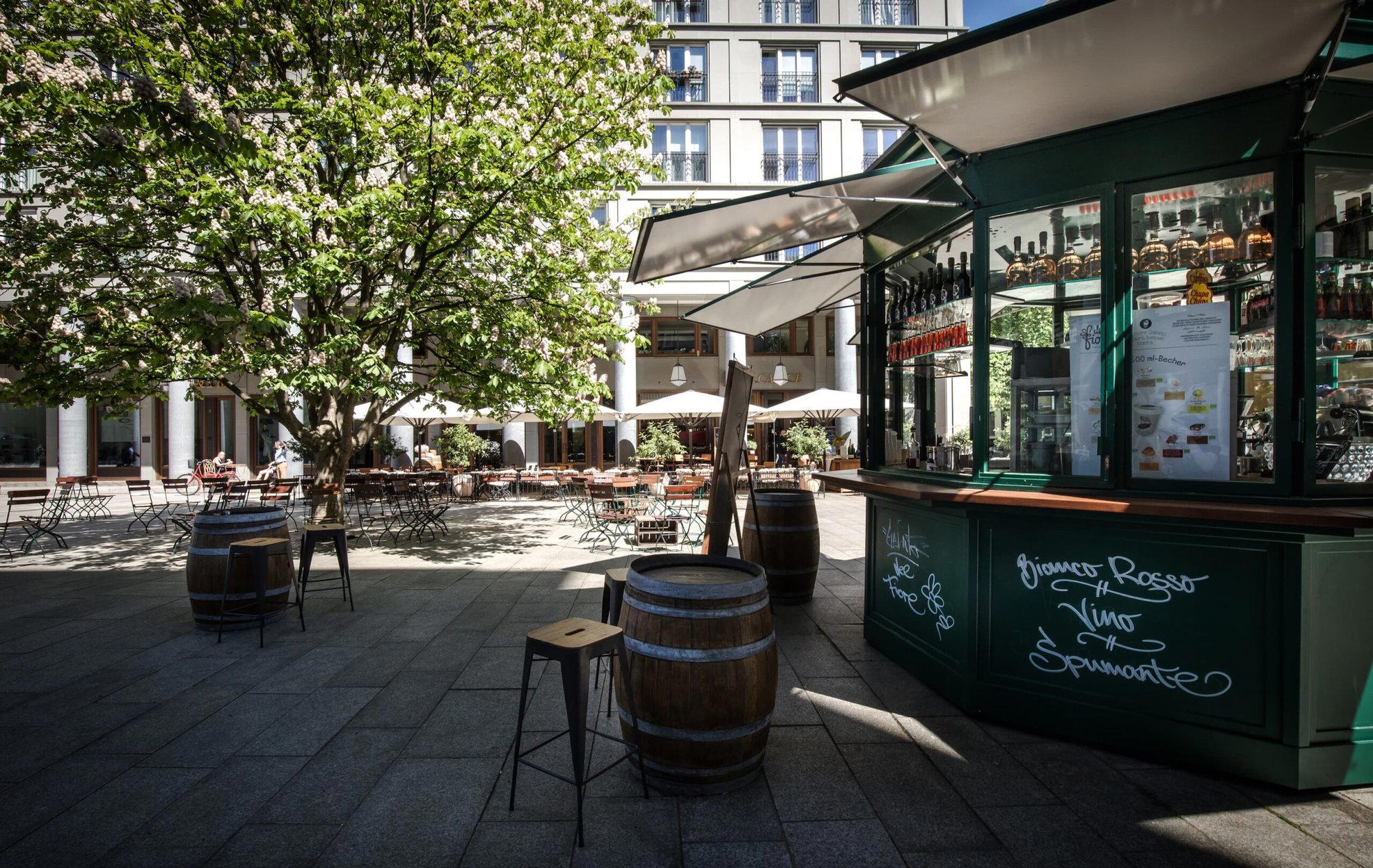
Glamorous 1920s atmosphere with red velvet booths, gilded lamps, faded murals, dark navy walls, dulled gold trim, and disco ball dappling diners.