Michelin Plate
Our verdict
A Cameroon-born chef and a sharp sommelier run this counter-format French restaurant in Osaka's Nishi Ward, where the kitchen's layered seasoning philosophy meets Japan's exceptional produce.

Pearl is the En Primeur Club membership app, where members save venues, book tables and use the concierge.
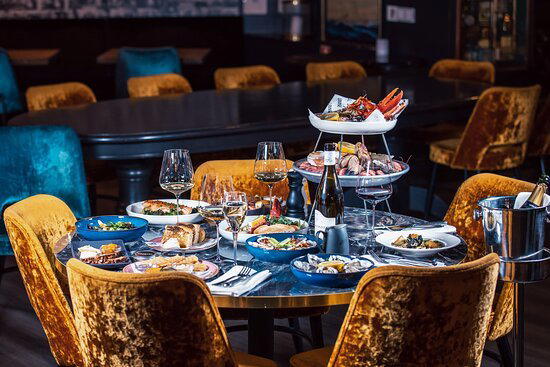
A Counter in Nishi Ward, Where Two Disciplines Meet
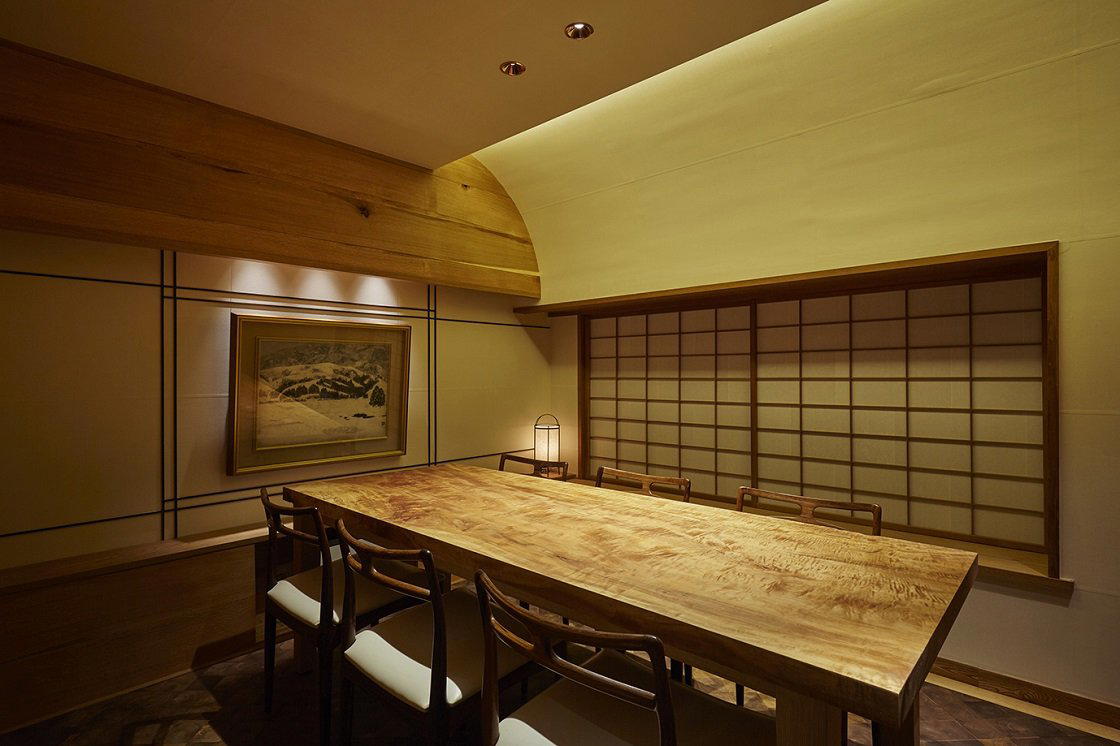
Osaka's French restaurant circuit has stratified sharply over the past decade. At the leading, La Cime and HAJIME operate at ¥¥¥¥ price points with two-star recognition and tasting menus pitched at international fine-dining travellers. Below them sits a more interesting middle tier: counter-format restaurants where the cooking is serious, the room is small, and the relationship between kitchen and table is the actual product. LOUISE, in the residential stretch of Itachibori in Nishi Ward, belongs to that second category. The address is quiet, the room is compact, and the format, counter seating, open kitchen, direct exchange with staff, is designed around proximity rather than spectacle.
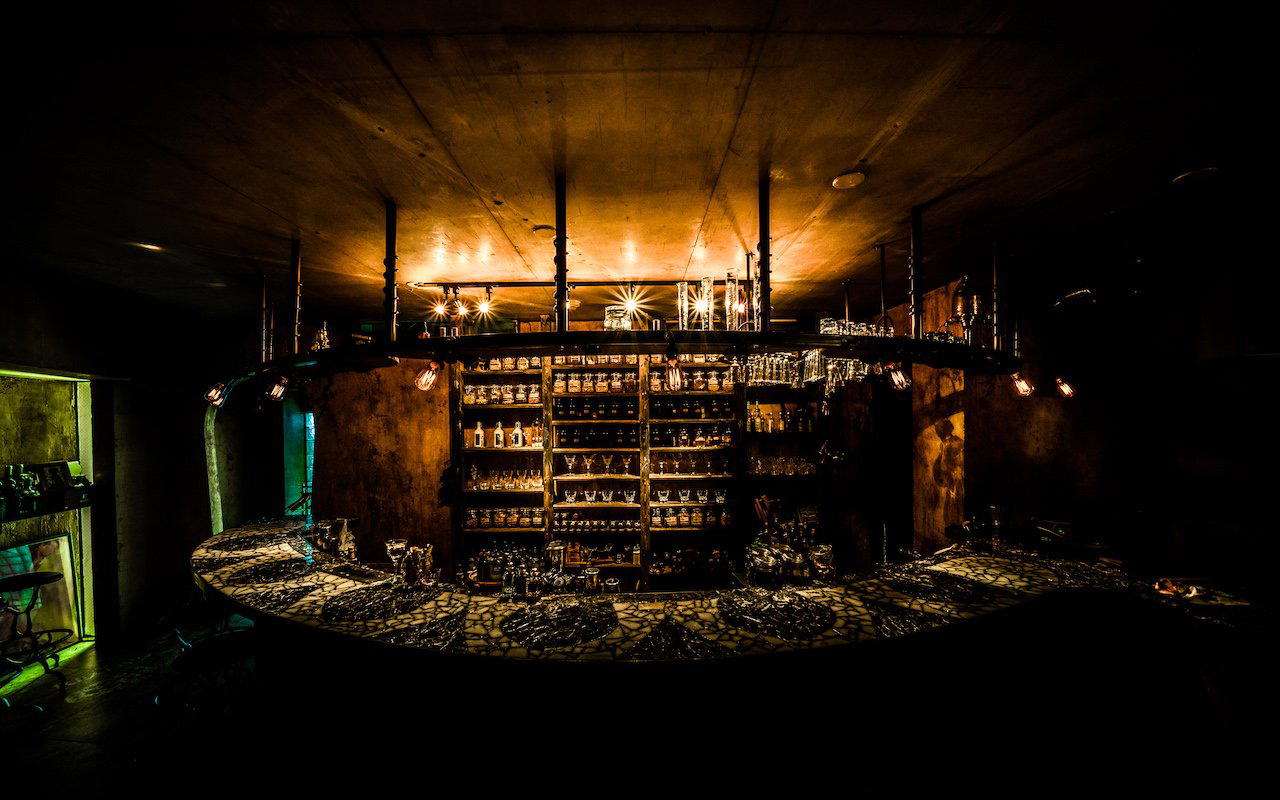
Walking toward the counter at LOUISE, the first thing that registers is the smell: herbs, reduction, something warm from the stove. Counter dining in this format is not incidental to the experience; it is the experience. The kitchen works within arm's reach, the sommelier moves between guests and wine, and the conversation that develops over the course of a meal is built into the architecture of the room. This is a well-established mode in Japanese restaurant culture, borrowed across cuisines from the kappo tradition and applied here to French technique.
The Dynamic Between Kitchen and Floor
In Osaka's French restaurants, the division between kitchen performance and floor service is often where a meal either coheres or fragments. At LOUISE, the defining feature, noted consistently across guest accounts and confirmed in Michelin's own annotations for the 2025 guide, is the working relationship between the Cameroon-born chef and the sommelier. Michelin specifically flags both figures: the chef for layered, herb-driven cooking that draws on Japanese ingredients, and the sommelier for hospitality that shapes the room's character as much as the food does.
That pairing matters more than it might appear. In smaller counter restaurants, a commanding kitchen without an equally engaged floor produces an imbalanced meal. The reverse, warm service over thin cooking, is equally unsatisfying. The Michelin Plate designation, which signals cooking of sufficient quality to warrant attention without reaching star level, applies here to a room where both sides of that equation are apparently functioning together. For a restaurant at the ¥¥¥ price point, that alignment is less common than it should be.
Compare this internal dynamic to Différence or La Bécasse, two other French addresses in Osaka that occupy roughly adjacent positions on the city's French dining map. Each has its own character in terms of how kitchen authority and floor hospitality interact. At LOUISE, the documented emphasis on the sommelier's role suggests a restaurant that treats wine service and guest engagement as co-equal to the cooking, rather than subordinate to it.
French Technique, Japanese Ingredients
The culinary context here is worth placing carefully. A French-trained chef operating in Japan is no longer a novelty, Sézanne in Tokyo and comparable addresses have normalised the idea of European technique built around Japanese seasonality. What Michelin's annotation for LOUISE describes is a more specific version of that intersection: layered ingredients seasoned with herbs and spices in a way that brings out a distinctive character, applied to the quality produce that Osaka's wholesale markets, among the most varied in Japan, make available.
Osaka's position as a sourcing city matters here. The Osaka Central Wholesale Market, one of the largest in Japan, gives restaurants at every price point access to seafood, vegetables, and proteins that chefs in other cities source with considerably more difficulty. For a kitchen working in French idiom, that access changes what's possible. The herb-forward, layered seasoning approach described in the Michelin notes fits naturally with Kansai produce, where the vegetables in particular tend toward subtlety rather than the intensity you find in some Tokyo-market sourcing.
For comparison at a higher price tier, LE PONT DE CIEL and nent operate in Osaka's upper bracket and represent what the same Japanese-ingredient logic looks like with more resource behind it. LOUISE sits below that ceiling, but the cooking philosophy, rooting French preparation in specifically Japanese raw material, runs through the same tradition.
Where LOUISE Sits in the Broader Japanese Scene
Western Japan's French restaurant culture extends well beyond Osaka. Gion Sasaki in Kyoto and akordu in Nara both demonstrate how European culinary traditions have been absorbed and reinterpreted across the Kansai region. Further afield, Goh in Fukuoka, 1000 in Yokohama, and 6 in Okinawa each represent regional variations on that same absorption. Harutaka in Tokyo approaches it from Japanese cuisine moving toward international influence. The network is broad, and within it, LOUISE represents the counter-format, mid-tier French position: technically grounded, team-driven, and built for repeat local custom rather than occasion dining.
Internationally, the reference point for this kind of cooking is the tradition of French regional restaurants where the chef's training is classical but the ingredient sourcing is local and seasonal. Hotel de Ville Crissier in Crissier represents the formal end of that French tradition. LOUISE operates at a different scale, but the underlying logic, French discipline, local ingredient authority, is the same.
Know Before You Go
| Address | 1 Chome-1-5 Itachibori, Nishi Ward, Osaka, 550-0012, Japan |
|---|---|
| Cuisine | French |
| Price Range | ¥¥¥ |
| Recognition | Michelin Plate (2025) |
| Seating Format | Counter, with direct kitchen interaction |
| Booking | Contact the restaurant directly; reservation recommended |
For more on eating, drinking, and staying in Osaka, see our full Osaka restaurants guide, our full Osaka hotels guide, our full Osaka bars guide, our full Osaka wineries guide, and our full Osaka experiences guide.
Frequently asked questions
Where do I go for LOUISE?
LOUISE is located at 1 Chome-1-5 Itachibori, Nishi Ward, Osaka, 550-0012, Japan, Osaka.
What should I budget for a meal at LOUISE?
Pricing at LOUISE is listed as ¥¥¥.
What awards or recognition does LOUISE have?
LOUISE has received recognition including: The Cameroon-born chef co-stars with the hospitable sommelier. What prompted a chef who pursued gastronomy in Paris to set up shop in Osaka. Simply put, a fascination with the foodstuffs of Japan. Layered ingredients, effectively seasoned w….
What's the must-try dish at LOUISE?
The counter seats are worth requesting: proximity to the kitchen means you catch the cooking aromas as each course takes shape, which is part of how the meal is meant to be read. Order whatever the chef is building around that season's Japanese produce.
How would you describe the cuisine at LOUISE?
How hard is it to get a table at LOUISE?
LOUISE carries a Michelin Plate for 2025 and operates at ¥¥¥ pricing, placing it below the two-star tier of Osaka's French circuit but well above casual neighbourhood dining. That positioning, combined with a counter format that limits covers by design, means advance booking is advisable rather than optional. The counter specifically is the seat to request, and those tend to go first.
Just the Basics
| Venue | Cuisine | Price | Awards | Notes |
|---|---|---|---|---|
| LOUISEThis venue (the venue you are viewing) | Modern French-Japanese Fusion | $150–200 | Michelin Plate | Not listed |
| HAJIME | Avant-Garde Japanese Fine Dining | $300–500 | 3 Michelin Stars · World's 50 Best #83 | French, Innovative |
| La Cime | Modern French with Japanese Ingredients | $150–200 | 2 Michelin Stars · World's 50 Best #13 | French |
| Kashiwaya Osaka Senriyama | Seasonal Kaiseki Omakase | $200–300 | 3 Michelin Stars · La Liste Top Restaurants | Japanese |
| Taian | Traditional Japanese Kaiseki Omakase | $150–200 | 3 Michelin Stars · La Liste Top Restaurants | Kaiseki, Japanese |
| Fujiya 1935 | Modern Japanese with European influences | $100–150 | 2 Michelin Stars · La Liste Top Restaurants | Innovative |
Recognition history
Dated appearances from independent guides and award organizations, with the underlying list record or original source where available.
Michelin Plate
Michelin
Full recognition history (2 entries)
Michelin Plate
Michelin