
Macarfi 7.3 Food Rating
Our verdict
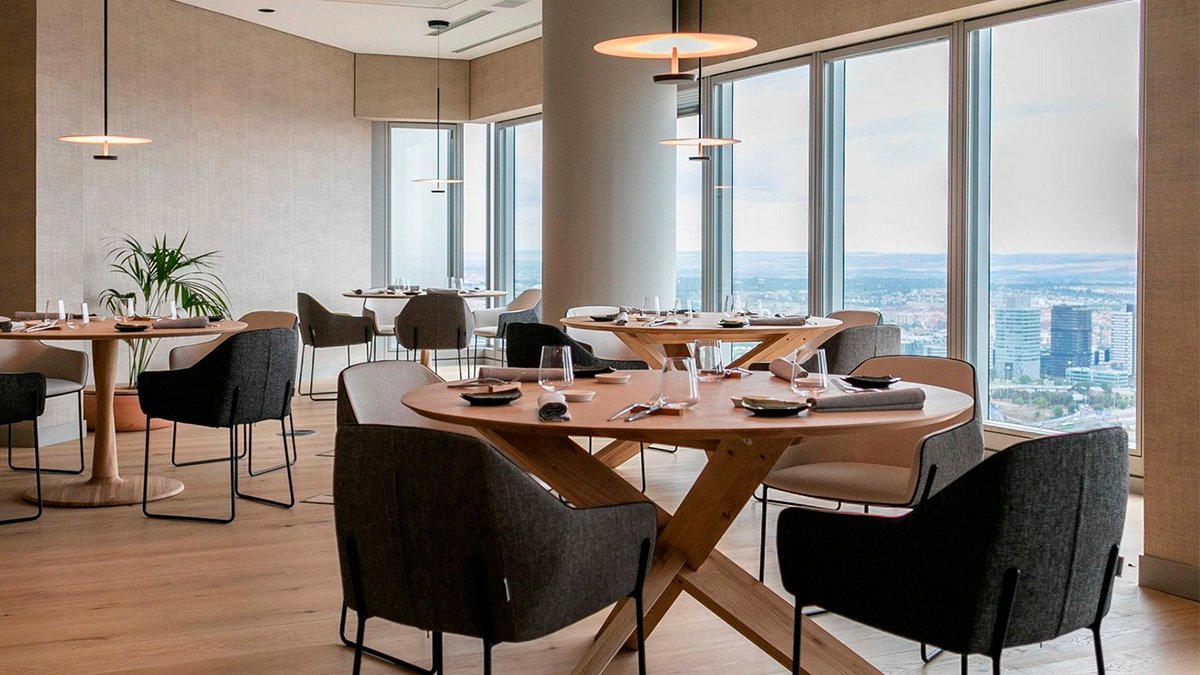
On the 33rd floor of Torre Emperador Castellana, Élkar occupies one of Madrid's more deliberately positioned dining addresses, placing guests above the Paseo de la Castellana with the city grid spread below. The format sits within Madrid's growing tier of destination restaurants where altitude and atmosphere are as much part of the proposition as the plate. A reservation here requires advance planning — walk-in access is limited at this level of the market.

Pearl is the En Primeur Club membership app — saves, bookings, and concierge access live there. Same editors, same standards.
Thirty-Three Floors Above the Castellana
Madrid's Paseo de la Castellana is the city's structural spine, running north from the Prado axis through Nuevos Ministerios and into the financial towers of the AZCA district and beyond. At its northern extreme, the Torre Emperador Castellana rises as part of the Cuatro Torres cluster, the quartet of skyscrapers that redefined the city's northern horizon in the mid-2000s. From street level, the towers read as corporate infrastructure. From the 33rd floor, where Élkar sits, the geometry reverses: the city becomes the view, and the restaurant becomes the vantage point from which to read it.
That shift in perspective is not incidental. Across European capitals, a specific tier of restaurant has emerged that uses altitude as a deliberate editorial device. The room does not merely overlook the city; the city is part of the service. Light changes across the meal — late afternoon sun catching the Castellana's lanes of traffic, dusk softening the financial district's geometry, then the grid lighting up after dark. Madrid's elevation above sea level already gives the city unusually clear air and dramatic skies; at 33 floors, both qualities amplify.
The Skyscraper Dining Tier in Madrid
Élkar's position within Madrid's restaurant scene is worth mapping carefully. The city's most decorated tables operate at street level or in townhouse conversions: DiverXO, the only three-Michelin-star address in Madrid, works in a hotel setting in the north of the city. Coque occupies a converted space in Chamberí. Deessa at the Rosewood Villa Magna and Paco Roncero both operate with strong hotel associations. DSTAgE runs a tightly controlled tasting menu in a discreet Chueca space. None of these operate from a tower at altitude.
Élkar instead belongs to a smaller, more international category of restaurants where the spatial experience is a fundamental part of the offer. This is not the same as a hotel rooftop bar with food attached. The tower context suggests a different set of expectations around both formality and the relationship between interior and exterior. The Cuatro Torres location places the restaurant well north of Madrid's traditional dining centre, which itself signals something about the intended audience: business travellers staying in the AZCA corridor, international guests whose hotel sits in the financial district, and Madrid residents who treat the journey north as part of the occasion.
Reading the Room: What Altitude Does to a Meal
At 33 floors, the acoustic environment shifts. Street noise drops away entirely, replaced by a controlled interior soundscape — the hum of a dining room at a remove from the city rather than inside it. This matters more than it sounds. Madrid's most celebrated traditional spaces, from the tabernas of La Latina to the market bars of San Miguel, are defined by compression and noise, the specific energy of a city that eats late and loudly. A room at altitude operates on different acoustics: conversation carries differently, the pace tends to slow, and the eye is drawn outward as often as inward.
Spain has a deep tradition of restaurants where the physical context shapes the experience as much as the kitchen. The cave dining rooms of Granada, the clifftop seafood houses of the Basque coast, the garden restaurants of the Andalusian interior, each uses its setting as an active ingredient. Élkar's version of this is vertical rather than geographic, but the underlying logic holds. The view is structural to the meal, not decorative.
Positioning in the Broader Spanish Fine Dining Circuit
For visitors mapping Élkar against Spain's wider restaurant network, the context is worth establishing. Spain's most internationally referenced addresses spread across several regions: El Celler de Can Roca in Girona, Mugaritz in Errenteria, Azurmendi in Larrabetzu, and Martin Berasategui in Lasarte-Oria anchor the Basque and Catalan ends of the circuit. In the south, Aponiente in El Puerto de Santa María and Quique Dacosta in Dénia represent distinct regional approaches. Barcelona contributes Cocina Hermanos Torres, while Ricard Camarena in València and Atrio in Cáceres extend the map into regions with different culinary identities.
Madrid's own fine dining tier has grown substantially in the past decade, shifting from a city seen primarily as a tapas and taberna destination toward one with genuine tasting-menu credentials. Élkar sits within that broader arc, operating in a format where the spatial drama of its tower location is the most immediately legible point of difference from the established street-level competition.
For international reference points, the format has parallels at addresses like Le Bernardin in New York City and Lazy Bear in San Francisco, both of which demonstrate how a tightly controlled spatial and atmospheric proposition can define a restaurant's identity as clearly as its menu. The comparison is not culinary, it is structural. These are restaurants where the room and its logic are inseparable from the dining proposition.
Planning Your Visit
Torre Emperador Castellana sits at the northern end of the Paseo de la Castellana, within the Cuatro Torres cluster. The nearest metro access is via lines serving the Begoña and Las Tablas area, though the tower is more readily associated with private car or taxi arrival given its distance from Madrid's traditional central dining districts. For those combining the meal with a stay in the AZCA financial corridor or the northern hotel belt, the location is direct. For visitors based in Salamanca, Maloja, or the historic centre, budget for travel time.
Reservations: Advance booking is advisable given the tower's controlled-access format; walk-in seating at this address is not a reliable option, particularly at peak dinner service. Dress: The tower context and room altitude suggest smart-casual at minimum; business attire is common given the surrounding corporate environment. Budget: Hours:
For a broader map of Madrid's restaurant circuit across price points and formats, the EP Club Madrid guide covers the full range from casual neighbourhood eating to the city's most decorated tasting-menu addresses.
Frequently asked questions
Where do I go for Élkar?
Élkar is located at Torre Emperador Castellana, P.º de la Castellana, 259D, Planta 33, 28046 Madrid, Spain, Madrid.
Is Élkar a good choice for a business dinner in Madrid's financial district?
Élkar's address inside Torre Emperador Castellana places it at the centre of Madrid's Cuatro Torres financial cluster, making it a geographically logical choice for corporate dining in that corridor. Floor 33 provides a level of separation from the street-level noise that characterises most central Madrid dining rooms. Specific private dining arrangements or set menu options for groups are best confirmed directly with the restaurant.
What's the signature dish at Élkar?
Élkar's menu composition is not publicly detailed in available documentation, and no single dish has been formally identified as a signature through named critical sources.
Can I walk in to Élkar?
The restaurant occupies the 33rd floor of Torre Emperador Castellana at Paseo de la Castellana 259D — a secured commercial tower where access protocols may apply regardless of reservation status. Contacting the venue directly before arrival is advisable.
Cuisine-First Comparison
| Venue | Cuisine | Price | Awards | Notes |
|---|---|---|---|---|
| ÉlkarThis venue — the venue you are viewing | Sophisticated Basque-Mediterranean Fine Dining | $50–100 | Macarfi 7.3 Food Rating | Not listed |
| DiverXO | Avant-Garde Spanish Tasting Menu | $300–500 | 3 Michelin Stars · World's 50 Best #4 | Progressive - Asian, Creative |
| Coque | Modern Spanish Fine Dining | $300–500 | 2 Michelin Stars · La Liste Top Restaurants | Spanish, Creative |
| Deessa | Modern Valencian Fine Dining | $150–200 | 2 Michelin Stars · La Liste Top Restaurants | Modern Spanish, Creative |
| Paco Roncero | Avant-Garde Spanish Fine Dining | $150–200 | 2 Michelin Stars · La Liste Top Restaurants | Creative |
| Smoked Room | Modern Japanese Fire Omakase | $200–300 | 2 Michelin Stars · La Liste Top Restaurants | Progressive Asador, Contemporary |
Recognition history
Dated appearances from independent guides and award organizations, with the underlying list record or original source where available.
Macarfi 7.3 Food Rating
Macarfi
Continue exploring
More in Madrid
Restaurants in Madrid
All restaurants in Madrid →
Bars in Madrid
All bars in Madrid →

Details
- Elegant
- Sophisticated
- Scenic
- Modern
- Special Occasion
- Business Dinner
- Date Night
- Panoramic View
- Private Dining
- Extensive Wine List
- Local Sourcing
- Skyline
- Mountain
- A La Carte
- Tasting Menu
- Wine
- Vegetarian Friendly
Current opening hours
- Monday
- Closed
- Tuesday
- 1:30–5 PM, 8:30 PM–12 AM
- Wednesday
- 1:30–5 PM, 8:30 PM–12 AM
- Thursday
- 1:30–5 PM, 8:30 PM–12 AM
- Friday
- 1:30–5 PM, 8:30 PM–12 AM
- Saturday
- 1:30–5 PM, 8:30 PM–12 AM
- Sunday
- Closed
Hours can change for holidays and private events. Last verified .
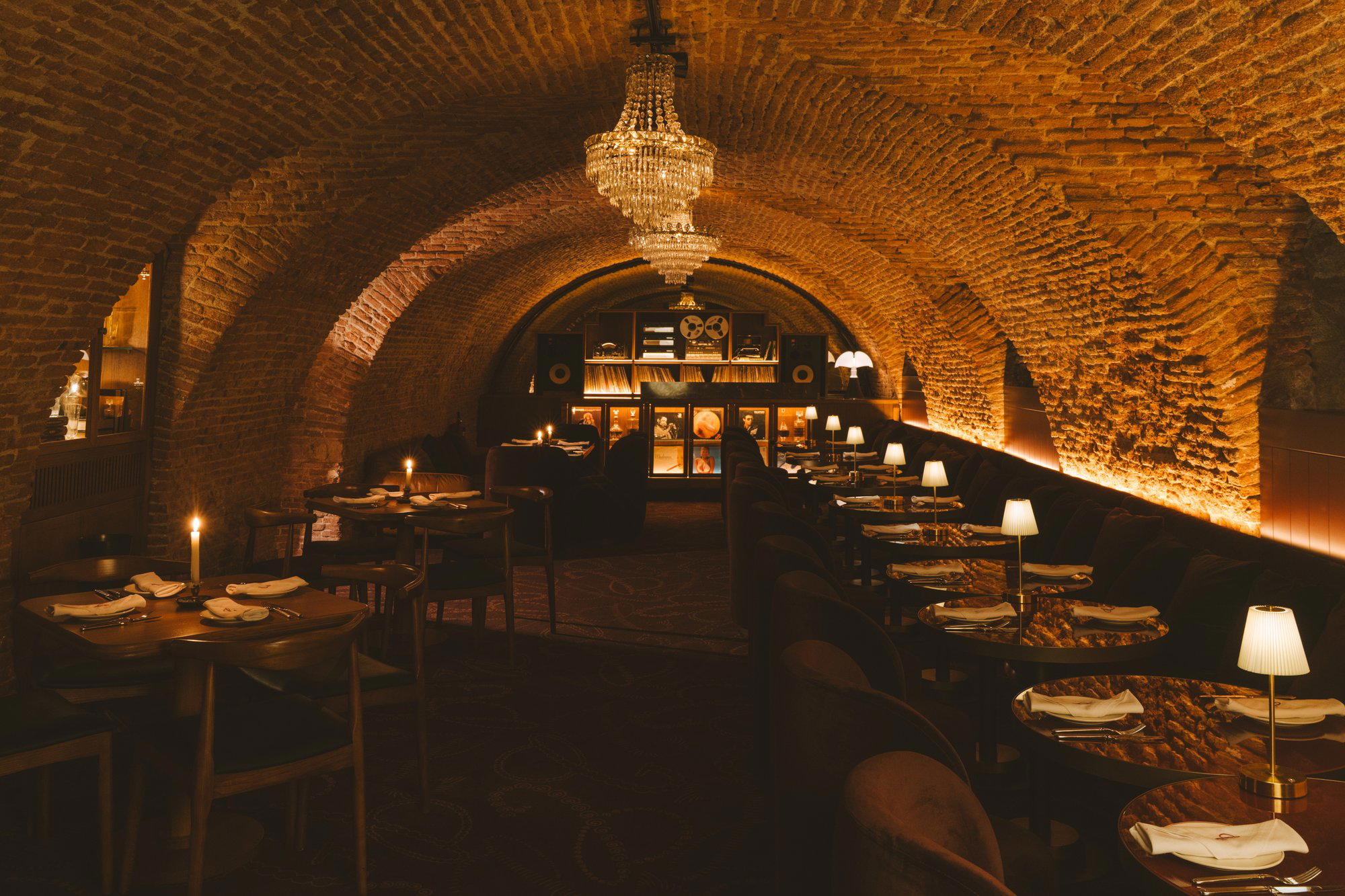
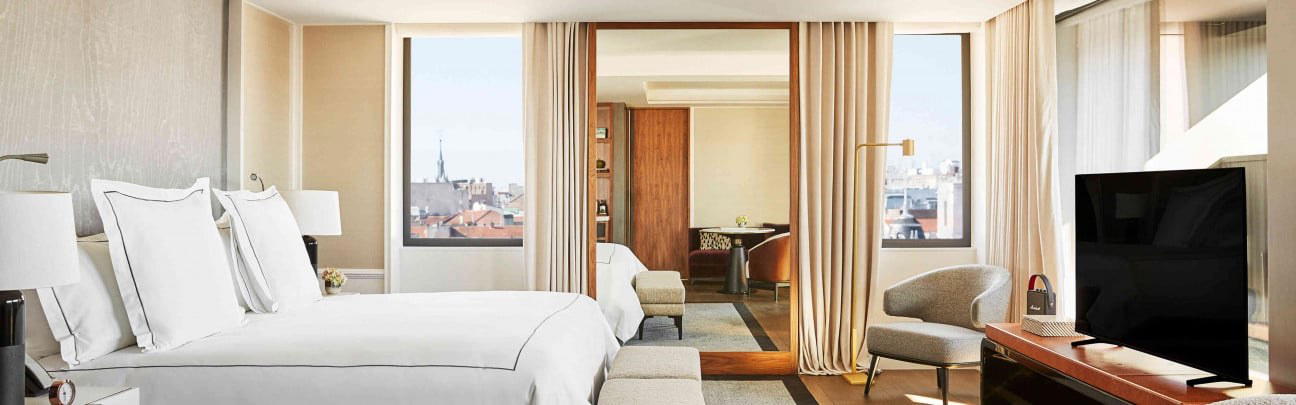
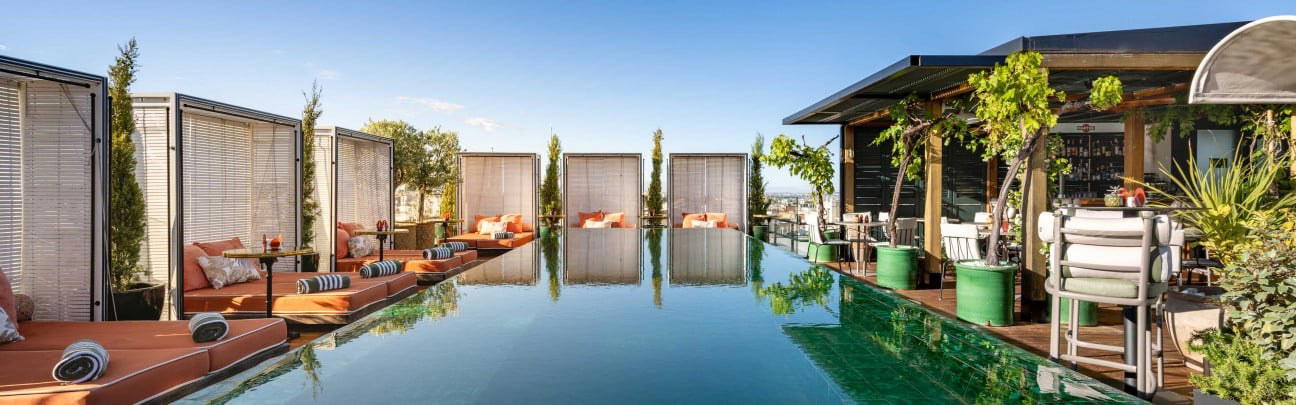
Exclusive and elegant atmosphere with notable panoramic views, sophisticated decor in private rooms, and a high-altitude fine dining experience.