Our verdict
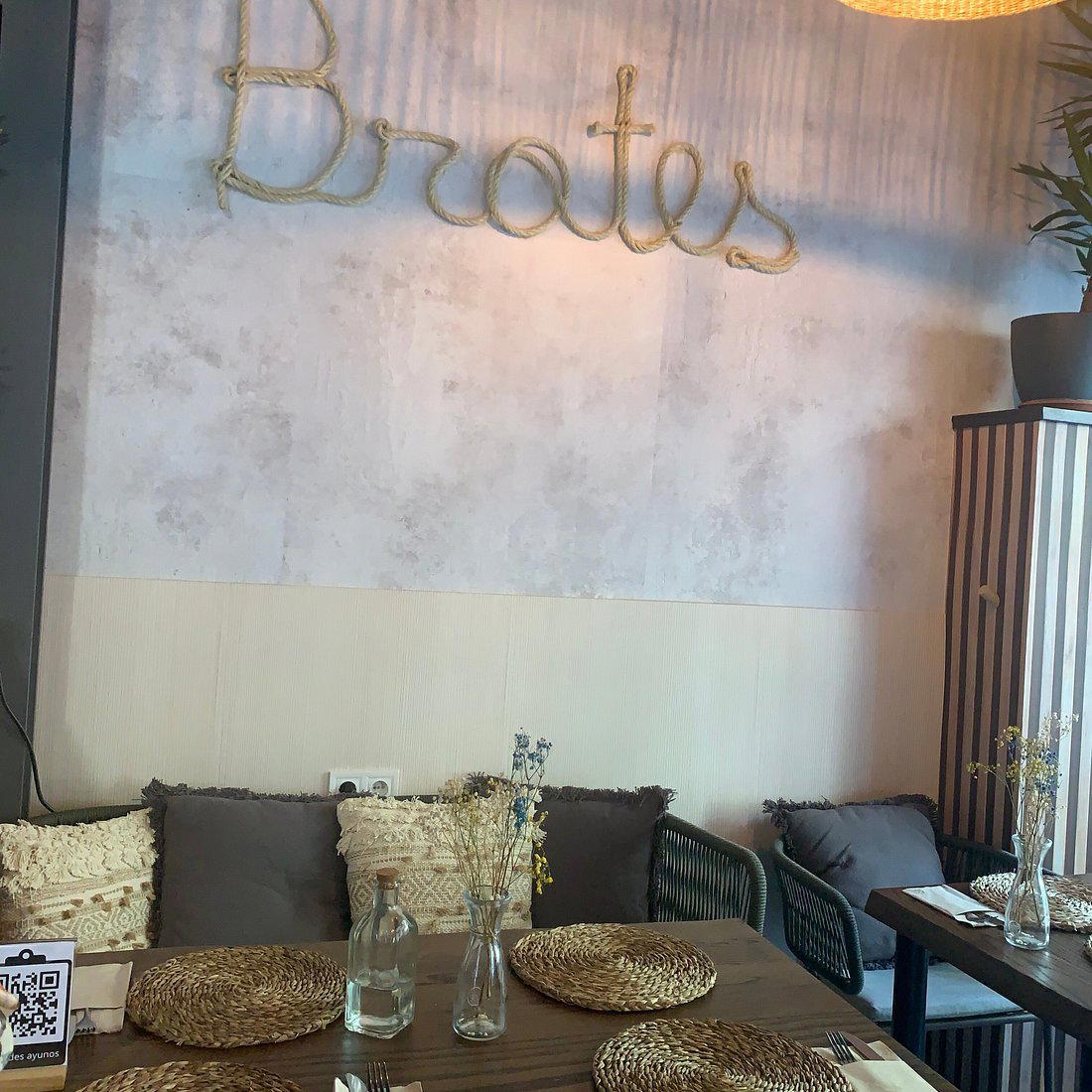
On Calle Velázquez in the Salamanca district, Brotes occupies a corner of Madrid where neighbourhood dining and the city's broader vegetable-forward movement meet. The address places it among some of the capital's most considered mid-to-upper tier tables, where seasonal produce rather than protein drives the menu structure. For visitors tracking Madrid's evolving restaurant culture, it belongs on the research list alongside the capital's more decorated rooms.

Pearl is the En Primeur Club membership app — saves, bookings, and concierge access live there. Same editors, same standards.
- Address
- Calle Velázquez, 120, Salamanca, 28006 Madrid, Spain
- Phone
- +34611585775
- Hours
- Daily 9:30 AM–5 PM
- Website
- brotesmadrid.com
- Directions
- Get directions
- Booking
- Book on TheFork
The menu
What to order
- Ceviche
- Quesadillas
- Artichoke hearts
- Tuna+egg lettuce tacos
Salamanca's Quiet Shift Toward Produce-Led Dining
Calle Velázquez runs through the heart of Madrid's Salamanca district like a spine of well-maintained bourgeois confidence. The neighbourhood has long anchored the city's conventional fine-dining circuit, its broad pavements and late-nineteenth-century residential architecture providing the backdrop for a restaurant culture that, until recently, leaned heavily on classic Spanish roast meats and long wine lists built around Rioja and Ribera del Duero. What has changed in the past decade is the arrival of a secondary current: rooms that place seasonal vegetables, herbs, and lighter preparations at the centre of the plate rather than at its edges. Brotes, situated at number 120 on this same street, belongs to that current.
The name itself is instructive. Brotes translates from Spanish as sprouts or shoots, the young growth at the tip of a plant before it fully develops. In a city where the steakhouse and the cocido madrileño remain cultural anchors, the choice of that word as a restaurant identity signals something deliberate about orientation. It is a small piece of vocabulary that does a lot of editorial work.
Where Brotes Sits in Madrid's Creative Tier
Madrid's restaurant scene has fragmented into increasingly distinct peer sets over the past fifteen years. At the very leading sits a small cluster of tasting-menu rooms that compete internationally: DiverXO, with its three Michelin stars and boundary-dissolving Asian-Spanish synthesis, and Coque, which channels Spanish tradition through a technically ambitious lens. A tier below that you find rooms like Deessa and DSTAgE, both Michelin-starred and both committed to a modern Spanish creative identity that speaks more to seasonal produce and contemporary technique than to classical French structure. Paco Roncero completes the picture of a capital now hosting multiple credible creative tasting formats simultaneously.
Brotes occupies a different register in this map, one defined less by tasting-menu theatre and more by the kind of neighbourhood-embedded, produce-focused cooking that has become a quiet counterweight to the high-concept rooms. The Salamanca address reinforces this reading: the clientele here trends local and repeat rather than destination-driven, which places pressure on consistency and seasonal rotation in ways that a once-a-year pilgrimage restaurant does not face in quite the same way.
The Cultural Roots of Vegetable-Forward Spanish Cooking
To understand what Brotes represents in context, it helps to consider what Spanish cooking looked like before the current generation of chefs began pulling vegetables out of their supporting role. Traditional Castilian cuisine, which dominates the culinary imagination of Madrid, is built around lamb, suckling pig, and slow-cooked legumes. The huerta tradition of eastern and southern Spain, where market gardens have supplied urban kitchens for centuries, was geographically distant from the capital's taste-making restaurants.
The shift began accelerating in the 1990s and early 2000s, when chefs across Spain started looking at the country's extraordinary agricultural diversity as primary material rather than garnish. This is the same intellectual movement that produced the careers of figures now associated with three-Michelin-star addresses across the country: Quique Dacosta in Dénia, whose work with Mediterranean coastal produce redefined what a vegetable course could be; Arzak in San Sebastián, where the integration of Basque garden produce into haute cuisine has been a decades-long project; and Azurmendi in Larrabetzu, where the kitchen's relationship with the surrounding landscape is explicitly programmatic. Martin Berasategui in Lasarte-Oria has similarly built a multi-starred reputation partly on the precision with which he handles seasonal Basque vegetables alongside richer proteins.
Further along the peninsula, Aponiente in El Puerto de Santa María and Ricard Camarena in València have built distinct propositions around the idea that what grows or lives closest to the kitchen should define the menu's structure. Cocina Hermanos Torres in Barcelona, El Celler de Can Roca in Girona, and Mugaritz in Errenteria represent the same current from different regional starting points. Even Atrio in Cáceres integrates Extremaduran seasonal produce into a tasting format of considerable ambition.
What this map shows is that produce-led thinking in Spanish fine dining is no longer a niche provocation. It is a mainstream creative direction, and Brotes on Calle Velázquez is one of the addresses in Madrid where that direction touches the neighbourhood dining register rather than the destination-restaurant tier. Internationally, the same produce-first logic has shaped how rooms like Le Bernardin in New York City approach their primary ingredient (in that case fish rather than vegetables), and how a format like Lazy Bear in San Francisco builds seasonal American produce into a structured tasting experience. The underlying discipline, placing agricultural specificity at the top of the creative hierarchy, is consistent across geographies.
Reading the Salamanca Address
Calle Velázquez 120 sits in the upper stretch of the street, closer to the Avenida del Doctor Arce end than to the Goya metro stop. This places Brotes in a residential pocket of Salamanca that is quieter than the shopping and gallery concentration further south. For visitors using public transport, the nearest metro connections run through the Gregorio Marañón or Nuevas Ministerios nodes on the 6 and 7 lines. The neighbourhood is walkable from the Paseo de la Castellana and accessible by taxi without difficulty from central Madrid.
The Salamanca district's restaurant density means that Brotes operates in a competitive local environment where a reliable, seasonally grounded menu carries more weight than spectacle. Repeat custom in this postcode depends on the kitchen maintaining a clear point of view across seasonal rotations, not just at launch.
Planning a Visit
- Address: Calle Velázquez, 120, Salamanca, 28006 Madrid, Spain
- District: Salamanca, upper Velázquez corridor
- Phone: Not publicly listed at time of publication
- Website: Not publicly listed at time of publication
- Price range: Not confirmed; consistent with Salamanca neighbourhood dining mid-to-upper tier
For a broader picture of where Brotes sits within Madrid's full dining offer, the EP Club Madrid restaurants guide maps the capital's key addresses across price tiers and creative approaches.
Frequently asked questions
Where exactly is Brotes?
Brotes is located at Calle Velázquez, 120, Salamanca, 28006 Madrid, Spain, Madrid.
Is Brotes suitable for guests who eat meat as well as those who prefer vegetable-focused menus?
Brotes operates within the produce-led cooking tradition that has reshaped Madrid's creative dining tier over the past decade, meaning vegetables hold structural prominence on the menu rather than occupying a separate section. The Salamanca address at Calle Velázquez 120 places it in a neighbourhood where mixed-table dining is the norm, so guests with differing preferences should confirm the current format directly with the restaurant.
What dish is Brotes famous for?
Brotes has built its reputation around produce-led cooking in Madrid's Salamanca district, where the menu foregrounds vegetables as the primary subject rather than a supporting element. No single signature dish is documented publicly, but the kitchen's focus on seasonal, plant-centred preparation is the consistent thread that draws the room. Given the Calle Velázquez 120 address and the neighbourhood's traditionally meat-heavy dining culture, that positioning is itself the statement.
Do they take walk-ins at Brotes?
No confirmed walk-in policy is published for Brotes at Calle Velázquez 120, and the Salamanca dining tier it occupies generally runs on reservations. Arriving without a booking on a weekend evening carries real risk at tables of this calibre in Madrid. Contacting the venue directly before visiting is the practical approach.
A Minimal comparable set
Comparable venues nearby, for context on price, style, and recognition.
| Venue | Cuisine | Price | Awards | Notes |
|---|---|---|---|---|
| BrotesThis venue — the venue you are viewing | Healthy Spanish Fusion | $20–30 | Not listed | Not listed |
| Ramón Freixa Tradición | Traditional Spanish Cuisine | $100–150 | Guía Repsol 1 Sol · Macarfi 7.9 Food Rating | Recoletos, Traditional Spanish Cuisine |
| KultO | Modern Spanish Tapas with Andalusian Flair | Not listed | Macarfi 7.3 Food Rating | Ibiza, Modern Spanish Tapas with Andalusian Flair |
| St. James Juan Bravo | Valencian Rice and Paella Specialist | $50–100 | Macarfi 6.6 Food Rating | Castellana, Valencian Rice and Paella Specialist |
| Castizo Canalejas | Classic Spanish Tapas | $30–50 | Not listed | Sol, Classic Spanish Tapas |
| Balear | Contemporary Mediterranean and Balearic Rice Dishes | $50–100 | Macarfi 7.3 Food Rating | Valdebebas, Balearic-Inspired Spanish Rice Dishes |