
Nagoya’s serious Japanese dining often sits between kappo precision and izakaya ease, and Link belongs to that middle register: fish-led cooking, sake attention, and a room small enough for service to matter. Its selection for Tabelog Japanese cuisine EAST “Tabelog 100” in 2021, 2023, and 2025 gives it a clear credential within the city’s competitive Japanese restaurant tier.
Pearl is the En Primeur Club membership app — saves, bookings, and concierge access live there. Same editors, same standards.
- Address
- Japan, 〒460-0011 Aichi, Nagoya, Naka Ward, Osu, 4 Chome−6−15 荘苑南久屋 202
- Phone
- +81 52-251-3850
- Website
- link33sake.link
 Saves & bookings on Pearl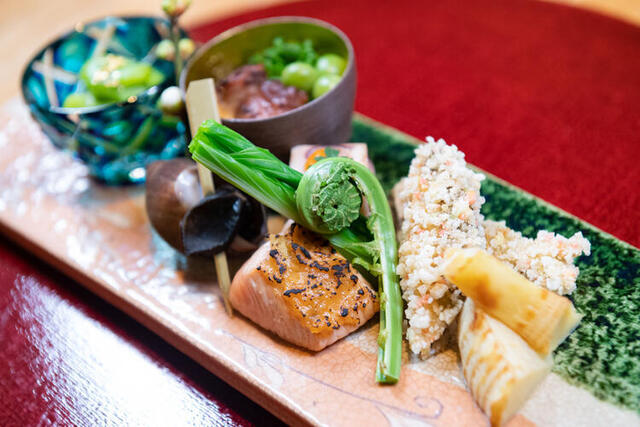
Osu changes character quickly: temple approaches, shopping arcades, second-floor rooms, and small dining addresses that do not announce themselves in the manner of hotel restaurants or Ginza counters. That context matters here. The appeal is not spectacle, but coordination: a compact Japanese restaurant where fish, sake, and table pacing have to work as a single system rather than as separate acts.
Nagoya’s dining reputation is often reduced outside Japan to miso katsu, hitsumabushi, and kishimen. That shorthand misses a quieter tier of Japanese restaurants that behave more like kappo-izakaya hybrids: polished enough for a planned dinner, relaxed enough to allow sake and conversation to lead the evening. Our full Nagoya restaurants guide gives the broader city frame, but Link is better understood through this middle register than through luxury tasting-menu language.
Fish-led Japanese cooking with sake as part of the structure
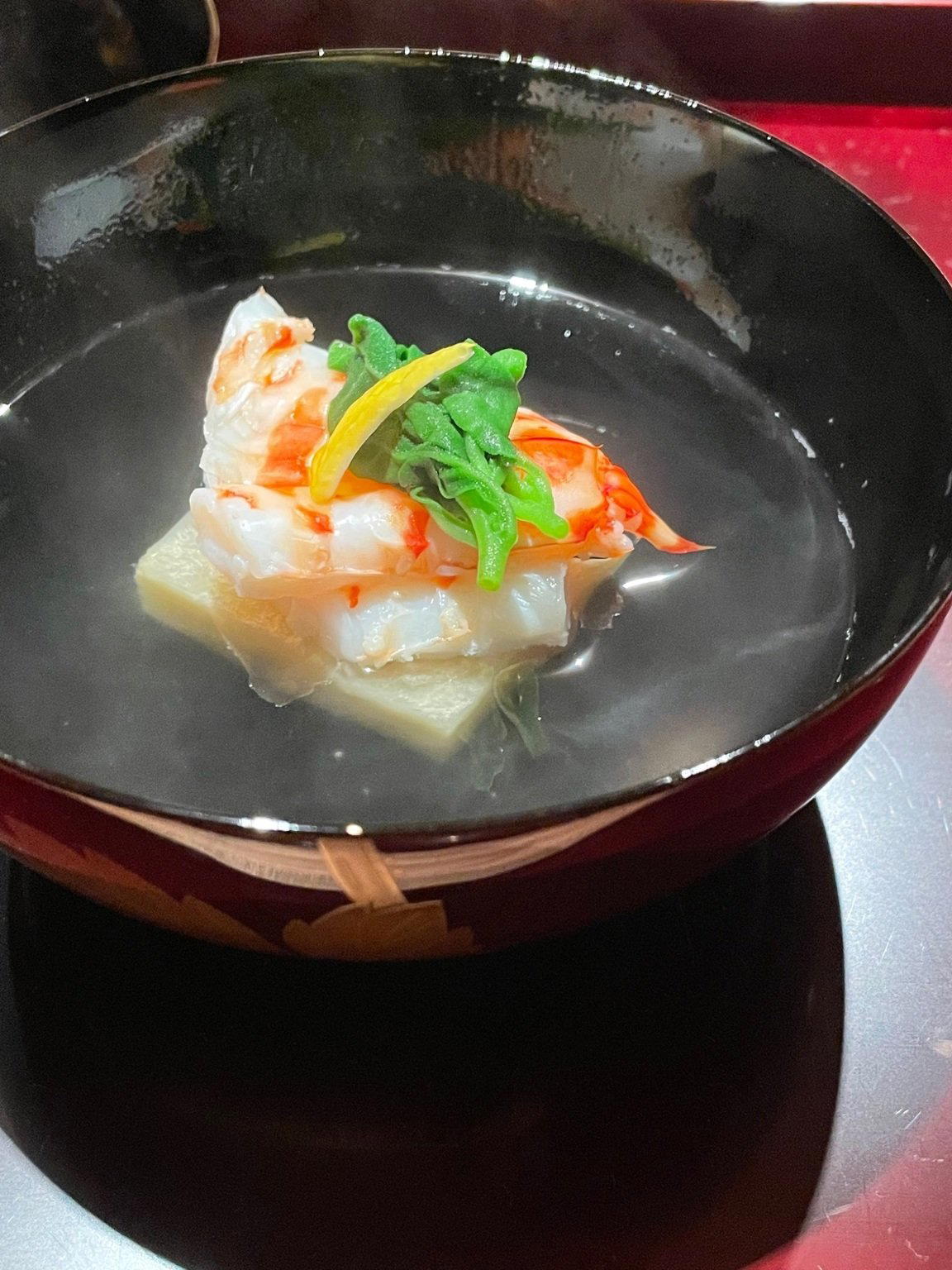
The kitchen’s public positioning is precise: Japanese cuisine and izakaya, with particular attention to fish and sake. That combination tells an experienced diner more than a long menu description would. In Japan, fish-focused cooking at this level depends less on a single named dish than on procurement, cutting, seasoning, temperature, and how the drinking sequence is handled. Sake is not an accessory in this format; it shapes the rhythm of the meal.
The stronger signal is recognition. Link was selected for Tabelog Japanese cuisine EAST “Tabelog 100” in 2021, 2023, and 2025, and carries a Tabelog score of 3.64. For Nagoya, that places it in a credible bracket of Japanese restaurants with sustained local diner validation rather than a one-season publicity spike. It also separates the address from casual izakaya browsing. This is the sort of room where the front-of-house role matters: explaining sake, spacing courses, and keeping a small dining room from feeling either rushed or inert.
Team dynamic is the point. In fish-led Japanese dining, the chef’s work can be undermined by a weak drinks program, and a strong sake list can feel ornamental if the kitchen lacks restraint. Link’s listed focus on sake, shochu, wine, and fish suggests a collaborative model rather than a chef-as-soloist format. That matters for travelers because it changes expectations: the meal is likely to reward ordering with the room’s rhythm, not treating the restaurant as a checklist of famous plates.
Within Nagoya’s peer group, the positioning is also useful. Siculamente sits in a similar dinner spend band, while Japan no Italian Ryori Ten sai occupies a higher Italian bracket; La Peche and Masaka are more moderate comparisons, and Bistrot L'Ampoule signals a lower-priced dining lane. Against that spread, Link reads as a Japanese specialist rather than a general-purpose dinner choice. The value is not in novelty; it is in choosing a restaurant whose format is built around fish, sake, and service concentration.
A small-room format in Osu, not a trophy dining room
The room is compact, with 23 seats divided between 6 counter seats and 17 table seats. That split is telling. Counter seats suit diners who want proximity to the kitchen’s cadence, while tables and private rooms make the restaurant viable for small groups, business dinners, and celebrations. Private rooms are listed for parties of 2, 4, 6, and 8, and private use is available for up to 20 people, so the venue has more range than its small footprint suggests.
Osu and Kamimaezu are practical dining neighborhoods, not just sightseeing districts. The area sits outside Nagoya Station’s corporate-hotel orbit and away from Sakae’s more obvious nightlife geography, which changes the mood of the evening. A meal here suits travelers already exploring central Nagoya’s older commercial fabric, as well as local diners who want a Japanese restaurant with recognition but without the formality of a grand dining room.
The no-smoking policy indoors, with smoking allowed on the terrace, is another useful signal for international diners. Payment is conventional for Japan’s serious mid-to-upper dining tier, with major credit cards accepted and electronic money or QR code payments not accepted. Parking is not attached, with coin parking nearby. Those details do not define the restaurant, but they define the friction around the meal.
For a wider Nagoya itinerary, the address pairs naturally with city planning beyond dinner. Our full Nagoya hotels guide is useful for choosing where to base yourself, while Our full Nagoya bars guide, Our full Nagoya wineries guide, and Our full Nagoya experiences guide help separate Nagoya as a stopover from Nagoya as a deliberate stay.
How to read the restaurant before choosing it
Link makes the clearest case for diners who want Japanese cooking with a drinks-aware service team, rather than a theatrical counter or a broad casual izakaya. The restaurant’s repeated Tabelog 100 selections indicate consistency across several cycles, and the 23-seat format means the experience depends heavily on pacing and staff attention. That is a strength when the room is working well; it also means the choice is less suited to diners looking for a loud, last-minute group meal.
Vegetarians should treat this as a fish-focused Japanese restaurant and plan with care. The public food emphasis is fish, and Japanese cuisine at this level often uses seafood-based stocks and seasonings even when a dish looks vegetable-led. Families should also plan deliberately, as the restaurant asks guests with children to contact the store first.
Travelers comparing Nagoya dining options should not force Link into the same category as Italian specialists, bistros, or station-area convenience restaurants. Its lane is narrower and more Japanese: fish, sake, compact service, and local recognition. For nearby and broader reading across EP Club, compare city and Japan dining notes through 1022, 451, Aaron, Alan., All Day Dining Montmartre, -Grilled beef Sukiyaki- KAMAKURA TANUKIAN 鎌倉 たぬき庵 in Kamakura. 鮪と炭火焼き うお炭 秋葉原店 in Tokyo.cafe in Osaka.know in Kumamoto, (Shoku) Vietnam in Kawasaki, [Curry Senmon Ten] Maruyama Kyoju. in Sapporo, Jōdo Saké Bar in Los Angeles, and Onigiri Time in Pasadena.
The Essentials
Comparable venues by category and price.
| Venue | Cuisine | Price | Notes |
|---|---|---|---|
| LinkThis venue — the venue you are viewing | Naka, Japanese Sake Bar & Izakaya | $$ | Not listed |
| Ronin | Higashi, Japanese Kappo | $$ | Not listed |
| Tori Yakiniku Toriichi Sakae joshidai ten | Naka, Chicken yakiniku & izakaya | $$ | Not listed |
| Kiwami | Nakamura, Standing Edomae Sushi Bar | $$ | Not listed |
| Taniya | Nishi, Handmade Soba & Izakaya | $$ | Not listed |
| 右江田 | Not listed | $$ | Nakagawa, Nagoya-style Unagi Hitsumabushi |
Recognition history
Dated appearances from independent guides and award organizations, with the underlying list record or original source where available.
Tabelog 100 #13 · No. 13
Tabelog · Tabelog 100 - Japanese cuisine - EAST - 2025
Continue exploring
More in Nagoya
Restaurants in Nagoya
Browse all →
At a Glance
- Cozy
- Quiet
- After Work
- Casual Hangout
- Solo
- Date Night
- Standalone
- Chefs Counter
- Sake Program
Current opening hours
- Monday
- 6–10:30 PM
- Tuesday
- 6–10:30 PM
- Wednesday
- 11:30 AM–2 PM, 6–10:30 PM
- Thursday
- 11:30 AM–2 PM, 6–10:30 PM
- Friday
- 11:30 AM–2 PM, 6–10:30 PM
- Saturday
- 11:30 AM–2 PM, 6–10:30 PM
- Sunday
- Closed
Hours can change for holidays and private events. Last verified .
Small, softly lit dining room with a calm, low-noise atmosphere centered on the sake counter, creating a relaxed, intimate feel rather than a lively izakaya vibe.