
A small Tokugawacho French address with a fish-led, French-and-innovative brief, LE PIGNON belongs to Nagoya’s quieter serious-dining tier rather than the station-side spectacle circuit. Tabelog selected it for French EAST 100 in 2021, 2023, and 2025, and the room’s 15-seat scale explains much of its regular-client appeal.
Pearl is the En Primeur Club membership app — saves, bookings, and concierge access live there. Same editors, same standards.
- Address
- Japan, 〒461-0023 Aichi, Nagoya, Higashi Ward, Tokugawacho, 2406-1 Le pignon
- Phone
- +81 52-710-8877
- Website
- le-pignon-tokugawa.com
 Saves & bookings on Pearl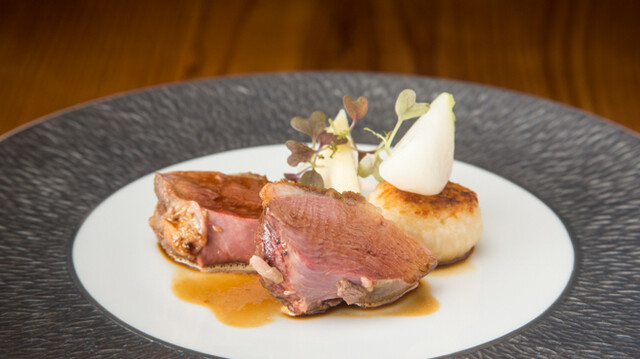
Tokugawacho changes the tempo before dinner begins. East of Nagoya’s denser commercial core, the approach feels residential and composed, closer to garden-city quiet than station-front appetite. That matters for a French restaurant here: the meal is framed less as theatre and more as a return ritual, the kind of place regulars remember by season, seat, and pacing rather than by a single trophy dish.
Nagoya’s serious dining scene often gets flattened between two clichés: miso-katsu comfort and high-budget kaiseki formality. The better reading is more layered. The city has a deep appetite for small, technically disciplined rooms that borrow from French structure while staying alert to Japanese produce and local habits of hospitality. LE PIGNON sits in that band, classified as French and Innovative, with a stated emphasis on fish. That combination gives the restaurant its editorial interest: not imported Parisian ceremony, but a Nagoya interpretation of French cooking in a compact, repeatable format.
Fish-led French cooking for a loyal Nagoya audience
The regulars’ perspective is useful here because this style of restaurant rewards continuity. A fish-led French kitchen depends on timing, sourcing, and restraint; the pleasure is not only in novelty but in seeing how a familiar framework changes across the year. In Japan, French cuisine has long been absorbed through local precision: sauces and courses remain part of the grammar, but portioning, texture, and seasonality often speak with a lighter accent than old-school hotel dining.
That is the register LE PIGNON occupies. Its selection for Tabelog French EAST 100 in 2021, 2023, and 2025 places it among restaurants recognised for French cooking across eastern Japan, a useful signal in a category where Michelin coverage alone never tells the full regional story. The Tabelog score of 3.76 also indicates a venue with sustained diner approval rather than passing attention. In a city with fewer international headlines than Tokyo or Kyoto, those repeated domestic signals carry weight.
The competitive set around Tokugawacho also sharpens the point. Tokugawa Cho Buta Fuku and Seigetsu sit in a more casual local price band, while Garden Restaurant Tokugawaen operates at a similar spend level nearby. Myoan and Kojitsu point toward the higher Japanese-cuisine bracket. LE PIGNON’s appeal is different: small-room French technique in a neighbourhood where the decision is often about occasion, familiarity, and mood rather than trend-chasing.
The strongest fit is the diner who prefers controlled scale to spectacle. Counter seating is available, private rooms are not, and the restaurant’s size keeps the experience close to the kitchen’s rhythm. That scale also explains why repeat guests matter. In a 15-seat room, familiarity is not a soft virtue; it shapes pacing, portion expectations, wine choices, and the unwritten sense of how the evening should move.
Tokugawacho's quieter luxury is the point
Luxury dining in Nagoya does not always announce itself with height, gloss, or hotel-lobby formality. Around Tokugawacho, the cultural reference is more domestic: houses, gardens, older residential streets, and a slower civic rhythm. A house-restaurant setting suits that mood. It makes the French format feel less ceremonial, closer to a private dinner with professional discipline behind it.
This is also where the restaurant separates itself from the city’s broader destination-dining conversation. Nagoya Station and Sakae handle much of the business-dinner traffic; Tokugawacho asks for a more deliberate choice. The neighbourhood is not a default stop for travellers moving between Shinkansen platforms and hotel check-ins. That relative remove gives the meal a clearer identity: a small French address for people who are already willing to cross town for a specific kind of room.
The wine-and-cocktail listing is another clue to its register. This is not a bar-forward restaurant, but drinks are part of the full evening rather than an afterthought. The service language also points toward birthdays, family meals, and small celebrations, which is consistent with Nagoya’s preference for polished but personal dining. School-age children are welcomed, an unusual and useful distinction in this tier, and one that says something about the regular base: this is serious dining that can function inside family life, not only anniversary performance.
There is no need to overstate the chef narrative when the stronger story is civic. Nagoya has enough restaurants built around personality; the better local addresses often endure because they become part of a private calendar. A repeat customer may not describe the restaurant in manifesto terms. They are more likely to know when to return, which seat they prefer, and why fish handled through a French lens feels right in this room.
How to place it within a Nagoya itinerary
For travellers building a Nagoya dining map, the restaurant works as a counterweight to the city’s louder food traditions. It does not replace hitsumabushi, kishimen, or miso-based cooking; it shows another side of the city’s appetite, the part that values French structure, small capacity, and repeat recognition from Japanese diners. Pair it with a broader look at Our full Nagoya restaurants guide, then decide whether the trip needs the neighbourhood calm of Tokugawacho or a more central night.
Readers comparing categories can widen the lens through Our full Nagoya hotels guide, Our full Nagoya bars guide, Our full Nagoya wineries guide, and Our full Nagoya experiences guide. For other restaurant pages in and beyond the city, see 1022, 451, Aaron, Alan., and All Day Dining Montmartre.
For a wider Japan and overseas dining index, compare the different editorial signals at -Grilled beef Sukiyaki- KAMAKURA TANUKIAN 鎌倉 たぬき庵 in Kamakura. 鮪と炭火焼き うお炭 秋葉原店 in Tokyo.cafe in Osaka.know in Kumamoto, (Shoku) Vietnam in Kawasaki, [Curry Senmon Ten] Maruyama Kyoju. in Sapporo, Jōdo Saké Bar in Los Angeles, and Onigiri Time in Pasadena.
Awards and Standing
Comparable venues by cuisine and category.
| Venue | Cuisine | Price | Notes |
|---|---|---|---|
| LE PIGNONThis venue — the venue you are viewing | Seasonal French fine dining in a traditional Japanese courtyard house | $$$ | Not listed |
| restaurant.m | Modern French | $$$ | Naka |
| ラ・ドゥ―ル | French Restaurant | $$$ | Chikusa |
| Bistrot L'Ampoule | Seasonal French Bistrot with Natural Wine | $$$ | Naka |
| ビストロ ラヴィ | French Bistro | $$$ | Chikusa |
| マスドラヴァンド | Classic French Fine Dining | $$$ | Higashi |
Recognition history
Dated appearances from independent guides and award organizations, with the underlying list record or original source where available.
Tabelog 100 #23 · No. 23
Tabelog · Tabelog 100 - French - EAST - 2025
Continue exploring
More in Nagoya
Restaurants in Nagoya
Browse all →
At a Glance
- Elegant
- Romantic
- Cozy
- Sophisticated
- Date Night
- Special Occasion
- Business Dinner
- Group Dining
- Private Event
- Garden
- Wine Cellar
- Design Destination
- Standalone
- Private Dining
- Extensive Wine List
- Sommelier Led
- Local Sourcing
- Farm To Table
- Garden
Current opening hours
- Monday
- 12–1 PM, 6–7 PM
- Tuesday
- 12–1 PM, 6–7 PM
- Wednesday
- Closed
- Thursday
- Closed
- Friday
- 12–1 PM, 6–7 PM
- Saturday
- 12–1 PM, 6–7 PM
- Sunday
- Closed
Hours can change for holidays and private events. Last verified .
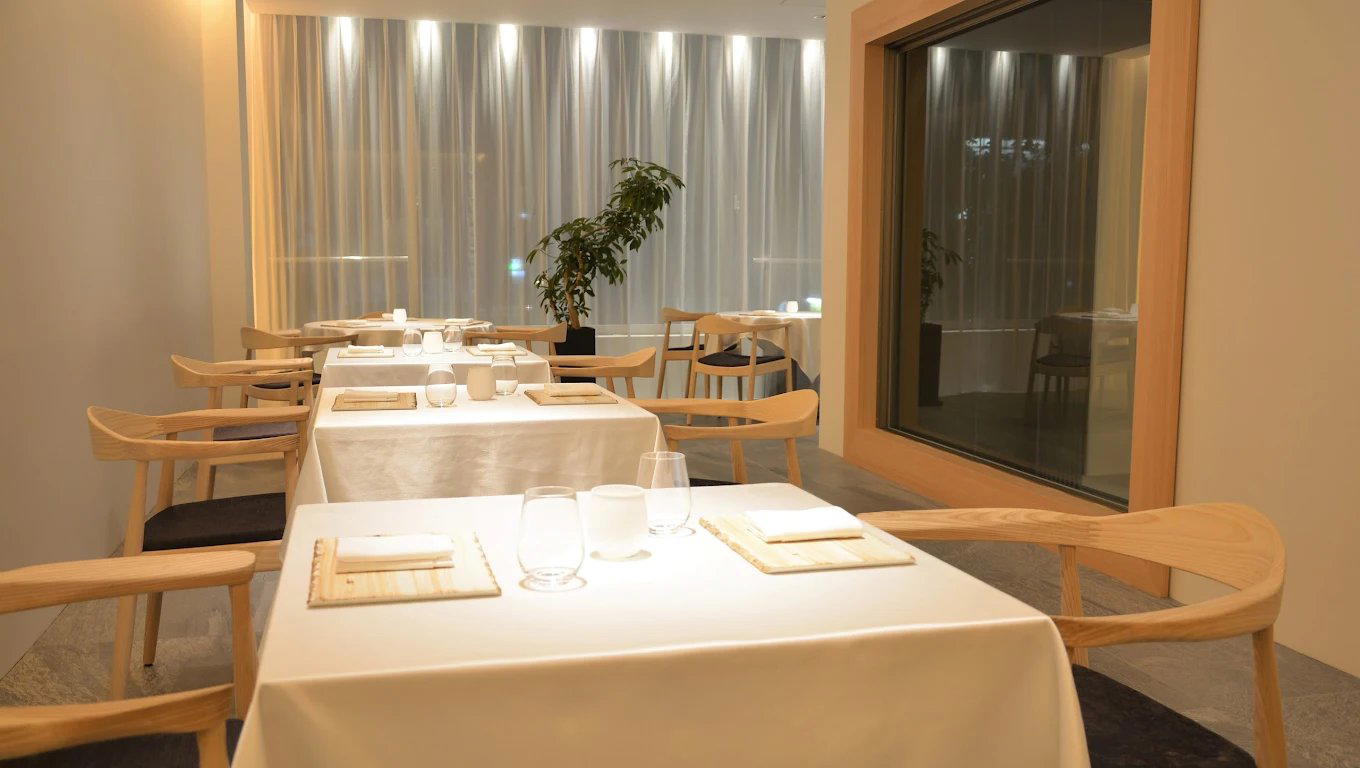
The restaurant offers a serene and intimate atmosphere in an old-fashioned Japanese courtyard house, combining understated Japanese architecture with elegant French fine-dining; lighting is soft and warm, creating a quiet, romantic mood that suits special occasions and relaxed, lingering meals.