
1 Michelin Star
Our verdict
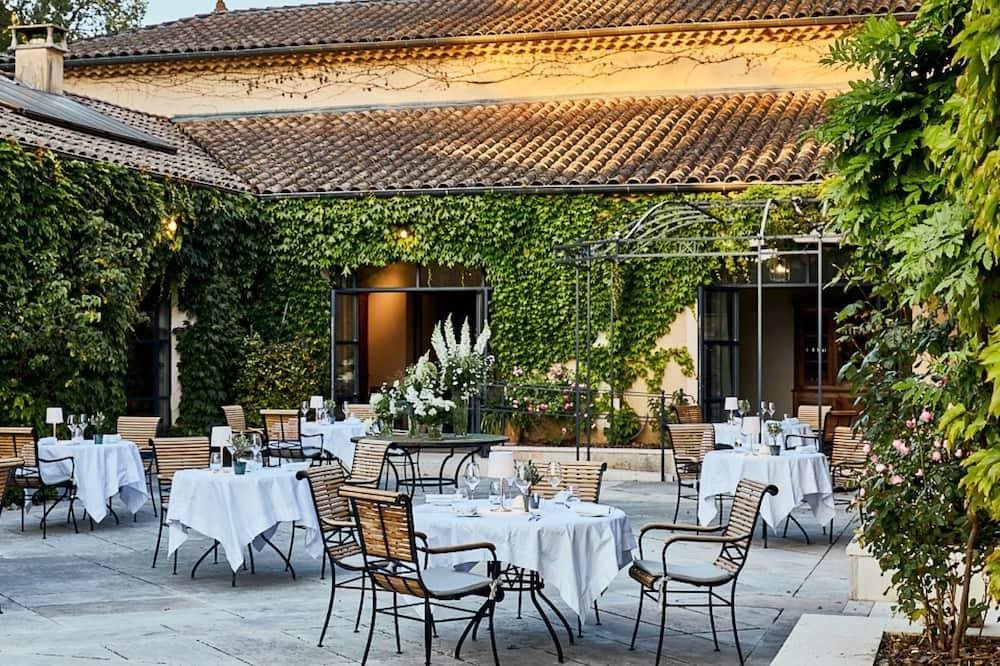
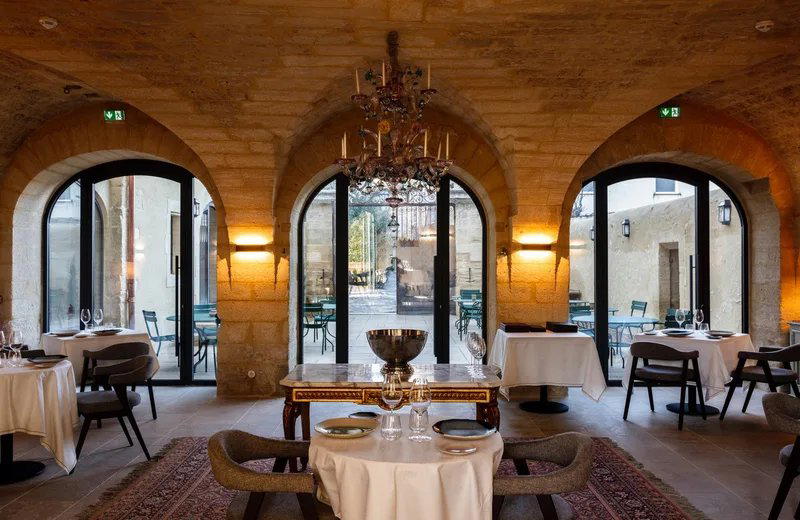
Le Cèdre de Montcaud earned its first Michelin star in 2025 under chef Matthieu Hervé, whose surprise set menu brings coastal and inland Languedoc-Roussillon produce into a courtyard setting that seats just six or seven tables. The format is intimate by design: no à la carte, no large groups, no noise. Expect dishes built around precise sourcing — blue crab, langoustine, John Dory, veal — framed by sauces of genuine technical ambition.

Pearl is the En Primeur Club membership app — saves, bookings, and concierge access live there. Same editors, same standards.
- Address
- Château de Montcaud, 30200 Sabran, France
- Phone
- +33 4 66 33 20 15
- Website
- chateaudemontcaud.com
- Directions
- Get directions
The menu
What to order
- Sole with girolles
- Veal in herb crust
- Langoustine consommé
A Courtyard, a Château, and What the Gard Grows
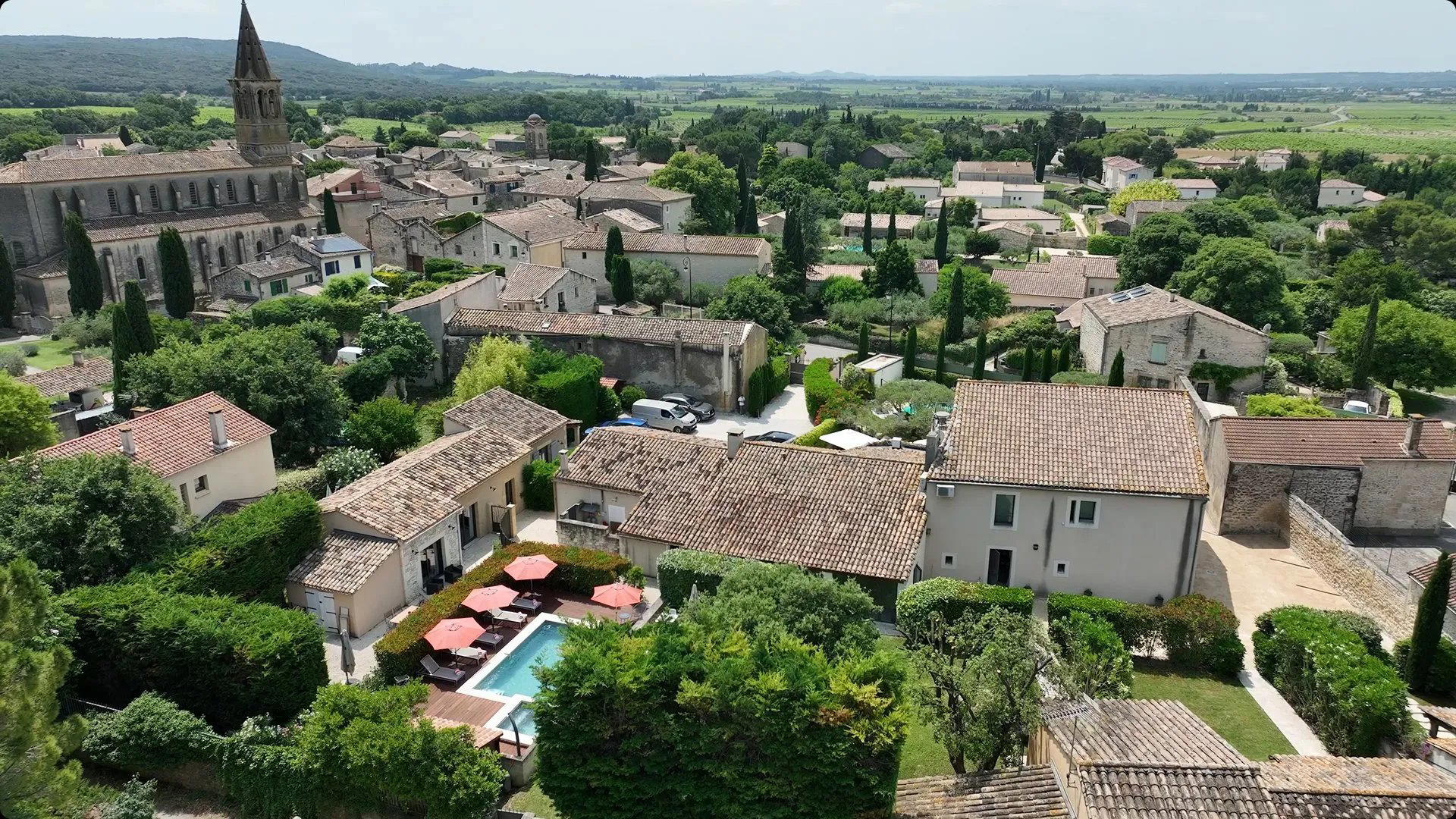
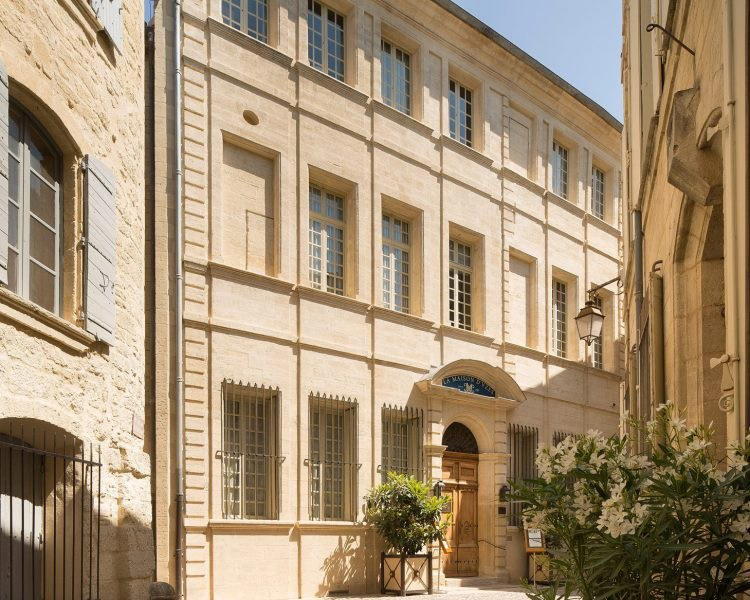
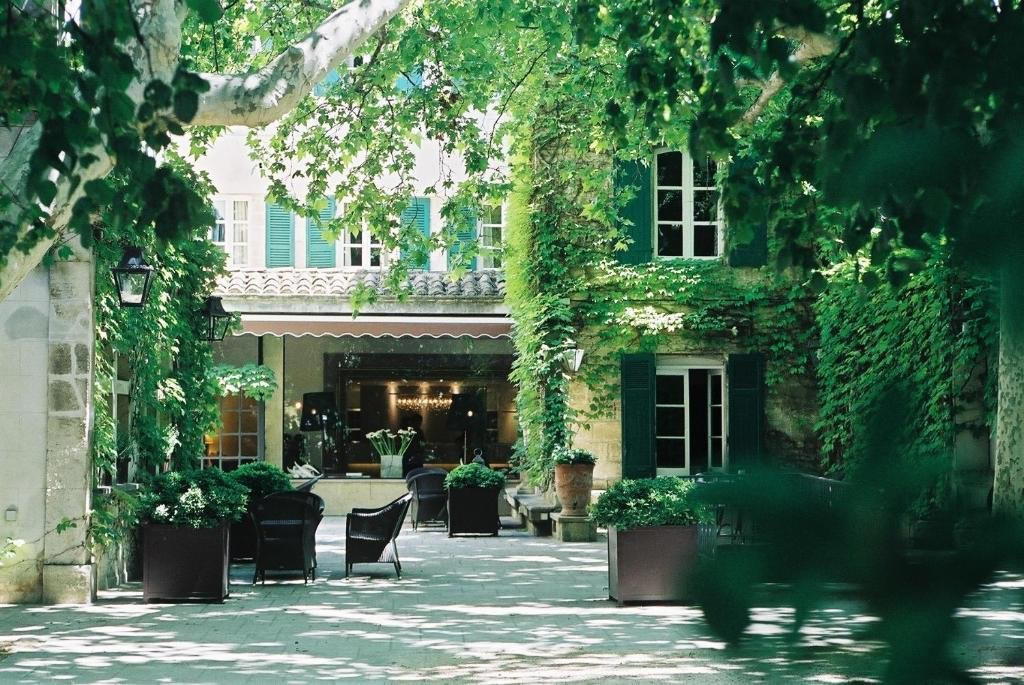
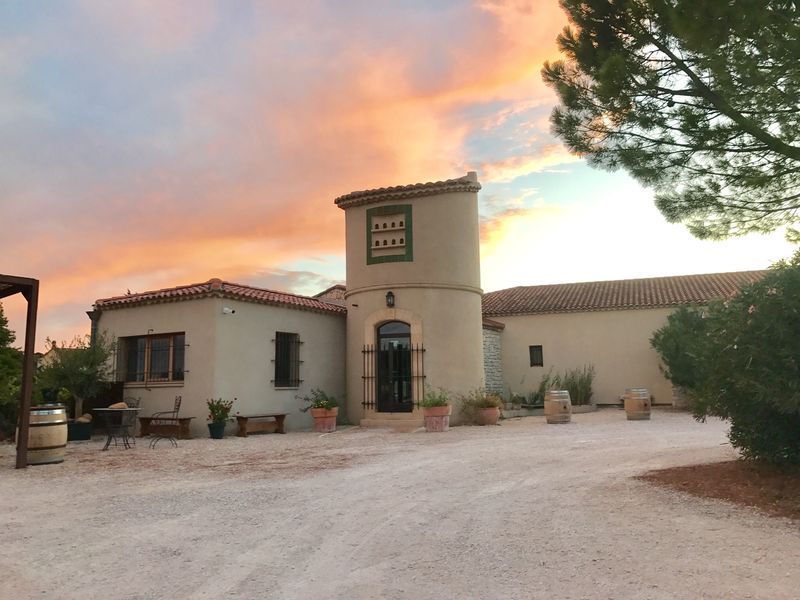
The southern Rhône valley has a long tradition of château dining that ranges from grand-hotel formality to the kind of small, serious restaurant that could exist anywhere in France but happens to be housed behind old stone walls. Le Cèdre de Montcaud sits firmly in the second camp. The restaurant operates from the courtyard of Château de Montcaud in Sabran, a village in the Gard département roughly equidistant between Avignon and Alès. Virginia creeper covers the walls, the tables number six or seven at most, and the format is a surprise menu with no alternatives. In 2025, the Michelin Guide awarded the room its first star — recognition that carries particular weight in a region not short of competition from larger, better-resourced operations.
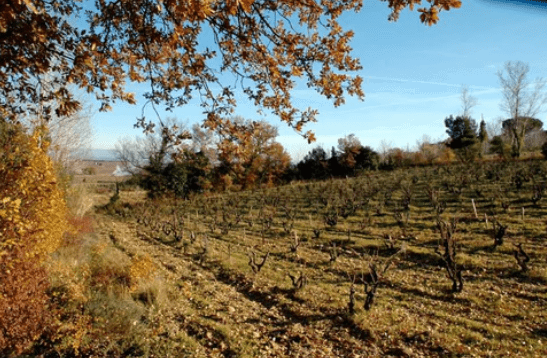
The physical scale matters because it shapes everything that follows on the plate. With fewer than thirty covers per service, the kitchen can source in quantities that a larger operation would find uneconomical: a single landing of blue crab, a specific supplier's langoustines, a local veal that suits a particular herb crust. The intimacy of the Gard garrigue — where wild thyme, fennel, and rosemary grow close to lavender fields and the Cèze river valley, creates a pantry of aromatic raw materials that inform the cooking without reducing it to a regional-curiosity act.
The Logic of the Surprise Menu
Across France, the all-in surprise format has become a tool of differentiation for restaurants that want to prioritise ingredient quality over customer choice. When a chef commits to a single daily sequence, purchasing decisions respond to the market that morning rather than a fixed menu printed two weeks in advance. At Le Cèdre de Montcaud, the menu reads as a succession of courses that move through textures and temperatures: jellied langoustine consommé, a romesco-sauced John Dory accompanied by rock fish soup, and a herb-crusted veal fillet with chanterelle cream and hay espuma. The Michelin notation specifically calls out the sauces as a distinguishing quality, a detail worth noting, because classical French sauce-making is the discipline most likely to separate trained kitchens from technically competent but less rigorous ones.
Chef Matthieu Hervé brings international kitchen experience to a room that could easily become overly regional in its ambitions. The combination matters: international training instils a comparative awareness of technique and sourcing philosophy that purely local formation sometimes lacks, while the Gard setting grounds that knowledge in specific terroir rather than allowing it to become generically cosmopolitan. The result, according to the Michelin assessment, is a menu that reads as genuinely of its place, the rock fish soup described as "bursting with sunshine", without being nostalgically folkloric about it. For context on the modern French fine dining register Hervé is working within, the approaches at Alléno Paris au Pavillon Ledoyen in Paris and AM par Alexandre Mazzia in Marseille illustrate how differently Michelin-recognised chefs in the same price tier can interpret the same national tradition.
Sourcing in the Languedoc-Gard Corridor
The editorial angle that clarifies what Le Cèdre de Montcaud is doing most distinctively is ingredient sourcing. The Gard sits at a confluence of supply chains that more famous restaurant addresses, Paris, Lyon, the Côte d'Azur, have to work harder to access. The Mediterranean is close enough for day-boat seafood to arrive in condition; the garrigue and the Cévennes foothills supply foraged aromatics and high-pasture meat; the Rhône valley's market garden culture means seasonal vegetables arrive at a standard that supermarket-dependent kitchens rarely see. Blue crab from the Languedoc littoral, langoustines from waters close enough to justify the consommé treatment, John Dory handled with enough confidence to pair against the intensity of a romesco and rock fish soup, these are sourcing decisions as much as culinary ones.
The hay espuma that accompanies the veal is a further signal. Hay-based preparations require a specific provenance, the scent and flavour vary significantly with the pastoral environment, and their appearance on a fine dining menu in the Gard is less a technique borrowed from Nordic or Catalonian modernism than a logical extension of what grows here. The chanterelle cream alongside it fits the same logic: chanterelles in this part of France have a season that the kitchen is evidently tracking rather than substituting with imported alternatives. This sourcing discipline, applied at the six-to-seven-table scale, is what differentiates the room from larger château hotel restaurants in the same region that can afford to be less exacting about provenance.
For a broader sense of how French regional kitchens across different climates handle their specific terroir, the approaches at Bras in Laguiole and Flocons de Sel in Megève each represent distinct models: the Aubrac plateau as larder, the Alpine valley as larder. Le Cèdre de Montcaud operates on a similar philosophy applied to the garrigue and the Languedoc coast.
Positioning in the French Fine Dining Field
A single Michelin star in 2025 places Le Cèdre de Montcaud within a large cohort of French kitchens earning first recognition, but its specific context makes that star more legible than the number alone suggests. The Gard is not a département with a long roster of starred addresses. Earning first-star recognition here, rather than in a city or a well-trodden gastronomic corridor, implies the inspectors found something worth the journey, which, from Avignon or Nîmes, is not negligible.
For comparison within the French constellation, Mirazur in Menton and Troisgros - Le Bois sans Feuilles in Ouches each represent the upper end of what happens when a regional French restaurant builds over decades, useful to understand the trajectory that first-star addresses in strong terroir sometimes follow. Older institutions like Auberge de l'Ill in Illhaeusern and Paul Bocuse - L'Auberge du Pont de Collonges in Collonges-au-Mont-d'Or frame how deeply embedded the château-and-garden format is in the French fine dining imagination. The newer generation, including Assiette Champenoise in Reims and Au Crocodile in Strasbourg, shows how regional addresses outside Paris continue to accumulate recognition. Internationally, Frantzén in Stockholm and FZN by Björn Frantzén in Dubai represent the model of taking a precise, small-format approach to global markets, a different trajectory from the château-rooted one, but a useful peer comparison for format discipline.
The Bistro de Montcaud, the château's more casual address, provides a lower price-point entry to the estate's cooking philosophy. Bistro de Montcaud (Traditional Cuisine) operates in a different register but shares the same sourcing geography, which makes a two-dinner stay at the château a coherent way to compare what the kitchen does at different levels of formality.
Planning a Visit
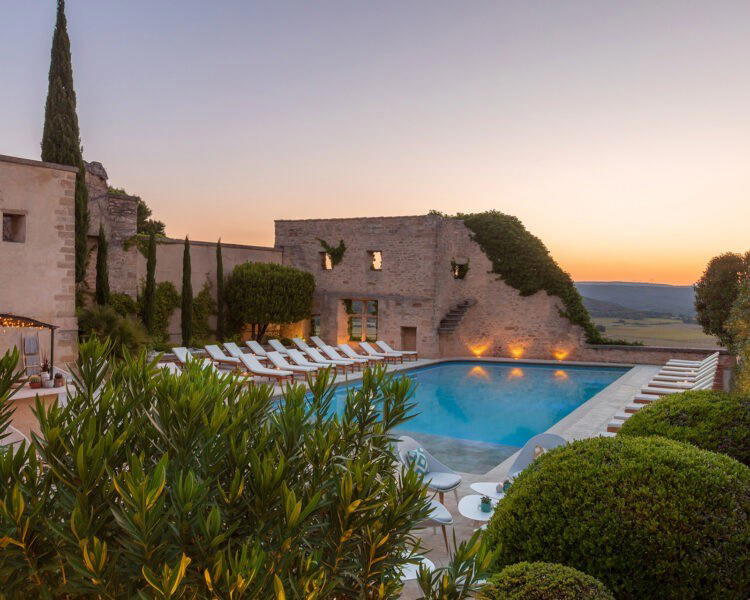
Sabran is most easily reached by car: the A9 motorway connects Avignon (roughly 45 minutes) and Nîmes (around 40 minutes) to the Gard interior. The €€€€ price designation places the restaurant at the top of the regional range, in line with its Michelin star status. The six-to-seven-table format means the dining room fills quickly; advance reservations are advisable, particularly during the summer garrigue season when the courtyard setting is at its most atmospheric and the estate's own programme of guests is at peak volume. The surprise menu removes the question of what to order, which in practice means the main decision is simply when to book.
For a full picture of what Sabran offers beyond this address, the full Sabran restaurants guide covers the wider dining picture, while the Sabran hotels guide, bars guide, wineries guide, and experiences guide map the broader territory for those spending more than a single evening in the Gard.
Frequently asked questions
Is Le Cèdre de Montcaud Michelin-listed?
Le Cèdre de Montcaud has received recognition including: Michelin 1 Star (2025); The fine dining restaurant at Château de Montcaud is headed up by a chef with international experience, the talented Matthieu Hervé. A constantly updated surprise set menu offers a succession of beautiful, meticulous….
What do regulars order at Le Cèdre de Montcaud?
The question does not quite apply: Le Cèdre de Montcaud runs on a surprise set menu with no à la carte option, so the kitchen — not the guest — decides the sequence. The Michelin entry describes dishes including blue crab with jellied langoustine consommé, John Dory with romesco and rock fish soup, and veal fillet with chanterelle cream, but these rotate as chef Matthieu Hervé updates the menu. Returning guests come for the format itself rather than a specific dish.
Is Le Cèdre de Montcaud more mid-range or high-end?
Pricing at Le Cèdre de Montcaud is listed as €€€€.
A Pricing-First Comparison
| Venue | Cuisine | Price | Awards |
|---|---|---|---|
| Le Cèdre de MontcaudThis venue — the venue you are viewing | Modern French Terre et Mer Fine Dining | $150–200 | 1 Michelin Star |
| Alléno Paris au Pavillon Ledoyen | Creative | Not listed | Michelin 3 Star |
| Kei | Contemporary French, Modern Cuisine | Not listed | Michelin 3 Star |
| L'Ambroisie | French, Classic Cuisine | Not listed | Michelin 3 Star |
| Le Cinq - Four Seasons Hôtel George V | French, Modern Cuisine | Not listed | Michelin 3 Star |
| Plénitude | Contemporary French | Not listed | Michelin 3 Star |
Recognition history
Dated appearances from independent guides and award organizations, with the underlying list record or original source where available.
Michelin 1 Star
Michelin
Full recognition history (2 entries)
Michelin 1 Star
Michelin
Continue exploring
More in Sabran
Restaurants in Sabran
Browse all →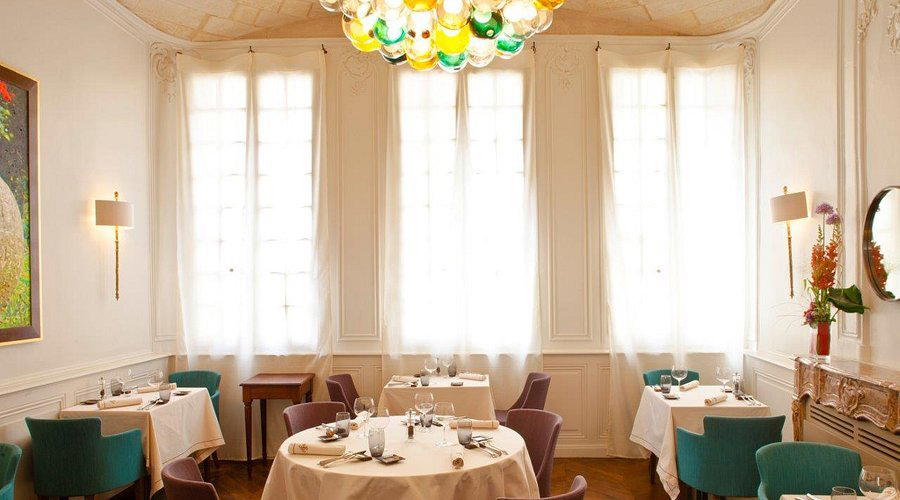
Bars in Sabran
Browse all →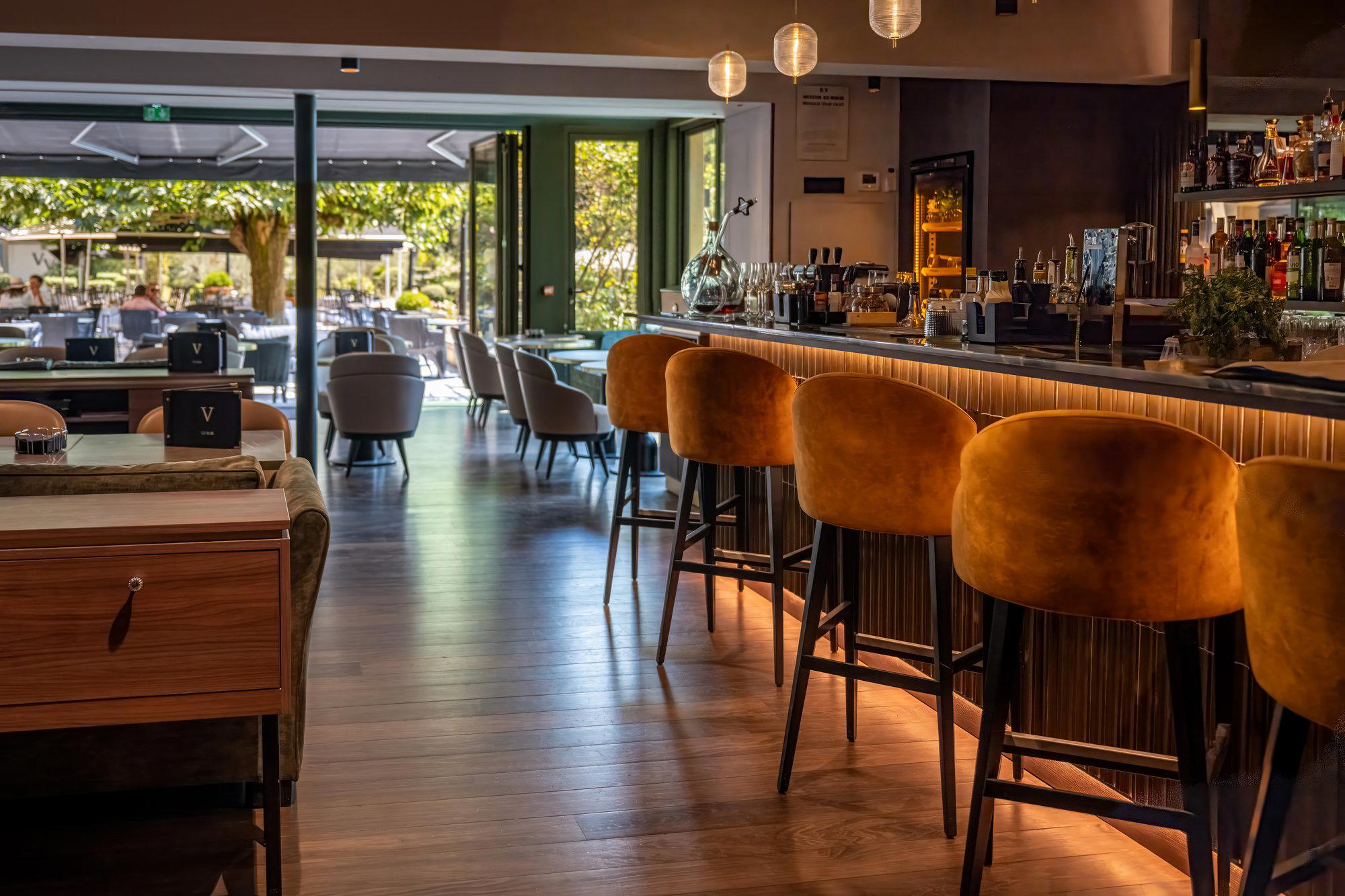
Hotels in Sabran
Browse all →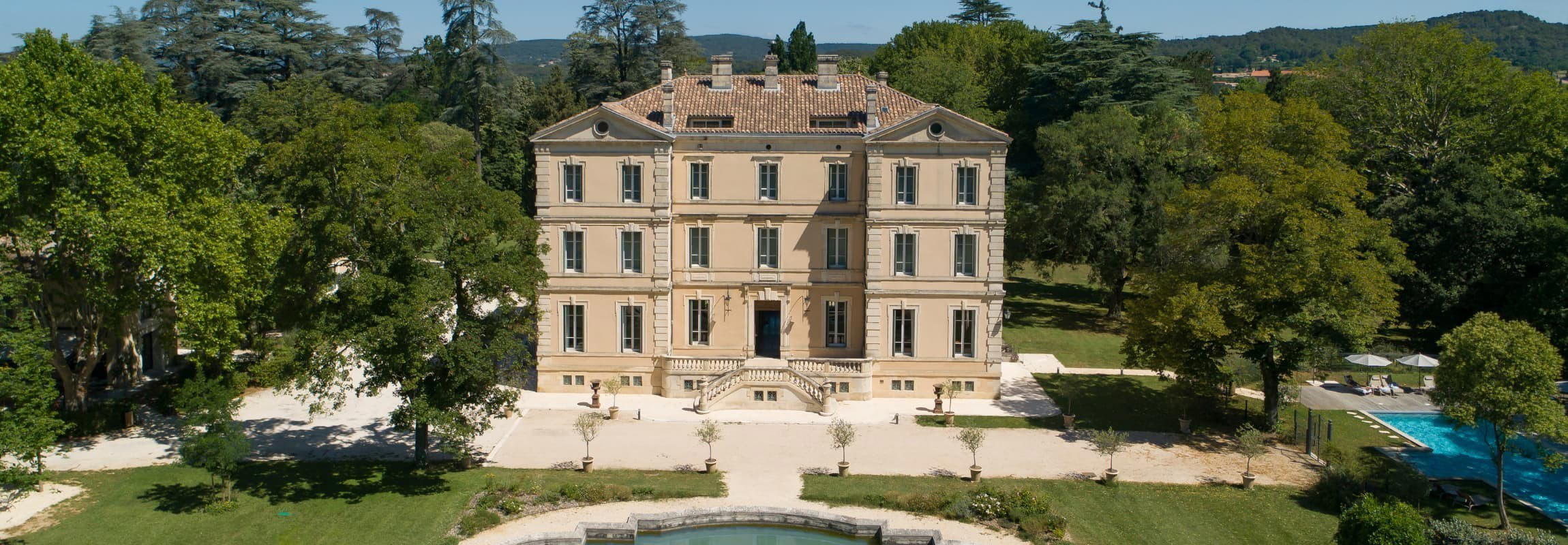
Details
- Romantic
- Elegant
- Intimate
- Sophisticated
- Rustic
- Date Night
- Special Occasion
- Celebration
- Terrace
- Courtyard
- Hotel Restaurant
- Extensive Wine List
- Sommelier Led
- Local Sourcing
- Garden
- Tasting Menu
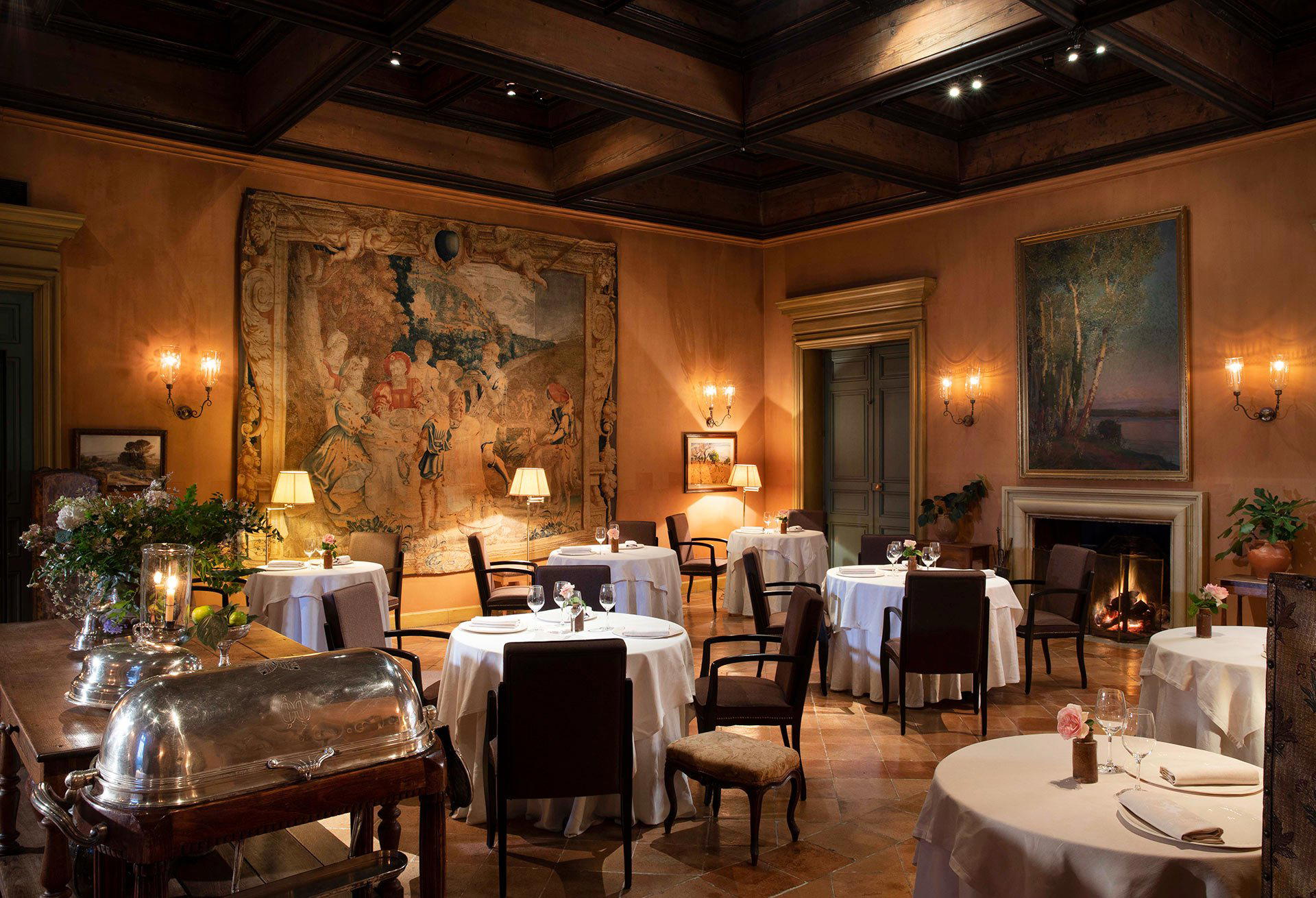
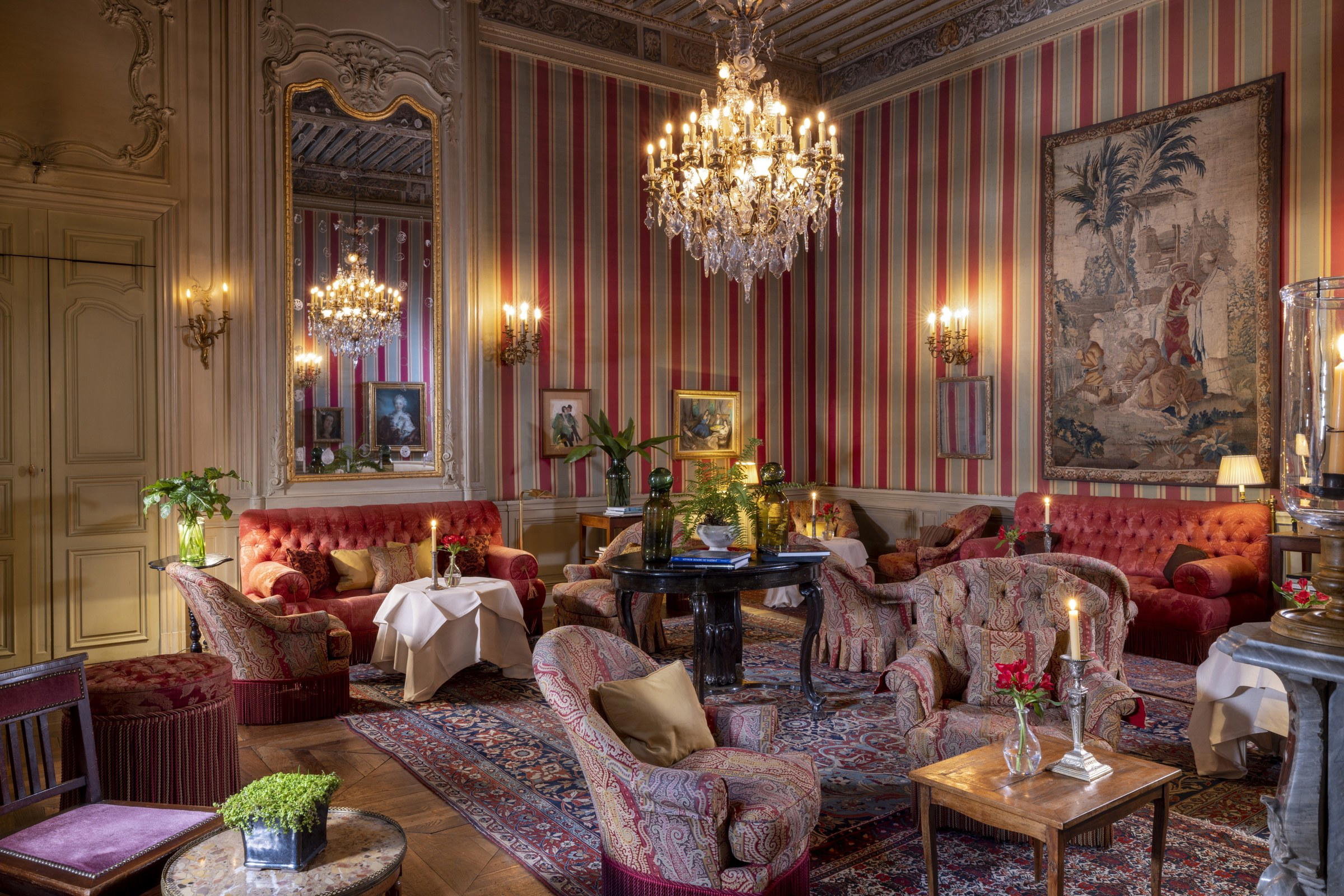
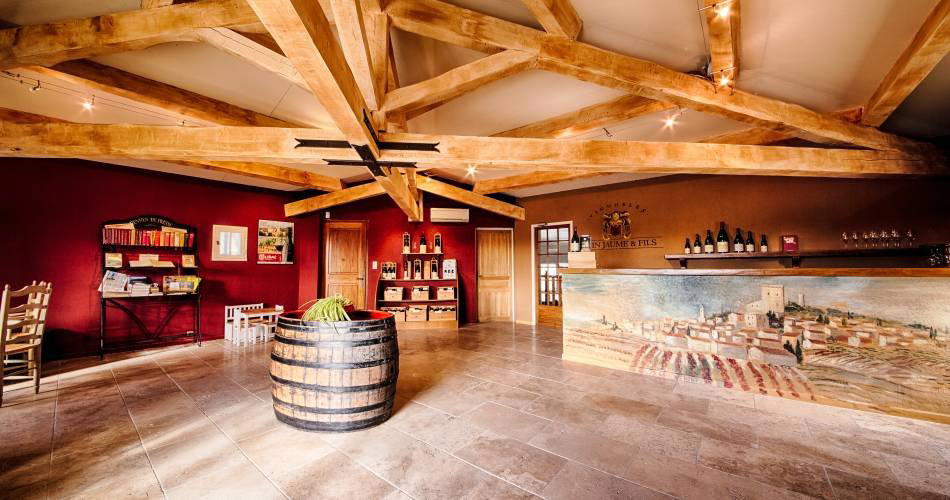
Intimate and confidential atmosphere in a delightful creeper-covered courtyard or elegant dining room with soft, subdued lighting and well-spaced tables.