Le Chapelier Toqué occupies a quiet address on Rue Guillaume Puy in Avignon's historic core, operating within a city whose restaurant scene spans medieval palace dining rooms and neighbourhood bistros shaped by Provençal market traditions. The venue sits in a tier of Avignon dining that rewards advance planning and contextual awareness of the city's broader culinary geography.
Pearl is the En Primeur Club membership app — saves, bookings, and concierge access live there. Same editors, same standards.
- Address
- 71 Rue Guillaume Puy, 84000 Avignon, France
- Phone
- +33490822901
- Directions
- Get directions
 Saves & bookings on Pearl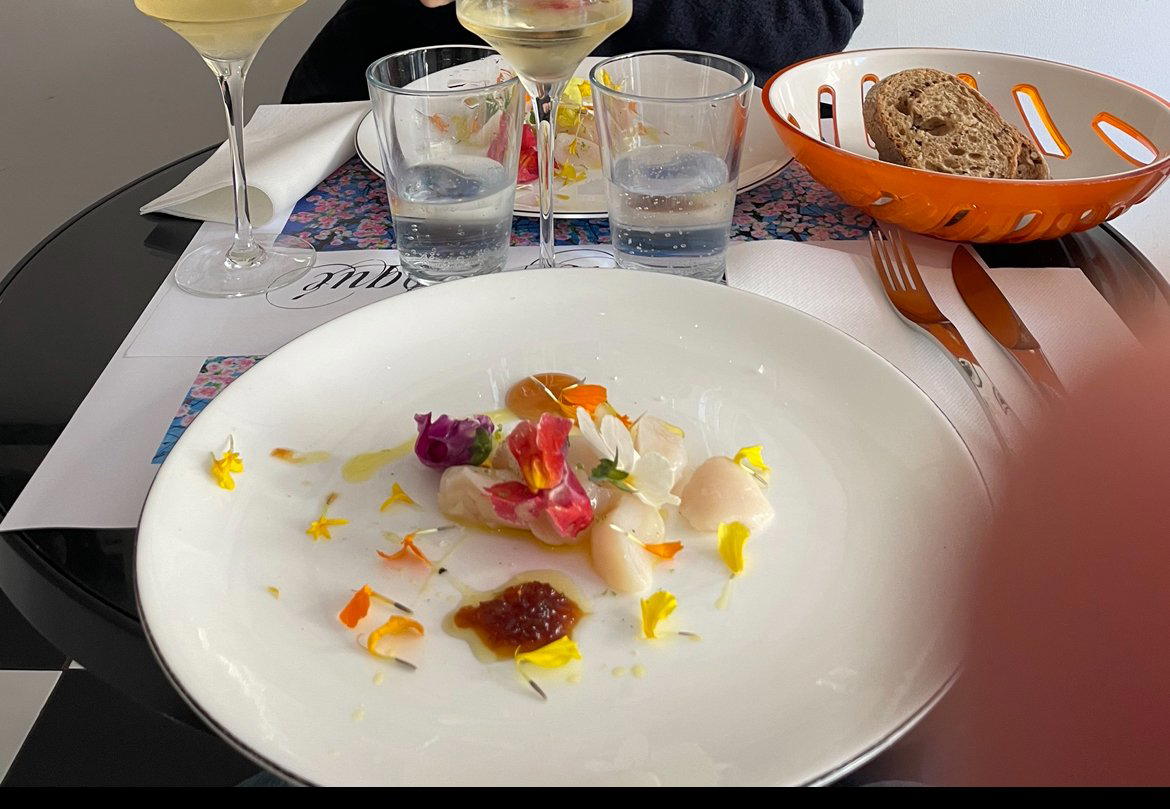
Avignon's Dining Scene and Where Le Chapelier Toqué Sits Within It
Avignon is not a city that announces its restaurants loudly. The streets inside the fourteenth-century ramparts hold everything from palace-adjacent dining rooms commanding four-figure wine lists to neighbourhood addresses where the cooking is grounded in the weekly rhythms of the Luberon and Alpilles markets. Le Chapelier Toqué, a Modern French Bistro at 71 Rue Guillaume Puy in Avignon, occupies a position in the city's quieter residential quadrant, away from the tourist pressure of the Place du Palais des Papes and the more theatrical dining rooms that cluster near the Palais itself. That address places it geographically closer to where Avignon residents actually eat than where most visitors first look.
Avignon's fine dining tier has historically been anchored by a small number of establishments with institutional weight. La Mirande operates from a fourteenth-century cardinal's palace and prices accordingly at the €€€€ tier. La Vieille Fontaine works within a similar register. Below that, a mid-tier of modern cuisine addresses has developed more recently, with venues like Pollen, Acte 2, and Bibendum working at the €€€ level and reflecting a generation of cooking more interested in technique and seasonal produce sourcing than in historical decor.
The Provençal Context: What the Region Demands of Its Kitchens
Any serious kitchen in Avignon is working against, and with, one of France's most demanding regional pantries. The Vaucluse is truffle country in winter, asparagus and strawberry country in spring, and melon and tomato country through the long summer. The regional produce calendar is not a marketing device here; it is a structural constraint that shapes what any kitchen can and cannot put on a plate in a given week. Well-regarded restaurants across the Rhône Valley and Provence treat this as a feature rather than a limitation, with menus that shift materially between November and March compared to the July Festival d'Avignon period, when the city's population temporarily triples and kitchen pressure is at its highest.
That festival context is worth holding in mind when planning a visit to any Avignon restaurant. July and August bookings across the city's serious dining addresses fill faster and often further in advance than equivalent establishments in Lyon or Marseille. The festival draws an audience that is both culturally literate and willing to spend on dining, which has historically pushed Avignon's mid-range and upper-tier restaurants toward tighter booking windows during the summer weeks. Outside the festival, the city's pace slows considerably, and same-week reservations become more realistic at many addresses.
Provence and the Longer Arc of French Regional Cooking
To understand what Avignon's better restaurants are doing, it helps to place them within the longer arc of French regional cooking. The post-Bocuse generation of French chefs largely moved away from the hierarchical brigade model and toward more producer-led, terroir-anchored approaches. In Provence, that shift arrived through kitchens influenced by the region's access to notable olive oil, wild herbs, and small-scale vegetable farming in the hinterland. The cooking that emerged is lighter than classical Lyonnais cuisine, more vegetable-forward than Alsatian traditions, and more herb-driven than what you find in Normandy or Brittany.
The restaurants that have attracted sustained critical attention across the south of France in the past decade share a recognizable orientation: they work with named producers, they change menus with the season rather than the quarter, and they treat the region's wine output, particularly the appellations of the southern Rhône, as a structural part of the meal rather than an afterthought. Avignon sits at the geographic heart of this, with Châteauneuf-du-Pape, Gigondas, and Vacqueyras all within forty kilometres. For comparison, the kind of kitchen ambition found at Mirazur in Menton or AM par Alexandre Mazzia in Marseille represents one end of the southern French spectrum; Avignon's more contained addresses represent a different register, less internationally profiled but often more embedded in local supply chains.
The broader French fine dining conversation, which runs through addresses like Alléno Paris au Pavillon Ledoyen, Flocons de Sel in Megève, Troisgros in Ouches, Auberge de l'Ill, Bras in Laguiole, Paul Bocuse, Assiette Champenoise in Reims, and Au Crocodile in Strasbourg, frames what regional Provençal restaurants are working against and occasionally drawing from. International diners arriving from cities with reference points like Le Bernardin or Atomix in New York will find Avignon's dining culture more rooted, slower-paced, and seasonal in a literal rather than rhetorical sense.
Planning a Visit: What to Confirm Before You Go
The restaurant is on Rue Guillaume Puy, a quiet residential street in the northeastern intramuros, accessible on foot from the city centre in under fifteen minutes. Avignon's TGV station connects to Paris in roughly two hours and forty minutes, making it a practical lunch-and-return destination from the capital for those who plan ahead.
For those building a broader Avignon dining itinerary, the city's dining options span price tiers and styles, from the institutional rooms near the Palais to neighbourhood addresses that operate closer to the rhythms of Provençal market life.
Booking and Cost Snapshot
Comparable venues nearby, for context on price, style, and recognition.
| Venue | Price | Awards | Notes |
|---|---|---|---|
| Le Chapelier ToquéThis venue — the venue you are viewing | $$$ | Not listed | Not listed |
| L'Essentiel | $$$ | Not listed | Avignon City Center, Contemporary French Bistro |
| Numéro 75 | $$$ | Michelin Plate | Intra-muros, Seasonal French Market Bistro |
| L'Épicerie de Ginette | $$ | Not listed | Place des Corps Saints, French Bistro Tartines |
| Première édition | $$$ | Michelin Plate | centre historique, Modern French Bistronomique |
| La Fourchette | $$ | Michelin Plate | historic city centre, Provençal French Bistro |
Continue exploring
More in Avignon
Restaurants in Avignon
Browse all →
Bars in Avignon
Browse all →
Hotels in Avignon
Browse all →
At a Glance
- Intimate
- Elegant
- Cozy
- Date Night
- Special Occasion
- Standalone
Current opening hours
- Monday
- Closed
- Tuesday
- 10 AM–2:30 PM, 7–11 PM
- Wednesday
- 12–2:30 PM, 7–11 PM
- Thursday
- 10 AM–2:30 PM, 7–11 PM
- Friday
- 10 AM–2:30 PM, 7–10:30 PM
- Saturday
- 10 AM–2:30 PM, 7–11 PM
- Sunday
- Closed
Hours can change for holidays and private events. Last verified .
Charming atmosphere with checkered tile floor, plexi seats evoking a Demy film, and a cozy, welcoming vibe.