Among Avignon's mid-to-upper dining tier, L'Essentiel occupies a quiet street inside the papal walls at 2 Rue de la Petite Fusterie, a location that positions it between the city's grand-hotel dining rooms and its more casual bistro circuit. The address alone signals a certain register: intimate, stone-walled, and removed from the tourist thoroughfares that dominate the Palais des Papes quarter.
Pearl is the En Primeur Club membership app — saves, bookings, and concierge access live there. Same editors, same standards.
- Address
- 2 Rue de la Petite Fusterie, 84000 Avignon, France
- Phone
- +33413399440
- Website
- restaurantlessentiel.com
- Directions
- Get directions
 Saves & bookings on Pearl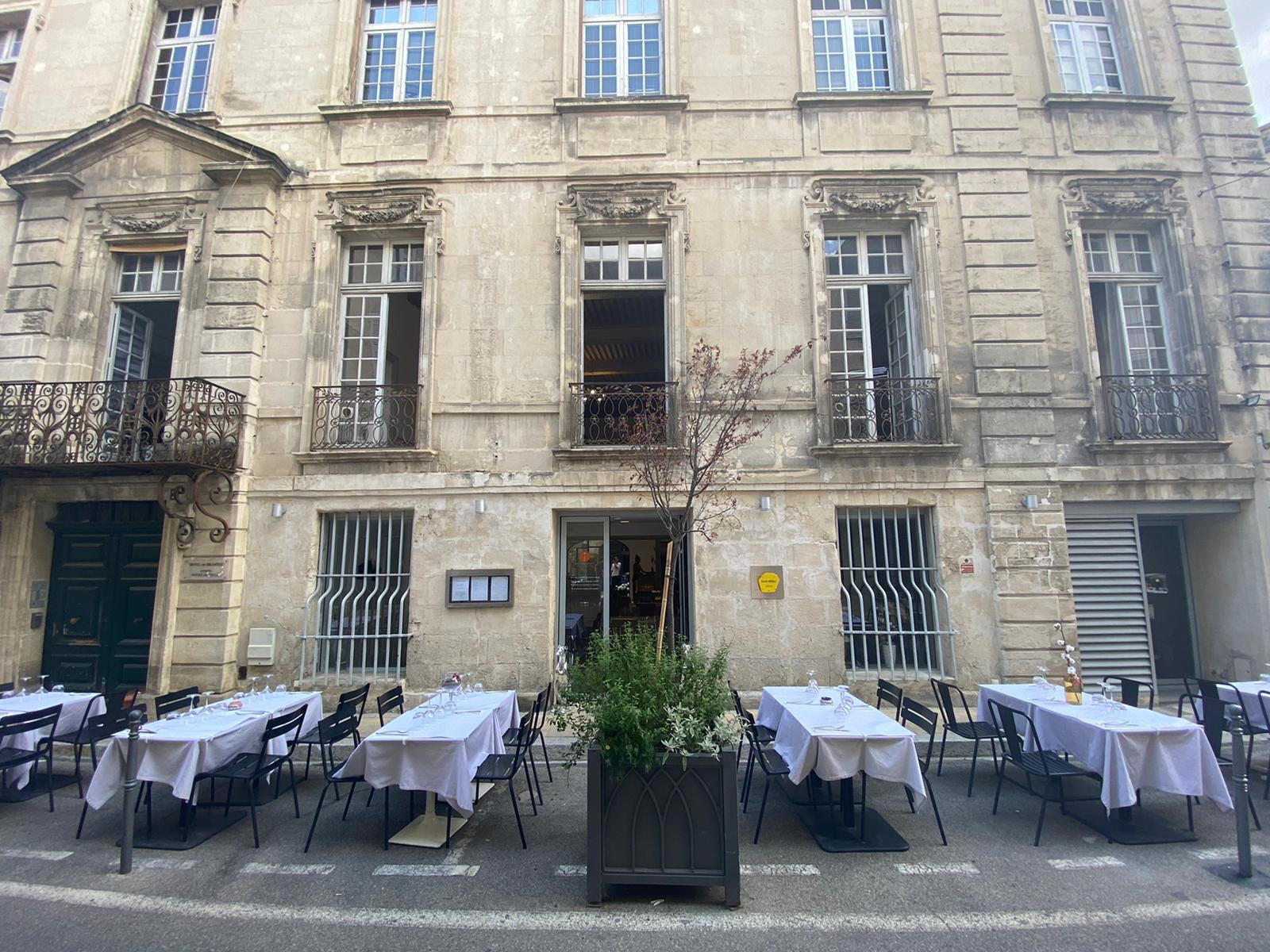
A Street That Sets the Register
Avignon's dining scene divides cleanly along its medieval geography. The streets immediately surrounding the Palais des Papes skew toward high-turnover brasseries and tourist-facing menus. Move a few blocks south and west, into the quieter residential grid near the Place de l'Horloge, and the register shifts. Rue de la Petite Fusterie is that kind of street: narrow, largely unmarked on tourist maps, and lined with addresses that assume a certain intentionality from the visitor who arrives there. L'Essentiel sits at 2 Rue de la Petite Fusterie, 84000 Avignon, France, and the location is its first editorial statement.
This part of the intra-muros city functions differently from the papal precincts. Residents use these streets; delivery cyclists use these streets. A restaurant here is not positioned to catch foot traffic. It is positioned to be sought out. That distinction matters when framing what kind of dining experience to expect, and it places L'Essentiel in the same orientation as La Mirande and La Vieille Fontaine, addresses where the journey to the table is already a filtering mechanism.
Where L'Essentiel Sits in Avignon's Dining Tier
Avignon's restaurant market has consolidated around a few clear tiers. At the leading end, grand-hotel dining rooms like La Mirande operate at the €€€€ price point with full ceremony. A level below, addresses like Pollen and Acte 2 represent a contemporary modern-cuisine cohort, technically serious, format-forward, and priced in the €€€ bracket. L'Essentiel occupies a comparable zone within the city's mid-to-upper circuit.
That kind of restaurant represents a different competitive logic from the hotel dining room. It earns its place through the reliability of what arrives at the table. In a city of Avignon's size, with a year-round local population supplemented by heavy seasonal tourism during the July Festival d'Avignon, that reliability is what separates restaurants with genuine longevity from those that cycle through on tourist momentum.
The Physical Environment
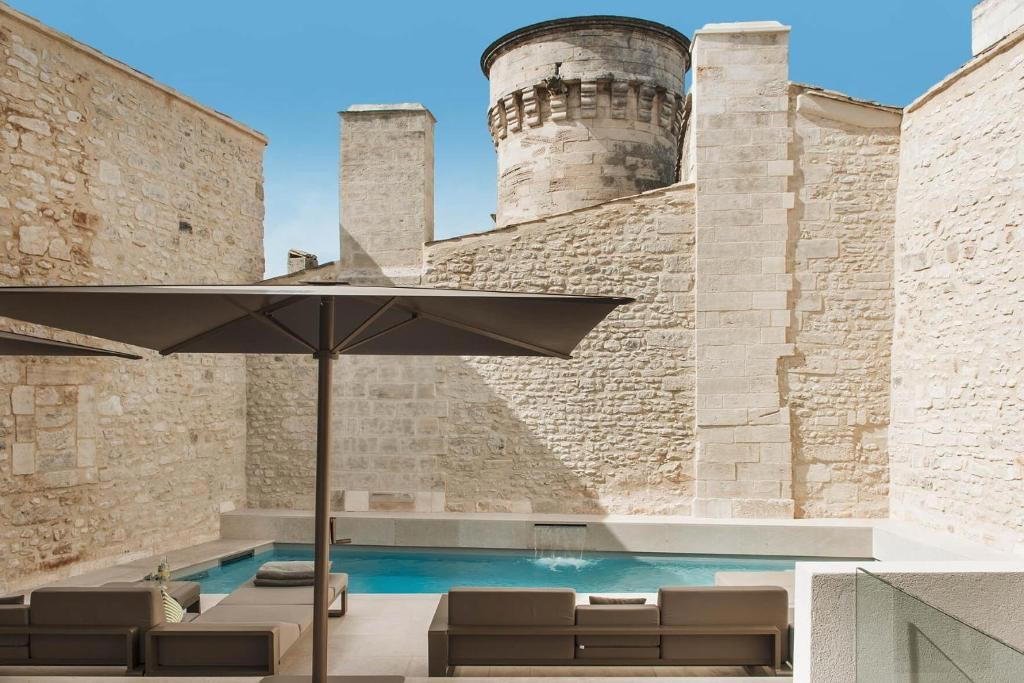
The architecture of Avignon's intra-muros buildings does much of the atmospheric work for any restaurant willing to use it. Stone walls, lower ceilings, and the thermal quality of medieval construction, cool in summer, held warmth in winter, give interiors a character that purpose-built modern dining rooms cannot replicate. A room on Rue de la Petite Fusterie arrives with that inheritance. What a restaurant does with it, in terms of lighting, table spacing, and the acoustic register it chooses to maintain, determines whether the history becomes atmosphere or merely backdrop.
The restaurant's format suggests a room scaled for conversation-forward dining. It is not a large-format venue designed for event dining. It is the kind of address where the room itself is part of the proposition.
The Regional Context That Shapes the Table
Provence's larder is among the more legible in France: olive oil from Les Baux, early-season asparagus from the Vaucluse plain, lamb from the Crau, tomatoes that need no adjustment in July, and a wine culture anchored by the Côtes du Rhône appellations immediately north and east of the city. Restaurants at the restaurant's tier within Avignon generally draw directly from this supply chain, not as a marketing exercise but because the product quality is genuinely superior when sourced within the region and the producer relationships are easier to maintain at proximity.
This regional dependency is worth understanding as a diner. In the Rhône Valley and Provence corridor, the gap between a kitchen that works closely with local producers and one that does not is more visible on the plate than in many other French regions, precisely because the ingredients at peak are so expressive. Addresses like Bibendum in the same city operate within a similar Provençal framework, and the comparison is instructive: what varies is not the raw material pool but the editorial choices a kitchen makes within it.
For a broader frame of reference across French fine dining, the regional contrasts are sharp. The technical register of Flocons de Sel in Megève or the garden-driven philosophy behind Mirazur in Menton represent different answers to the same question of what a regional restaurant owes its landscape. Avignon's answer has historically been warmer and more direct: less architectural plating, more acknowledgment of the sun and the soil that actually produced the ingredient. Whether a specific kitchen holds to that tradition or departs from it is the question worth asking before you book.
Planning Your Visit
The restaurant's location on Rue de la Petite Fusterie places it within easy walking distance of the main intra-muros landmarks. Avignon's walled city is compact enough that most addresses inside the ramparts are reachable on foot from the central Place de l'Horloge within ten minutes. Arriving by train, Avignon Centre station is the more useful of the city's two stations for intra-muros dining; TGV passengers arriving at Avignon TGV will need a shuttle or taxi into the centre. Booking ahead is the standard practice for any address at this tier in a city where the July festival period compresses demand sharply, walk-in availability at a room of this character is realistic off-season but less so in summer.
The Broader French Fine Dining Frame
Placing Avignon's serious dining addresses within the wider French context requires some adjustment of expectation. The city is not Paris, and its restaurants are not competing on the three-Michelin-star axis that defines addresses like Alléno Paris au Pavillon Ledoyen or the multigenerational prestige of Troisgros in Ouches or Auberge de l'Ill in Illhaeusern. The comparison set for a serious Avignon address is regional: AM par Alexandre Mazzia in Marseille for one technically ambitious end of the Provence corridor, and the broader circuit of Bras in Laguiole for the kind of regional-produce-driven cooking that defines the southern French serious table at its most grounded.
What a restaurant like L'Essentiel represents within that frame is the essential middle register: the reliable, address-specific room that gives a city its dining credibility at the local level. That is, for most visitors with limited evenings in Avignon, the more useful category to understand. For further context across the French fine dining spectrum, the approaches at Paul Bocuse in Collonges-au-Mont-d'Or and Assiette Champenoise in Reims offer instructive poles for how French regional restaurants build and sustain their standing over time.
The Short List
Comparable venues nearby, for context on price, style, and recognition.
| Venue | Cuisine | Price | Notes |
|---|---|---|---|
| L'EssentielThis venue — the venue you are viewing | Not listed | $$$ | Not listed |
| Le Chapelier Toqué | Not listed | $$$ | rue des teinturiers, Modern French Bistro |
| La Cour d'Honneur | Not listed | $$ | Centre Ville, Seasonal French Bistronomique |
| Le Goût du Jour | Intra-muros, Modern Provençal French | $$$ | Not listed |
| Acte 2 | Not listed | $$$$ | Centre ville, Modern French Seasonal Tasting Menu |
| L'Explo | Not listed | $$ | Intra-muros, Craft Beer Bar with Local Bites |
Continue exploring
More in Avignon
Restaurants in Avignon
Browse all →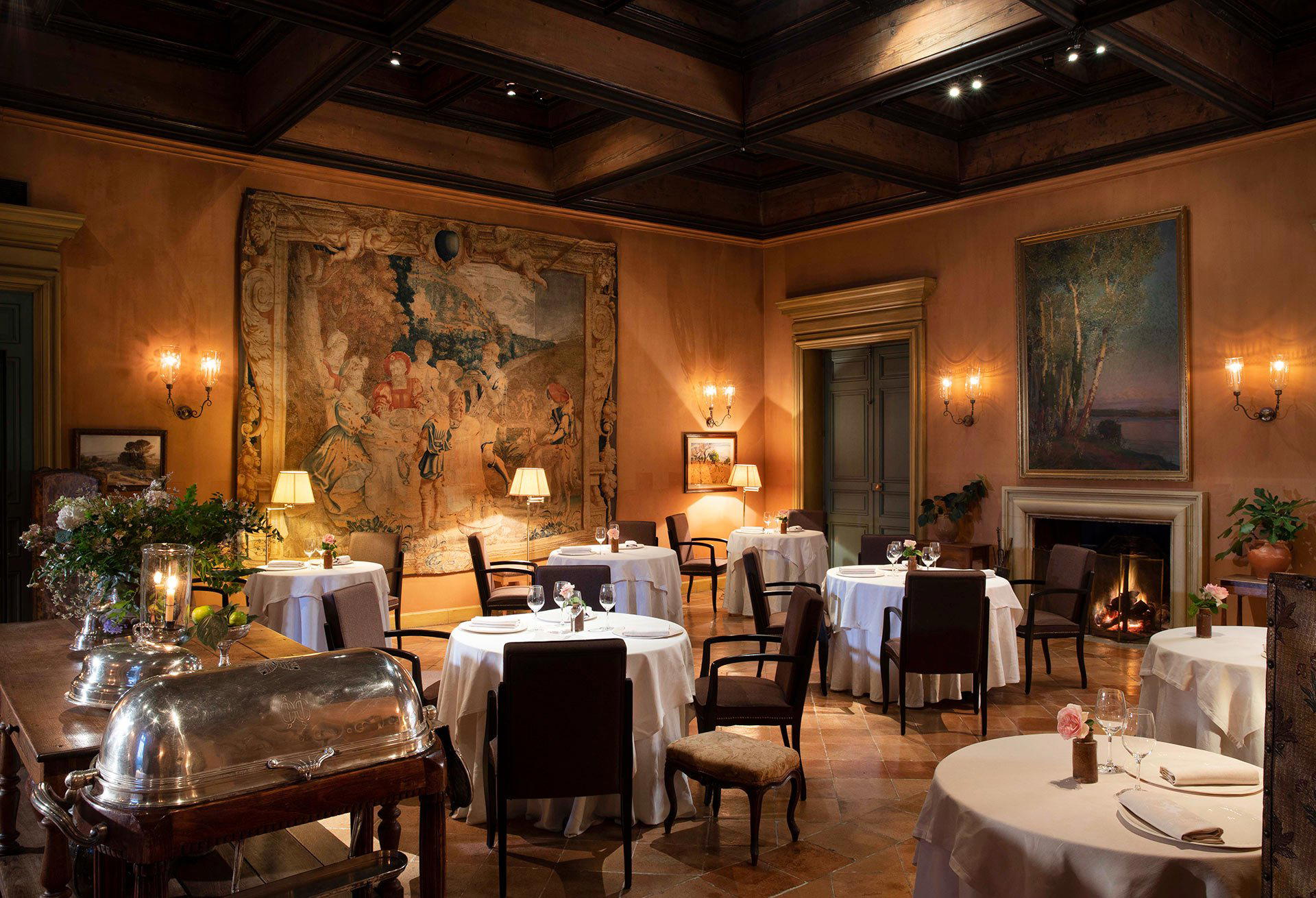
Bars in Avignon
Browse all →
Hotels in Avignon
Browse all →
At a Glance
- Elegant
- Romantic
- Modern
- Quiet
- Date Night
- Special Occasion
- Business Dinner
- Courtyard
- Historic Building
- Standalone
- Sommelier Led
- Local Sourcing
- Garden
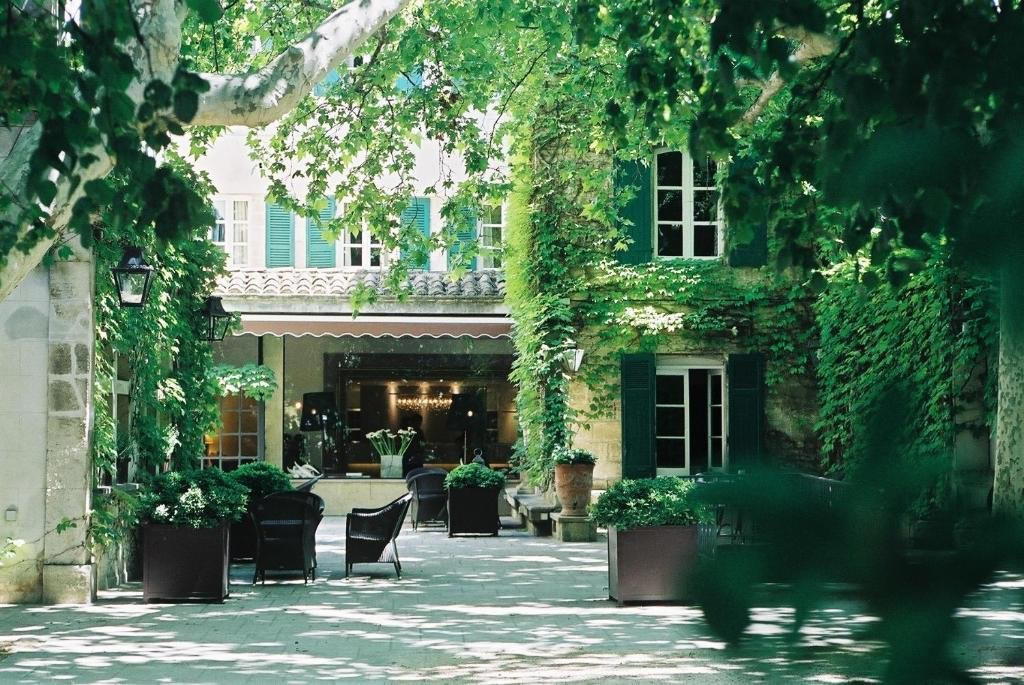
Chic and refined with modern interior decoration contrasted by a serene 17th-century courtyard; soft, sophisticated lighting creating an intimate dining experience.