Hôtel de Tourrel


A nine-suite hotel occupying a 17th-century palais in the center of Saint-Rémy-de-Provence, Hôtel de Tourrel earned a Michelin Key in 2024 for a renovation that stripped the building back to its original stucco while layering in mid-century design. The property operates seasonally from mid-March through late October, with 34 wine appellations within easy reach and a wood-lined wine bar on-site.
Pearl is the En Primeur Club membership app — saves, bookings, and concierge access live there. Same editors, same standards.
- Address
- 5 Rue Carnot, 13210 Saint-Rémy-de-Provence
- Phone
- +33 4 84 35 07 20
- Website
- detourrel.com
- Directions
- Get directions
 Saves & bookings on Pearl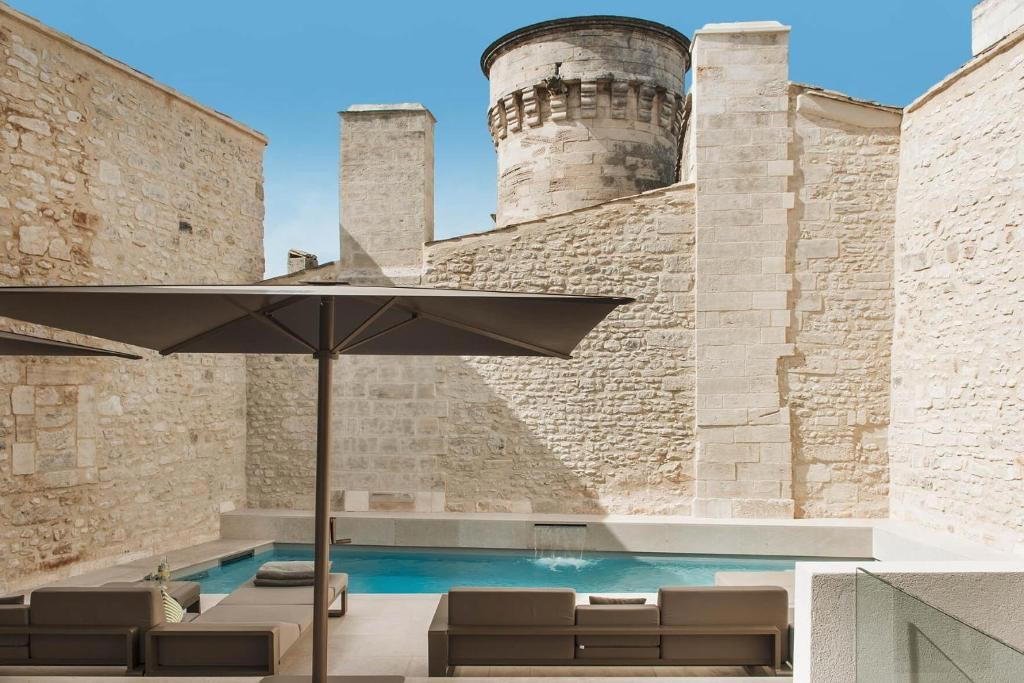
A 17th-Century Shell, Redesigned From the Inside Out
Saint-Rémy-de-Provence attracts a particular kind of traveller: one who arrives with a mental image borrowed from Van Gogh, who checked himself into the local asylum at Saint-Paul-de-Mausole in 1889 and produced more than a hundred paintings of the surrounding countryside in the twelve months that followed. The town has grown around that reputation — art galleries, well-sourced bistros, weekly markets — while remaining compact and navigable on foot. The premium accommodation tier here is thin. A handful of boutique properties have appeared in the historic center over the past decade, and Hôtel de Tourrel, housed in a 17th-century palais at 5 Rue Carnot, sits at the upper end of that small cohort.
The design approach here is architectural rather than decorative. Boutique hotels in historic French buildings commonly face a choice between pastiche and erasure, recreating a period atmosphere with reproduction furniture, or gutting the shell entirely for a contemporary interior. The owners chose a third path: stripping back. Layers of paint were removed to reveal the original stucco walls and ceilings, which now read as the dominant texture of the building's interior. High ceilings, decorative molding, and parquet floors remain intact. What arrived on top of those bones is mid-century in register, furniture with 1960s proportions, clean lines, earth tones, and crisp whites, creating a conversation between centuries rather than a single-era statement. Properties like Château du Grand-Lucé and Château de Montcaud take comparable approaches to French heritage properties, but the Tourrel renovation is notable for how much it foregrounds the building's original materiality rather than using it as backdrop.
Nine Suites, Deliberate Proportions
The original manor contained 24 rooms. The renovation reduced that to nine suites, a decision that reconfigured the building's spatial logic entirely. In Provence's boutique hotel tier, low key-count properties have become a distinct sub-category: La Réserve Ramatuelle and Casadelmar both operate on a similar logic of fewer, larger rooms as a luxury signal rather than square-footage maximization. At Hôtel de Tourrel, the consequence is suites with proportions that feel genuinely domestic rather than hotel-standard: floor-to-ceiling windows, king-sized beds, stone floors with underfloor heating for cooler months, and parquet elsewhere. Aesop bath products and Apple TVs are standard across all nine.
Suites diverge meaningfully beyond those shared specifications. Some carry free-standing bathtubs; others open onto private terraces. Numéro Trois incorporates an exposed ancient stone wall as a design element, the building's structural history made visible at room level. Numéro Sept is a duplex configured across two levels, with views over the town from both floors. In a nine-suite property where no two rooms are identical, the configuration question matters more than in a larger hotel: guests booking Tourrel should consider which architectural feature matters to them rather than defaulting to a standard room-tier logic.
The Wine Bar and Restaurant
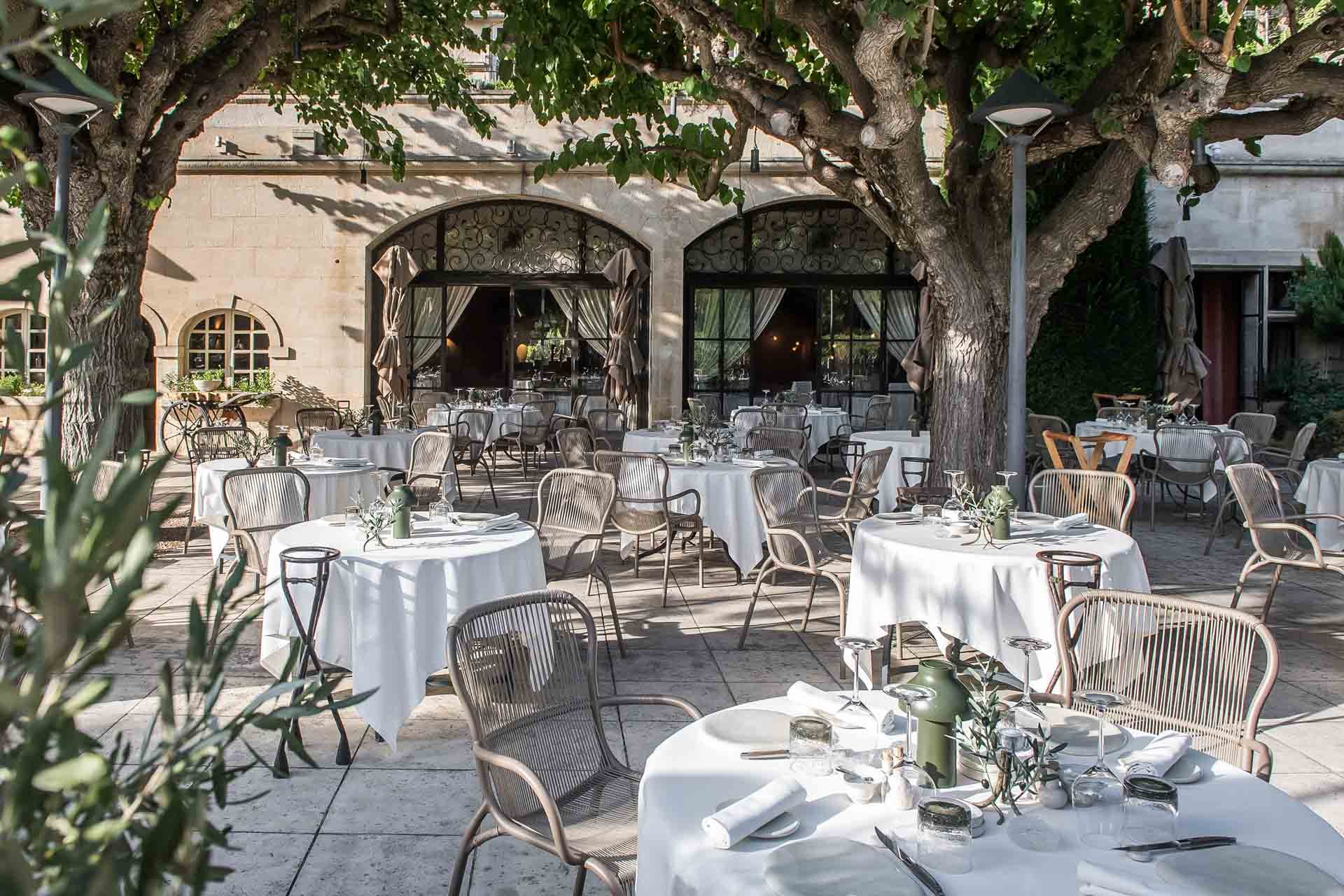
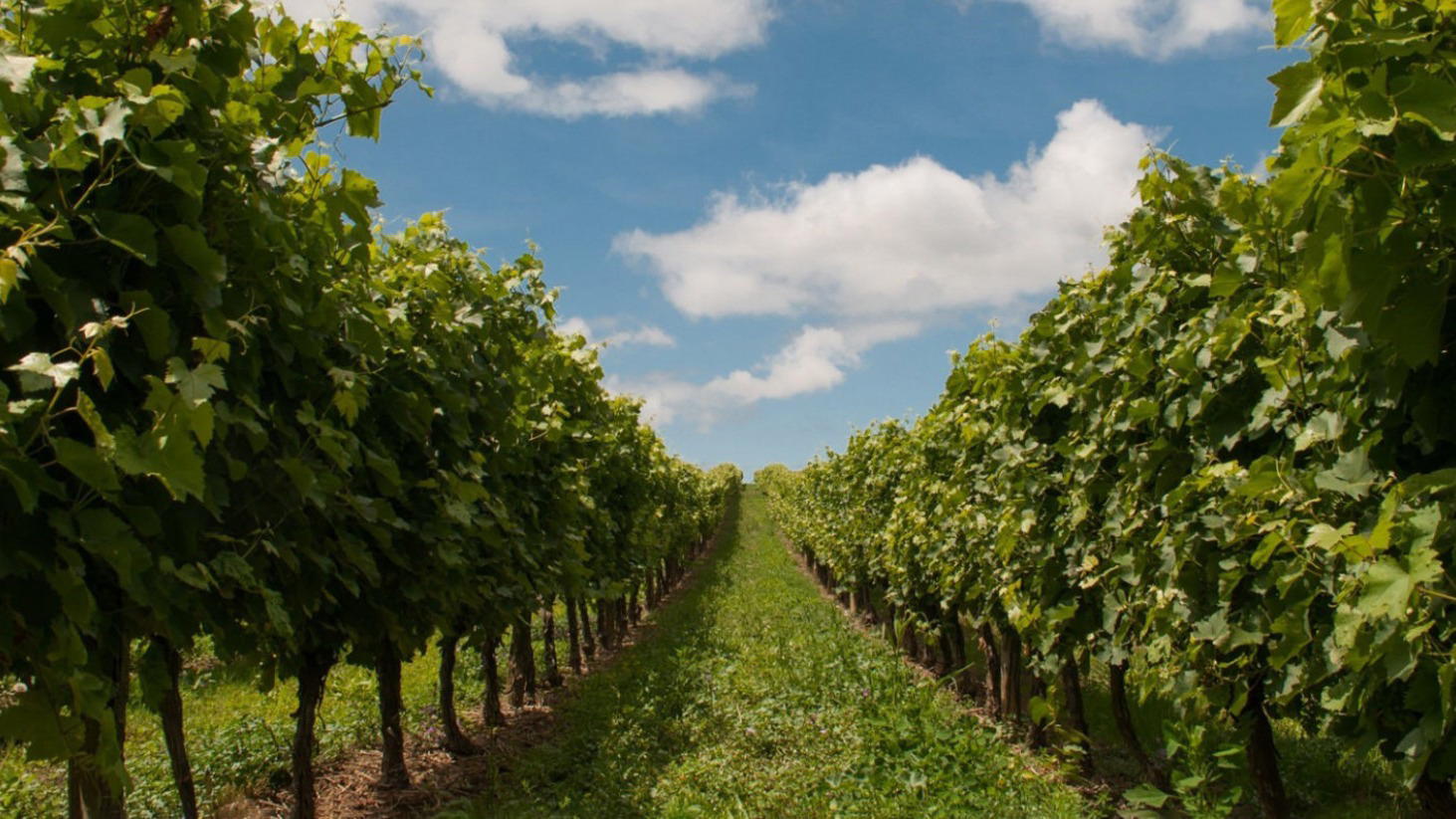
Saint-Rémy sits within one of the most wine-dense corridors in France. There are 34 appellations within easy driving distance of the hotel, covering terrain that runs from the Rhône's southern appellations through the limestone-heavy wines of Les Baux-de-Provence and into the Luberon. For travellers using the hotel as a base for wine exploration, the on-site wine bar provides a sensible starting point: a wood-lined room designed for pre-dinner tasting or a quieter evening in. It is not positioned as a destination in itself, but as a well-calibrated complement to the region's resources. The hotel also operates a restaurant, which rounds out the on-site offering for guests who prefer not to venture out every evening. Details on the restaurant's current format are best confirmed directly with the property, as Hôtel de Tourrel operates on a seasonal basis from mid-March through late October.
For a broader picture of where to eat in the area, our full Saint-Rémy-de-Provence restaurants guide covers the dining scene across price points and formats.
Where It Sits in the Southern French Hotel Tier
Provence's premium hotel market is more varied than its image suggests. At one end sit grand-scale resort properties like Hotel Du Cap-Eden-Roc on the Côte d'Azur, operating at a size and price register that targets a different audience entirely. At the other, design-led small properties like Hôtel de Tourrel compete on specificity: architectural identity, low key count, and location in a town with genuine cultural content rather than amenity-led resort positioning. Château de la Gaude in nearby Aix-en-Provence operates in a comparable bracket with a different design language; Villa La Coste near Le Puy-Sainte-Réparade adds a significant art program to its accommodation offer.
Hôtel de Tourrel's positioning is more interior-focused than landscape-driven. Its value proposition is the building itself and the town that surrounds it, rather than a view or a pool. That works for a specific kind of visitor: one who is comfortable in a small town, interested in the built environment, and treating the surrounding Provençal countryside as a day-trip resource rather than a constant backdrop. For travellers looking across the broader French luxury hotel tier, comparators like Domaine Les Crayères in Reims or Château Lafaurie-Peyraguey in the Sauternes show how heritage properties handle the old-building brief in different regional contexts. For those prioritising city-scale luxury, Cheval Blanc Paris and Aman New York represent the urban end of that spectrum.
Getting There and When to Go
The hotel's seasonal window runs mid-March through late October, which covers the full Provençal high season and extends into the quieter shoulder months on either side. Visiting in April or October means fewer visitors in town and more navigable restaurant bookings, while July and August bring the full weight of the regional tourist calendar. The lavender fields that define the area's visual shorthand peak in late June through mid-July, which coincides with the busiest period.
By air, Marseille Provence Airport is approximately 75 kilometres by car via the A7 and D99A, making it the most practical arrival point. Montpellier-Méditerranée Airport is roughly 105 kilometres via the A9 and A54, a viable alternative depending on flight routing. Travellers preferring rail can take the TGV to Avignon station, approximately 20 kilometres from the hotel, or to Aix-en-Provence TGV, approximately 75 kilometres away. A rental car from either train station is effectively necessary: Saint-Rémy's surrounding countryside, the Alpilles, and the wine appellations the hotel positions itself against are not navigable without one. Comparable Riviera and Côte d'Azur properties such as The Maybourne Riviera and Airelles Saint-Tropez have airport transfer infrastructure that Hôtel de Tourrel, at its scale, does not replicate, self-arranged transport is the norm here.
The 2024 Michelin Key adds an external credential to that guest-level signal, placing Hôtel de Tourrel among a small tier of Provence properties recognised for hospitality as a designed experience rather than simply a place to sleep.
How Hôtel de Tourrel Saint-Rémy compares with similar nearby venues.
| Venue | Awards |
|---|---|
| Hôtel de Tourrel | Michelin 1 Key |
Recognition history
Dated appearances from independent guides and award organizations, with the underlying list record or original source where available.
Design Hotels Member
Design Hotels
Michelin 1 Key
Michelin
Michelin 1 Key
Michelin
Continue exploring
More in Saint-Rémy-de-Provence
Hotels in Saint-Rémy-de-Provence
Browse all →
Bars in Saint-Rémy-de-Provence
Browse all →
Restaurants in Saint-Rémy-de-Provence
Browse all →
At a Glance
- Elegant
- Sophisticated
- Intimate
- Romantic
- Quiet
- Scenic
- Romantic Getaway
- Anniversary
- Honeymoon
- Weekend Escape
- Historic Building
- Terrace
- Rooftop Pool
- Pool
- Wi Fi
- Room Service
- Concierge
- Restaurant
- Elevator
- Street Scene
- Garden
- Pool
- Wi Fi
- Room Service
- Concierge
- Restaurant
- Elevator
Sophisticated and serene with subtle lighting, warm staff presence, and a quiet oasis atmosphere praised for its attention to detail and historic charm.
Know Before You Go
- Getting there
- 5 Rue Carnot, 13210 Saint-Rémy-de-Provence