Michelin Plate · Tabelog 100 #44
Our verdict
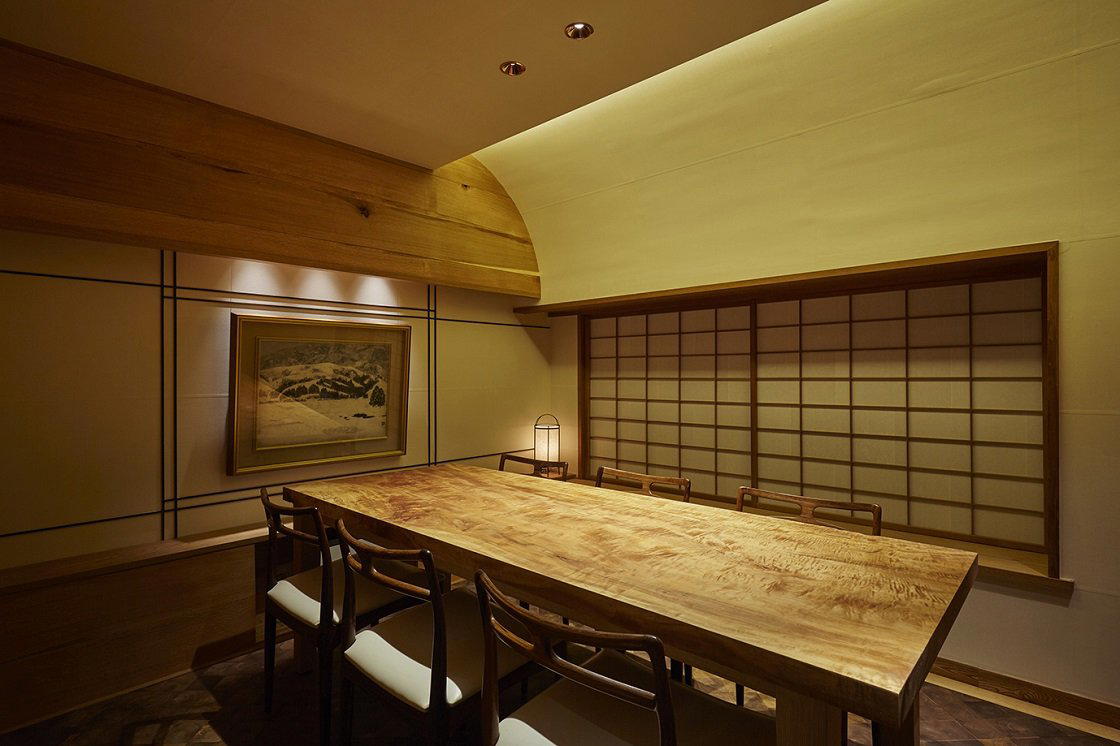
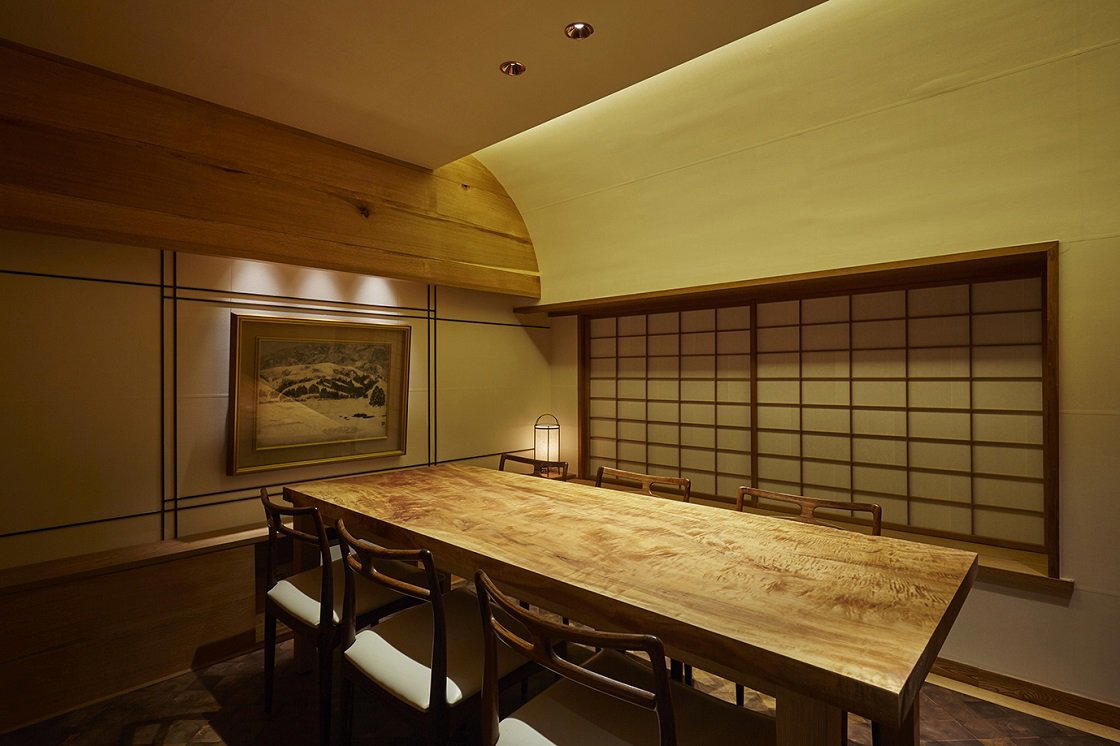
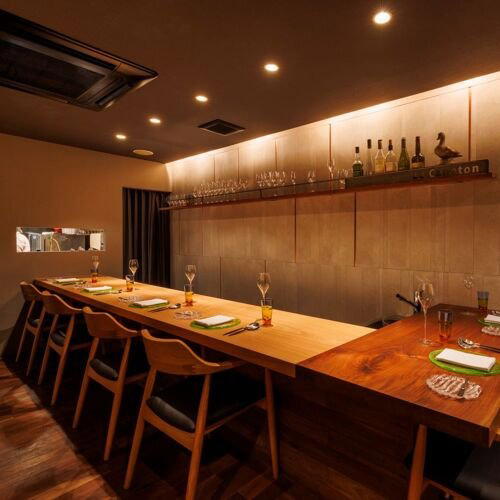
A prix fixe French restaurant in Osaka's Chuo Ward built around a single obsession: duck and foie gras, sourced locally and presented with classical French discipline. Playful amuse-bouche arrive on high-tea stands; Osaka duck anchors the main course. The in-house pâtissière handles desserts with equal seriousness. Michelin Plate recognition in both 2024 and 2025 confirms consistent kitchen standards at the ¥¥¥ price tier.

Pearl is the En Primeur Club membership app, where members save venues, book tables and use the concierge.
A Single Obsession in a City That Rewards Them
Osaka has long rewarded restaurants that commit to one thing completely. The city's dining culture runs on conviction: the ramen shop that has served the same broth for forty years, the kushikatsu counter that refuses to deviate, the kaiseki kitchen where every decision traces back to a governing seasonal logic. French cuisine fits this city less obviously than raw fish or skewered pork, yet Osaka's French dining scene is among the most serious in Japan, with addresses like La Cime and Différence operating at ¥¥¥¥ and competing on the same terms as any Paris address. Le Caneton, at the ¥¥¥ tier in Chuo Ward, operates in the tier below that ceiling, but the commitment to its subject is no less focused.
The name translates from French as 'duckling,' and the kitchen's orientation is exactly that literal. Duck and foie gras form the structural spine of the menu, not as seasonal features but as permanent governing ingredients. In the crowded field of Osaka French dining, that degree of specialisation is a positioning decision as much as a culinary one. It narrows the audience and deepens the craft at the same time.
The Prix Fixe as a Discipline
Among Osaka's French restaurants, the shift toward prix fixe formats in the upper-mid and fine dining tiers reflects a broader commitment to sequenced cooking. A fixed menu gives a kitchen control over pacing, temperature, and portioning in ways that à la carte cannot. La Bécasse and LE PONT DE CIEL operate within similar formats, where the logic of the meal is built course by course rather than assembled from individual selections.
Le Caneton's prix fixe structure is explicitly tied to quality control: the format exists, in the restaurant's own framing, to ensure that each dish reaches the table in its intended state. This is not unusual reasoning in the French tradition, but in an Osaka context, where the kitchen is working with locally sourced duck as its centrepiece ingredient, the format also allows the chef to align sourcing quantities precisely with service. Osaka duck, the ingredient the menu is built around, is listed as the main course as a matter of course, not a special. That consistency is part of the value proposition at this price point.
What ¥¥¥ Buys Here vs. What It Buys Elsewhere
The ¥¥¥ bracket in Osaka French dining sits between casual bistro territory and the four-symbol tier occupied by La Cime, Hajime, and Fujiya 1935. At ¥¥¥¥, you are buying full tasting menu architecture, imported European cellar depth, and service programmes that require significant front-of-house staffing. At ¥¥¥, the exchange is different: the kitchen is often smaller, the format is tighter, and the value depends on how well the restaurant has identified its own niche and executed within it.
Le Caneton's Michelin Plate recognition in both 2024 and 2025 signals that the kitchen is performing consistently within its category. The Michelin Plate is not a star, but it is a statement of calibre: the guide's way of marking a restaurant that merits attention without yet meeting the criteria for star elevation. Across two consecutive years, the same recognition confirms stability rather than a single strong inspection cycle.
Comparable ¥¥¥ Japanese addresses that operate at a similar level of commitment include nent in Osaka and, beyond the city, akordu in Nara, which applies European technique to Japanese ingredients within a similar mid-range fine dining format. Within the French tradition specifically, Sézanne in Tokyo and the benchmark of Hotel de Ville Crissier in Switzerland define what classical French execution looks like at its furthest reach, useful reference points for understanding where the tradition Le Caneton is working within ultimately leads.
The Amuse-Bouche and the Pâtissière
Two details in Le Caneton's format distinguish it from the standard French prix fixe template. The amuse-bouche course arrives on a high-tea stand, a presentation device borrowed from afternoon tea service and used here to introduce the meal with a degree of ceremony and wit. In French dining, amuse-bouche tend to be presented with quiet precision; the high-tea stand shifts the register slightly, signalling that the kitchen is not operating with total solemnity. The format communicates something about the restaurant's self-awareness without abandoning the rigour of what follows.
The dessert programme runs through the pâtissière, who is also the chef's partner. In French restaurant kitchens, the separation of savoury and pastry responsibilities is standard at a certain level of ambition, and at ¥¥¥ in Osaka, it is not a given. The pâtissière role here functions as a structural complement to the kitchen's duck focus: the savoury courses are singular and concentrated, and the dessert section provides range and contrast. A pastry specialist at this scale typically means that the dessert sequence carries the same deliberateness as the main course, rather than functioning as a coda that the savoury kitchen assembled as an afterthought.
Chuo Ward and the Osaka French Context
Le Caneton's address in Uehonmachinishi, Chuo Ward, places it in the central Osaka territory that concentrates much of the city's serious dining. Chuo Ward spans from Shinsaibashi's commercial energy through to quieter residential pockets where smaller, chef-driven restaurants occupy ground floors of nondescript buildings, a pattern familiar from Tokyo's backstreet French rooms and from the quieter corners of Kyoto where Gion Sasaki operates.
Osaka's French scene has historically drawn on the city's appetite for craft and its willingness to support restaurants that specialise rather than diversify. The city sends diners to France in higher numbers than most Japanese cities, sustains a French wine trade that feeds into serious restaurant cellars, and has produced chefs who have returned from European stages to open addresses that treat French technique as a living discipline rather than a historical reference. Le Caneton sits within that tradition, operating at the tier where the cooking is serious but the pricing does not require a special occasion to justify. See our full Osaka restaurants guide for the broader picture of where this fits in the city's dining scene.
For those building an itinerary around Japan's Kansai region, comparable restaurant stops include Goh in Fukuoka and, further afield, Harutaka in Tokyo and 1000 in Yokohama. For Osaka specifically, explore hotels, bars, wineries, and experiences to complete the picture. Those extending to Okinawa might note 6 in Okinawa as another example of focused, format-driven dining operating outside Japan's main metropolitan centres.
Know Before You Go
- Address: 2 Chome-6-23 Uehonmachinishi, Chuo Ward, Osaka, 542-0062, Japan
- Price tier: ¥¥¥ (mid-range fine dining)
- Format: Prix fixe only
- Cuisine: French, with duck and foie gras as the central ingredients
- Recognition: Michelin Plate 2024 and 2025
- Booking: Contact details not publicly listed, check current booking channels before visiting
Frequently asked questions
Can I bring kids to Le Caneton?
Le Caneton's format is built around a sequenced prix fixe menu centred on duck and foie gras, with a pâtissière handling desserts. That structure suits adults who want to follow a composed progression from amuse-bouche to dessert. Families with young children who may not sit through a multi-course French format should consider whether the pacing works for their group.
Is Le Caneton better for a quiet night or a lively one?
The prix fixe format and the theatrical high-tea stand presentation of the amuse-bouche signal a deliberate, course-by-course rhythm rather than a convivial drop-in atmosphere. Le Caneton's Chuo Ward address and its Michelin Plate recognition both point toward a setting where the focus stays on the plate. Plan for a measured evening rather than a high-energy one.
What awards or recognition does Le Caneton have?
Le Caneton has received recognition including: The name is French for ‘duckling’, reflecting the chef’s passionate pursuit of duck and foie gras cuisine. He places the accent on prix fixe, the better to ensure perfection in each dish. Playful amuse-bouche are dramatically presented on a….
What should I eat at Le Caneton?
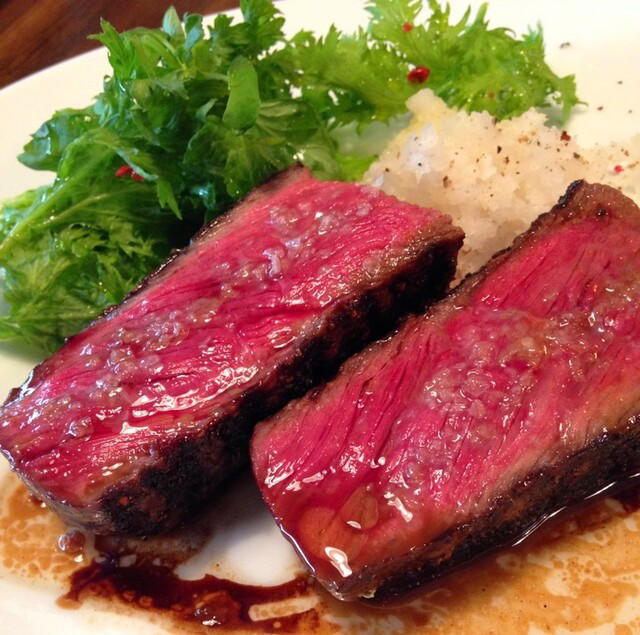
The menu is built around duck, and Osaka duck is the central main course. The name itself, French for 'duckling', signals where the kitchen's attention lies, alongside foie gras preparations. The amuse-bouche course, served on a high-tea stand, and the house pâtissière's desserts round out a prix fixe that is designed to be eaten in full, in sequence.
What style of cooking does Le Caneton do?
What does dinner at Le Caneton typically cost?
Pricing at Le Caneton is listed as ¥¥¥.
Recognition Snapshot
| Venue | Cuisine | Price | Awards | Notes |
|---|---|---|---|---|
| Le CanetonThis venue (the venue you are viewing) | French Duck & Foie Gras Specialist | $100–150 | Michelin Plate · Tabelog 100 #44 | Not listed |
| HAJIME | Avant-Garde Japanese Fine Dining | $300–500 | 3 Michelin Stars · World's 50 Best #83 | French, Innovative |
| La Cime | Modern French with Japanese Ingredients | $150–200 | 2 Michelin Stars · World's 50 Best #13 | French |
| Kashiwaya Osaka Senriyama | Seasonal Kaiseki Omakase | $200–300 | 3 Michelin Stars · La Liste Top Restaurants | Japanese |
| Taian | Traditional Japanese Kaiseki Omakase | $150–200 | 3 Michelin Stars · La Liste Top Restaurants | Kaiseki, Japanese |
| Fujiya 1935 | Modern Japanese with European influences | $100–150 | 2 Michelin Stars · La Liste Top Restaurants | Innovative |
Recognition history
Dated appearances from independent guides and award organizations, with the underlying list record or original source where available.
Michelin Plate
Michelin
Tabelog 100 #44 · No. 44
Tabelog · Tabelog 100 - French - WEST - 2025
Full recognition history (4 entries)
Michelin Plate
Michelin
Michelin Plate
Michelin