Lauriol Plaza
On 18th Street NW in the Adams Morgan corridor, Lauriol Plaza has anchored Washington's Latin dining scene for decades, drawing steady crowds to its sprawling rooftop terrace and direct Mexican and Latin American menu. It reads as a neighbourhood fixture rather than a destination tasting room, with a following built on consistency, generous portions, and one of the busiest outdoor dining footprints in the city.
Pearl is the En Primeur Club membership app — saves, bookings, and concierge access live there. Same editors, same standards.
- Address
- 1835 18th St NW, Washington, DC 20009
- Phone
- +12023870035
- Website
- lauriolplaza.com
- Directions
- Get directions
 Saves & bookings on Pearl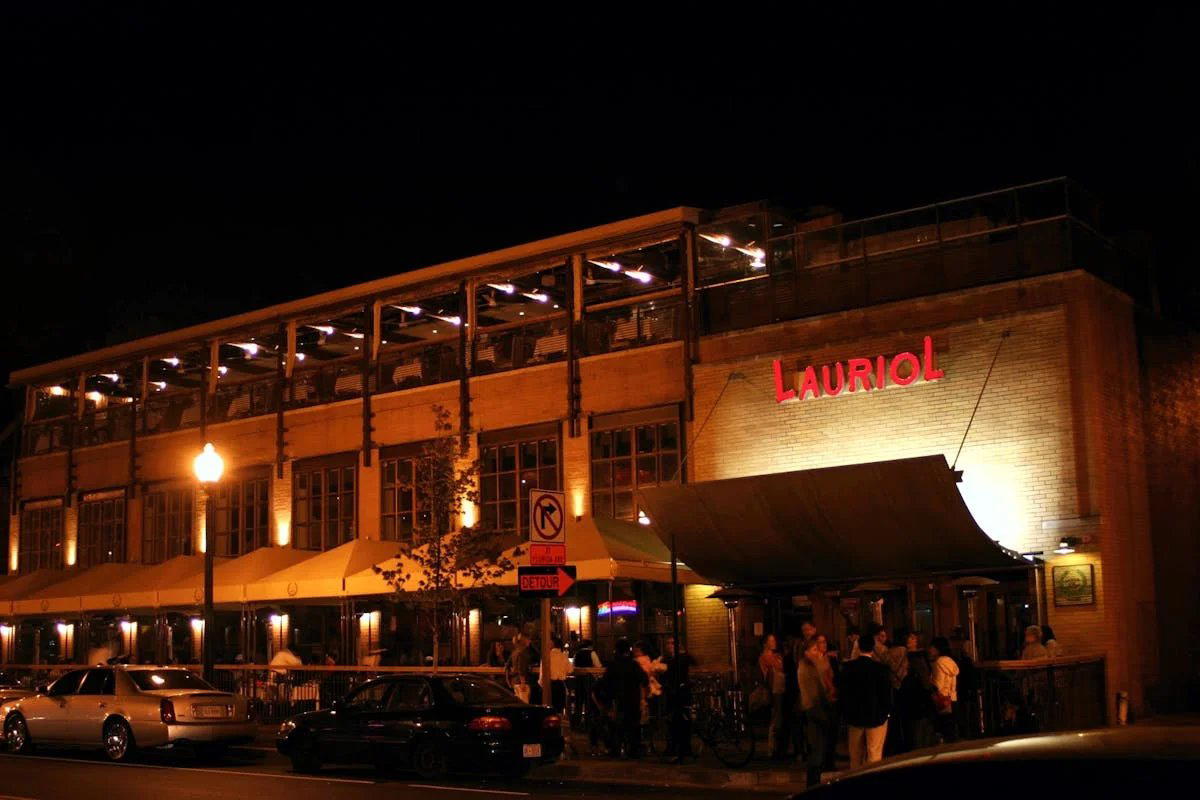
18th Street and the Rooftop Economy of Adams Morgan
Lauriol Plaza is a Mexican & Latin American restaurant in Washington, D.C. at 1835 18th St NW,668 reviews and a price tier of about $30 per person. Washington's Adams Morgan neighbourhood has always operated on a different register from the power-lunch corridors of Penn Quarter or the chef-driven blocks of 14th Street. On 18th Street NW, the pull is more social than gastronomic: long tables, warm evenings, and the kind of casual Latin cooking that lends itself to pitchers of margaritas and shared plates passed across crowded surfaces. Lauriol Plaza, at 1835 18th St NW, sits at the centre of that tradition. Its rooftop terrace is among the largest continuous outdoor dining footprints in the District, and on any given Friday in late spring, the wait times and street-level noise confirm its standing as a neighbourhood anchor rather than a reservation-driven destination.
That distinction matters when reading the D.C. dining map. The city now carries a serious cohort of ambitious restaurants: Jônt operates a modern French counter where every seat is committed to a single tasting arc, minibar applies molecular technique at a price point that signals intent, and Causa has given Peruvian cooking a serious, ingredient-focused platform. Lauriol Plaza operates in a different tier entirely, and understanding that tier is part of understanding how Adams Morgan functions as a dining district.
The Rooftop as the Experience
Washington summers arrive early and leave late. By late April, the rooftop at the restaurant is already drawing queues, and by July the terrace is effectively the main event regardless of what arrives from the kitchen. This is not uncommon in cities with compressed warm-weather seasons: outdoor seating becomes a category unto itself, and the venue that controls the leading roof or patio in a given neighbourhood often holds it regardless of culinary competition from indoors. The rooftop here has that grip on Adams Morgan.
The physical experience of arriving on a warm evening involves navigating a multi-level space, catching sightlines down 18th Street, and settling into an atmosphere that is more block party than restaurant service. That atmosphere carries weight for a particular kind of dining occasion: groups celebrating, post-work gatherings, visitors who want a recognisable Latin American menu without the formality of a curated tasting format. For those occasions, the rooftop delivers something the more austere rooms of Oyster Oyster or Albi are not designed to provide.
Where the Wine List Fits This Kind of Room
The editorial angle of wine curation sits awkwardly against the restaurant context, and that awkwardness is itself informative. Across the upper tier of American dining, wine programs have become as much a critical category as the kitchen. Le Bernardin in New York City maintains a cellar that runs to thousands of references; The French Laundry in Napa and Single Thread Farm in Healdsburg both carry wine programs treated as integral to the dining proposition. Alinea in Chicago and Blue Hill at Stone Barns in Tarrytown use their lists to extend the conceptual framework of the kitchen.
Casual Latin American restaurants operate on entirely different logic. The beverage program in this category is typically built around cocktails, specifically margaritas and frozen drinks, with the wine list functioning as a secondary offering rather than a curatorial statement. That is not a criticism; it reflects the genre. A long list of aged Riojas or Burgundy whites would serve no structural purpose in a room where the ask is cold, fast, and social. The relevant comparison set for the bar program here is not the sommelier-driven rooms at Providence in Los Angeles or Atomix in New York City; it is the broader category of high-volume casual Latin dining in American cities, where the margarita pitcher is as much a signal of format as the bread course at a tasting menu counter.
Lauriol Plaza in the D.C. Latin Dining Conversation
Washington has expanded its Latin American dining options considerably over the past decade. The city now has serious representations of Peruvian, Venezuelan, Salvadoran, and Colombian cooking across multiple price points and formats. In that expanded field, the restaurant holds its position through longevity and volume rather than through culinary differentiation. It has been operating on 18th Street long enough that it functions as an orientation point for the neighbourhood itself.
That kind of tenure creates a specific kind of credibility. It is not the credibility of award recognition, of the sort tracked at Addison in San Diego or The Inn at Little Washington, where Michelin stars and James Beard nominations form part of the venue identity. It is the credibility of the neighbourhood fixture: a place that has outlasted multiple cycles of restaurant openings and closures on the same block, and whose regulars return for the terrace and the familiarity rather than for any evolving tasting proposition.
For visitors building a broader D.C. itinerary, the venue sits alongside rather than in competition with the city's more formally ambitious rooms. The restaurant reads clearly as the latter. Similarly, anyone comparing casual-register Latin dining in American cities would find parallels in the longevity-driven neighbourhood institution model visible at Emeril's in New Orleans or Lazy Bear in San Francisco, though each operates in a different culinary register.
Those seeking a more controlled dining experience in D.C.'s Latin American category might also consider Causa, which operates at a higher price point with a tighter, Peruvian-focused format.
- Chicken with Orange Bitters
- Salmon with Shrimp
- Masitas de Puerco
- Lomo Salado
- Beef Fajitas
- Carne Asada
Peers Worth Knowing
Comparable venues nearby, for context on price, style, and recognition.
| Venue | Cuisine | Price | Notes |
|---|---|---|---|
| Lauriol PlazaThis venue — the venue you are viewing | Mexican & Latin American | $$ | Not listed |
| El Tamarindo | Authentic Salvadoran & Mexican | $$ | Reed-Cooke |
| Agua 301 | Modern Mexican | $$ | Near Southeast |
| Talkin' Tacos Washington DC | Authentic Mexican Taqueria | $$ | Dupont Circle |
| The Well Dressed Burrito | Southwestern Burritos | $ | Dupont Circle |
| Gemini | Greco‑Roman small plates, pasta & pizza with natural wine | $$ | Dupont Circle |
Continue exploring
More in Washington DC
Restaurants in Washington DC
Browse all →
Bars in Washington DC
Browse all →
Hotels in Washington DC
Browse all →
At a Glance
- Lively
- Well Known
- Scenic
- Energetic
- Group Dining
- Casual Hangout
- Brunch
- Celebration
- Date Night
- Rooftop
- Terrace
- Panoramic View
- Standalone
- Craft Cocktails
- Beer Program
- Street Scene
Current opening hours
- Monday
- 11:30 AM–10 PM
- Tuesday
- 11:30 AM–10 PM
- Wednesday
- 11:30 AM–10 PM
- Thursday
- 11:30 AM–10 PM
- Friday
- 11:30 AM–11:30 PM
- Saturday
- 11:30 AM–11:30 PM
- Sunday
- 11 AM–10 PM
Hours can change for holidays and private events. Last verified .
Cool and urbane interior with matte-black metal, white walls, and curved wooden ceiling; Spanish fiesta mural in bar; tall windows frame street activity; lively and inviting throughout multiple levels.