
Latteria sits in Milan's Brera district as a reference point for no-frills Milanese cooking, drawing a loyal neighbourhood crowd with its plainspoken trattoria format. The kitchen operates under chef Arturo Maggi with a focus on regional classics, and the room itself, compact, worn-in, and unhurried, tells you everything you need to know before the first course arrives. Recognised by Opinionated About Dining (2023) as Highly Recommended in the Casual Europe category.
Pearl is the En Primeur Club membership app — saves, bookings, and concierge access live there. Same editors, same standards.
- Address
- Via S. Marco, 24, 20121 Milano MI, Italy
- Phone
- +39 02 659 7653
- Directions
- Get directions
 Saves & bookings on Pearl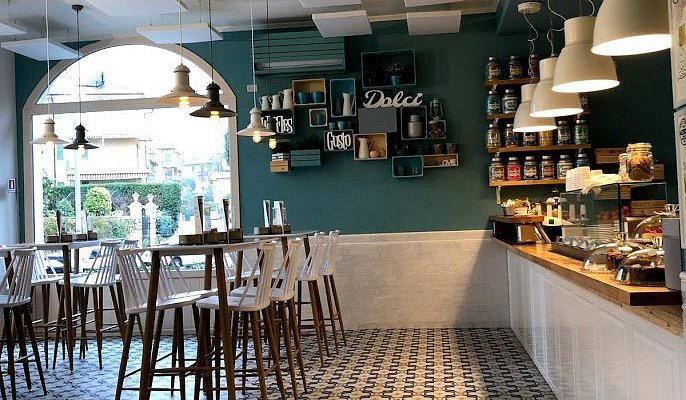
A Room That Earns Its Reputation Before You Sit Down
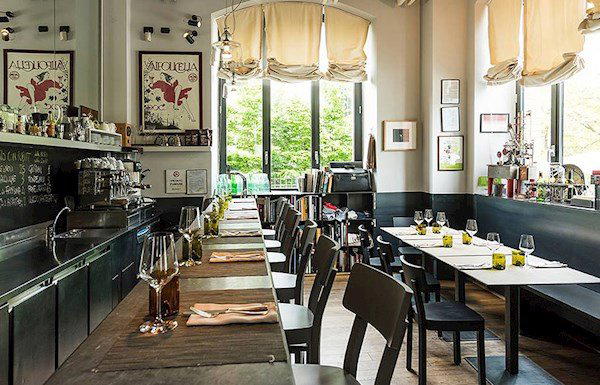
In a city that has spent the last decade importing tasting-menu formats and Nordic-inflected plating into every available dining room, the Milanese trattoria has become something closer to a political statement than a format. Latteria is a vegetarian Italian restaurant on Via S. Marco, 24, 20121 Milano MI, Italy. The room is small, the furniture functional, the walls aged rather than art-directed. Nothing about the physical space has been designed to signal ambition in the contemporary sense, which is, in Milan's current dining moment, precisely what makes it legible as a serious address.
The trattoria format across northern Italy operates on a logic that newer restaurant categories have struggled to replicate: the space, the food, and the clientele exist in a kind of equilibrium. Tables are close enough that the room hums at lunch, the lighting is settled rather than theatrical, and the pace of service moves at the rhythm of the kitchen rather than a hospitality script. Latteria fits that template with enough consistency that its.
Brera as a Frame
The neighbourhood context matters here. Brera is the part of Milan that tourists find first and locals have learned to negotiate carefully. The cobbled streets around the Pinacoteca di Brera and the Orto Botanico draw significant foot traffic, and the restaurant density along Via Solferino, Corso Garibaldi, and the streets connecting them is high enough that mediocre rooms survive on location alone. Via San Marco sits at the quieter edge of that corridor, which means Latteria draws a crowd that has made a specific choice rather than one that wandered in from the adjacent aperitivo circuit.
That geography places Latteria in a different competitive set from the destination restaurants that define Milan's upper tier. The city's high-end dining operates at a remove from neighbourhood life: Enrico Bartolini at Mudec runs a multi-Michelin-starred creative program; Il Cairoli, Boeucc, and Bice each occupy their own historical registers. Latteria's comparable set is the city's surviving casual Milanese rooms, places where the menu changes with the market rather than the season, and where the value of the experience is inseparable from the room's physical character.
What the Space Is Actually Doing
The design argument for a room like Latteria's is rarely made explicitly, but it is worth articulating. The trattoria interior in its classic form is not an absence of design, it is a design position that treats accumulation over time as more credible than coherence by brief. The patina on the furniture, the slight crowding of tables, the way the light falls at midday through windows that have not been reconfigured for flattering photography: these are not failures of renovation but evidence of continuity. A room that looks like it has always looked is making a claim about permanence that a freshly designed space cannot replicate.
This matters because Milan's dining market has been moving in the opposite direction. The city's newer casual openings increasingly reference Scandinavian minimalism or the kind of exposed-concrete aesthetic that reads as contemporary across European cities. Against that backdrop, a room like Latteria's functions as orientation: it tells the visitor something specific about where they are, both geographically and culturally. It is a Milan interior rather than a generic European restaurant interior, and that specificity carries editorial weight that newer spaces earn only gradually, if at all.
The Milanese Kitchen in Its Casual Register
The cuisine category, Milanese, connects Latteria to a tradition that is narrower than it might appear. Milanese cooking is not simply Lombard cooking repackaged: it has its own set of reference dishes (risotto alla Milanese, cotoletta, ossobuco, cassoeula in the colder months) and its own logic about restraint, about dairy and saffron and the particular richness that defines the city's table. In the casual register, that tradition is maintained most faithfully in rooms that have neither the budget nor the inclination to reinterpret it, which is a structural argument for the trattoria format's continued relevance.
Chef Arturo Maggi operates within that tradition. That Latteria appears in this list alongside rooms from across Europe places it in a comparable set defined by cooking quality and format integrity, not by price point or design ambition.
The city's range, from neighbourhood trattorie like Antica Osteria il Ronchettino and Osteria del Ponte in Trezzano sul Naviglio to the structured ambition of destination tables, is wide enough that understanding the tier you are entering matters before you book.
Know Before You Go
| Address | Via S. 1 from 431 reviews |
|---|---|
| Booking | Recommended |
The Quick Read
Comparable venues nearby, for context on price, style, and recognition.
| Venue | Cuisine | Price | Notes |
|---|---|---|---|
| LatteriaThis venue — the venue you are viewing | Brera, Vegetarian Italian | $$ | Not listed |
| Pizzacoteca di Brera | Brera, Gourmet Neapolitan Pizza | $$ | Not listed |
| Pastamadre | Pta Romana, Modern Sicilian Pasta | $$ | Not listed |
| My Heart | Xxii Marzo, Gluten-Free Italian Pizzeria | $$ | Not listed |
| Losko | Not listed | $$$ | Buenos Aires - Porta Venezia - Porta Monforte, Modern Italian Grill |
| Luini | Duomo, Puglian Panzerotti | $ | Not listed |
Recognition history
Dated appearances from independent guides and award organizations, with the underlying list record or original source where available.
Opinionated About Dining Newly Added European Restaurants
Opinionated About Dining
Opinionated About Dining Casual in Europe Recommended
Opinionated About Dining
Opinionated About Dining Casual in Europe Highly Recommended
Opinionated About Dining
Continue exploring
More in Milan
Restaurants in Milan
Browse all →
Bars in Milan
Browse all →
Hotels in Milan
Browse all →
At a Glance
- Cozy
- Intimate
- Rustic
- Casual Hangout
- Standalone
Current opening hours
- Monday
- 12:30–2:30 PM, 7:30–10 PM
- Tuesday
- 12:30–2:30 PM, 7:30–10 PM
- Wednesday
- 12:30–2:30 PM, 7:30–10 PM
- Thursday
- 12:30–2:30 PM, 7:30–10 PM
- Friday
- 12:30–2:30 PM, 7:30–10 PM
- Saturday
- Closed
- Sunday
- Closed
Hours can change for holidays and private events. Last verified .
Minimalist and charming with a homey, crowded feel from closely packed tables in small rooms.