
A former tea leaf factory in Beipu Township, Lao Tou Pai has operated as a Hakkanese restaurant for around 30 years, with red-brick walls, wooden beams, and wood-fired ceramics setting the tone. The menu centres on traditional Hakka cooking, with slow-braised pork belly and homemade preserved mustard greens among the dishes that define the kitchen's approach. It sits at the more rooted, heritage-focused end of Hsinchu County's dining scene.
Pearl is the En Primeur Club membership app — saves, bookings, and concierge access live there. Same editors, same standards.
- Address
- 46-1, Neighborhood 4, Dalin Village, Beipu Township
- Phone
- +886 3 580 1501
- Directions
- Get directions
 Saves & bookings on Pearl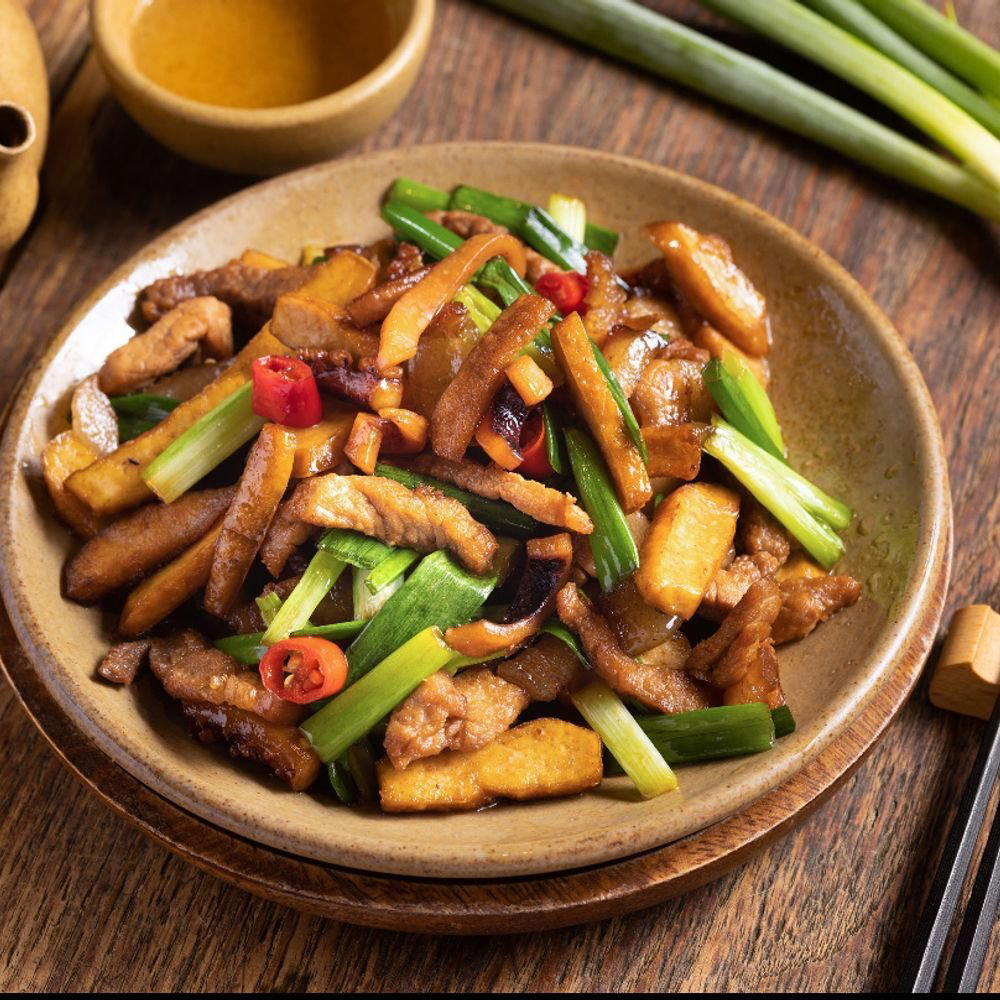
Red Brick, Wood Smoke, and the Hakka Table
Beipu Township sits in the foothills of Hsinchu County, a short distance from the city but meaningfully different in character. It is among the more concentrated Hakka communities in Taiwan, and the cuisine here carries the evidence of that history: preserved ingredients, slow cooking, and a flavour register built on intensity rather than delicacy. This is the culinary tradition that Lao Tou Pai has occupied for roughly three decades, in a building that predates the restaurant by another generation entirely.
The physical space begins the argument before any food arrives. The owner's family operated a tea leaf factory on this site, and when it was remodelled into a restaurant some 30 years ago, the industrial bones stayed: red brick walls, heavy wooden beams, and wood-fired ceramics that carry the warmth of long use. In many parts of Taiwan, this kind of heritage conversion would be aestheticised into a design statement. Here it functions more like an inheritance, worn in rather than staged. The atmosphere at Lao Tou Pai belongs to a category of dining spaces that earn their atmosphere through continuity rather than concept.
The Hakka Kitchen in Context
Hakka cuisine sits in a specific position within Taiwan's broader food culture. Unlike the Hokkien-inflected street food that defines much of the island's popular culinary identity, or the Taiwanese aboriginal cooking that has attracted growing attention at restaurants like Akame in Wutai Township, Hakka food is built around preservation, frugality, and depth. Historically a cuisine of communities that farmed difficult land, it developed techniques for making ingredients last: fermenting, pickling, drying, slow-braising. The results are dishes with layered, assertive flavours that reward patience in both the kitchen and the diner.
Red shiso is one marker of this tradition that appears on the menu at Lao Tou Pai. The herb carries a sharper, more complex profile than the green variety familiar from Japanese cooking, and its use here signals a kitchen working within a specific regional vocabulary rather than reaching for broadly accessible ingredients. At the other end of Taiwan's contemporary restaurant scene, places like JL Studio in Taichung or logy in Taipei have built reputations on reinterpreting regional traditions through a fine-dining framework. The restaurant operates in a different register entirely, one where the tradition is the point, not the raw material for transformation.
What the Kitchen Does
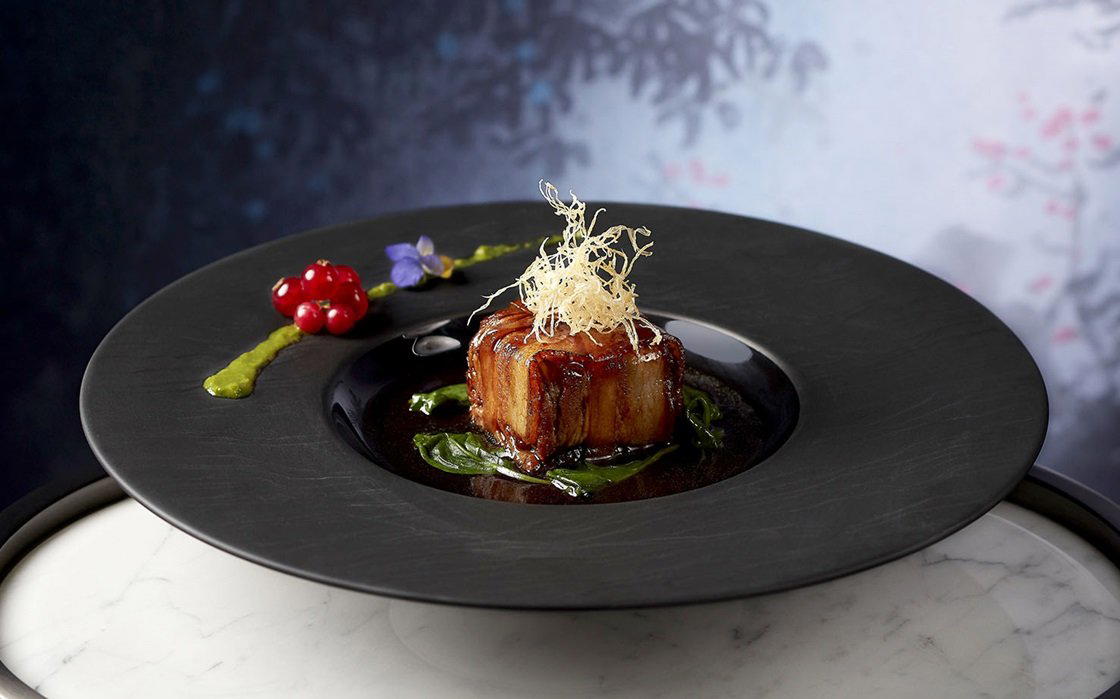
The braised pork belly with homemade preserved mustard greens is the dish that most clearly defines the kitchen's position. Slow cooking allows the fat to render gradually while the preserved greens contribute a fermented, slightly sour depth that cuts through the richness of the pork. The mustard greens are made in-house, which matters in this context: the flavour of preserved vegetables changes significantly depending on the salt content, fermentation time, and the starting quality of the produce. Commercial versions are consistent but predictable. House-made versions carry variation and intention.
This is also a dish that places the restaurant in a broader conversation about Hakka cooking across Taiwan and the diaspora. The combination of braised fatty pork and preserved mustard greens appears in various forms from Hsinchu to the Hakka communities of southeastern China and Southeast Asia, and its presence here is less a signature than a commitment to the canon. Restaurants like Zhu Xin Ju in Tainan or GEN in Kaohsiung approach Taiwanese culinary identity from different regional angles; the restaurant's version is rooted specifically in the Hakka north.
The Beipu Setting and How It Shapes the Experience
Beipu is not a dining destination in the way that parts of Taipei or Tainan have become. It is a township with a working character, a Saturday market, and old tea houses that have served local families for generations. Arriving at the restaurant from outside the area requires intention: the address at 46-1, Neighborhood 4, Dalin Village, Beipu Township is not the kind of location that captures passing trade. Within Hsinchu County's dining scene, venues like Firoo, Bebu, and Chuan Fu operate in more accessible or urban contexts. The restaurant draws from a different logic, where location reinforces authenticity rather than convenience.
That separation from the county's more densely serviced dining corridors also means the experience here exists on different terms from the urban Hakka restaurants that have adapted the cuisine for broader audiences. The building, the location, and the menu read as a coherent whole rather than a deliberate positioning exercise. For visitors also considering nearby options, Ang Gu and Geng Ye Yue Mei offer additional perspectives on Hsinchu County's food character.
Planning a Visit
The township itself rewards a half-day visit: the old street in Beipu and the surrounding tea-growing hills give context to the agricultural tradition that the restaurant's building literally contains. Those extending further through Taiwan might also look at Volando Urai Spring Spa and Resort in Wulai District or Emeril's in New Orleans and Le Bernardin in New York City for reference points on how heritage-inflected cooking performs at different price tiers and in different cultural contexts.
Cuisine Context
Comparable venues nearby, for context on price, style, and recognition.
| Venue | Cuisine | Price | Awards | Notes |
|---|---|---|---|---|
| Lao Tou PaiThis venue — the venue you are viewing | Traditional Hakkanese | $$ | Michelin Plate | Not listed |
| Tsou Chi Cai Bao (Zhongzheng Road) | Hakkanese Small Eats | $ | Bib Gourmand | Beipu Township |
| Mud Brick House | Hakka | $$$ | Michelin Plate | Beipu Township |
| Bebu | Hakka | $$ | Bib Gourmand | Beipu Township |
| Ko Chia Pen Se | Hakkanese | $$ | Michelin Plate | Beipu District |
| Yummy | Taiwanese Contemporary | $$ | Michelin Plate | East District |
Recognition history
Dated appearances from independent guides and award organizations, with the underlying list record or original source where available.
Michelin Plate
Michelin

At a Glance
- Rustic
- Cozy
- Family
- Casual Hangout
- Historic Building
Rustic atmosphere with red bricks, wooden beams, and wood-fired ceramics.