
Michelin Bib Gourmand
Our verdict
A Michelin Bib Gourmand recipient in consecutive years (2024 and 2025), Lao A Bo occupies the affordable end of Quanzhou's serious seafood scene without compromising on ingredient sourcing. The owner's background in food distribution shows in the quality of rarely-seen catch: wild mudskippers, giant sea snails, and swimmer crabs anchor a menu that pairs Fujian coastal produce with home-style staples at mid-range prices.

Pearl is the En Primeur Club membership app, where members save venues, book tables and use the concierge.
The menu
What to order
- River fish steamed in banana leaf with wild citrus
- Wild-caught mudskippers braised with shallots and black beans
- Charred eggplant relish
- Gigantic sea snails
- Swimmer crabs
Where Fujian Coastal Cooking Meets Serious Sourcing
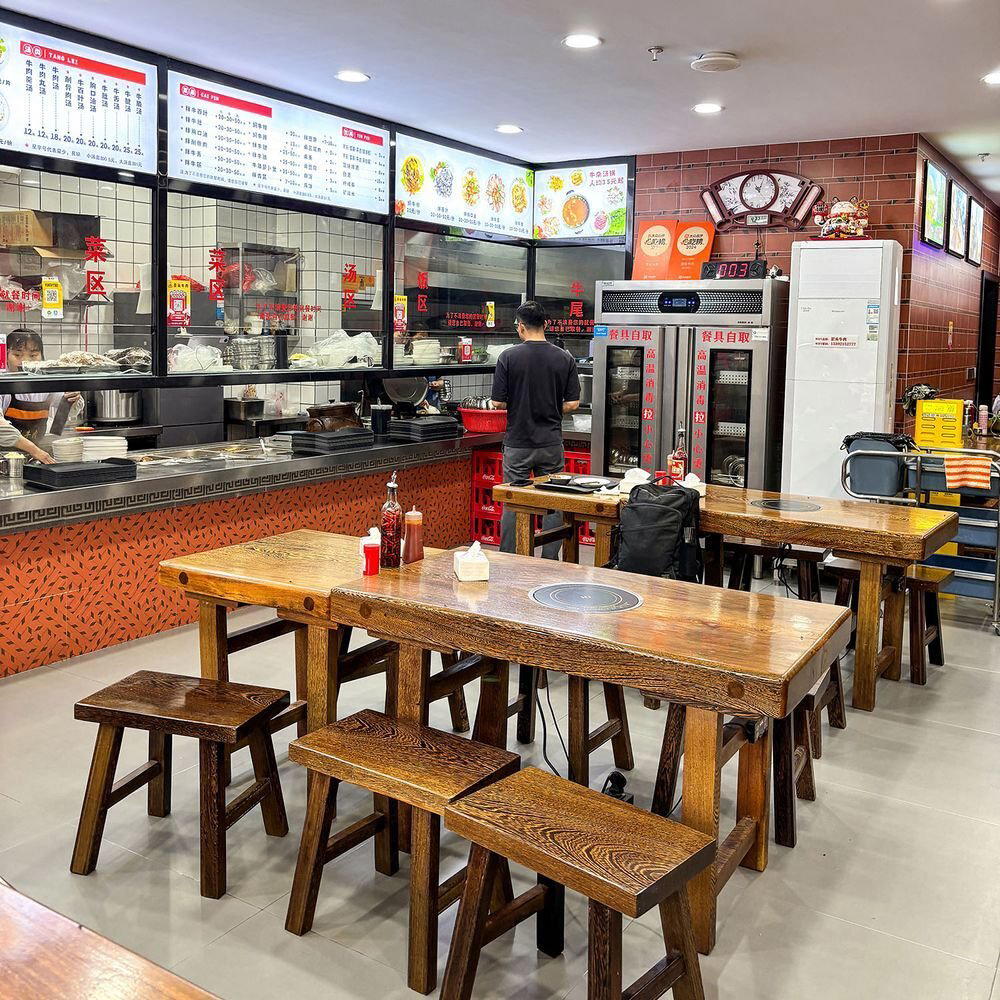
Fengze District sits east of Quanzhou's historic core, a working neighbourhood where the city's appetite for honest seafood is served without ceremony. Along Jinhuai Street, the format is familiar: tiled interiors, shared tables, menus that change with the catch. What separates one kitchen from the next at this price tier is sourcing discipline, and that is precisely where Lao A Bo has built its reputation over more than a decade of regular trade.
Fujian's coastal cuisine relies on a supply chain that most inland visitors never see. The province's position along the Taiwan Strait means access to a diversity of inshore species, many of which rarely travel beyond local markets. At the affordable end of the price spectrum, that produce is usually filtered through compromise: lower-grade catch, farmed substitutes, or species familiar enough to command volume. Lao A Bo operates against that tendency. The owner's prior career as a food distributor gave him both the contacts and the judgment to hold out for less common material, and the kitchen has been built around that supply rather than the other way around.
The Ingredients Driving the Menu
The clearest expression of that sourcing philosophy is the mudskipper, a species that most Chinese restaurants outside Fujian and Guangdong never touch. Wild-caught and braised with shallots and black beans, the preparation is a direct Hokkien technique that lets the fish's texture do the work: springy, dense flesh that absorbs the fermented depth of the black bean without losing its own character. It is the kind of dish that only works when the starting ingredient is right, and it appears here with enough consistency to anchor the kitchen's reputation among regulars.
Fujian seafood cooking at this level tends to rely on contrast rather than elaboration. Giant sea snails arrive with the kind of chew that rewards patience, and swimmer crabs, when the season allows, are treated with similar restraint. The broader menu follows the same logic: braised pork rice, tofu dressed in sa cha sauce, blood curd soup. These are home-style staples that in lesser hands serve as filler around the seafood, but here function as a coherent second register, evidence that the kitchen understands the full grammar of Hokkien cooking rather than just its showpiece ingredients.
Sa cha sauce, a condiment with roots in Southeast Asian Hokkien communities and now thoroughly embedded in Fujian and Taiwan cooking, deserves particular attention as a marker of regional identity. Its appearance on a mid-range Quanzhou menu alongside rarer seafood signals a kitchen more interested in the integrity of a culinary tradition than in chasing trends. For readers interested in how Fujian cooking travels and transforms across diaspora routes, the comparison with Hokklo, Fujian in Xiamen and Hokkien Cuisine, Fujian in Chengdu is instructive: what stays constant, what adapts, and what gets lost in translation.
Bib Gourmand Status and What It Signals
Michelin's Bib Gourmand designation, awarded in both 2024 and 2025, is the relevant benchmark here. The award is specifically designed for restaurants delivering quality above what the price point would suggest, and it maps closely onto what Lao A Bo does: uncommon ingredients, competent technique, and prices that remain accessible to daily trade. Two consecutive years of recognition confirm that the kitchen is consistent rather than episodic, which at the ¥¥ tier matters more than any single exceptional service.
For context on how Fujian cooking performs at higher price points in the region, Qing You Yu operates in the ¥¥¥ seafood tier in Quanzhou, while Chun Sheng occupies a comparable mid-range Fujian position. Nationally, kitchens working with premium Fujian product include Xin Rong Ji (Xinyuan South Road) in Beijing and Xin Rong Ji in Chengdu, both operating at a significantly different price and formality tier. The distance between those rooms and Jinhuai Street illustrates the range across which Hokkien and Fujian cooking now operates in mainland China.
Quanzhou's Broader Dining Scene
Quanzhou does not attract the volume of food tourism that Xiamen commands despite holding comparable culinary depth. That gap between reputation and quality is most visible at the affordable mid-range level, where kitchens like this one operate without the marketing infrastructure that drives reservation demand in larger coastal cities. The Fengze District address is not a destination neighbourhood by the standards of Chinese food tourism, which means the crowd here skews local: regulars who have been returning for over a decade and who track the kitchen's sourcing by what appears on the table rather than what is written on a menu board.
For visitors building a broader Quanzhou itinerary, the city's dining scene rewards lateral movement across price tiers and cuisine types. Hall Thing (Licheng), Antstory, Jian Lai Fa, and A Qiu Niu Pai (Huxin Street) each occupy distinct positions within the city's offer. The full Quanzhou restaurants guide covers the range in detail, and hotels, bars, wineries, and experiences guides are available for full trip planning.
Further afield, readers interested in how contemporary Chinese kitchens are reinterpreting regional traditions at higher price points can reference 102 House in Shanghai, Ru Yuan in Hangzhou, Chef Tam's Seasons in Macau, and Imperial Treasure Fine Chinese Cuisine in Guangzhou for a broader view of where the tradition sits in the contemporary Chinese dining conversation.
Planning a Visit
Lao A Bo is located at 367 Jinhuai Street in Fengze District, reachable by taxi or rideshare from Quanzhou's central areas in under twenty minutes. No phone or website is listed in public records, which is consistent with a kitchen that fills through word of mouth and returning regulars rather than online booking channels. Arriving early, particularly for weekend lunch, is the practical move: seafood-led kitchens at this price tier in Chinese cities typically run through the better ingredients before the late sitting. The ¥¥ price bracket means a table for two with multiple dishes remains a modest spend by any regional benchmark. Dress code is informal; the neighbourhood and format make that self-evident.
Frequently asked questions
Does Lao A Bo have a Michelin star or similar recognition?
Lao A Bo has received recognition including: For over 10 years, regulars have been flocking here to sample ingredients that are rarely found elsewhere. The owner used to be a food distributer and has always been picky about his seafood. Adventurous eaters may try wild-caught mudskippe….
What do people recommend at Lao A Bo?
The wild-caught mudskippers braised with shallots and black beans draw the most consistent attention, it is a species that rarely appears on menus outside Fujian and Guangdong. Gigantic sea snails and swimmer crabs are also frequently cited by regulars, alongside home-style staples like braised pork rice and blood curd soup. The owner's background as a seafood distributor shapes every item on the menu, which is why the sourcing holds up across the board.
What's the pricing like at Lao A Bo?
Pricing at Lao A Bo is listed as ¥¥.
What part of town is Lao A Bo in?
Lao A Bo is located at 367 Jinhuai St, Fengze District, Quanzhou, Fujian, China, 362019, Quanzhou.
Can I walk in to Lao A Bo?
No reservation platform or booking contact appears in the available record, so walk-in is the practical approach. The restaurant has held Michelin Bib Gourmand status in both 2024 and 2025, which draws a steady crowd, so arriving early or at off-peak hours is the safer strategy. Quanzhou's mid-range dining culture generally runs on first-come seating rather than advance bookings at this price level.
What's the defining dish or idea at Lao A Bo?
The mudskipper is the clearest statement of what this restaurant does: the owner spent years as a seafood distributor and built the menu around ingredients that most urban Chinese restaurants simply cannot source. That philosophy extends to the sea snails, swimmer crabs, and house staples like tofu in sa cha sauce. Two consecutive Michelin Bib Gourmand awards confirm that the kitchen's consistency matches the sourcing ambition.
| Venue | Cuisine | Price | Awards | Notes |
|---|---|---|---|---|
| Lao A BoThis venue (the venue you are viewing) | Refined Laotian & Fujian Seafood | $20–30 | Michelin Bib Gourmand | Not listed |
| Chun Sheng | Home-style Fujian | $20–30 | Michelin Bib Gourmand | Fujian |
| Jiang Nan Yuan | Vegetarian | Not listed | Not listed | Not listed |
| Luo Ji Mian Xian Hu | Minnan Noodle Shop | $10–20 | Michelin Bib Gourmand | Noodles |
| Qing You Yu | Live Seafood Selection with Refined Fujian Technique | $50–100 | 1 Michelin Star · Black Pearl 1 Diamond | Seafood |
| Che Qiao Tou Wen A Shui Wan (Daxi Street) | Traditional Quanzhou Small Eats | Not listed | Michelin Bib Gourmand | Not listed |
Recognition history
Dated appearances from independent guides and award organizations, with the underlying list record or original source where available.
Michelin Bib Gourmand
Michelin
Full recognition history (3 entries)
Michelin Bib Gourmand
Michelin
Michelin Bib Gourmand
Michelin
Continue exploring
More in Quanzhou
Restaurants in Quanzhou
All restaurants in Quanzhou →
Bars in Quanzhou
Browse all →



Details
- Intimate
- Elegant
- Quiet
- Sophisticated
- Date Night
- Special Occasion
- Open Kitchen
- Sommelier Led
- Local Sourcing
- Sustainable Seafood
- Tasting Menu
- A La Carte
- Lao Rice Spirits
- Old World Wines
- Artisanal European Producers
- Herbal Teas
- Pescatarian Friendly
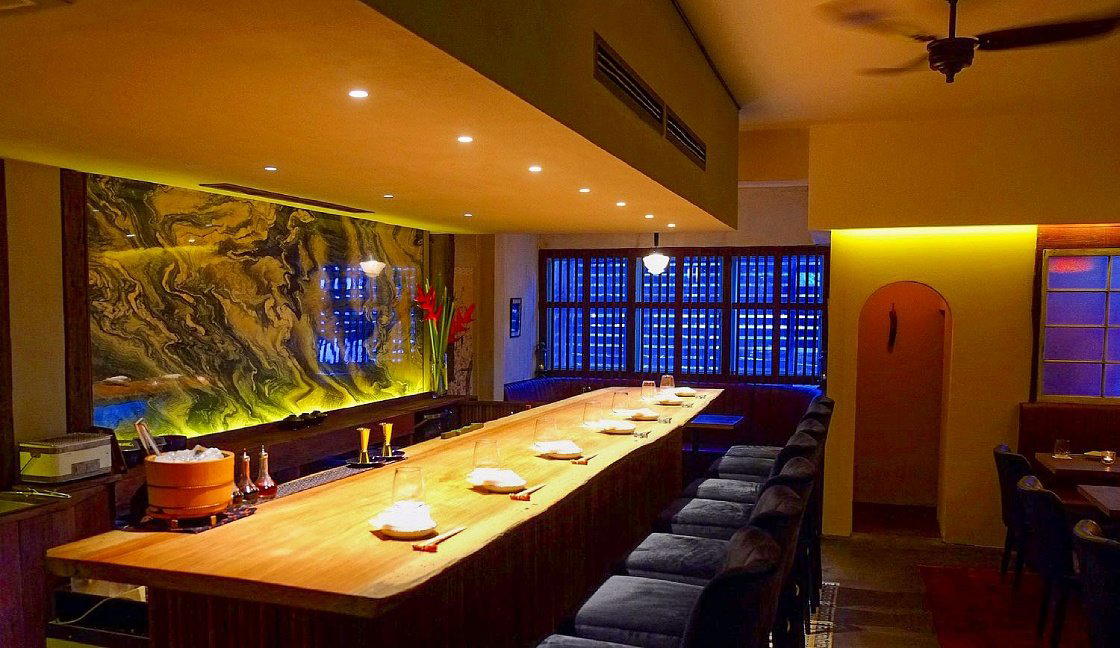
Soft hand-polished teak, delicate silk, candlelit tables casting golden glow, artisanal ceramics, subtle perfume of lemongrass and toasted rice creating an intimate yet airy atmosphere.