.png)
A Bib Gourmand–recognised home-style Fujian restaurant in Jinjiang, Chun Sheng has drawn local families for over two decades with its no-menu, choose-your-own-ingredient format. Ginger duck stew and fried green lobster in peppered salt are the dishes regulars return for. The ¥¥ price point makes it one of the more accessible ways to eat serious Fujian cooking in the Quanzhou area.
 Discover on Pearl
Pearl is the En Primeur Club membership app — saves, bookings, and concierge access live there. Same editors, same standards.
Where the Table Does the Talking
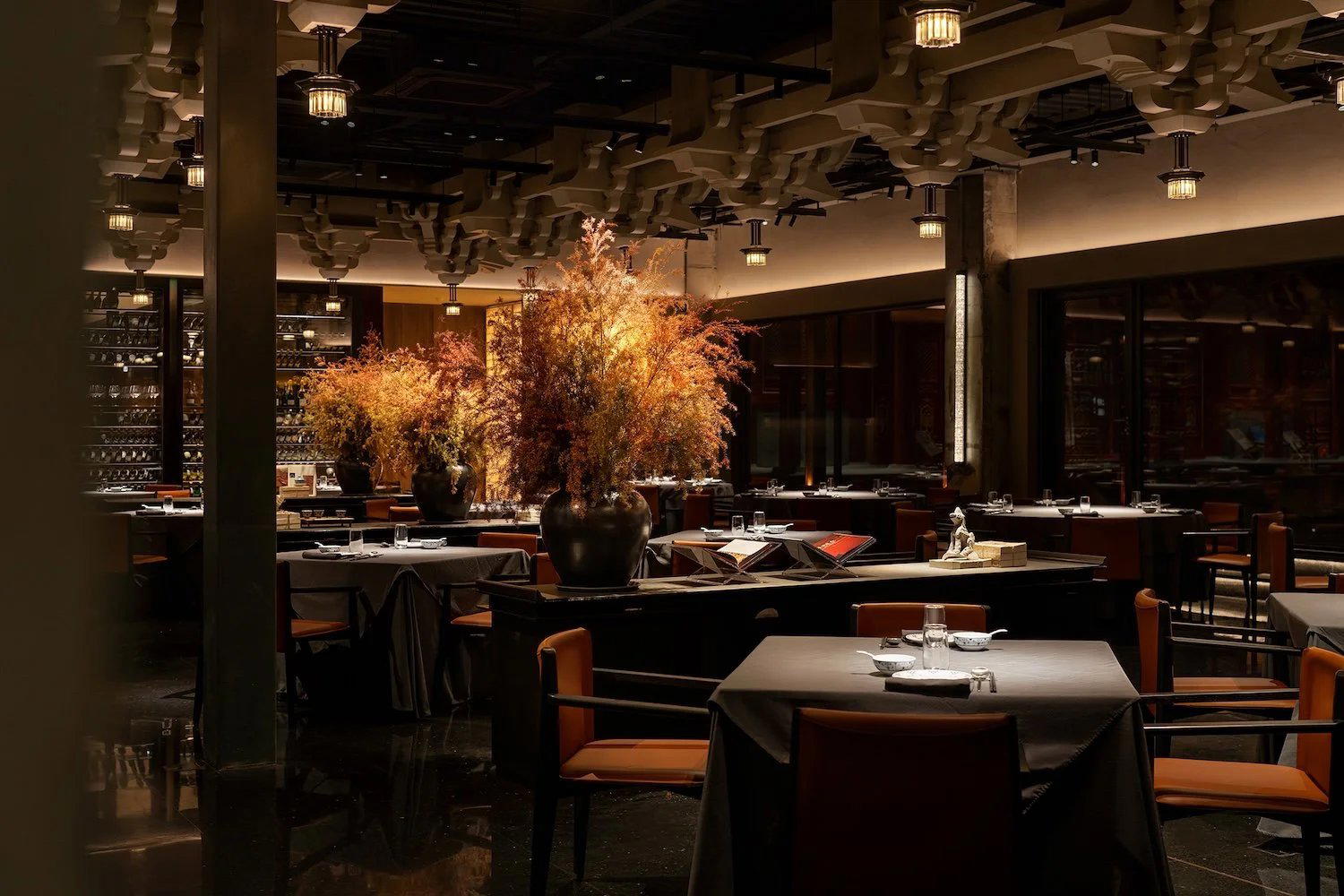
The dining rooms that define Fujian home cooking rarely announce themselves. They sit in commercial strips on the edges of cities, in buildings that prioritise function over facade, where the noise level rises in proportion to how full the lazy Susan has become. Chun Sheng, on Shuang Xue Lu in Jinjiang, operates firmly in this tradition. The signal that something serious is happening inside is not a sign or a shopfront, but the cars parked three rows deep on a weekend evening and the sound of ceramic meeting ceramic through an open door.
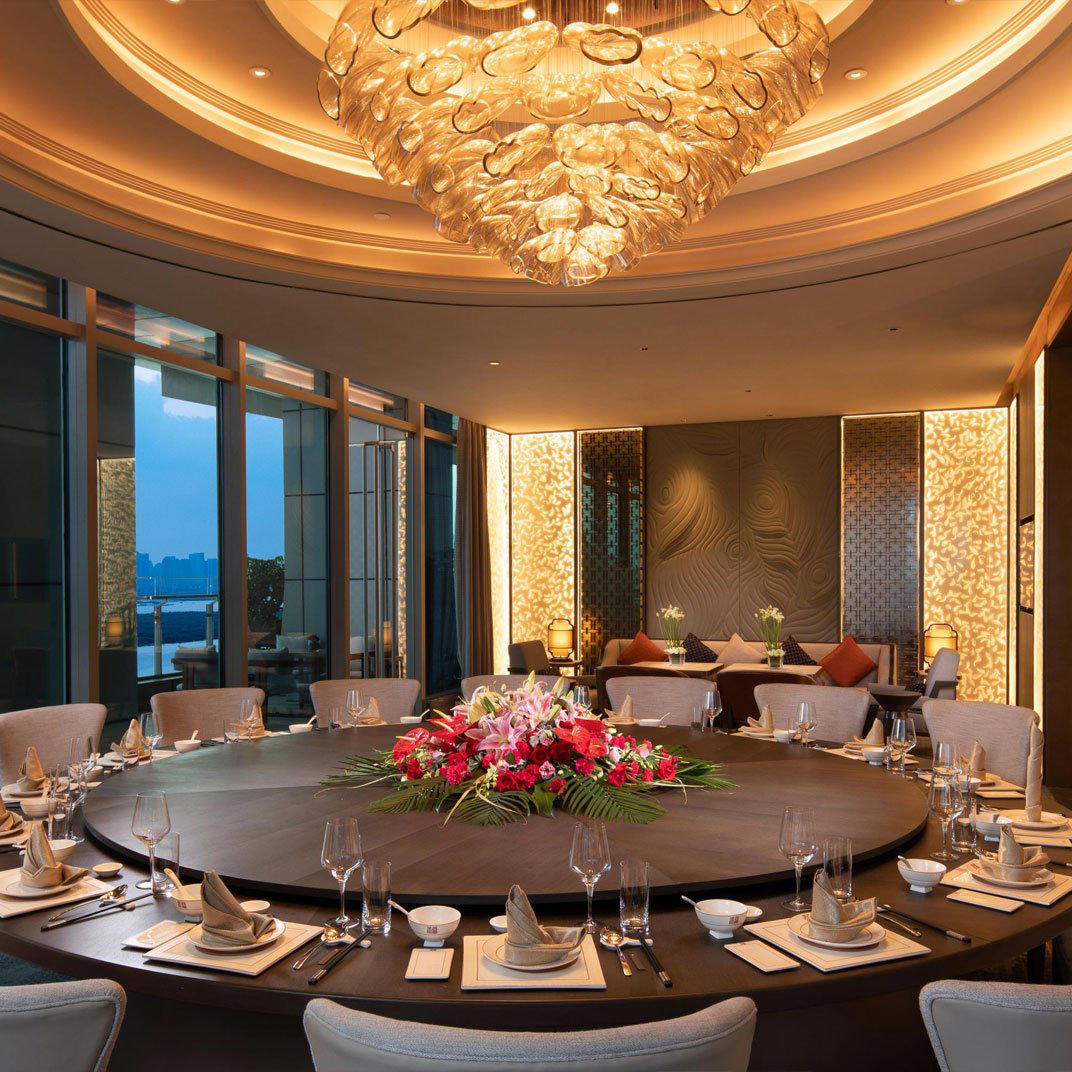
This is the communal dining format that defines southern Fujian family meals: a large round table, a spinning centre loaded with shared dishes, and an implicit understanding that the meal belongs to the group rather than the individual. Courses arrive as they're ready, not in a choreographed sequence, and the table fills incrementally until every inch of the lazy Susan is occupied. That format has not changed at Chun Sheng in over two decades of operation, and the Michelin Bib Gourmand recognition it received in both 2024 and 2025 reflects a consistent kitchen rather than a recent reinvention.
The Logic of No Menu
Across Fujian's home-style restaurant circuit, the most trusted houses tend to operate without a printed menu. The format is consistent: a fish tank near the entrance holds live seafood, a chiller displays cuts of meat and poultry, and the diner's job is to select ingredients and ask the server how to prepare them. It is a system built on freshness and on the kitchen's confidence in its own range. A printed menu is, in some sense, a hedge against the unknown — the no-menu format removes that hedge and replaces it with a direct conversation about what arrived at the market that morning.
At Chun Sheng, that conversation typically steers toward two dishes that regulars treat as non-negotiable. Ginger duck stew is the kitchen's signature, a preparation that draws on the Hokkien tradition of long-braised poultry with aromatics, producing meat that yields without falling apart and a broth deepened by ginger and rice wine. The fried green lobster in peppered salt represents the seafood side of the equation: the crustacean's natural sweetness given contrast by the dry, sharp bite of peppercorn salt, with a texture described by the Michelin inspectors as bouncy — a term that in Cantonese and Hokkien food culture carries specific weight, implying a particular live-catch freshness and careful frying technique.
Both dishes sit within a broader Fujian culinary grammar that prizes clarity of flavour over complexity of technique. Fujian cooking , sometimes grouped under the Hokkien umbrella when discussed in the context of its diaspora in Southeast Asia , leans on umami-rich stocks, careful seasoning rather than aggressive spicing, and seafood treated with restraint. Dishes at restaurants like Hokklo in Xiamen and Hokkien Cuisine in Chengdu operate from the same culinary base, though each interprets it through a different local context. Chun Sheng's version is resolutely home-style: no refinement for refinement's sake, no plating gestures directed at cameras.
Positioning in Quanzhou's Dining Circuit
The Quanzhou restaurant scene divides, broadly, into refined seafood houses charging premium prices per head and mid-range Fujian tables where local families eat regularly rather than occasionally. Hall Thing in Licheng occupies the same ¥¥ bracket as Chun Sheng and draws a similar local following for Fujian cooking. The Bib Gourmand designation, awarded by Michelin for quality at a price point rather than for gastronomic ambition, explicitly positions Chun Sheng in this tier , it is recognition of value and consistency, not of innovation or prestige-ingredient sourcing.
That distinction matters for how to read the award. The Bib Gourmand cohort in Chinese cities typically includes the places that a working professional or a multigenerational family would visit for a significant meal without treating it as an occasion requiring weeks of planning. It is a different category from the starred restaurants in cities like Macau, where venues such as Chef Tam's Seasons operate at the formal end of Chinese fine dining, or from Shanghai addresses like 102 House, where the dining format is architectural and deliberate. Chun Sheng's peers are places like Lao A Bo and Jian Lai Fa within Quanzhou itself , restaurants where the measure of quality is the accuracy of a broth and the freshness of what came off the boat, not the ingenuity of a tasting menu format.
Visitors navigating Quanzhou's wider food and hospitality options can find more context in our full Quanzhou restaurants guide, as well as our Quanzhou hotels guide, bars guide, wineries guide, and experiences guide. For those moving between cities and wanting to track Fujian cuisine in different registers, Ru Yuan in Hangzhou and Xin Rong Ji in Chengdu offer additional reference points, as does Xin Rong Ji on Xinyuan South Road in Beijing. Within Quanzhou itself, A Qiu Niu Pai on Huxin Street and Antstory represent adjacent dining options for different moods and meal formats, while Imperial Treasure Fine Chinese Cuisine in Guangzhou provides a useful comparison point for how formal Chinese dining handles the same southern ingredient vocabulary at a different price tier.
Planning a Visit
Chun Sheng sits at 188 Shuang Xue Lu in Jinjiang, the district that adjoins central Quanzhou to the south. At the ¥¥ price point, it fits comfortably into a group meal budget without requiring advance financial planning. The no-menu format means the visit requires some willingness to engage with what's available on the day, and a table of four or more will cover the most ground , the round-table communal format rewards numbers, allowing the lazy Susan to carry six or eight dishes simultaneously and giving each person exposure to the full range of what the kitchen is doing that evening. Arriving with a specific request for the ginger duck stew is advisable, as it has been the most consistently cited dish over two decades of local patronage and two consecutive Bib Gourmand cycles.
The Quick Read
A quick peer check to anchor this venue’s price and recognition.
| Venue | Notes | Price |
|---|---|---|
| Chun Sheng | This venue | ¥¥ |
| Hall Thing (Licheng) | Fujian, ¥¥ | ¥¥ |
| Jiang Nan Yuan | Vegetarian, ¥¥¥ | ¥¥¥ |
| Luo Ji Mian Xian Hu | Noodles, ¥ | ¥ |
| Qing You Yu | Seafood, ¥¥¥ | ¥¥¥ |
| Che Qiao Tou Wen A Shui Wan (Daxi Street) |



At a Glance
- Cozy
- Classic
- Family
- Casual Hangout
Away from the city centre, casual local spot acclaimed for over two decades with a focus on fresh ingredients.