
Michelin Bib Gourmand
Our verdict
A Qiu Niu Pai on Huxin Street has held a Michelin Bib Gourmand in consecutive years, serving a Fujianese interpretation of beef steak that bears no resemblance to its Western counterpart. The kitchen braises veal from yellow cow in curry spices until the meat reaches a near-molten texture, anchored by double-boiled oxtail soup with gelatinous depth. Over four decades, the red-wood interior has remained unchanged.

Pearl is the En Primeur Club membership app, where members save venues, book tables and use the concierge.
The menu
What to order
- Braised beef steak
- Double-boiled oxtail soup
Red Wood, Old Spice, and Forty Years on Huxin Street
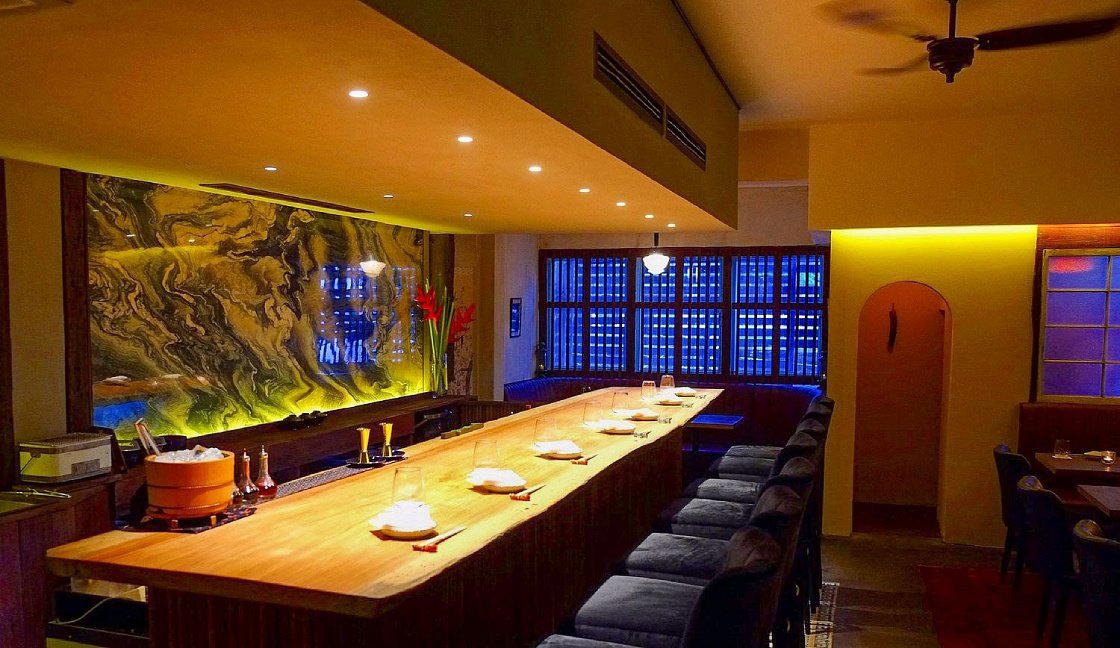
Quanzhou's street-food culture is older and more layered than most of coastal China's, shaped by centuries of maritime trade that deposited spice routes directly onto the city's cooking. The Fujian tradition favours slow heat and aromatic complexity over the searing wok hei that defines cooking further north: stocks are built over hours, meats are braised rather than flash-fried, and the flavour architecture depends on depth rather than char. A Qiu Niu Pai on Huxin Street sits squarely inside that tradition. Step through the entrance and the room announces its own timeline: red-wood furniture worn smooth with use, a ceiling unmodified since the shop opened more than forty years ago, the ambient warmth of a kitchen that has been running the same programme for decades.
The name translates directly as "beef steak," which is at once accurate and misleading. There is no grill here, no Maillard crust, no fire-forward approach. The local understanding of niu pai is a braised preparation, and it is a reminder that culinary terms travel and mutate as they move across cultures. Fujian absorbed outside influences, including curry spice vocabulary carried through centuries of trade with Southeast Asia and the Indian subcontinent, and folded them into its own slow-cooking logic. What arrives at the table is veal from yellow cow, braised in curry spices until the fibres give way entirely, producing a texture closer to slow-cooked short rib than anything resembling a Western steak. The heat is present but mild, building gradually in a way that the Fujianese kitchen consistently prefers over blunt spice impact.
Technique Over Fire: The Braising Tradition in Fujian Cooking
The editorial angle around Chinese cooking often defaults to wok hei: the scorched, slightly smoky quality that high-heat cooking at speed produces. That is a legitimate frame for Cantonese and northern Chinese kitchens. In Fujian, the signature move is different. The province's most respected preparations rely on controlled, low-heat duration, a technique that requires as much precision as the wok, but operates on a different axis. Getting a braise wrong is slow failure: too much heat and the collagen tightens rather than melts; too little time and the aromatics never integrate. The beef at A Qiu Niu Pai carries the hallmarks of a braise executed with long institutional experience: the curry spice notes are present throughout the meat rather than sitting on its surface, the texture is uniform rather than uneven, and the cooking liquid has reduced to something that coats rather than pools.
Oxtail soup operates by the same logic. Double-boiling is a technique associated strongly with southern Chinese cooking, where the goal is extracting collagen and mineral depth from bones and connective tissue without clouding the stock through agitation. The result at this shop, gelatinous in texture, carrying deep umami with faint herbal aromas, reflects a process that cannot be abbreviated. These are not dishes that can be produced at volume without the kind of institutional knowledge that only accumulates over time. For the Michelin inspectors who awarded consecutive Bib Gourmand recognition in 2024 and 2025, the distinction appears to rest precisely here: technique applied consistently, at accessible price points, over decades.
Where A Qiu Niu Pai Sits in Quanzhou's Eating Hierarchy
Quanzhou's dining options span a wide range of formats and ambitions. At the more formal end, restaurants like Chun Sheng operate at a higher price tier, offering Fujian cuisine in a more composed setting. At the entry level, noodle shops across the city serve mian xian, the thin, delicate vermicelli that is one of the province's most democratic dishes. A Qiu Niu Pai occupies the middle register, priced at the single-¥ tier, meaning the per-head cost remains low while the Bib Gourmand recognition places it in a different credibility bracket from the average neighbourhood shop.
The Bib Gourmand, as a category, is specifically calibrated to reward this positioning: cooking that meets a quality threshold but does not price itself out of regular use. Consecutive recognition across 2024 and 2025 signals consistency rather than novelty, which matters differently than a first-year listing. Quanzhou has attracted increasing Michelin attention as a city, its long culinary history, its specific regional ingredients, and its density of specialist shops make it a productive territory for inspectors. Venues like Hall Thing (Licheng), Jian Lai Fa, Lao A Bo, and Antstory represent adjacent points in the city's eating geography. The broader Fujian cooking tradition also extends beyond Quanzhou: Hokklo in Xiamen and Hokkien Cuisine in Chengdu offer points of comparison for anyone tracking how Fujian's flavour vocabulary travels across cities.
For context on how Chinese regional cooking at different price points and formats gets treated across the country, EP Club's coverage of Xin Rong Ji in Beijing, 102 House in Shanghai, Chef Tam's Seasons in Macau, Ru Yuan in Hangzhou, Xin Rong Ji in Chengdu, and Imperial Treasure Fine Chinese Cuisine in Guangzhou provides a wider framework. The Quanzhou entry-point is, by design, more accessible than most of those venues.
Planning a Visit to 494 Huxin Street
A Qiu Niu Pai is located at 494 Huxin Street in the Fengze District, one of Quanzhou's more commercially active zones. At ¥-tier pricing, the financial threshold for entry is low, and the format suits solo diners and small groups equally. The interior is compact and characterful rather than spacious, in keeping with the kind of specialist shop that has operated in the same format for four decades without needing to expand.
For further planning across the city, EP Club's full Quanzhou restaurants guide covers the complete range of options, from specialist noodle shops to formal Fujian dining. If you are building a longer stay, the Quanzhou hotels guide, bars guide, wineries guide, and experiences guide provide the surrounding context.
Frequently asked questions
How do I find A Qiu Niu Pai (Huxin Street)?
A Qiu Niu Pai (Huxin Street) is located at 494 Huxin St, Fengze District, Quanzhou, Fujian, China, 362017, Quanzhou.
What kind of recognition has A Qiu Niu Pai (Huxin Street) received?
A Qiu Niu Pai (Huxin Street) has received recognition including: The 40-plus-year-old shop has stayed true to its origins, boasting red wood furniture and old-school vibes. Niu Pai is the Chinese term for beef steak. Rather than being seared on a grill, here, it is braised with curry spices until it melt….
What's the best thing to order at A Qiu Niu Pai (Huxin Street)?
The braised veal is the dish to order. Michelin's own Bib Gourmand documentation describes yellow cow veal cooked in curry spices until the texture approaches tender dissolution, carrying deep umami with faint herbal heat. The double-boiled oxtail soup, noted for its gelatinous consistency and layered flavour, is a strong second order for the table. Both dishes reflect the shop's 40-plus years of working the same technique.
What's the pricing like at A Qiu Niu Pai (Huxin Street)?
Pricing at A Qiu Niu Pai (Huxin Street) is listed as ¥.
Comparable Spots, Quickly
| Venue | Cuisine | Price | Awards |
|---|---|---|---|
| A Qiu Niu Pai (Huxin Street)This venue (the venue you are viewing) | Traditional Fujian Beef Specialties | $10–20 | Michelin Bib Gourmand |
| Chun Sheng | Home-style Fujian | $20–30 | Michelin Bib Gourmand |
| Jiang Nan Yuan | Vegetarian | Not listed | Not listed |
| Luo Ji Mian Xian Hu | Minnan Noodle Shop | $10–20 | Michelin Bib Gourmand |
| Qing You Yu | Live Seafood Selection with Refined Fujian Technique | $50–100 | 1 Michelin Star · Black Pearl 1 Diamond |
| Che Qiao Tou Wen A Shui Wan (Daxi Street) | Traditional Quanzhou Small Eats | Not listed | Michelin Bib Gourmand |
Recognition history
Dated appearances from independent guides and award organizations, with the underlying list record or original source where available.
Michelin Bib Gourmand
Michelin
Full recognition history (3 entries)
Michelin Bib Gourmand
Michelin
Michelin Bib Gourmand
Michelin
Continue exploring
More in Quanzhou
Restaurants in Quanzhou
All restaurants in Quanzhou →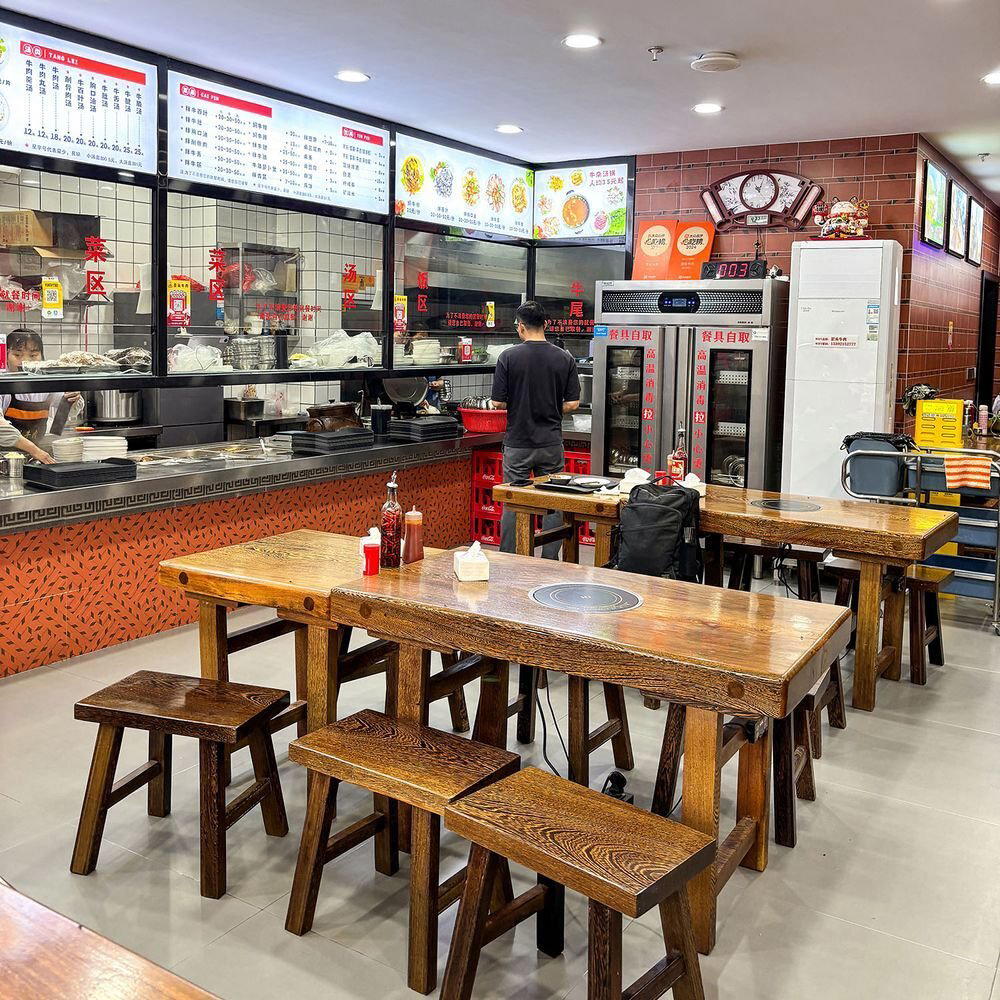
Bars in Quanzhou
Browse all →



Details
- Classic
- Cozy
- Intimate
- Casual Hangout
- Historic Building
- A La Carte
Red wood furniture, old-school vibes with polished wood and soft amber lighting creating a quiet, intimate atmosphere.