On the waterfront at Corricella, one of the Campanian islands' most photographed fishing harbours, La Locanda del Postino occupies a position where the sourcing story writes itself: the catch arrives from boats that moor within sight of the kitchen. The cooking draws on that proximity, keeping the focus on what the Bay of Naples yields each day rather than on technique for its own sake.
Pearl is the En Primeur Club membership app — saves, bookings, and concierge access live there. Same editors, same standards.
- Address
- Via Marina di Corricella, 43, 80079 Procida NA, Italy
- Phone
- +39 331 174 1796
- Website
- locandadelpostino.com
- Directions
- Get directions
 Saves & bookings on Pearl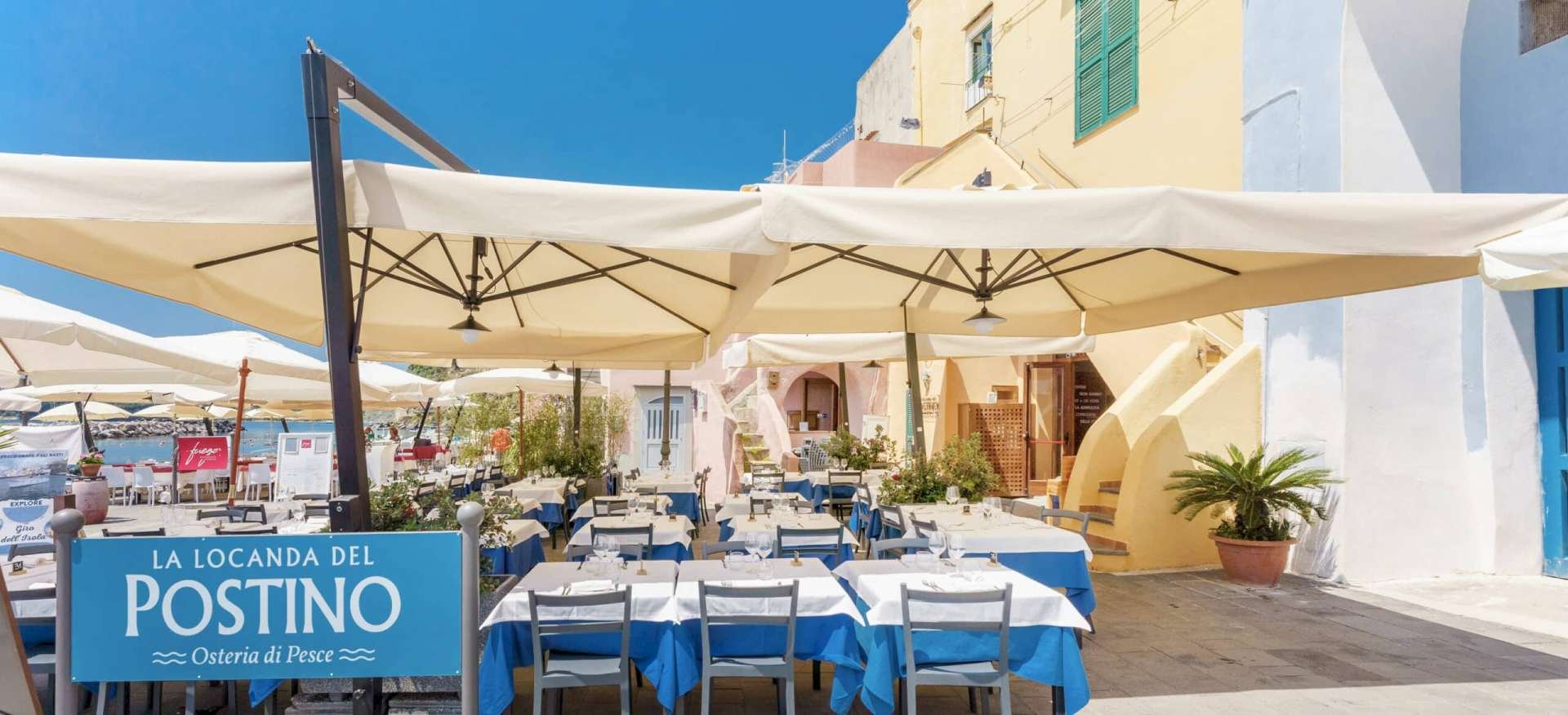
Where the Harbour Is the Larder
Corricella is the kind of fishing harbour that makes ingredient sourcing an architectural fact rather than a marketing claim. The pastel-stacked houses rise directly from the water, and the boats that supply the day's catch dock within metres of the restaurants that line the quay. La Locanda del Postino sits along Via Marina di Corricella at number 43, which means the journey from net to kitchen is measured in footsteps, not kilometres. In that context, the question of where the food comes from is answered before you sit down.
Procida has occupied a particular place in Italian popular imagination since the 1994 film Il Postino was shot across the island, lending the harbour its postcard familiarity to a generation of Italian and international visitors. That cultural footprint brought attention, but the island's dining scene developed along its own logic: small, family-run trattorie and locande shaped by what the sea and the volcanic soil of the island produce, not by what tourists arriving on the ferry from Naples expected to find. La Locanda del Postino takes its name from that cinematic association, anchoring itself to a place-based identity that the waterfront location makes literal.
The Sourcing Argument on a Campanian Island
The Bay of Naples produces a distinct set of ingredients that separate Campanian coastal cooking from the broader category of Italian seafood. The volcanic geology of the Phlegraean Fields, which includes Procida and its neighbour Ischia, shapes both the fish populations and the agricultural produce grown on the terraced plots above the harbour. Lemons from the island, smaller and more aromatic than the Amalfi varieties that travel better for export, appear in kitchens here with a regularity that reflects availability rather than fashion. Octopus, totano squid, and the various smaller fish that characterise the inshore catch of the northern Bay differ in flavour profile from the fish hauled from deeper waters further south.
What this means in practice is that the leading kitchens along Corricella's quay are constrained by season and proximity in a way that larger, better-resourced restaurants on the mainland are not. The menu changes with the catch, not with a kitchen's creative calendar. That constraint is also the point: it forces a kind of culinary discipline that technique-driven cooking can sometimes obscure. Compared to the elaborate tasting formats at places like Osteria Francescana in Modena or the precisely engineered courses at Le Calandre in Rubano, the cooking at a harbour locanda on Procida operates from entirely different premises: daily catch, local produce, and the accumulated knowledge of how to treat both simply.
Italy's most recognised seafood-focused kitchens, from Uliassi in Senigallia on the Adriatic to Quattro Passi in Marina del Cantone just across the Sorrentine peninsula, have built reputations by working within that same coastal-sourcing logic but applying it at a level of technical ambition that comes with Michelin recognition and broad critical coverage. Procida's locande, including La Locanda del Postino, occupy a different tier: neighbourhood-scaled, harbour-adjacent, and priced for the regularity of local custom rather than the occasion dining of destination-seeking visitors. That positioning is not a limitation. It is, in the context of a small island with a coherent culinary identity, an argument about what food should be.
Corricella's Dining Scene in Context
Procida gained its status as Italian Capital of Culture in 2022, which brought a wave of coverage and first-time visitors to an island that had spent decades as the quieter, less-developed alternative to Ischia and Capri. The attention raised the profile of the island's restaurants without fundamentally changing the character of the better ones. Along Corricella's quay, the choice of where to eat is shaped by a cluster of small operations that share similar sourcing conditions but differ in what they emphasise. Da Girone and Ristorante Da Mariano are part of the same local ecosystem, each drawing from the same harbour supply, and Pizz'Stop represents the more casual end of the island's eating options. La Locanda del Postino sits within that scene rather than apart from it.
The island's broader culinary conversation connects to a wider Italian coastal tradition. The ethos at work in a place like Dal Pescatore in Runate, which built its reputation on rigorous regional sourcing in the Lombard countryside, shares a philosophical kinship with what the leading harbour kitchens on Procida do with the Bay of Naples catch, even if the two operate at vastly different scales of ambition and resource. The principle, that the quality of what arrives in the kitchen determines the quality of what leaves it, holds across both.
Planning a Visit
Procida is reached by ferry or hydrofoil from Naples (Molo Beverello or Calata di Massa), with crossings running regularly throughout the day and the hydrofoil taking around 35 minutes. From the main ferry landing at Marina Grande, Corricella is a short walk or a ride on one of the island's three-wheeled ape taxis. The harbour at Corricella has no road access for cars, which means the approach on foot along the stepped paths above the water is the only way in. That walk, with the painted houses descending to the quay below, frames the arrival at any restaurant along the front. Summer months bring ferry-day crowds, particularly on weekends when day-trippers from Naples swell the island's population considerably. Visiting mid-week or outside the June-to-August peak gives a quieter experience of the harbour and a better chance of a table without a long wait. The restaurant is recommended for reservations, and its regular hours are Monday through Sunday, 12:00 to 3:30 PM and 7:00 PM to 12:30 AM.
Visitors with a broader interest in southern Italian fine dining will find relevant context in the Campanian region's more formal offerings, including Reale in Castel di Sangro and, across the broader Italian fine dining spectrum, Enoteca Pinchiorri in Florence, Enrico Bartolini in Milan, Piazza Duomo in Alba, Atelier Moessmer Norbert Niederkofler in Brunico, Casa Perbellini 12 Apostoli in Verona, and Da Vittorio in Brusaporto. For international seafood-focused benchmarks, Le Bernardin in New York City and Atomix in New York City represent the kind of technically ambitious coastal cooking that shares a sourcing-first philosophy at a different tier of execution.
At-a-Glance Comparison
Comparable venues nearby, for context on price, style, and recognition.
| Venue | Cuisine | Price | Notes |
|---|---|---|---|
| La Locanda del PostinoThis venue — the venue you are viewing | Traditional Italian Seafood | $$ | Not listed |
| Ristorante Da Mariano | Traditional Italian Seafood | $$ | Marina di Chiaiolella |
| Da Girone | Neapolitan Seafood & Pizza | $$ | Marina Chiaiolella |
| Pizz'Stop | Neapolitan Pizza | $$ | Marina Grande |
| Dal Moro's Fresh Pasta To Go | Fresh Pasta To Go | $$ | Castello |
Continue exploring
More in Procida
Restaurants in Procida
Browse all →
Bars in Procida
Browse all →
Hotels in Procida
Browse all →
At a Glance
- Romantic
- Rustic
- Scenic
- Cozy
- Date Night
- Special Occasion
- Waterfront
- Terrace
- Local Sourcing
- Waterfront
Current opening hours
- Monday
- 12–3:30 PM, 7 PM–12:30 AM
- Tuesday
- 12–3:30 PM, 7 PM–12:30 AM
- Wednesday
- 12–3:30 PM, 7 PM–12:30 AM
- Thursday
- 12–3:30 PM, 7 PM–12:30 AM
- Friday
- 12–3:30 PM, 7 PM–12:30 AM
- Saturday
- 12–3:30 PM, 7 PM–12:30 AM
- Sunday
- 12–3:30 PM, 7 PM–12:30 AM
Hours can change for holidays and private events. Last verified .
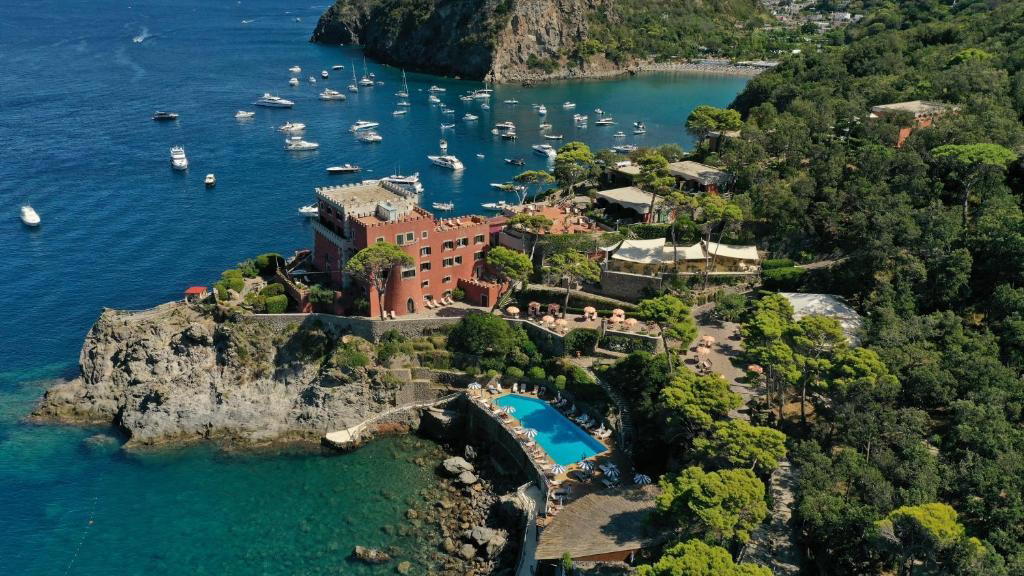
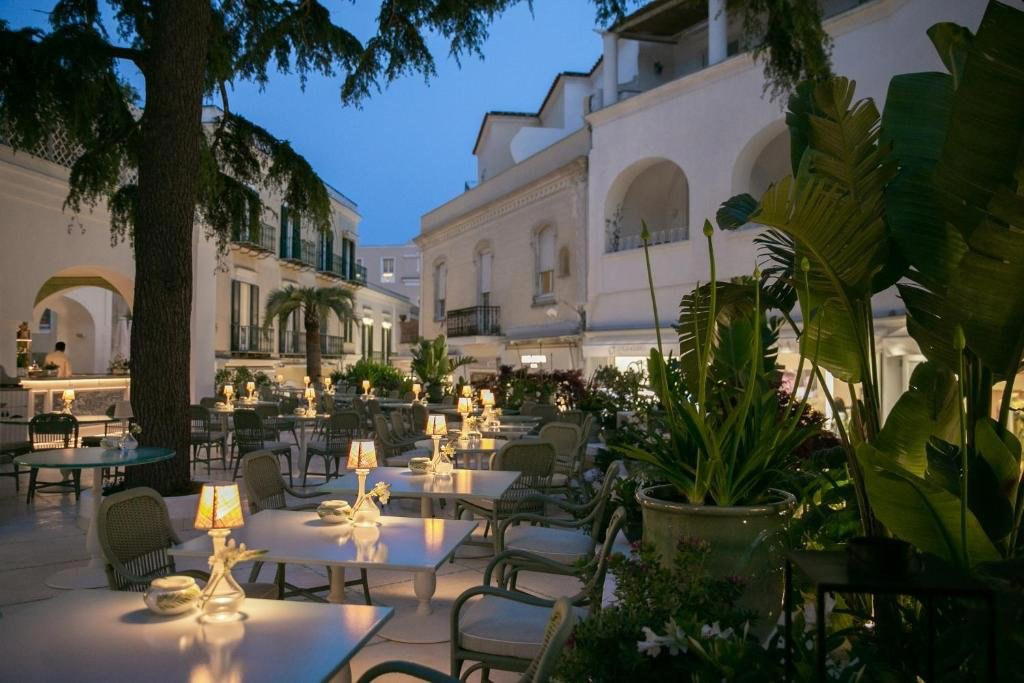
Serene and inviting waterfront atmosphere with beautiful sea views and a romantic, relaxing terrace.