On Procida's lungomare, Da Girone occupies a position that the island's fishing-village character makes legible before you sit down. The kitchen draws on what the surrounding waters and Campanian smallholders supply, placing it in a category of trattorias where the sourcing logic is the menu logic. For visitors building an itinerary around the island's table, it sits alongside neighbours like La Locanda del Postino and Ristorante Da Mariano as a reference point worth understanding.
Pearl is the En Primeur Club membership app — saves, bookings, and concierge access live there. Same editors, same standards.
- Address
- Lungomare Cristoforo Colombo, 4, 80079 Procida NA, Italy
- Phone
- +39 081 896 7367
- Directions
- Get directions
 Saves & bookings on Pearl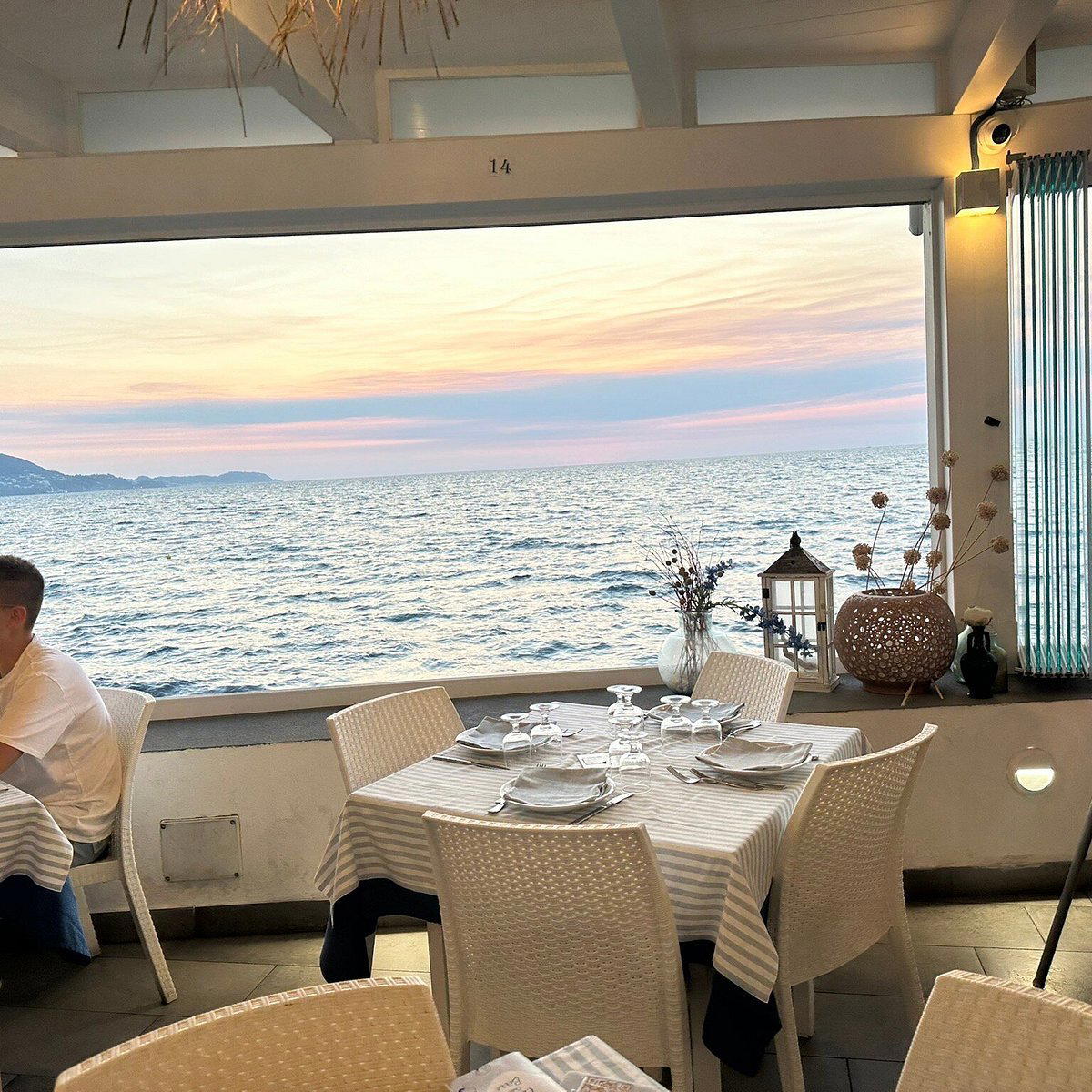
Where the Waterfront Sets the Terms
Procida's lungomare is not a promenade designed for tourism. It is a working edge, fishing boats berthed close, nets drying in the salt air, the smell of the sea arriving before any menu does. Da Girone sits on Lungomare Cristoforo Colombo at number 4, and it serves Neapolitan seafood and pizza in Procida. Waterfronts in the Campanian islands have always produced a particular category of eating: places where the distance between the sea and the plate is measured in metres, not supply-chain days, and where the kitchen's job is to get out of the way of that proximity.
This is not the polished waterfront-restaurant format that has colonised the Amalfi coast or the tourist-facing strips of Ischia. Procida attracted a new wave of attention without fully surrendering its residential character. The island's dining scene reflects that: a handful of places, La Locanda del Postino, Pizz'Stop, Ristorante Da Mariano, that sit alongside Da Girone and operate with the same priority: feed islanders and visitors alike, with whatever the morning delivered.
The Sourcing Logic Behind Campanian Coastal Cooking
To understand what Da Girone is doing, it helps to understand what Campanian coastal kitchens have always done. The Bay of Naples produces a specific marine pantry: octopus, clams, sea bream, squid, anchovies from Cetara, and the occasional catch of palamita, bonito-adjacent and underrated. These are not premium trophy fish in the sense that high-end tasting menus at places like Quattro Passi in Marina del Cantone or Uliassi in Senigallia might deploy them. They are the quotidian catch, and the skill of trattoria cooking at this level is in knowing how to treat each one according to its nature, which gets a slow braise, which gets raw treatment with lemon and olive oil, which gets the grill.
The terrestrial sourcing follows a parallel logic. Campania's interior sends San Marzano tomatoes, Sorrento lemons, fior di latte from Agerola, and the olive oils that define southern Italian cooking at its least corrupted. On an island like Procida, accessible only by hydrofoil or ferry from Naples or Pozzuoli, with no through-traffic, the supply chain is necessarily short. Restaurants here do not receive the same daily logistics that a Naples city kitchen does. What arrives on the ferry shapes what goes on the pass. That constraint, read correctly, is what makes island cooking at its leading different from mainland cooking in kind, not just in setting.
This sourcing-first approach to menu construction sits at the opposite end of the spectrum from the ambitious creative programs at restaurants like Osteria Francescana in Modena, Reale in Castel di Sangro, or Piazza Duomo in Alba, none of which is a criticism in either direction. They represent different relationships between kitchen and ingredient. Trattoria cooking on a small island represents the older contract: the sea decides, the cook responds.
Procida in the Context of Italian Coastal Dining
Italy's coastline produces a wide range of seafood dining formats, from the elaborately credentialled, Dal Pescatore in Runate, Le Calandre in Rubano, Enoteca Pinchiorri in Florence, to the deeply local. The latter category is not lesser; it operates by a different set of values. Internationally, the trattoria-style format that privileges daily sourcing over fixed menus has analogues in places like Le Bernardin in New York City, which built its reputation on the same sourcing-first principle, though in an entirely different price bracket and register.
What Procida offers is a version of that principle at its most unmediated. The island has resisted the development pressure that reshaped parts of Capri and Positano. Its architecture is the same dense, pastel-coloured fabric photographed a hundred times; its restaurants are still, in the main, family-run operations with menus that shift by season and catch. Da Girone's lungomare address places it in direct conversation with that character.
Arriving on Procida and Reaching Da Girone
Getting to the restaurant requires getting to Procida first, which means a ferry or hydrofoil from Naples (Molo Beverello) or Pozzuoli, the crossing typically runs between 35 minutes and an hour depending on the service. The island has no cars available to non-residents in the ordinary sense; most visitors move on foot or by scooter. Lungomare Cristoforo Colombo runs along the island's western-facing waterfront and is walkable from the main ferry landing. The practical effect is that dinner at the restaurant is always the end of a journey, which shapes the pace at which most people arrive and eat.
Advance planning matters more on Procida than on the mainland: ferry schedules create hard departure windows, and missing a last hydrofoil has consequences that missing a taxi does not.
How Da Girone Sits in Its comparable set
On Procida itself, the restaurant shares the lungomare category with a small number of comparably positioned establishments. La Locanda del Postino and Ristorante Da Mariano represent adjacent points on the same spectrum, each with its own character but the same underlying commitment to Campanian coastal produce. The decision between them is less about quality hierarchy than about format preference and which particular stretch of the island you want to be on when the sun goes down.
Further afield, the Campanian seafood tradition the restaurant draws from has produced some of Italy's most credentialled cooking, from the work being done at Quattro Passi on the Sorrento peninsula to the northern Italian coastal interpretations visible at Uliassi. Knowing that lineage helps position what a trattoria-format restaurant on Procida is working within, even when operating at a fraction of the ambition and price point. The same waters, the same produce tradition, different registers of the same conversation.
For anyone building an Italian dining itinerary that includes both the credentialled end and the trattoria end, Procida makes a compelling case as the latter's home base. The restaurant, on the lungomare, is where that argument is made in the simplest possible terms: the sea, a table, what arrived this morning. And a comparison point like Lazy Bear in San Francisco, which operates its own sourcing-led philosophy at the opposite end of the format spectrum, only underlines how widely that principle travels.
In Context: Similar Options
Comparable venues nearby, for context on price, style, and recognition.
| Venue | Cuisine | Price | Notes |
|---|---|---|---|
| Da GironeThis venue — the venue you are viewing | Neapolitan Seafood & Pizza | $$ | Not listed |
| La Locanda del Postino | Traditional Italian Seafood | $$ | Marina di Corricella |
| Ristorante Da Mariano | Traditional Italian Seafood | $$ | Marina di Chiaiolella |
| Pizz'Stop | Neapolitan Pizza | $$ | Marina Grande |
| Trattoria Il Focolare | Traditional Ischian Trattoria | $$ | Barano d'Ischia |
Continue exploring
More in Procida
Restaurants in Procida
Browse all →
Bars in Procida
Browse all →
Hotels in Procida
Browse all →

At a Glance
- Relaxed
- Rustic
- Casual Hangout
- Family
- Waterfront
- Local Sourcing
- Waterfront
Current opening hours
- Monday
- 10 AM–4 PM, 5–11 PM
- Tuesday
- Closed
- Wednesday
- 10 AM–4 PM, 5–11 PM
- Thursday
- 10 AM–4 PM, 5–11 PM
- Friday
- 10 AM–4 PM, 5–11 PM
- Saturday
- 10 AM–4 PM, 5–11 PM
- Sunday
- 10 AM–4 PM, 5–11 PM
Hours can change for holidays and private events. Last verified .
Relaxed inviting atmosphere with waterfront location.