

Capri's oldest hotel, founded in 1822 and now part of the Oetker Collection, sits steps from the Piazzetta with 50 rooms, three dining outlets, a private beach club, and a rooftop restaurant overlooking the village rooftops and sea. The recent renovation by designer Francis Sultana channels the island's 1950s jet-set character through a restrained Mediterranean palette. This is the address for guests who want the island's social centre within walking distance of everything.
Pearl is the En Primeur Club membership app — saves, bookings, and concierge access live there. Same editors, same standards.
- Address
- Via Vittorio Emanuele, 39, 80073 Capri NA
- Phone
- +39 081 837 0133
- Website
- oetkerhotels.com
- Directions
- Get directions
 Saves & bookings on Pearl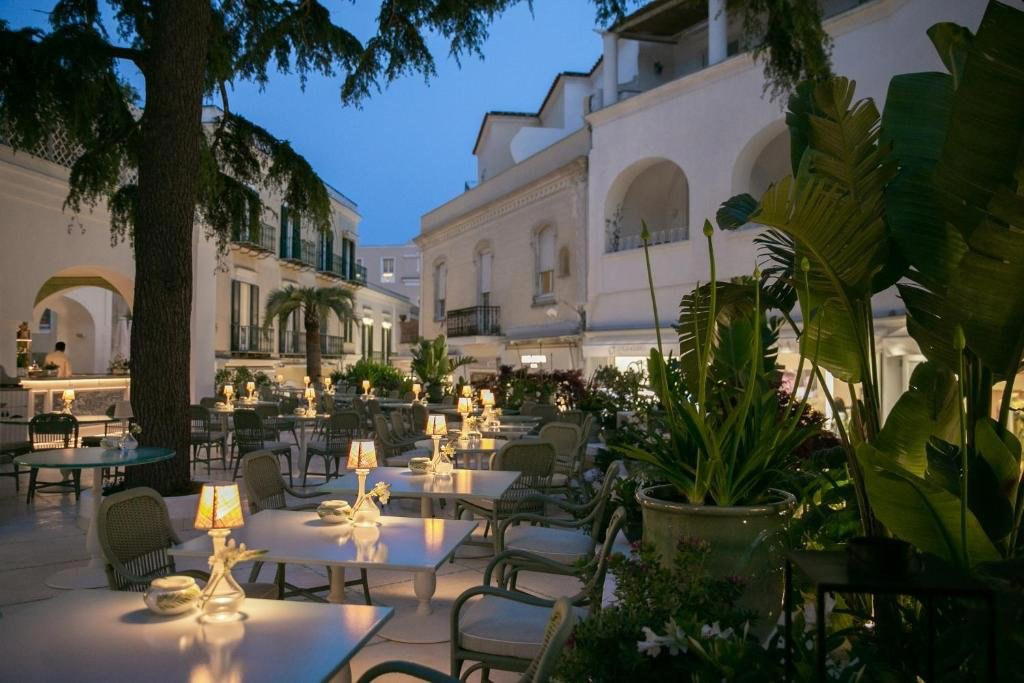
The Address That Defines Capri's Social Centre
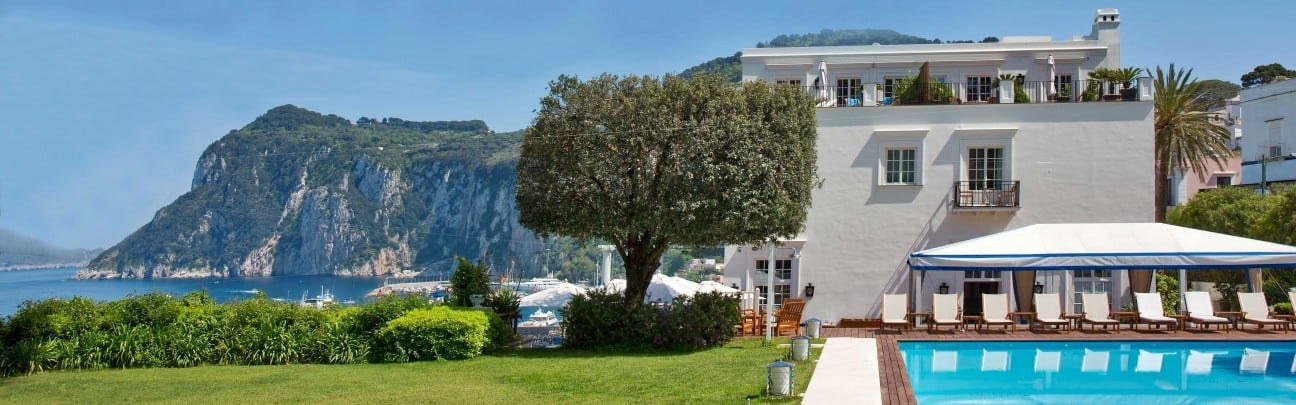
On an island where geography determines everything, Via Vittorio Emanuele 39 is not a neutral postcode. Hotel La Palma Capri, an Oetker Collection Hotel, is a 5-star hotel with 50 rooms and a Michelin Key in Capri, Italy. Hotel La Palma, Capri's oldest hotel (founded in 1822), sits a short promenade from the Piazzetta, the small square that functions as the island's barometer of fashion, gossip, and visibility. For guests staying here, the famous square is not a destination requiring planning; it is simply where the morning begins and where the evening tends to end. That proximity, on an island with no cars and where every journey is on foot, is one concrete advantage any Capri address can offer.
Grand Hotel Quisisana has the broader footprint and pool presence; JK Place Capri offers the boutique, design-forward format in a smaller key count; Jumeirah Capri Palace controls the hillside-and-medical-spa territory in Anacapri. Hotel La Palma's positioning is distinct: it carries the historical credibility of the island's first hotel, the scale of 50 rooms and suites, and the programmatic breadth of three food and beverage outlets, a private beach club, and a spa, all from the central location on the island.
Renovation as Reinterpretation
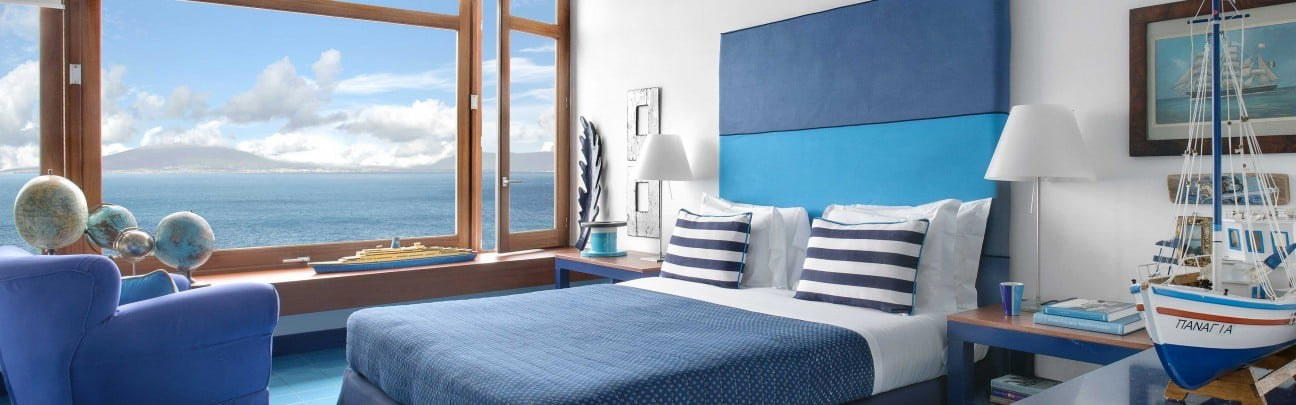
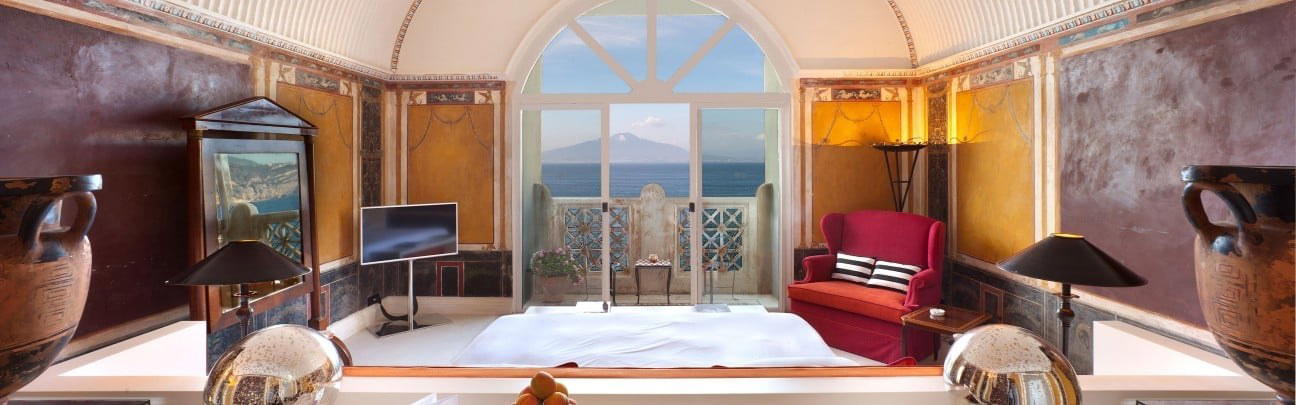
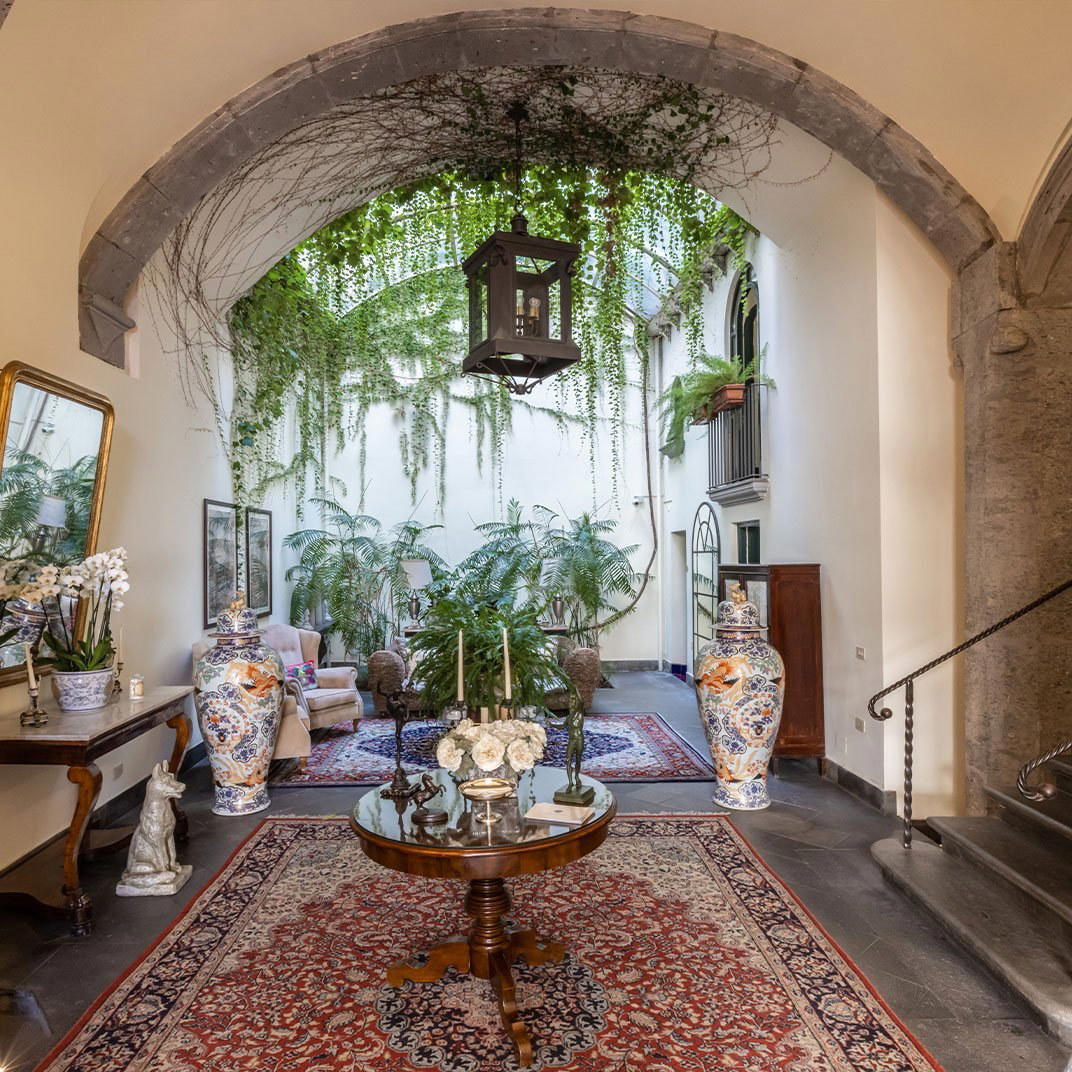
The recent transformation of Hotel La Palma was led by Francis Sultana, a Maltese-born designer whose practice spans fine art, furniture, and architecture, but for whom Hotel La Palma represented a first hotel commission. The renovation's framework draws from Capri's 1950s jet-set period, when the island attracted writers, filmmakers, and aristocrats who preferred its relative informality to the more structured grandeur of the Amalfi Coast. Sultana translated that reference into a visual language of restrained Mediterranean tones punctuated by deliberate moments of decorative intensity, keeping the aesthetic legible without tipping into pastiche.
Hotel La Palma carries similar ambitions but with a significantly central urban address rather than the clifftop seclusion those properties offer.
Three Floors of Food and Drink
Hotel La Palma operates three distinct outlets that together address different hours and registers of the day.
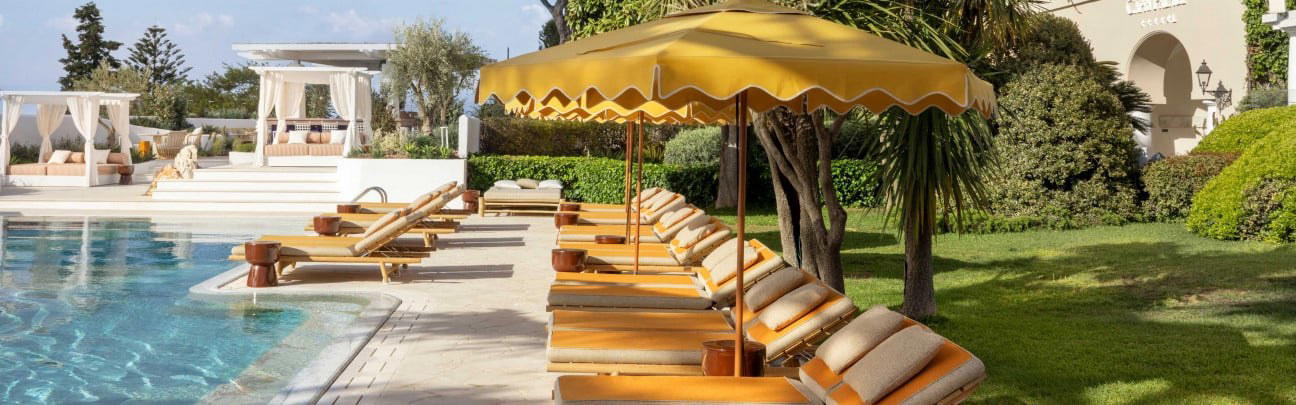
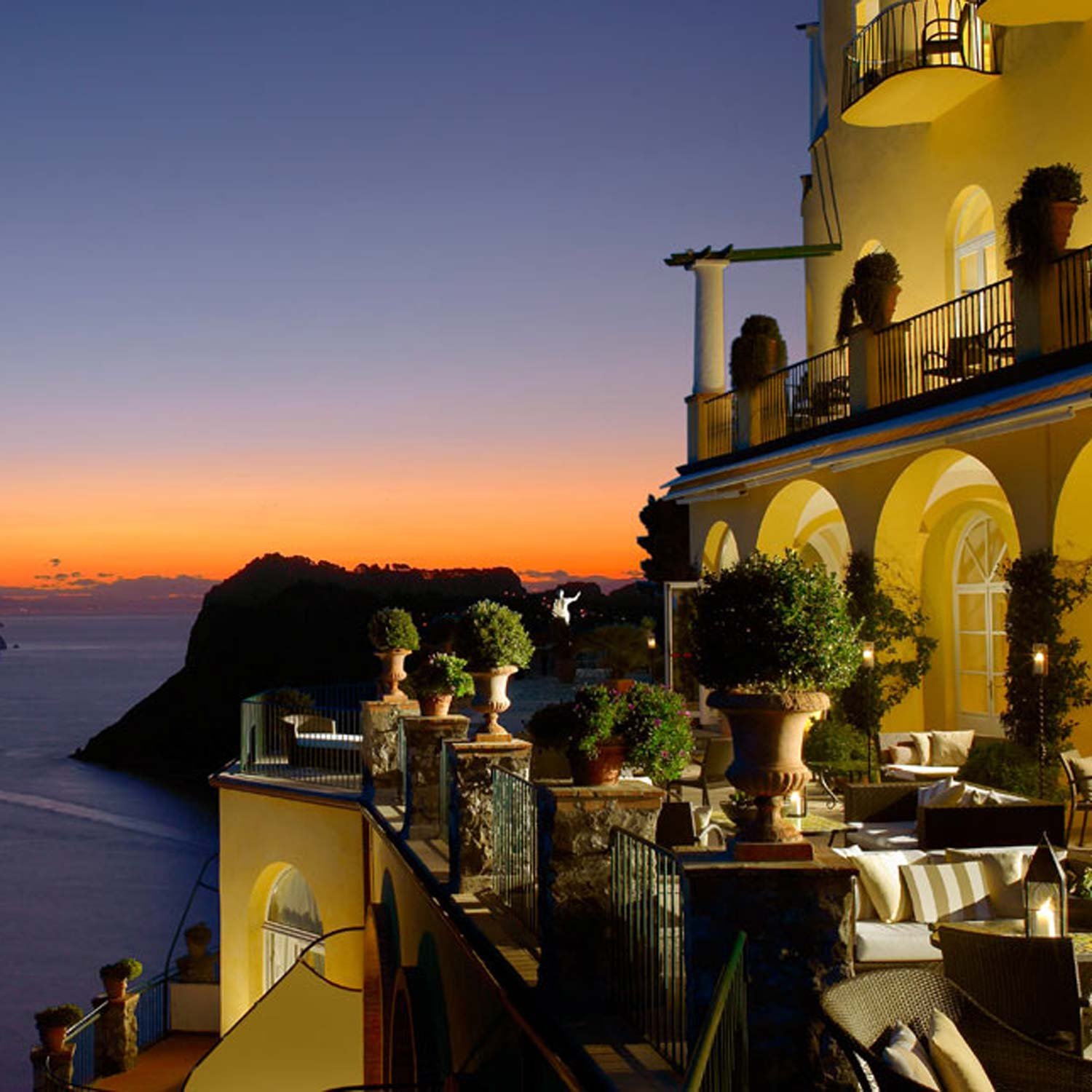
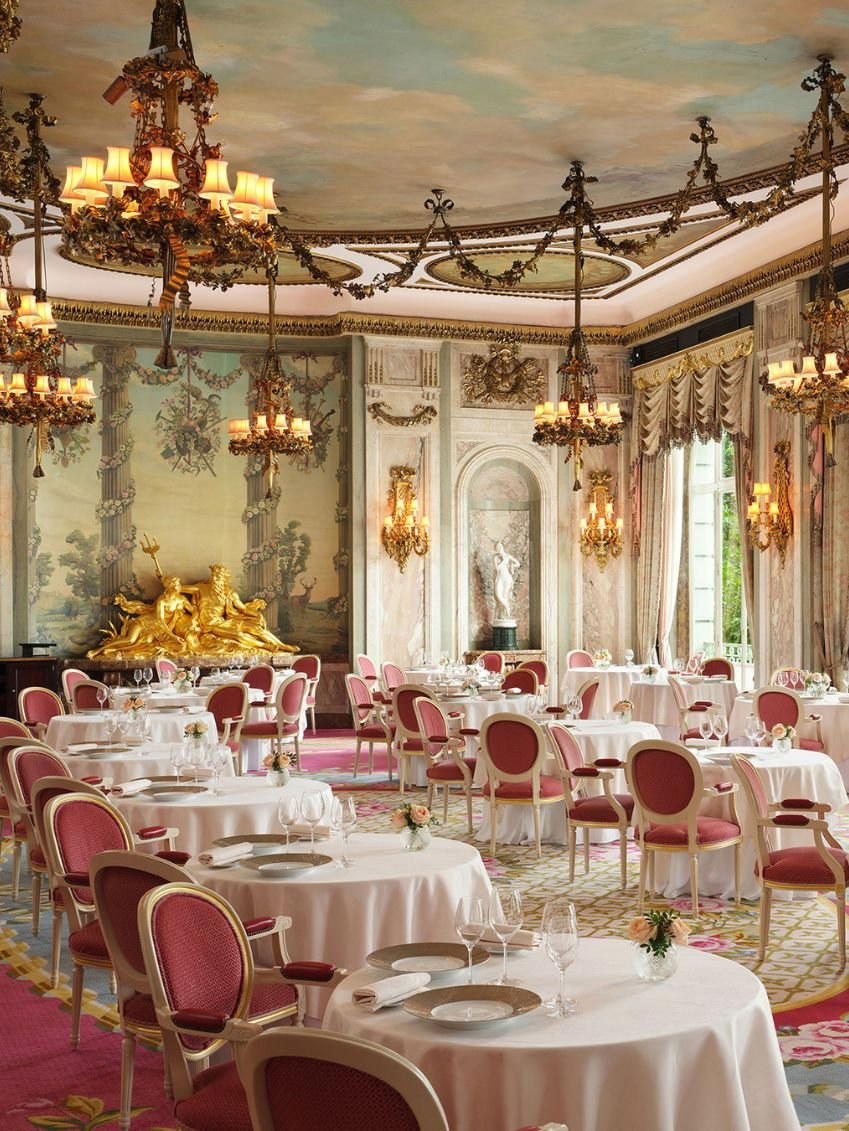
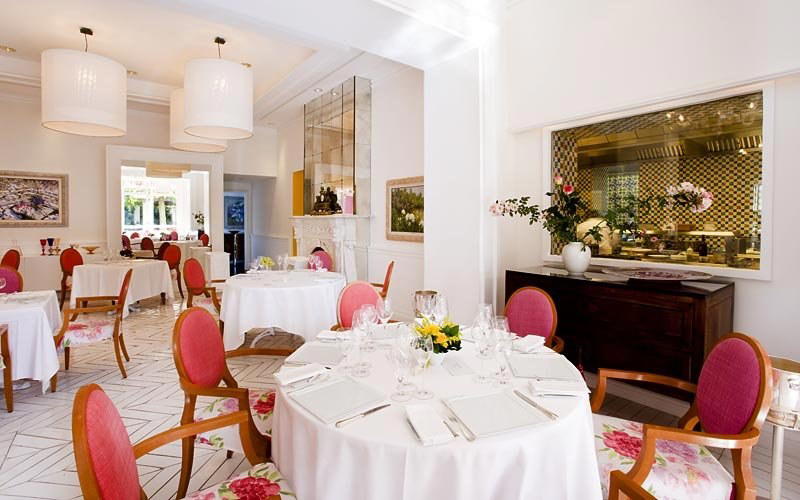
La Palma restaurant anchors the ground level with direct, authentic Italian cooking under Chef Giovanni Bavuso. The format leans toward the unfussy end of the Capri dining spectrum, which is the correct register for an island where the leading meals are often the simplest. Bianca Rooftop Carne&Crudo occupies a newly constructed rooftop position open for dinner, with views over the village and, at distance, the sea. Rooftop dining in Capri is a competitive sub-category: the combination of altitude, sea sightlines, and evening light has made it a deciding factor for guests choosing between hotels. The Aqua Bar on the pool deck completes the circuit, positioned as the social centrepoint of daytime hours, with the street activity of Via Vittorio Emanuele visible below.
What the Location Actually Delivers
The hotel's proximity to several of Capri's key cultural sites merits specificity. I Giardini di Augusto, the terraced gardens with views over the Faraglioni rock formations, are reachable on foot. So is La Certosa di San Giacomo, the fourteenth-century Carthusian monastery now used as a museum and occasional concert venue. Via Krupp, the dramatic serpentine pathway cut into the cliff face, connects the garden level to the Marina Piccola and is accessible from the same pedestrian zone. For guests who want to cover the island's main points without vehicle logistics, Hotel La Palma's address removes the majority of the planning burden.
Capri's geography creates a natural tier system among its hotels. Properties on the island's western side, such as Hotel Caesar Augustus in Anacapri, trade the central density for dramatic clifftop elevation and quieter surrounds. Punta Tragara and Capri Tiberio Palace sit on the island's quieter eastern edges. Hotel La Palma is the principal option for guests who specifically want to be in the middle of island activity rather than apart from it. That preference is not universal, but for a certain kind of Capri visitor, the one who uses the hotel as a base for island movement rather than a retreat from it, the central address is the primary criterion.
The 50-room scale keeps the hotel within a manageable band: large enough to support the full amenity programme (beach club, spa, pool, multiple restaurants), compact enough to avoid the anonymous corridor problem of larger resort hotels. Comparable Italian properties with similar ambitions in different regions include Four Seasons Hotel Firenze in Florence and Bulgari Hotel Roma in Rome, both of which balance a city-centre address against a controlled room count. On a smaller island, 50 rooms represents a meaningful share of the premium inventory.
Planning Your Stay
Capri's high season runs from late May through September, with August representing peak density on the island when day-tripper volumes from Naples and Sorrento are highest. Guests who want the island at its most legible, with better availability at restaurants and lighter foot traffic near the Piazzetta, typically find June and early September to be the more workable windows. The hotel's position means that midday crowds from the funicular arrival point are close; the compensating factor is that evenings in Capri clear relatively quickly as day visitors depart, and the Piazzetta at nine in the evening operates at a different register than at noon. Those comparing options across the wider Italian luxury portfolio should also consider Passalacqua in Moltrasio on Lake Como, Castello di Reschio in Umbria, or Borgo Egnazia in Puglia as regionally distinct alternatives with comparable positioning.
Compact Comparison
Comparable venues nearby, for context on price, style, and recognition.
| Venue | Price | Notes |
|---|---|---|
| Hotel La Palma Capri, an Oetker Collection HotelThis venue — the venue you are viewing | $$$$ | Not listed |
| Capri Tiberio Palace | $$$$ | Capri Town, Contemporary retro-Mediterranean luxury boutique hotel blending 1950s-60s Italian cinema aesthetics with modern design sensibility. |
| Villa Marina Capri | $$$$ | Marina Grande, Authentic Caprese villa with Art Deco architecture built in 2008 |
| Casa Morgano | $$$$ | Capri Town, Luxury boutique on panoramic Via Tragara |
| Pazziella, a Luxury Collection Hotel, Capri | $$$$ | Capri Town Center, Contemporary classic with authentic Capri villa architecture, blending tradition dating to 1950 with modern luxury through recent floor-to-ceiling renovation. |
| Punta Tragara | $$$$ | Tragara, Modernist luxury villa with contemporary Italian design; exclusive and romantic retreat blending architectural heritage with refined comfort. |
Recognition history
Dated appearances from independent guides and award organizations, with the underlying list record or original source where available.
Virtuoso Luxury Hotel Partner
Virtuoso
Michelin 1 Key
Michelin
Continue exploring
More in Capri
Hotels in Capri
Browse all →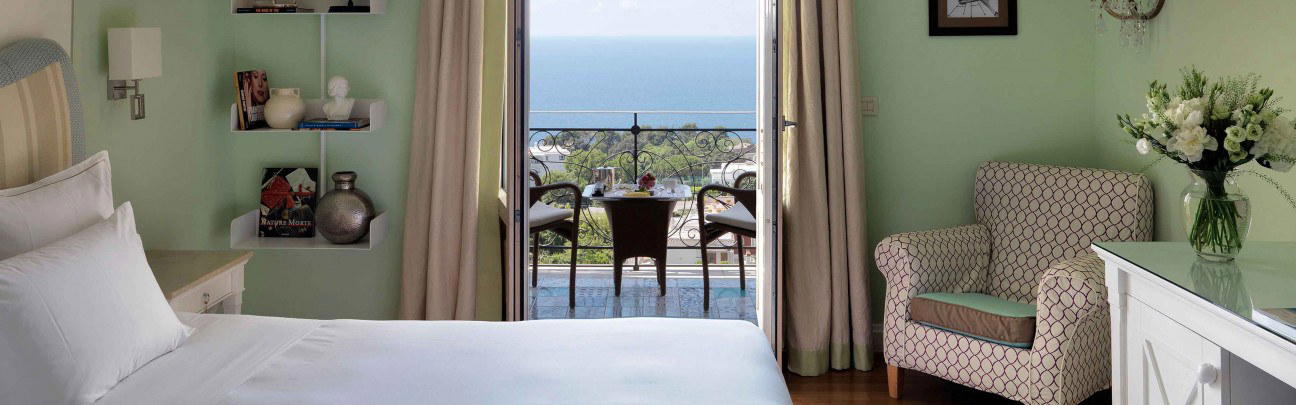
Bars in Capri
Browse all →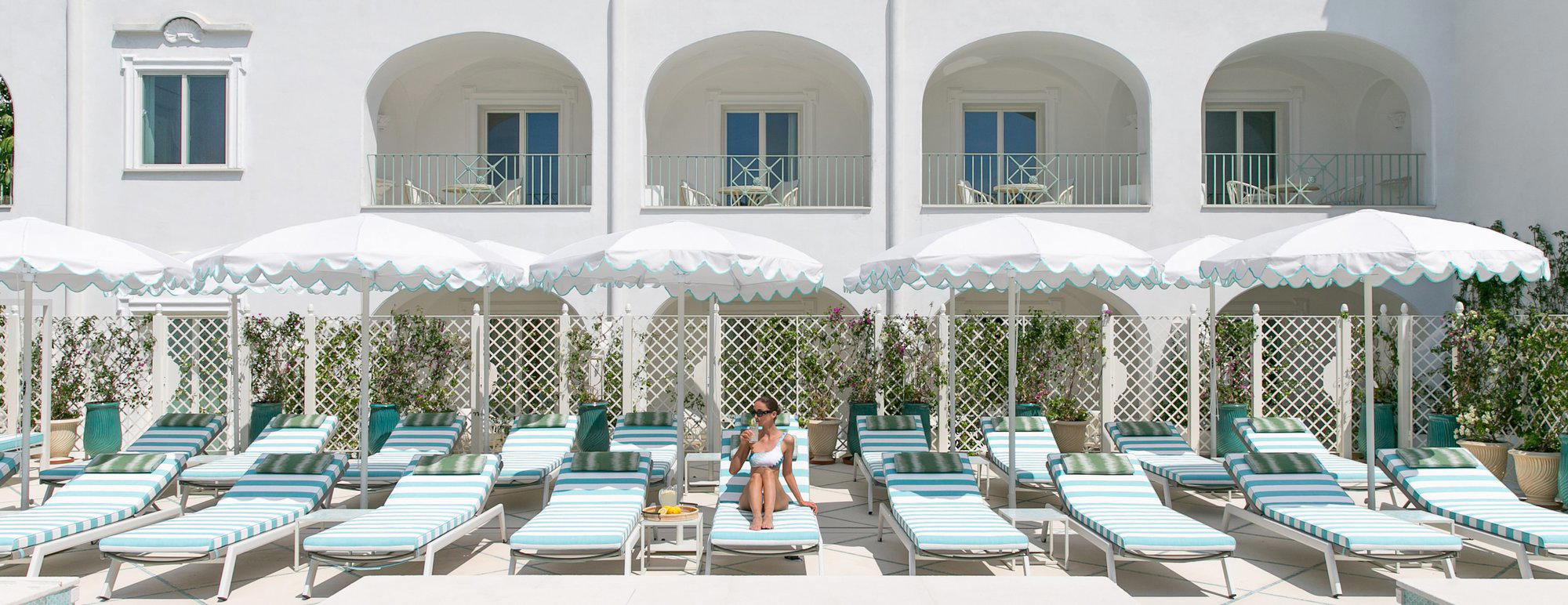
Restaurants in Capri
Browse all →

At a Glance
- Romantic
- Elegant
- Sophisticated
- Well Known
- Honeymoon
- Romantic Getaway
- Anniversary
- Celebration
- Beachfront
- Rooftop Pool
- Destination Spa
- Panoramic View
- Private Dining
- Historic Building
- Design Destination
- Waterfront
- Wi Fi
- Pool
- Spa
- Fitness Center
- Room Service
- Concierge
- Beach Access
- Restaurant
- Bar
- Waterfront
- Street Scene
- Wi Fi
- Pool
- Spa
- Fitness Center
- Room Service
- Concierge
- Beach Access
- Restaurant
- Bar
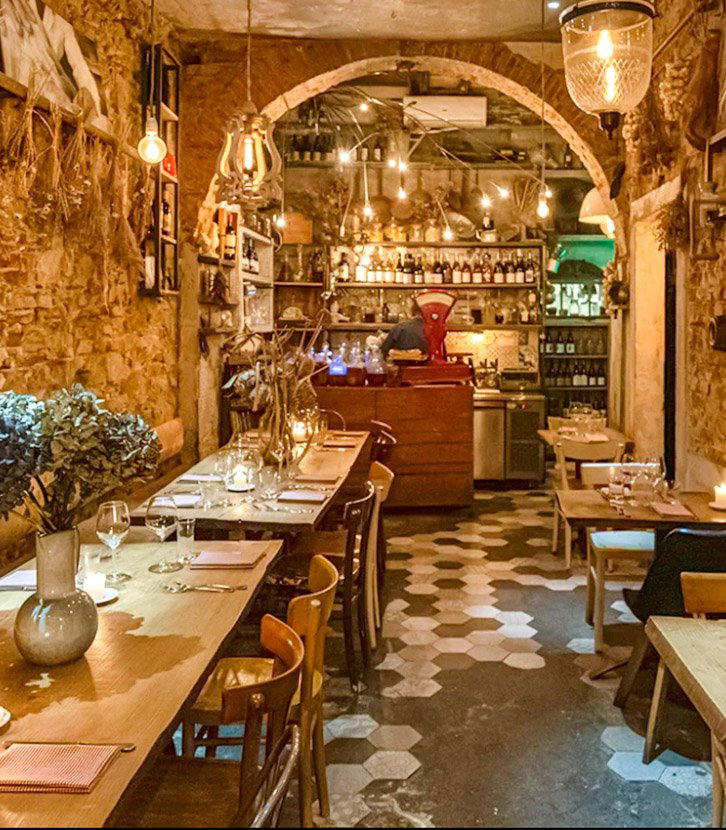
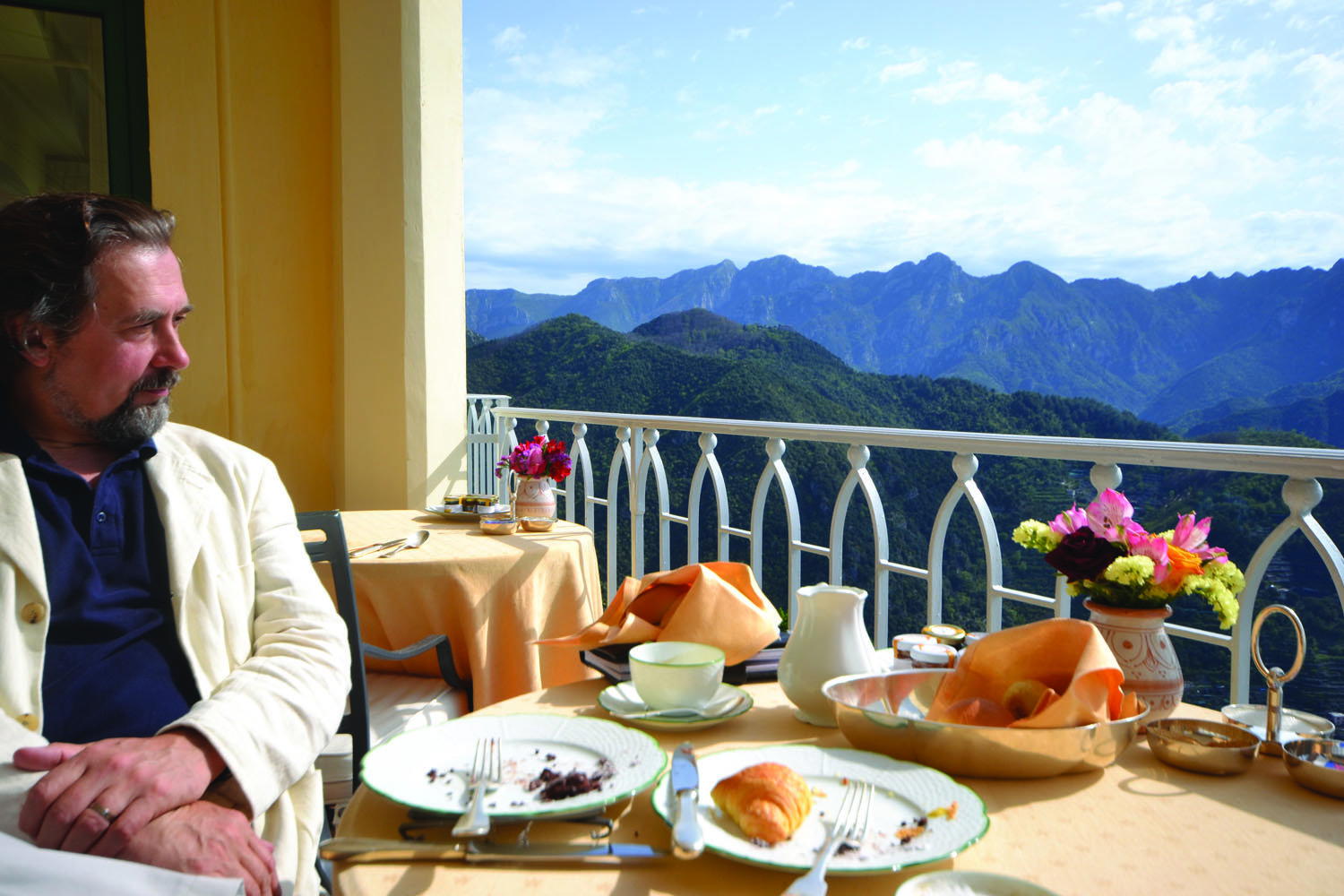
Glamorous yet warm Mediterranean elegance with soft lighting on the rooftop terrace, sophisticated dining spaces, and sun-drenched beach club atmosphere.