La Grange Gourmande
La Grange Gourmande sits on the Rue Principale in Morschwiller, a village in the Alsace region where agricultural tradition and French culinary craft have long intersected. The name itself signals the format: a farmhouse kitchen sensibility applied to considered, locally sourced cooking. For visitors moving between the Rhine plain and the Vosges foothills, it occupies a distinct position in the area's dining fabric.
Pearl is the En Primeur Club membership app — saves, bookings, and concierge access live there. Same editors, same standards.
- Address
- 43 Rue Principale, 67350 Morschwiller, France
- Phone
- +33369162256
- Website
- lagrangegourmande.fr
- Directions
- Get directions
 Saves & bookings on Pearl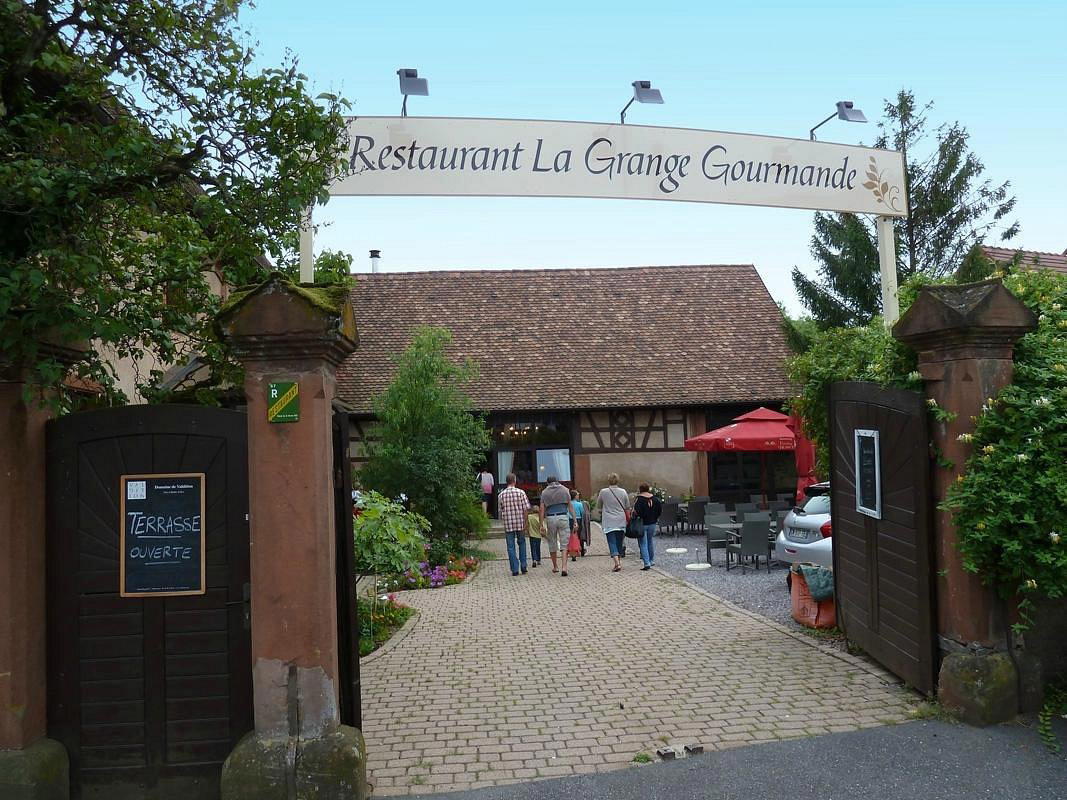
Where the Alsatian Countryside Meets the Table
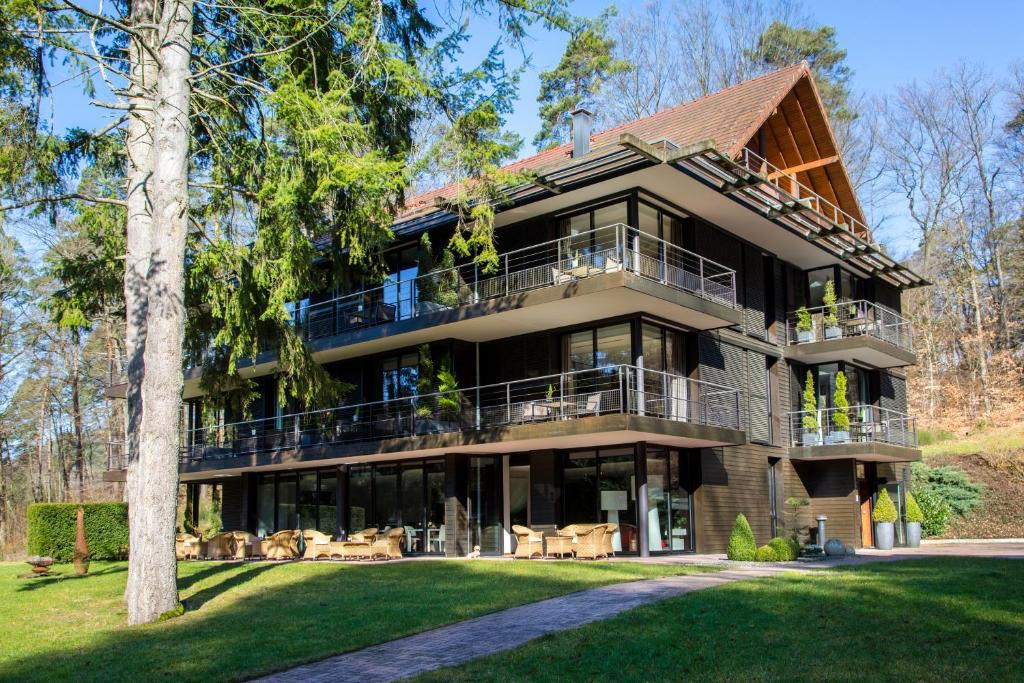
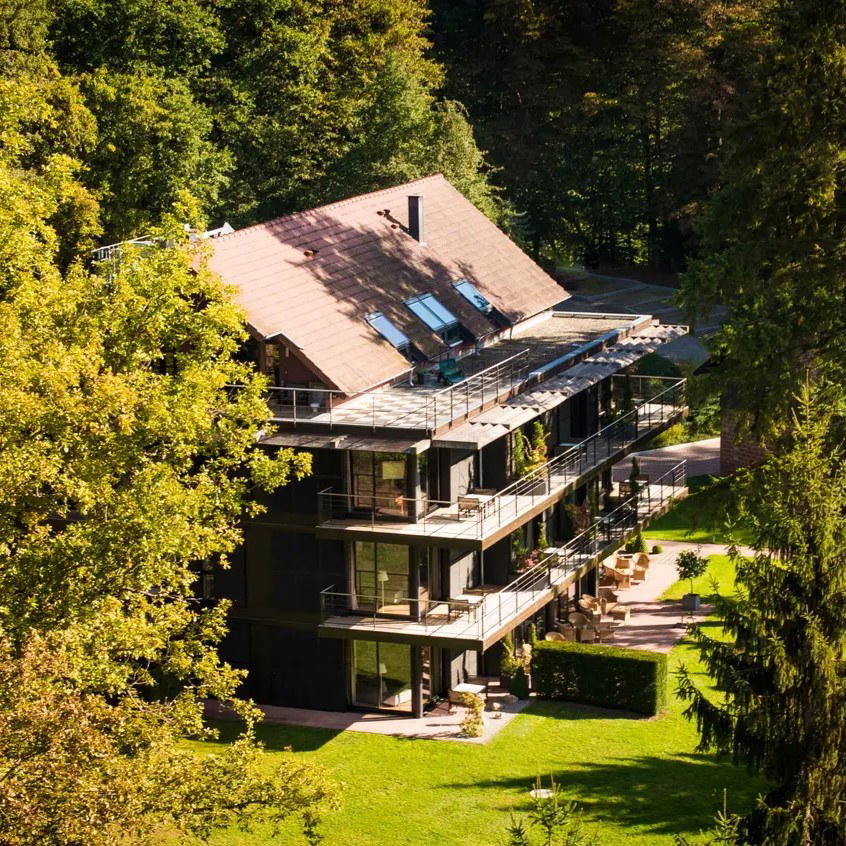
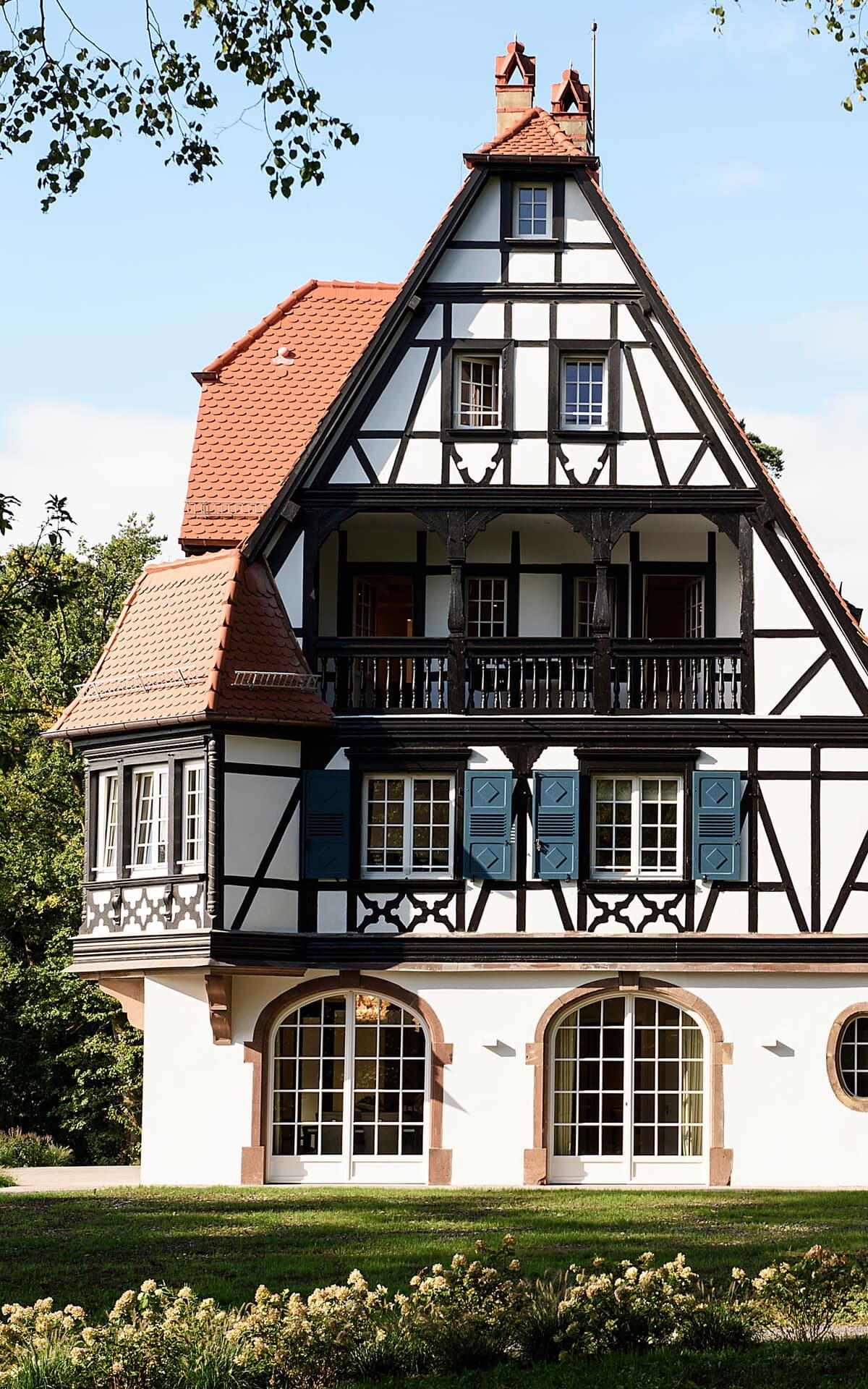
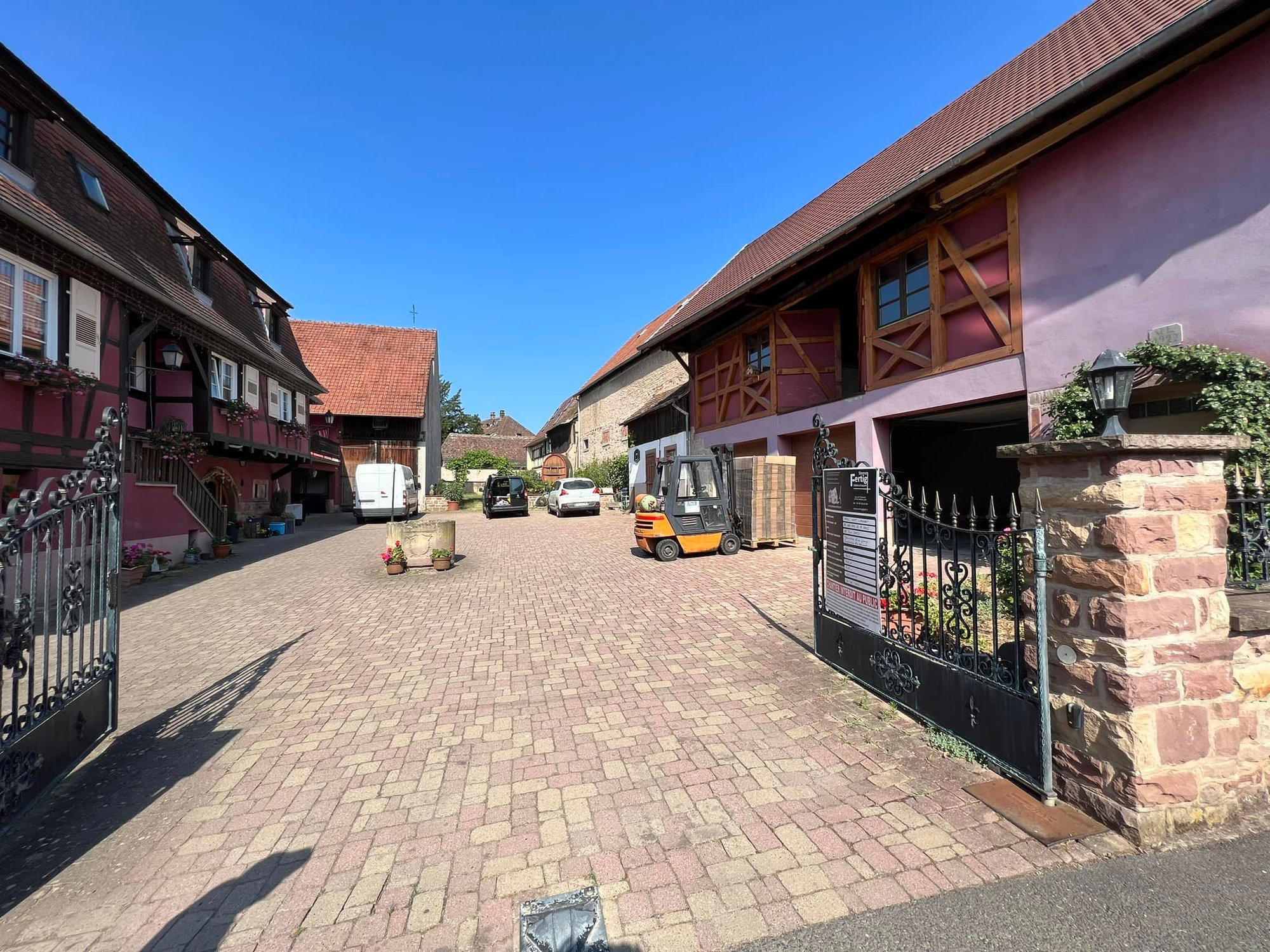
Arriving at 43 Rue Principale in Morschwiller, a village in the Bas-Rhin department of Alsace, the setting does the work before you step inside. The Alsatian villages along the eastern foothills of the Vosges have a particular architectural grammar: half-timbered facades, enclosed courtyards, buildings that once served agriculture now repurposed for quieter, more deliberate uses. La Grange Gourmande belongs to that tradition in name and in spirit. Grange means barn, and the word carries weight in this part of France, where the distance between field and kitchen has historically been short and the relationship between farmer and cook direct.
That proximity to the source is the defining characteristic of cooking in this corridor of Alsace. Unlike the grand kitchens of Strasbourg — where Au Crocodile has long anchored the city's high-end French tradition — or the destination restaurants drawing visitors from across Europe, the village dining rooms of the Bas-Rhin operate on a different logic. They draw from what surrounds them: the market gardens of the Rhine plain, the game and mushrooms of the Vosges, the charcuterie traditions that run deep in Alsatian households, and the Riesling and Pinot Gris vines that climb the hillsides to the west.
Sourcing as Culinary Argument
Across France's most compelling regional restaurants, ingredient sourcing has moved from background assumption to front-of-house argument. At Bras in Laguiole, the Aubrac plateau's flora has shaped an entire philosophy around what the land immediately offers. At Mirazur in Menton, the kitchen's own terraced gardens supply much of what arrives on the plate. These are high-profile examples of a broader shift in French regional cooking: the kitchen's relationship with its supply chain has become part of the editorial identity of a restaurant, not simply a logistical detail.
In Alsace, that argument has deep historical roots. The region's position as a crossroads between French and German culinary traditions means it has never lacked for produce diversity. The Rhine plain is among the more productive agricultural zones in France, yielding asparagus in spring, mirabelles and quetsches in late summer, sauerkraut cabbage from the fields around Krautergersheim, and foie gras from operations that have supplied Alsatian tables for generations. A kitchen in Morschwiller, sitting within this supply network, has access to ingredients that larger urban restaurants often source from greater distances at greater cost.
The grange concept, when applied honestly to a restaurant in this setting, implies a certain fidelity to that network. It suggests a kitchen less interested in importing technique and prestige ingredients from outside the region than in cooking with authority from within it. That is a meaningful distinction in a country where the gravitational pull of Parisian fine dining, the Alléno Paris au Pavillon Ledoyen tier of creative ambition and Assiette Champenoise-level technical precision, can sometimes overshadow the quieter intelligence of deeply regional cooking.
Alsace's Village Dining Context
The Alsatian village restaurant occupies a specific cultural niche that visitors often underestimate. These are not winstubs, the informal wine taverns of Strasbourg and Colmar built around tarte flambée and choucroute garnie. Nor are they the grand maisons like Auberge de l'Ill in Illhaeusern, which has held three Michelin stars for decades and operates with the infrastructure of a full destination property. The village restaurant sits between these poles: more considered than a tavern, more accessible than a grand maison, with cooking that reflects place rather than ambition for its own sake.
Morschwiller itself is a small commune in the Bas-Rhin, positioned in the agricultural flatlands east of the Vosges. It does not attract the wine-route tourism that clusters around Obernai, Riquewihr, or Kaysersberg. That relative quiet is part of what shapes the dining culture here. A restaurant on the Rue Principale in a village of this scale is, almost by definition, cooking for a local and regional audience rather than an international one, and that changes what ends up on the plate. The reference points are the seasons of the surrounding countryside, the habits of the local table, and the rhythms of the agricultural year.
For visitors planning a route through Alsace, the village dining room is often the category that rewards the while requiring the preparation. Unlike the well-documented destination restaurants, the three-star institutions covered extensively in European food media, or the rising kitchens in Strasbourg and Colmar, the smaller village addresses often have limited online presence and benefit from advance planning. Traveling through the Bas-Rhin with a reservation already in hand is consistently more productive than arriving and hoping for availability.
Where La Grange Gourmande Sits in the Regional Picture
Alsace is one of France's most densely mapped dining regions. The Route des Vins runs through hundreds of villages, and the concentration of Michelin-recognized tables per square kilometer rivals Burgundy and the Rhône Valley. In that context, the addresses that don't carry star credentials function differently: they carry the weight of local loyalty, seasonal consistency, and a certain informality that the starred circuit rarely offers.
The farmhouse-kitchen register that La Grange Gourmande's name invokes connects it to a broader French tradition of cooking that prizes directness. Troisgros - Le Bois sans Feuilles in Ouches and Georges Blanc in Vonnas both built their identities on regional produce and family continuity before becoming international reference points. L'Oustau de Baumanière in Les Baux drew its authority from the garrigue and olive groves of the Alpilles. The village restaurant in Alsace operates in that lineage, even if at a different scale.
For visitors whose itinerary through eastern France includes stops at the Alsatian grands crus villages, a meal in a place like Morschwiller offers a counterpoint to the wine-route spectacle: quieter, more grounded in the agricultural reality of the region, and often closer to what daily life in Alsace actually tastes like than the curated experiences designed for international visitors.
For a broader orientation to the dining options in and around this part of the Bas-Rhin, our full Morschwiller restaurants guide maps the village and surrounding area across price points and styles.
Planning Your Visit
Morschwiller is accessible by car from Strasbourg (roughly 30 kilometers south) and sits within reasonable distance of the Route des Vins. Given the village scale and the limited online footprint of addresses in this category, contacting the restaurant directly before visiting is advisable. Village restaurants in Alsace at this level of intimacy often operate on reduced hours outside peak tourist season, particularly in January and February, and some close entirely for annual holiday periods. Arriving without a reservation at a small dining room in a Bas-Rhin commune is a risk that a short phone call or advance inquiry eliminates entirely.
How La Grange Gourmande Morschwiller compares with similar nearby venues.
| Venue | Cuisine | Price |
|---|---|---|
| À l'Agneau | Traditional Cuisine | €€ |
| Les Jardins du Moulin | Modern Cuisine | €€€ |
| La Merise | Modern Cuisine | €€€€ |
Continue exploring
More in Morschwiller
Restaurants in Morschwiller
Browse all →
Bars in Morschwiller
Browse all →
Hotels in Morschwiller
Browse all →

At a Glance
- Rustic
- Cozy
- Classic
- Family
- Casual Hangout
- Historic Building
- Local Sourcing
Current opening hours
- Monday
- Closed
- Tuesday
- 12–1:30 PM
- Wednesday
- 12–1:30 PM
- Thursday
- 12–1:30 PM
- Friday
- 12–1:30 PM, 6:30–10 PM
- Saturday
- 6:30–10 PM
- Sunday
- 6:30–10 PM
Hours can change for holidays and private events. Last verified .
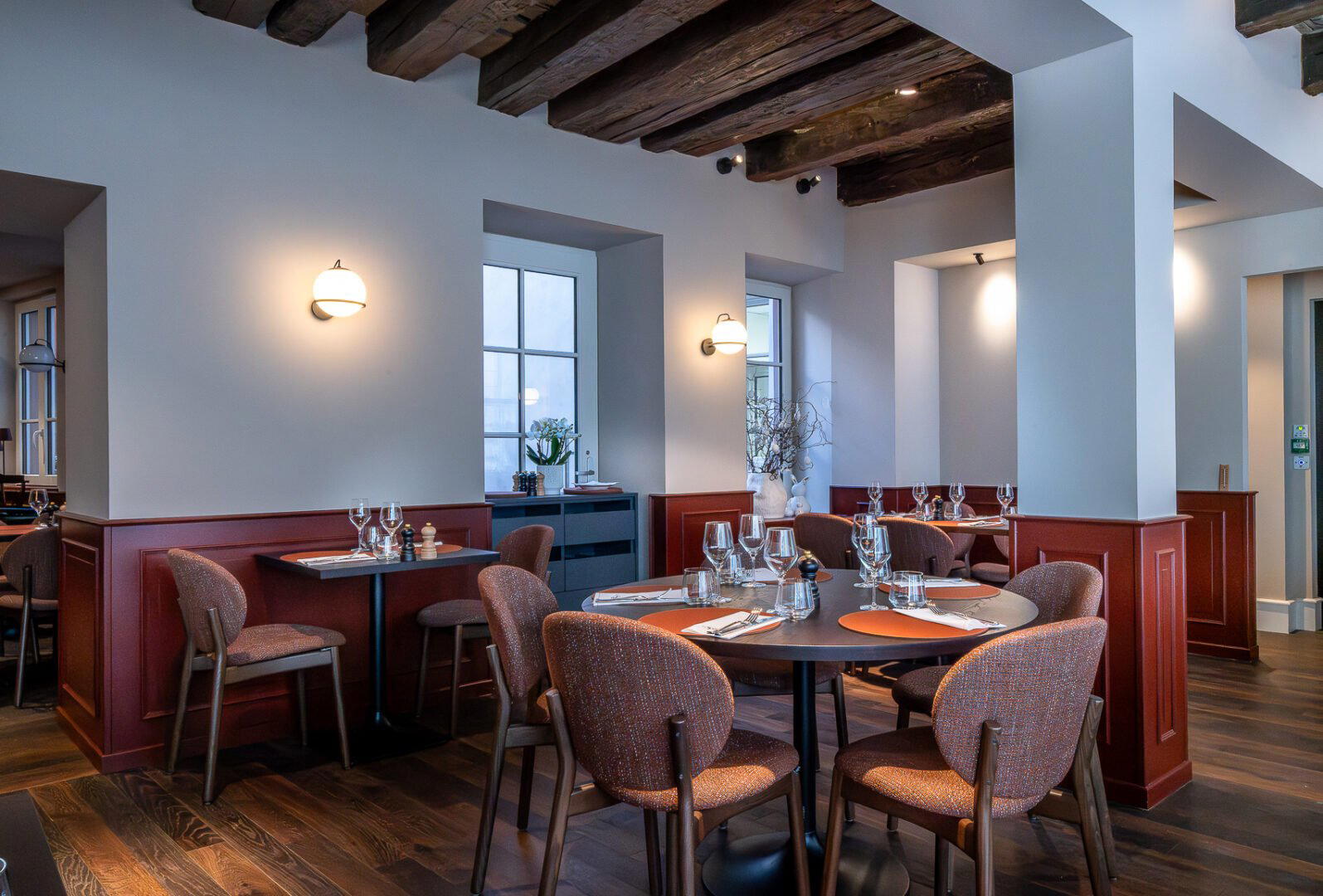
Warm rustic atmosphere with exposed beams and stonework in a peaceful village setting.