On the Cours Honoré d'Estienne d'Orves, La Cantine occupies one of Marseille's most socially animated squares, where the line between café culture and proper dining blurs by midday. Positioned in the mid-range tier below the Michelin-starred circuit of AM par Alexandre Mazzia and Le Petit Nice, it reads as a working address for the neighbourhood rather than a destination in isolation.
Pearl is the En Primeur Club membership app — saves, bookings, and concierge access live there. Same editors, same standards.
- Address
- 27 Cr Honoré d'Estienne d'Orves, 13001 Marseille, France
- Phone
- +33491333708
- Website
- la-cantine-de-marseille.fr
- Directions
- Get directions
 Saves & bookings on Pearl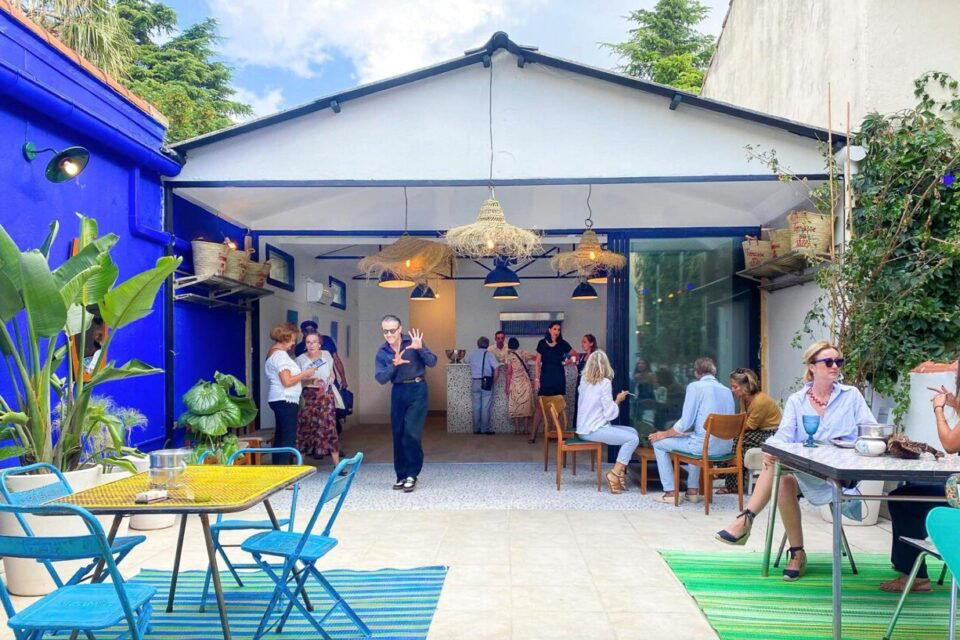
A Square That Does Most of the Work
The Cours Honoré d'Estienne d'Orves is one of those Marseille addresses where the architecture and the crowd conspire to make any individual venue secondary to the whole. The cours is wide, shaded in summer, and ringed with terraces that fill from late morning through the dinner hour. La Cantine sits within that frame at number 27, drawing on the ambient energy of a square that functions as a social commons for nearby residents and visitors. The approach is more arrondissement than destination: you find it because you are already in the area, not because you have planned a cross-city expedition.
That positioning matters in a city where the high-end dining circuit, anchored by addresses like AM par Alexandre Mazzia (French, Creative) and Le Petit Nice (French Seafood, Seafood), operates in a separate register entirely, with tasting menus, advance bookings, and price points that push into the €€€€ bracket. La Cantine occupies a different stratum, one closer to the everyday rhythm of a port city that has historically fed its population from market tables and communal kitchens rather than from composed fine-dining plates.
Marseille's Relationship with the Table Commune
The cantine as a format has deep roots in French civic and working culture. In its original form it was a subsidised canteen, a place where dockworkers, factory employees, and schoolchildren ate together without pretension. The word carries connotations of utility and shared purpose rather than ceremony. Marseille, which built its modern identity on maritime trade and the movements of people across the Mediterranean, has always maintained a version of this communal eating instinct, the long table, the shared carafe, the dish designed to feed rather than to impress.
This tradition sits at the opposite end of the spectrum from the haute cuisine lineages represented elsewhere in the city. Une Table, au Sud (Modern Cuisine) works firmly in the contemporary fine-dining idiom. 1860 Le Palais draws on a different register of Provençal formality. La Cantine, in name and in placement, signals something more grounded: an address calibrated to the daily life of the neighbourhood rather than to the occasional celebratory occasion.
Sustainability Through Simplicity: The Southern French Model
Across the south of France, a particular approach to environmentally conscious cooking has emerged not from manifesto-driven kitchen politics but from the practical logic of cooking close to source. Provençal and Mediterranean kitchens have historically operated on short supply chains: fish from the Vieux-Port, vegetables from the Bouches-du-Rhône plain, olive oil from the Baux valley. The ecological argument for this model is direct, fewer transport miles, seasonal menus dictated by what the land and sea produce each week, and a natural disincentive to food waste when ingredients are purchased in small quantities from markets rather than from industrial distributors.
An address on the Cours d'Estienne d'Orves is well positioned to draw from this logic. The Marché du Noailles, one of Marseille's most active daily markets, is within walking distance, and the city's fishing fleet continues to operate from the Old Port less than five minutes away on foot. Addresses like Alivetu (Mediterranean Cuisine) have demonstrated that the Mediterranean pantry, pulses, preserved vegetables, whole fish, and herbs, supports a cooking style that generates minimal waste by design, because the cuisine was built around using everything from the start.
What the format and location imply is a structural alignment with the shorter-chain, lower-waste model that defines casual southern French cooking at its most coherent. The cantine tradition itself is, in a sense, a pre-industrial version of what the contemporary food system calls nose-to-tail or root-to-stem cooking: you eat what is prepared, the menu changes with availability, and the kitchen does not carry expensive inventory it cannot use.
Where La Cantine Sits in the Marseille Dining Picture
Marseille's restaurant scene has diversified considerably since the city's 2013 European Capital of Culture designation brought sustained international attention to its food culture. The city now has a well established fine-dining tier, with AM par Alexandre Mazzia representing the creative high end and Le Petit Nice maintaining its position as the city's seafood reference point at the summit of the market. Below that, a mid-range tier serves the city's population of tourists, professionals, and residents who want something more considered than a tourist-facing pizza but are not planning a set-piece dinner.
The restaurant operates in that middle register. Its competitive set on the Cours d'Estienne d'Orves includes the other terrace addresses along the square, most of which serve a similar profile of Provençal-inflected café food and simple plats du jour. The differentiation within that tier tends to come from consistency, sourcing integrity, and the ability to sustain quality across the lunch and dinner service rather than from any single signature dish or conceptual statement.
For readers planning a wider tour of Marseille's dining scene, the EP Club's full Marseille restaurants guide maps the full spectrum from market-table addresses through to the city's leading tables. Comparative reference points further afield, including Mirazur in Menton and Auberge du Vieux Puits in Fontjoncouse, show how the southern French kitchen operates at its most ambitious when it commits fully to regional sourcing and seasonal discipline.
Practical Matters
The restaurant is located at 27 Cours Honoré d'Estienne d'Orves in the 1st arrondissement, within a short walk of the Vieux-Port metro station. The cours itself is a reliable lunch destination from late spring through early autumn, when the terrace operates at full capacity and the square draws a broad cross-section of the city's population. For visitors unfamiliar with Marseille's geography, the 1st arrondissement places you at the intersection of the city's historic centre, its main market quarter, and its port-facing promenades, a practical base for a half-day on foot.
The Short List
Comparable venues nearby, for context on price, style, and recognition.
| Venue | Cuisine | Price | Notes |
|---|---|---|---|
| La CantineThis venue — the venue you are viewing | Opera, Mediterranean Bistro | $$ | Not listed |
| Gingette Solaire Le Présage | Not listed | $$ | Chateau-Gombert, Eco-responsible Mediterranean Solar Cuisine |
| OAÏ | Opera, Provençal Mediterranean Bistro | $$ | Not listed |
| Restaurant Femina | Noailles, Algerian Couscous Specialist | $$ | Not listed |
| Chez Yassine | Noailles, Authentic Tunisian | $$ | Not listed |
| PEPERE | Not listed | $$ | Prefecture, Mediterranean Cocktail Bar with Tapas |
Continue exploring
More in Marseille
Restaurants in Marseille
Browse all →
Bars in Marseille
Browse all →
Hotels in Marseille
Browse all →
At a Glance
- Cozy
- Elegant
- Rustic
- Date Night
- Casual Hangout
- Group Dining
- Terrace
- Local Sourcing
Current opening hours
- Monday
- 12–2:15 PM, 7:30–10:30 PM
- Tuesday
- 12–2:15 PM, 7:30–10:30 PM
- Wednesday
- 12–2:15 PM, 7:30–10:30 PM
- Thursday
- 12–2:15 PM, 7:30–10:30 PM
- Friday
- 12–2:15 PM, 7:30–10:30 PM
- Saturday
- 12–2:15 PM, 7:30–10:30 PM
- Sunday
- 12–2:15 PM, 7:30–10:30 PM
Hours can change for holidays and private events. Last verified .
Cozy mix of wicker lighting, leather chairs, wooden tables, indirect lighting, and vintage decor with terrace seating.