Kyō-To Sushi Catania brings Japanese counter dining to Via Barone della Bicocca in central Catania, placing raw-fish technique against one of Italy's most seafood-intensive coastlines. The address sits where Sicilian ingredient culture meets Japanese preparation discipline, a pairing that makes more geographic sense than it might first appear. For the city's growing appetite for non-Sicilian precision dining, it occupies a distinct position in the local restaurant mix.
Pearl is the En Primeur Club membership app — saves, bookings, and concierge access live there. Same editors, same standards.
- Address
- Via Barone della Bicocca, 14, 95124 Catania CT, Italy
- Phone
- +39952907347
- Website
- instagram.com
- Directions
- Get directions
 Saves & bookings on Pearl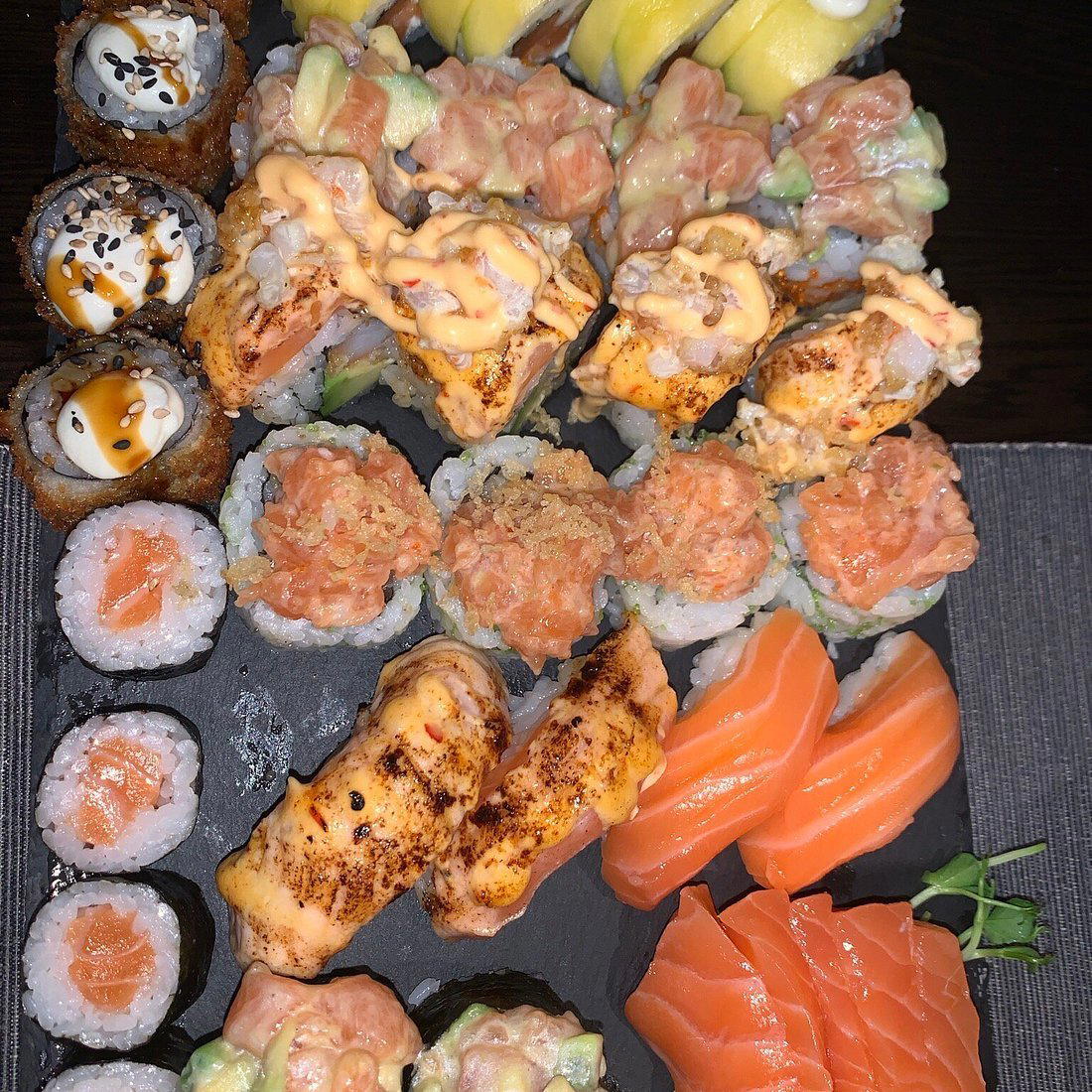
Where the Ionian Coast Meets the Japanese Counter
Catania's relationship with raw fish runs deep before any Japanese influence enters the picture. The city's markets, most visibly La Pescheria, a few blocks from the Duomo, have traded in the same Ionian and Mediterranean catch for centuries: ricci di mare, swordfish, sea bream, red prawns pulled from cold southern waters. It is a city that already understands fish at the ingredient level, which makes it a more natural host for serious sushi than many Italian cities where the seafood culture is thinner. Kyō-To Sushi Catania, at Via Barone della Bicocca 14 in the 95124 district, operates inside that context: Japanese preparation arriving in a place where the underlying ingredient logic was already present.
That geographic specificity matters more than it is usually given credit for. The argument for quality sushi in a landlocked city rests almost entirely on supply chain and technique. In Catania, at least half of that equation is solved by proximity: the Ionian Sea delivers a range of species that overlap meaningfully with what Japanese counters build menus around, and local fishing culture means the catch arriving in Catania's wholesale and retail markets is handled with the same immediacy that defines the leading fish procurement in Japan. Sushi at this address is not operating against the grain of where it is situated, it is working with a coastal city's existing ingredient strengths.
The Sicilian Ingredient Case for Japanese Technique
Sicily's southern and eastern coasts are among Italy's most productive fishing zones. Red prawn (gambero rosso) from the straits around Mazara del Vallo or from the deep waters off Sciacca ranks among the more referenced raw-consumption prawns in European seafood trade; it appears on omakase menus in Tokyo-aligned counters across Europe precisely because of its fat content and sweetness at lower temperatures. The ricci (sea urchin) harvested from Sicilian waters carry a brininess and richness that Japanese preparation, minimal intervention, temperature-managed service, tends to amplify rather than obscure.
This is the ingredient story that a sushi counter in Catania can tell that a comparable address in Milan or Rome cannot replicate with the same directness. Supply chains from Sicily to northern Italian cities add a day, sometimes two, in transit time. At Via Barone della Bicocca, the catch from that same sea is local.
Catania's Non-Sicilian Dining Tier
For context on where this type of restaurant sits in Catania's dining structure: the city's dominant register is Sicilian, with spots like the seafood-driven Angiò-Macelleria di Mare and the Italian Contemporary work at Coria representing the higher end of locally-rooted cooking. There is also a broader casual spectrum, Al Vicolo Pizza&Vino for wine-paired pizza, Big Daddy's and Casbah del Moro for different informal registers. Japanese dining sits in a separate lane from all of these: it asks for a different kind of trust from the diner, one built around technical precision rather than regional familiarity.
Across Italy, the tier of serious Japanese restaurants has grown steadily since the mid-2010s, concentrated in Milan, Rome, and to a lesser extent Florence, cities with the international visitor volumes and corporate dining cultures that anchor high-spend Japanese counters. The south has been slower to develop that tier. A sushi address in Catania is, by Italian standards, still a relatively early proposition in a city where the dominant dining identity remains Sicilian. For comparison, the Michelin-level Italian precision cooking that features in venues like Osteria Francescana in Modena, Le Calandre in Rubano, or Piazza Duomo in Alba represents one end of Italy's fine dining spectrum; the Japanese counter format occupies a structurally different but similarly technique-intensive position. In Catania, both remain niche relative to the Sicilian mainstream.
The ingredient-to-technique argument also has international precedents worth noting. Le Bernardin in New York City built its reputation on the principle that seafood quality is non-negotiable and technique must serve the ingredient rather than override it, a philosophy that shares structural logic with the leading Japanese fish counters. Atomix in New York City demonstrates how Asian fine dining formats can operate at the highest level in a non-Asian city when the sourcing and technical discipline are treated seriously. Both serve as reference points for what happens when a city's ingredient access is matched by kitchen commitment.
For diners travelling more widely in Italy, the country's most formally recognised kitchens include Dal Pescatore in Runate, Enoteca Pinchiorri in Florence, Uliassi in Senigallia, Enrico Bartolini in Milan, Reale in Castel di Sangro, Quattro Passi in Marina del Cantone, and Atelier Moessmer Norbert Niederkofler in Brunico.
At-a-Glance Comparison
Comparable venues nearby, for context on price, style, and recognition.
| Venue | Cuisine | Price | Notes |
|---|---|---|---|
| Kyō-To Sushi CataniaThis venue — the venue you are viewing | Japanese-Asian Contemporary Sushi | $$ | Not listed |
| PLANTE Lab | Vegan Plant-Based Fast Food | $$ | Historical Center |
| Vermut | Sicilian Salumeria & Vermouth Bar | $$ | Centro Catania |
| Casbah del Moro | Modern Moroccan Hummus Bar & Kitchen | $$ | Catania City Center |
| Big Daddy's | American Bar Snacks | $$ | Stesicoro |
| Osteria Antica Marina | Sicilian Seafood Osteria | $$$ | Zona Pescheria |
Continue exploring
More in Catania
Restaurants in Catania
Browse all →
Bars in Catania
Browse all →
Hotels in Catania
Browse all →



At a Glance
- Modern
- Trendy
- Casual Hangout
- Group Dining
- Standalone
- Sustainable Seafood
Current opening hours
- Monday
- Closed
- Tuesday
- 6–11:30 PM
- Wednesday
- 6–11:30 PM
- Thursday
- 6–11:30 PM
- Friday
- 6–11:30 PM
- Saturday
- 6–11:30 PM
- Sunday
- 6–11:30 PM
Hours can change for holidays and private events. Last verified .
Contemporary and welcoming atmosphere with friendly hosts; casual dining environment suitable for both intimate meals and small groups.