
Kyoto Kuriya sits in Kyoto’s wagashi lane rather than its kaiseki lane: a traditional sweets address in Nakagyo Ward with Tabelog 100 recognition for Japanese sweets in West Japan. Its appeal is the value equation, where a low-spend format can still carry regional credibility in a city often framed through formal dining.
Pearl is the En Primeur Club membership app — saves, bookings, and concierge access live there. Same editors, same standards.
- Address
- 42-4 Daimonjicho, Nakagyo Ward, Kyoto, 604-0071, Japan
- Phone
- +81 75-231-4564
- Website
- kyoto-kuriya.jp
 Saves & bookings on Pearl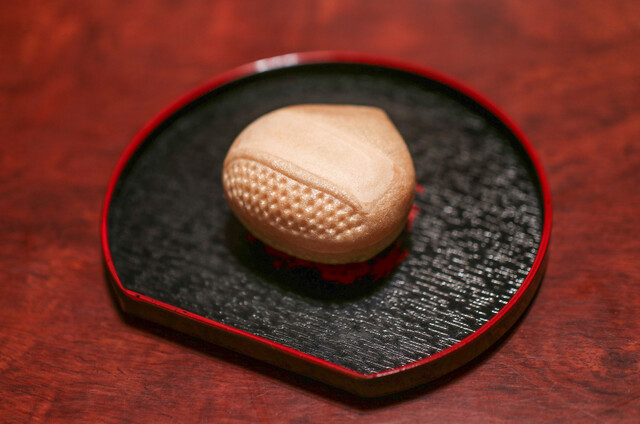
Approaching a Kyoto wagashi shop changes the tempo of the city. The cues are smaller than at a counter restaurant: a display case, a quiet exchange, a purchase that may be eaten soon after rather than stretched into a full lunch. In Nakagyo Ward, that modest scale matters. Kyoto’s sweets culture has long operated beside tea, temple visits, gift-giving, and household routines, so the category rewards precision without demanding the ceremony or cost of a full meal.
That is the useful frame for Kyoto Kuriya. It belongs to the city’s traditional Japanese sweets circuit, a category where reputation is built through consistency, regional memory, and repeat custom rather than theatrical service. Its selection for Tabelog 100 Japanese traditional sweets / Japanese sweets cafe West in 2023 gives it a clear public credential inside a field that is often difficult for visitors to read from the street. The Tabelog score of 3.65 also places it in a credible local bracket, especially for a low-spend sweets format.
Kyoto's wagashi economy rewards small purchases with serious craft
Kyoto dining is often judged through kaiseki rooms, counter sushi, and reservation-heavy restaurants, but wagashi gives a sharper lesson in the city’s daily food culture. The spend is lower, the transaction shorter, and the margin for error narrow. A sweet shop cannot hide behind a long beverage pairing or a dramatic dining room. It is judged on balance, seasonality, texture, and whether the item makes sense with tea or as a gift.
That is why the value proposition is strong here. A visitor can participate in a serious Kyoto food tradition without committing to a formal tasting menu. The category also sits comfortably alongside more casual city eating: a traveler comparing Kyoto’s quick-service and low-ticket options might look at 551蓬莱 for a different everyday register, or 3TOKU6MI Shijo karasuma ten for a contemporary casual meal. Wagashi plays another role entirely, less about filling a dining slot than understanding how Kyoto treats sweetness, season, and gifting.
The comparison within Kyoto is revealing. Kaji and Chiso Aida occupy Japanese dining territory with higher meal expectations, while SONGBIRD COFFEE and Marque-page sit closer to cafe pacing. Fuka Fuchomae honten shares the low-spend bracket, which makes it a useful reference point for visitors trying to separate a casual stop from a recognized specialist. Kyoto Kuriya’s Tabelog 100 listing gives it a stronger editorial signal than price alone can convey.
A recognized sweets stop, not a long-form restaurant experience
The format should be understood on its own terms. This is not the part of Kyoto dining built around lingering courses or chef-led storytelling. It is closer to a focused purchase or short sweets stop, with the craft carried by the product rather than by a staged dining sequence. For travelers accustomed to restaurant rankings, that distinction is useful: an award in the wagashi category does not mean the same thing as a star restaurant, but it does signal that the address has been noticed within a specialist field.
Kyoto’s geography makes this kind of stop easy to fold into a broader day. Nakagyo Ward is central enough for routes that also touch shopping streets, palace-side walks, coffee, and casual dining. Readers building a full city itinerary can cross-reference Our full Kyoto restaurants guide, then layer in Our full Kyoto hotels guide, Our full Kyoto bars guide, Our full Kyoto wineries guide, and Our full Kyoto experiences guide for a more complete map of the city.
For food travelers, the smarter move is to treat wagashi as a category, not a dessert afterthought. Aburi mochi, tea sweets, bean-based confections, and seasonal pieces all sit under a larger Kyoto grammar of restraint and timing. Aburi Mochi Honke Nemoto Kazariya shows another historic sweets pathway, while [ki:] and Abbesses point to how Kyoto’s contemporary dining map now stretches well beyond inherited categories.
Where it fits in a wider Japan food itinerary
Kyoto Kuriya is useful precisely because it does not ask for a heavy commitment. In a city where visitors often overload days with temples, set lunches, and dinner reservations, a recognized sweets stop gives the itinerary texture without taking over the schedule. It also keeps spending disciplined, which matters in Kyoto: the city can move from inexpensive snacks to high-ticket formal dining within a few blocks.
That low-friction role has parallels across Japan and abroad. A traveler using EP Club to compare casual specialists might move from.cafe in Osaka to.know in Kumamoto, from [Curry Senmon Ten] Maruyama Kyoju. in Sapporo to (Shoku) Vietnam in Kawasaki. The common thread is not cuisine type but editorial usefulness: small-format places can say as much about a city as a formal restaurant when the category is read correctly.
For a broader contrast, -Grilled beef Sukiyaki- KAMAKURA TANUKIAN 鎌倉 たぬき庵 in Kamakura sits in a more meal-driven Japanese register, while. 鮪と炭火焼き うお炭 秋葉原店 in Tokyo points toward urban seafood and charcoal cooking. Outside Japan, Jōdo Saké Bar in Los Angeles and Onigiri Time in Pasadena show how Japanese formats travel and adapt, but Kyoto’s wagashi culture remains anchored to local rhythms: tea, season, gift, pause.
The editorial verdict is simple: Kyoto Kuriya is a high-signal, low-commitment stop for travelers who want Kyoto food culture beyond the usual restaurant hierarchy. The Tabelog 100 West selection supplies the trust signal; the category supplies the cultural value. It is the kind of place to use between larger meals, not instead of understanding the city’s dining depth.
Recognition, Side-by-Side
Comparable venues at a glance for context.
| Venue | Cuisine | Price | Awards | Notes |
|---|---|---|---|---|
| Kyoto KuriyaThis venue — the venue you are viewing | Traditional Kyoto wagashi and chestnut sweets | $ | , | |
| Flip up! | Kyoto bakery & bagel shop | $ | , | Nakagyō |
| Kono Hana | Traditional Japanese sweets & cafe near Kitano Tenmangu | $ | , | Kamigyō |
| Awamochidokoro Sawaya | Traditional Japanese sweets (wagashi) cafe | $ | , | Kamigyō |
| Jinba Do | Traditional Japanese Yaki-Mochi & Wagashi | $ | , | Kita |
| Tsukemen Kirari | Kyoto tsukemen & ramen shop | $ | , | Fushimi |
Continue exploring
More in Kyoto
Restaurants in Kyoto
Browse all →

Bars in Kyoto
Browse all →


Hotels in Kyoto
Browse all →

Wineries in Kyoto
Browse all →
At a Glance
- Classic
- Quiet
- Hidden Gem
- Solo
- Family
- Casual Hangout
- After Work
- Standalone
- Local Sourcing
Traditional and understated wagashi shop atmosphere, with a calm, quiet setting focused on takeaway sweets rather than sit-down dining.