
Awamochidokoro Sawaya belongs to Kyoto’s old confectionery grammar: small rooms, short shelf life, and sweets treated as craft rather than dessert course. Its Tabelog 100 recognition for Japanese traditional sweets and cafe in WEST 2023 places it in a serious wagashi bracket, while the house-restaurant format keeps the experience closer to neighbourhood ritual than polished salon.
Pearl is the En Primeur Club membership app — saves, bookings, and concierge access live there. Same editors, same standards.
- Address
- 838-7 Kamiyagawacho, Kamigyo Ward, Kyoto, 602-8384, Japan
- Phone
- +81 75-461-4517
- Website
- tabelog.com
 Saves & bookings on Pearl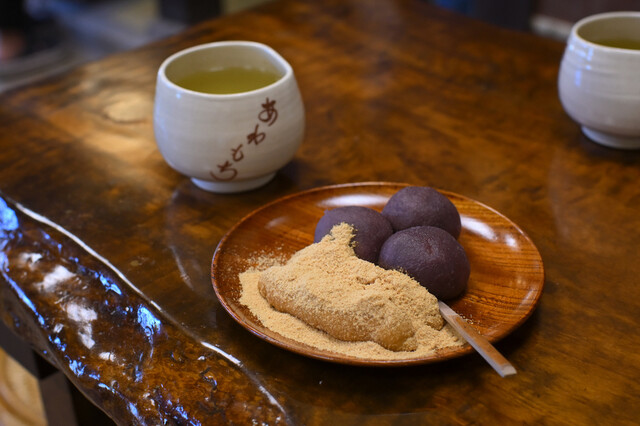
Approaching the Kitano Tenmangu area, Kyoto’s scale tightens: the broad temple approach gives way to low buildings, shopfront signs, and people moving between prayer, errands, and tea. Here, wagashi is not decorative; it is one of the city’s working languages. Awamochidokoro Sawaya sits inside that language with a house-restaurant format, 30 seats, and a specialty built around millet mochi, a same-day sweet whose shelf life says more about Kyoto confectionery discipline than any ornate room could.
Kyoto rewards food travelers who understand small formats. Serious eating is not limited to kaiseki rooms such as Noguchi or 京天神 野口, nor to contemporary restaurants in central districts. Its confectionery culture runs on another clock: morning production, careful texture, short holding windows, and ties to shrine and temple districts that predate the modern dessert cafe. In that category, Awamochidokoro Sawaya is less a casual sugar stop than a compact lesson in perishable sweets as place-specific craft.
A small room for a short-lived sweet
The design story is not spectacle. Kyoto has restaurants where architecture announces rank before the first course; wagashi shops often work oppositely. A house restaurant near a major shrine precinct emphasizes sequence and restraint: arrive, sit, eat, leave, or take something away before texture loses its point. The reported 30-seat scale keeps the experience in the register of a local sweet shop rather than a destination dining room.
Millet mochi is an unforgiving anchor for that space. Unlike confections designed for gift boxes, this is a same-day sweet. That detail makes the case for coming here rather than treating it as packaged Kyoto souvenir culture. The value is not scarcity theatre; it is perishability. A same-day sweet belongs to the immediate geography of production and consumption, which is why the area around Kitano Tenmangu is context, not scenery.
Kyoto’s wagashi scene has competitive tiers. Kono Hana operates in a lower casual bracket, Castella do Paulo sits in a higher spend range, and Ito Sen occupies a more expensive register again. Awamochidokoro Sawaya remains in a sub-¥1,000 band, making its Tabelog 100 selection in the Japanese traditional sweets and Japanese sweets cafe WEST 2023 category more telling. Recognition is not tied to luxury pricing; it signals consistency and category relevance in a field where texture, timing, and tradition carry the weight.
Why Kitano's confectionery culture matters
Kitano Tenmangu frames the visit differently from central Kyoto cafe-hopping. Shrine districts in Japan have long supported foods eaten before or after worship: sweets, tea, grilled mochi, and portable snacks suited to short visits rather than long meals. Nearby Aburi Mochi Honke Nemoto Kazariya belongs to the same Kyoto grammar, where a specific sweet becomes inseparable from a route, a season, and a religious precinct. Sawaya’s millet mochi sits in that lineage without requiring full tea-ceremony formality.
Design and service format also overlap. A small sweet shop handles two audiences: people sitting down for a brief pause, and people carrying sweets away. Take-out is part of the format, but the mochi’s same-day nature limits how far that logic can stretch. For travelers, the decision is clear: treat it as part of a Kitano morning or afternoon, not something to collect for later hotel-room grazing.
Within Kyoto’s broader dining map, this shows that prestige is not always expressed through long menus or elaborate service. A larger itinerary might pair shrine-side sweets with central meals at 3TOKU6MI Shijo karasuma ten, [ki:], or Abbesses, while keeping casual references such as 551蓬莱 in a separate lane. For the wider city edit, use Our full Kyoto restaurants guide, with parallel planning through Our full Kyoto hotels guide, Our full Kyoto bars guide, Our full Kyoto wineries guide, and Our full Kyoto experiences guide.
How to read the recognition
Tabelog 100 selection is useful because it identifies strength within a specific genre rather than folding every sweet shop into a general restaurant hierarchy. The 2023 WEST recognition for Japanese traditional sweets and Japanese sweets cafe places Awamochidokoro Sawaya within that regional confectionery field. Earlier selections in Tabelog’s sweets categories in 2018, 2019, 2020, and 2022 add continuity, important in a craft where small changes in production and handling can alter the result.
The practical reading is simple: this is not a grand meal and should not be forced into that role. It works as a focused Kyoto stop for travelers who care about the city’s edible traditions at street and shrine scale. The absence of private rooms and the no-smoking format reinforce the space’s functional character. Payment limitations point to an older style of operation, so the visit belongs to a cash-ready, low-friction itinerary rather than a long, reservation-led dining plan.
For readers comparing beyond Kyoto, the lesson translates across Japan: small-format regional food often carries more cultural information than a high-spend dinner. That is true of specialist counters and casual shops such as -Grilled beef Sukiyaki- KAMAKURA TANUKIAN 鎌倉 たぬき庵 in Kamakura,. 鮪と炭火焼き うお炭 秋葉原店 in Tokyo,.cafe in Osaka,.know in Kumamoto, (Shoku) Vietnam in Kawasaki, and [Curry Senmon Ten] Maruyama Kyoju. in Sapporo. Even outside Japan, compact formats such as Jōdo Saké Bar in Los Angeles and Onigiri Time in Pasadena show how narrow focus can carry dining identity without a large room or long menu.
The editorial verdict is measured but firm. Awamochidokoro Sawaya is valuable because it preserves a specific Kyoto confectionery rhythm: small room, modest spend, short shelf life, and a shrine-side setting that gives the sweet its natural context. Come for the category, not restaurant theatre.
Comparable Options
Side-by-side context: comparable cuisine and price.
| Venue | Cuisine | Price | Notes |
|---|---|---|---|
| Awamochidokoro SawayaThis venue — the venue you are viewing | Traditional Japanese sweets (wagashi) cafe | $ | |
| Onkashi Tsukasa Shioyoshiken | Traditional Kyoto Wagashi (Japanese confectionery) | $ | Kamigyō |
| Kissa Tirol | Classic Kyoto kissaten & yoshoku cafe | $ | Nakagyō |
| Flip up! | Kyoto bakery & bagel shop | $ | Nakagyō |
| Rokuyosha Chika ten | Traditional Kyoto kissaten & coffee bar | $ | Nakagyō |
| Kansen Do | Traditional Japanese Wagashi & Sweets | $ | Higashiyama |
Continue exploring
More in Kyoto
Restaurants in Kyoto
Browse all →
Bars in Kyoto
Browse all →
Hotels in Kyoto
Browse all →
Wineries in Kyoto
Browse all →
At a Glance
- Classic
- Cozy
- Iconic
- Quiet
- Solo
- Family
- Casual Hangout
- Historic Building
- Standalone
- Street Scene
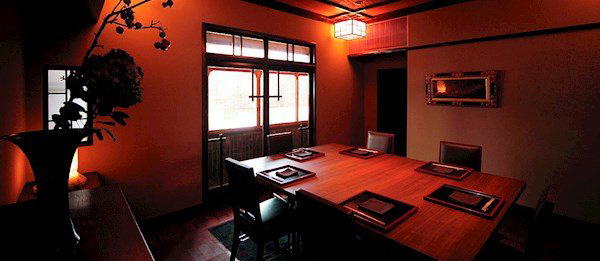
A small, traditional house-style sweets shop with a relaxed, non-smoking tea-room feel; simple wooden interiors and a calm, old-Kyoto atmosphere that stays cozy but can feel bustling during shrine festival days.