
Setagaya’s sushi culture rewards small counters that trade Ginza polish for neighbourhood discipline. Kozasa Sushi fits that quieter Tokyo register: 13 seats, counter format, sake, take-out, and recognition in Tabelog Sushi TOKYO 100 for 2025, with dinner spending listed at JPY 15,000–19,999.
Pearl is the En Primeur Club membership app — saves, bookings, and concierge access live there. Same editors, same standards.
- Address
- 3 Chome-7-10 Daizawa, Setagaya City, Tokyo 155-0032, Japan
- Phone
- +81 3-3413-0488
- Website
- tabelog.com
 Saves & bookings on Pearl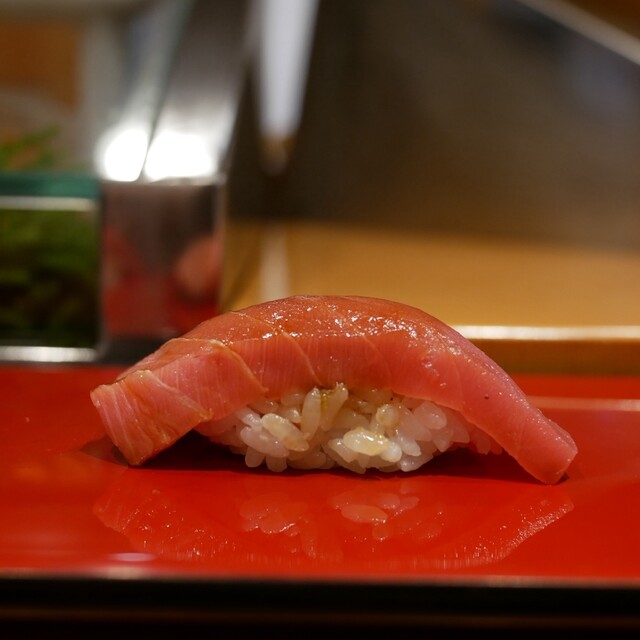
Daizawa is not the Tokyo sushi fantasy sold through hotel concierges. The approach is residential, low-rise, and closer to Shimo-Kitazawa’s lived-in west-side rhythm than to the choreographed luxury of Ginza. That setting matters. In this part of the city, sushi counters often read less as destination theatre than as neighbourhood institutions with strict economies of space, habit, and repeat custom.
Kozasa Sushi belongs to that tradition. Its scale is the first clue: 13 seats, counter seating, no private rooms, and a non-smoking room. Tokyo has increasingly split into two sushi markets. One is the international trophy counter, priced and booked like a scarce asset. The other is a tighter local tier where craft, regularity, and recognition inside Japanese dining platforms carry more weight than global spectacle. This address sits in the latter camp, helped by selection for Tabelog Sushi TOKYO 100 in 2025 and a Tabelog score of 3.98.
Setagaya sushi, after the Ginza inflation cycle
The evolution of Tokyo sushi over the past decade has not been only about rising prices. It has also been about geography. Serious counters have moved, or been noticed, beyond the central wards as diners became more willing to travel for smaller formats and lower-key rooms. Setagaya, with its mix of old shopping streets, residential pockets, and young neighbourhoods around Shimo-Kitazawa, gives sushi a different frame: less ceremonial, more embedded.
That distinction sharpens when compared with nearby casual dining patterns. In the same broad Tokyo ecosystem, places such as Dashin Soan, KAISO, Kyu Yamu Tei Shimokita sou, Café Trois Chambres, and サーモンアンドトラウト signal how the west side can move between soba, bakeries, curry, coffee, and contemporary small restaurants without behaving like a single luxury dining district. A sushi counter here has to make sense beside daily life, not apart from it.
The price band also tells a clear story. Dinner at Kozasa Sushi is listed at JPY 15,000–19,999, which puts it above casual neighbourhood meals but below the rarified tier where international demand can overwhelm the room’s original audience. That middle-high bracket is one of Tokyo’s more interesting categories in 2026: expensive enough to demand precision, restrained enough to keep the meal from becoming a status performance.
A compact counter built around concentration, not spectacle
The format is traditional in the ways that matter. Counter seating places the meal in direct view of the work, and the room’s small capacity limits the social noise that can dilute sushi’s rhythm. No chef biography is needed to understand the editorial point: in Tokyo, the counter is the operating system. It determines pacing, interaction, and how closely each piece is tied to the moment it is served.
Listed category is sushi, with sake noted under drinks. That pairing is conventional but not incidental. Sake remains the natural language of many Tokyo counters because it can follow changes in temperature, fat, salt, and vinegar without imposing the oak or tannin structure that wine often brings. The presence of take-out adds another Setagaya signal: this is not merely a formal evening room but part of a local food circuit.
Recognition from Tabelog’s Hyakumeiten program gives the counter a useful kind of Japanese credibility. Tabelog’s sushi lists are not the same as Michelin stars, and they should not be read as a global luxury ranking. They are more revealing as a measure of domestic attention, especially for small restaurants outside the hotel-dining corridor. For travellers who already know Tokyo’s famous sushi names, that makes this selection meaningful: it points toward a counter with local traction rather than imported hype.
The comparison is instructive beyond sushi. Tokyo visitors often plan around central dining clusters, then miss how much of the city’s eating intelligence sits in residential wards. The same planning instinct applies across categories, from casual Japanese rooms to bars and hotels. For broader mapping, see Our full Tokyo restaurants guide, Our full Tokyo hotels guide, Our full Tokyo bars guide, Our full Tokyo wineries guide, and Our full Tokyo experiences guide.
How to read the room before committing an evening
This is a focused choice, not a catch-all recommendation. The counter suits diners who want a compact sushi experience in western Tokyo, who are comfortable with a small room, and who do not need multilingual theatre around every decision. It is less suited to travellers trying to stage a large celebratory dinner, because private rooms and private use are not part of the format.
The practical signals are unusually important here. Reservations are listed as unavailable, payment is cash-oriented with credit cards, electronic money, and QR payments not accepted, and parking is unavailable. Those facts shape the experience before the first piece of fish arrives. A small Tokyo sushi counter can be excellent and still require old-fashioned planning: arrive with cash, treat timing seriously, and do not build the evening around flexible group logistics.
For travellers building a wider Tokyo food itinerary, contrast this with casual or specialist stops such as. 鮪と炭火焼き うお炭 秋葉原店, 12/10 Shinjuku ten, 124. KAGURAZAKA (Yakitori), 2D Cafe, and 3 Chome no Curry Ya San. Beyond Tokyo, the same editorial lens helps with -Grilled beef Sukiyaki- KAMAKURA TANUKIAN 鎌倉 たぬき庵 in Kamakura.cafe in Osaka.know in Kumamoto, (Shoku) Vietnam in Kawasaki, [Curry Senmon Ten] Maruyama Kyoju. in Sapporo, [ki:] in Kyoto, Jōdo Saké Bar in Los Angeles, and Onigiri Time in Pasadena.
The appeal is the restraint of the category. Kozasa Sushi is not trying to turn Setagaya into Ginza. Its current relevance comes from a Tokyo shift that rewards smaller counters with domestic recognition, clear format discipline, and prices that signal seriousness without leaving the neighbourhood register behind.
In Context: Similar Options
Comparable venues at similar price and category levels.
| Venue | Cuisine | Price | Notes |
|---|---|---|---|
| Kozasa SushiThis venue — the venue you are viewing | Traditional Sushi Counter | $$$ | Not listed |
| Akaoni | Sake Specialist Izakaya | $$$ | Setagaya |
| Daikanyama Yakiniku Kaneko | Yakiniku (Japanese BBQ) | $$$ | Shibuya |
| Teppanyaki Takami | Traditional Japanese Teppanyaki | $$$ | Shibuya |
| Toriyaki Sasaya | Traditional Yakitori Course Menu | $$$ | Meguro |
| Shinjuku Takano Fruits Parlor | Japanese Fruit Parlor | $$$ | Shinjuku |
Recognition history
Dated appearances from independent guides and award organizations, with the underlying list record or original source where available.
Tabelog 100 #38 · No. 38
Tabelog · Tabelog 100 - Sushi - TOKYO - 2025















At a Glance
- Classic
- Cozy
- Intimate
- Solo
- Family
- Casual Hangout
- Chefs Counter
- Standalone
- Sake Program
Current opening hours
- Monday
- 5–9 PM
- Tuesday
- 5–9 PM
- Wednesday
- Closed
- Thursday
- 5–9 PM
- Friday
- 5–9 PM
- Saturday
- 5–9 PM
- Sunday
- Closed
Hours can change for holidays and private events. Last verified .
A small, old-school sushi counter with only 13 seats, non-smoking and tucked into a quiet residential street near Shimokitazawa, creating a calm, intimate atmosphere that feels like a local low-profile address rather than a formal high-end omakase temple.