Koshu Houtou Kosaku sits on the northern shore of Lake Kawaguchi in Yamanashi Prefecture, serving houtou, the thick wheat-flour noodle stew that defines cold-weather eating across the Fuji Five Lakes region. The restaurant draws steady local and tourist traffic as one of the area's most established addresses for this regional specialty. Visit in autumn or winter when the dish reads most clearly against its mountain context.
 Discover on Pearl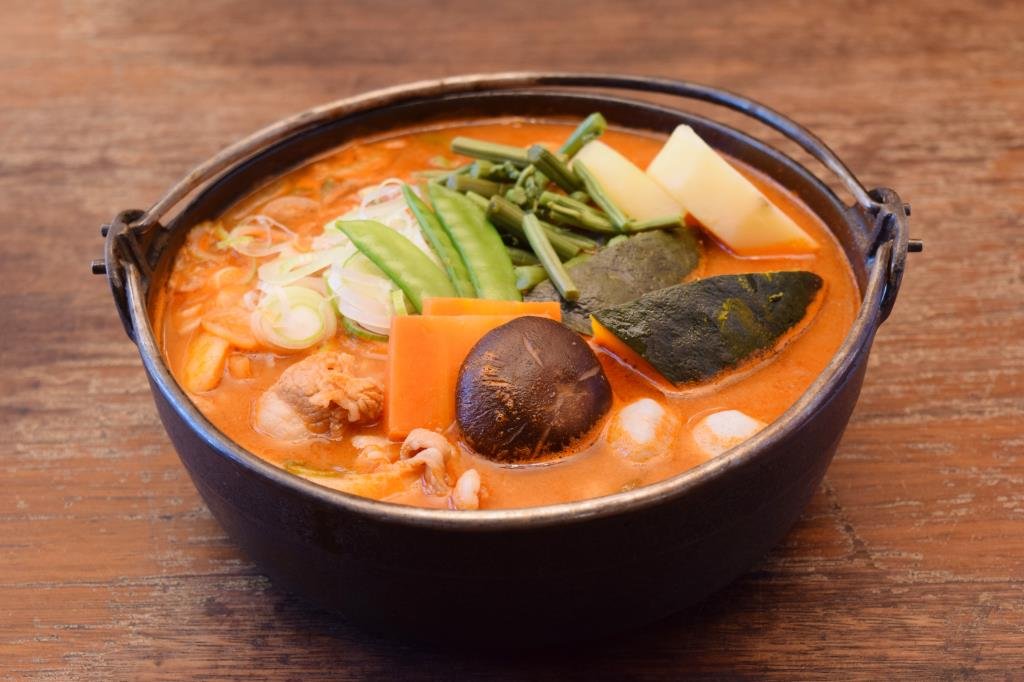
A Dish That Belongs to This Landscape
Arrive at the Lake Kawaguchi shoreline on a grey November morning and the logic of houtou becomes immediately clear. Yamanashi Prefecture sits at altitude, hemmed by mountains that hold cold air longer than the lowland cities. The regional noodle stew, built around flat, irregular wheat-flour noodles simmered directly in miso-based broth until they absorb it and swell, is not a dish designed for aesthetic restraint. It is a dish designed for warmth, and the environment around Koshu Houtou Kosaku, at 船津1638-1 in Fujikawaguchiko, makes that purpose legible in a way that eating houtou elsewhere rarely does.
Kosaku is one of the most recognisable names in the Fuji Five Lakes houtou circuit, a cluster of restaurants that has formed around what is both a prefecture-wide agricultural tradition and an increasingly organised culinary tourism draw. For a broader read on where this sits in the town's dining scene, see our full 富士河口湖町 restaurants guide.
The shortlist, unlocked.
Hard-to-book tables, cellar releases, and concierge-planned trips.
Get Exclusive Access →Houtou and Its Place in Yamanashi's Food Culture
Houtou is one of Japan's most geographically specific noodle traditions. Unlike soba, which spread across prefectures, or ramen, which became genuinely national, houtou remained anchored to Yamanashi in a way that makes the prefecture its primary and most authoritative context. The noodles are made without eggs, rolled thick and wide, and cooked in the broth rather than separately, which means they thicken the liquid as they release starch. Kabocha pumpkin is the near-universal vegetable addition, providing sweetness against the salt of the miso, and the cast-iron or ceramic vessel it arrives in retains heat through most of a meal.
Across Japan, regional dishes with this kind of cultural rootedness tend to bifurcate into two formats: the casual, volume-driven local staple and the refined, restrained reinterpretation. Houtou in Yamanashi has largely stayed in the first category. At venues like Kosaku and its neighbour in the local specialist tier, Houtou Fudou, the dish is served essentially as it has been for generations, with the emphasis on quantity, heat, and authenticity of execution rather than refinement of presentation. That is not a limitation. It is a deliberate positioning that keeps these restaurants credible to the local Yamanashi population while remaining accessible to visitors arriving from the Chuo Expressway or by train from Shinjuku.
Contrast this with what fine dining culture in Japan has done with regional ingredients elsewhere: Gion Sasaki in Kyoto and HAJIME in Osaka both operate in a register where provenance is articulated with precision and ceremony. Houtou's power lies in the opposite impulse, the communal pot, the shared table, the dish that fills the room with miso steam.
Where Kosaku Sits in the Local Field
The Fujikawaguchiko houtou scene is small enough to map clearly. A handful of specialist restaurants handle the bulk of demand from visitors, with Kosaku and Houtou Fudou holding the most established positions. Newer entries, including the more contemporary-leaning MOONBOW and the smaller 山のは, represent a modest diversification of the local restaurant field, but the dominant format in this part of Yamanashi remains the mid-casual, high-volume houtou specialist.
Kosaku's address, 船津1638-1, places it on the northern edge of the lake close to the Kawaguchiko area's main transit infrastructure, which matters practically. Visitors arriving by Fuji Kyuko Line or by highway bus from Shinjuku are within reasonable reach without needing onward transport. That accessibility has made Kosaku a natural first stop for many first-time visitors to the region, and the restaurant has developed accordingly, with a setup that handles groups and families without the intimacy pressure of a counter-only format. For context on the range of regional Japanese dining that EP Club covers, see also akordu in Nara and Goh in Fukuoka as reference points for how regional specificity operates at different price tiers.
Eating Here: What the Tradition Demands
Ordering at a houtou specialist requires little deliberation, and that is the point. The dish is the menu. Variations turn on the miso base (white or red, or blended), vegetable additions beyond kabocha, and occasionally the protein included. The format at Kosaku follows the regional standard: a clay or iron pot arrives at the table still simmering, with noodles thickened to near-viscous in a savoury, slightly sweet broth.
The social geometry of the meal is worth noting. Houtou is not a dish that rewards solitary eating in the way a bowl of soba might. It is designed for groups, for sharing heat, for the slow pace of a pot that stays warm through conversation. Families with children, walking groups descending from the Fujikyuko trails, and couples sheltering from the lake wind all find the format accommodating. The communal nature of the vessel is not incidental; it is part of what the dish communicates about Yamanashi hospitality. For reference on how a similar communal spirit operates in quite different national culinary traditions, Atomix in New York City offers an interesting counterpoint in how it structures the shared experience at the counter level.
When and How to Visit
Houtou reads most strongly as a cold-weather dish, and the Fuji Five Lakes region obliges. From October through March, temperatures around Lake Kawaguchi drop sharply after dark and often stay below 10°C through the day. Planning a visit in this window means the dish arrives with full contextual force. Autumn also coincides with the koyo foliage season, when the lakeshore maple trees turn and visitor numbers in the area peak significantly, so arriving before midday gives the clearest run at a table without a long queue forming.
Summer visits are possible and the restaurant remains open year-round, though the dish's warming logic is less urgently felt when temperatures around the lake climb into the mid-twenties. The broader Fujikawaguchiko area sees its highest tourist density in late July and August, which compresses wait times at all the major houtou addresses. Spring, particularly April during cherry blossom season, is the other high-traffic window to note.
The restaurant does not appear to take reservations through online channels in the conventional sense, making walk-in timing the key planning variable. Arriving at opening or in the mid-afternoon lull between lunch and dinner service gives the leading odds of a short wait.
EP Club Perspective
Yamanashi's houtou tradition does not need defending against the charge of simplicity. The dish is what it is, and Kosaku is a reliable address for experiencing it in the correct physical and cultural context, on the shore of the lake, in the shadow of the mountain, in a season when warmth carries meaning. Visitors interested in tracing how regional Japanese food culture operates across different registers should also consider Harutaka in Tokyo and 一本木 石川製 in Nanao as comparative reference points on the spectrum from hyper-local to internationally recognised. Closer to Fujikawaguchiko, 湖畔荘 in Takashima and 羽根屋 in Nishikawa Machi extend the regional picture further. The range of Japanese dining culture also extends to international outposts worth tracking, including Le Bernardin in New York City, Birdland in Sakai, Bistro Ange in Toyohashi, Blue Ocean Steak in Nakagami District, and 古代山乃 in Sapporo for a fuller view of the dining spectrum across Japan.
Frequently Asked Questions
- Is Koshu Houtou Kosaku good for families?
- Yes, straightforwardly so: the communal pot format and mid-casual atmosphere make it one of the more family-appropriate dining formats in the Fujikawaguchiko area, with no formality pressure and a dish that suits all ages.
- Is Koshu Houtou Kosaku formal or casual?
- Kosaku operates at the casual end of the spectrum, consistent with the broader houtou specialist category in Yamanashi. There is no dress expectation beyond what you would wear for a day around Lake Kawaguchi, and the room is set up for groups and families rather than intimate or ceremonial dining.
- What should I order at Koshu Houtou Kosaku?
- Houtou is the reason to be here, and the dish anchors the menu. The kabocha pumpkin variation is the regional standard, arriving in a simmering clay or iron pot with thick wheat-flour noodles in miso broth. The choice of miso base, where offered, is the main variable; the red miso version tends to deliver a deeper, saltier flavour profile against the sweetness of the pumpkin.
- How does Koshu Houtou Kosaku differ from other houtou restaurants near Lake Kawaguchi?
- Kosaku's position at 船津1638-1 near the northern lakeshore gives it a practical advantage in terms of access from the Kawaguchiko station area, which draws visitors arriving by train or highway bus. As one of the longer-established names in the local houtou field alongside Houtou Fudou, it handles volume and group bookings with a format built for throughput. Newer addresses in the area offer a more contemporary setting, but Kosaku's appeal rests on consistency within the traditional format rather than any departure from it.
A Pricing-First Comparison
A fast peer set for context, pulled from similar venues in our database.
| Venue | Price | Awards | Notes |
|---|---|---|---|
| Koshu Houtou Kosaku (甲州ほうとう 小作) | This venue | ||
| Houtou Fudou (ほうとう不動) | |||
| MOONBOW | |||
| 山のは |
Need a table?
Our members enjoy priority alerts and concierge-led booking support for the world's most difficult tables.
Get Exclusive AccessThe shortlist, unlocked.
Hard-to-book tables, cellar releases, and concierge-planned trips.
Get Exclusive Access →