
Michelin Plate
Our verdict
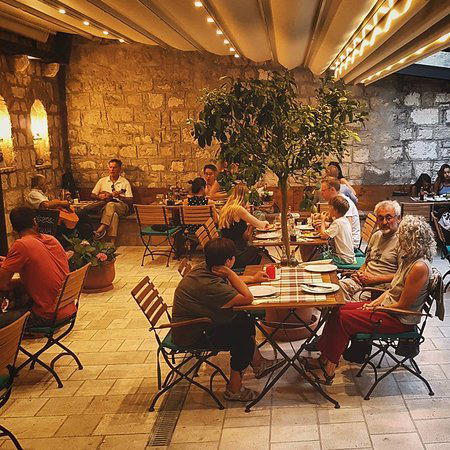
Konoba Fetivi holds consecutive Michelin Plate recognitions for 2024 and 2025, placing it among the more consistent performers in Split's mid-range dining tier. Occupying a quiet address in the historic core at Ul. Tomića stine 4, it delivers traditional Dalmatian cooking at €€ pricing, a combination that makes it one of the more considered choices in a city where Michelin-recognised restaurants often skew toward the €€€ bracket.

Pearl is the En Primeur Club membership app, where members save venues, book tables and use the concierge.
The menu
What to order
- Chef’s fish selection
- Grilled octopus
- Prawn risotto
Stone Walls and Dalmatian Tradition: The Konoba Format in Split
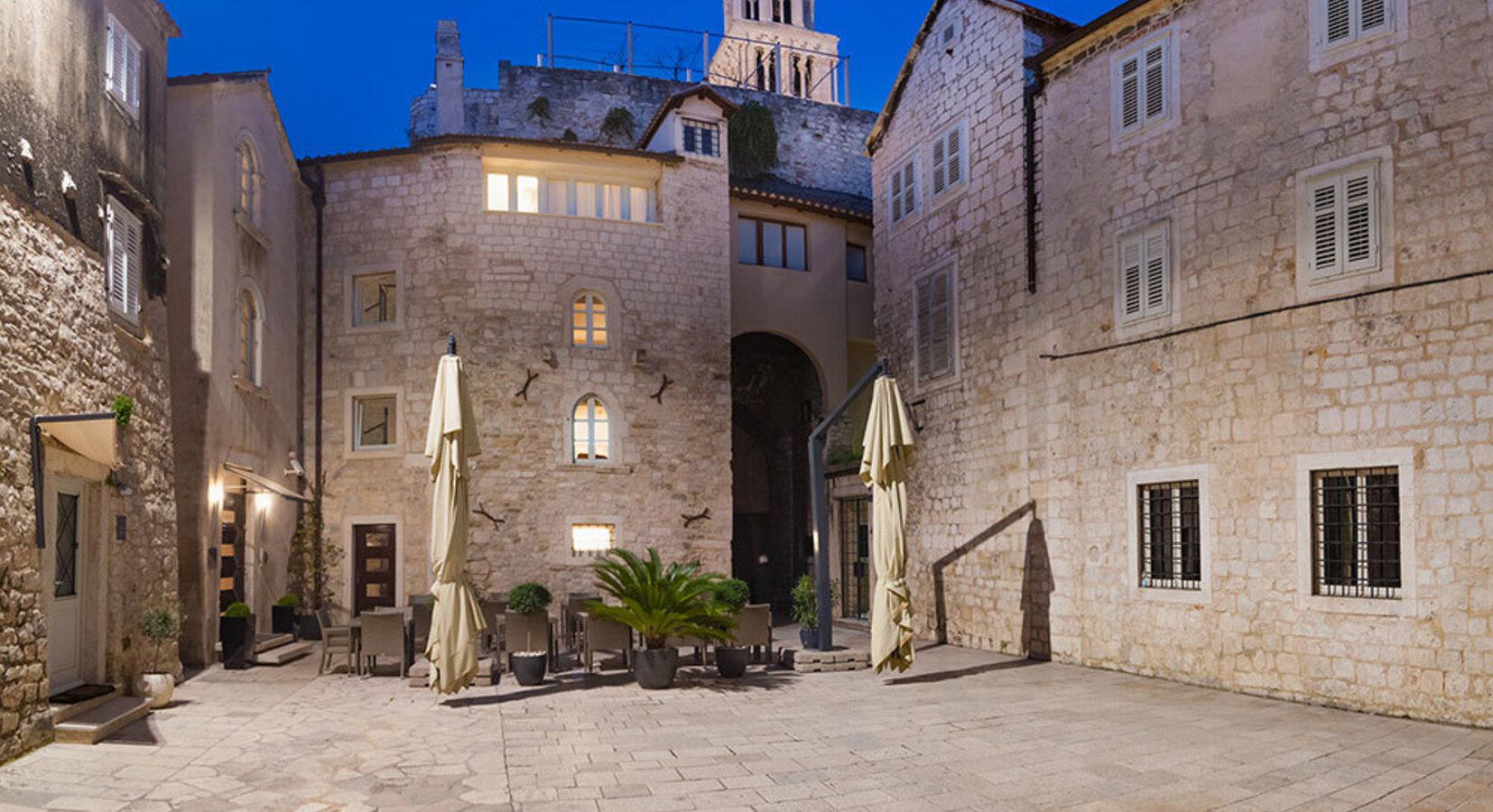
Approach Ul. Tomića stine 4 through the stone-paved lanes of Split's Varoš district, the oldest residential quarter of the city, where low limestone buildings press close and the noise of the Riva waterfront fades quickly, and you begin to understand the register that Konoba Fetivi is working in. The konoba format, a specifically Dalmatian category of eating house somewhere between a tavern and a family restaurant, has been the backbone of local hospitality for generations. It prioritises familiarity over spectacle, and traditional preparation over creative reinvention. In a city where newer addresses like Krug carry a Michelin star and operate at €€€ price points, Fetivi occupies a distinct position: Michelin-recognised cooking at middle-range pricing.
What Michelin Plate Recognition Actually Signals Here
The Michelin Plate is awarded to restaurants where inspectors find good cooking, not the peak of the star hierarchy, but a meaningful threshold that distinguishes a kitchen from the undifferentiated mass of tourist-facing trattorias that fill any coastal Croatian city in summer. Konoba Fetivi has held this designation in both 2024 and 2025, consecutive inclusions that suggest a consistent standard rather than a one-season anomaly. Among Split's Michelin-recognised restaurants, this places Fetivi in a peer group that includes addresses working across different price and format registers: BÒME also operates at €€, while Dvor and Kadena sit at €€€. For a reader calibrating value, Fetivi's two-year Plate record at mid-range pricing is a signal worth weighing carefully.
It reflects a restaurant that handles consistent traffic, including the difficult summer surges that expose staffing and kitchen weaknesses in many Split restaurants, without losing its footing on quality.
The Value Proposition Inside Croatia's Michelin Scene
Croatia's Michelin-recognised restaurants are spread across a number of cities and islands, and the price distribution matters when assessing what Fetivi offers. On the Adriatic coast, starred restaurants such as Agli Amici Rovinj in Rovinj and LD Restaurant in Korčula occupy the higher end of the local pricing spectrum. Inland, addresses like Dubravkin Put in Zagreb and Korak in Jastrebarsko operate within their own regional pricing logic. What makes the Dalmatian konoba format compelling in this context is that it delivers the inspectors' baseline for good cooking within a category that has historically kept its prices anchored to local economic reality rather than the premium expectations of international visitors.
At €€, Fetivi sits at the same price band as K.užina, another Split address. The distinction is format: konoba cooking leans toward the grilled, braised, and preserved traditions of the Dalmatian interior and coast, peka-roasted meats, fresh catch prepared simply, house-cured fish, and seasonal vegetables cooked with olive oil and local herbs. The ambition is not innovation but execution within a narrow, defined tradition. When that execution is consistent enough to attract Michelin attention twice in succession, the value case assembles itself.
Traditional Cuisine in the Croatian Coastal Context
Dalmatian cooking is often described loosely as Mediterranean, but the konoba tradition has its own specific character that sits apart from the broader category. The geography matters: Split sits where the Dinaric hinterland meets the Adriatic, and the larder reflects both. Lamb and veal from inland pastures appear alongside Adriatic seafood; smoked and dried preparations from a pre-refrigeration tradition persist alongside fresh catches; wine from the surrounding Dalmatia wine region, Plavac Mali and Pošip in particular, functions as the default pairing logic. This is the culinary inheritance that a konoba is built to preserve and serve. The comparison addresses in Split's broader dining scene, BÒME, Dvor, K.užina, variously interpret or rework this tradition with modern technique. Fetivi's konoba format represents the more conservative end of that spectrum: the tradition served on its own terms.
For context on what Michelin recognition means within Croatia's traditional-format restaurants, the Boskinac in Novalja and Alfred Keller in Mali Lošinj illustrate how island and coastal kitchens have earned recognition within their own formats. Internationally, traditional-format restaurants with Plate recognition at accessible price points, the French case being perhaps the most instructive, with addresses like Auberge Grand'Maison in Mûr-de-Bretagne, share Fetivi's structural logic: unpretentious room, established technique, consistent kitchen.
Planning a Visit: Timing, Access, and Practical Notes
Konoba Fetivi's address in the Varoš neighbourhood places it within walking distance of Split's Old Town and Diocletian's Palace, but removed from the densest tourist circuits. The Varoš quarter's narrow lanes are not well-served by vehicle access, so arrival on foot from the palace area is the practical approach. Shoulder season, May, early June, September, gives more flexibility. The €€ price bracket means the meal fits comfortably within a Split day that might include a longer lunch and a lighter dinner, or vice versa, without requiring the budget allocation that a starred restaurant demands.
For those building a broader itinerary around Split's dining and hospitality scene, EP Club's full guides cover the city across every category: restaurants, hotels, bars, wineries, and experiences.
Frequently asked questions
Has Konoba Fetivi won any awards?
Konoba Fetivi has received recognition including: Michelin Plate (2025); Michelin Plate (2024).
What's the best thing to order at Konoba Fetivi?
The menu specifics aren't published in detail, but the Michelin Plate recognition across two consecutive years points to the kitchen's traditional Dalmatian dishes as the core reason to visit. In the konoba tradition, that typically means slow-cooked meats, fresh fish, and local produce prepared without reinvention. Order according to what the server describes as that day's kitchen focus, in this format, that guidance carries weight.
What should I budget for a meal at Konoba Fetivi?
Pricing at Konoba Fetivi is listed as €€.
How do I find Konoba Fetivi?
Konoba Fetivi is located at Ul. Tomića stine 4, 21000, Split, Croatia, Split.
Do they take walk-ins at Konoba Fetivi?
Given the €€ price range and Varoš neighbourhood setting, Fetivi draws a local and informed visitor crowd rather than high-volume tourist traffic, which typically means walk-in availability is more realistic than at higher-profile Split restaurants. Arriving outside peak dinner service hours improves the odds considerably.
What is Konoba Fetivi known for?
Konoba Fetivi is known for traditional Dalmatian cooking delivered in the konoba format, stone-walled, neighbourhood-rooted, and rooted in coastal Croatian technique. Michelin inspectors awarded it a Plate in both 2024 and 2025, the guide's recognition for kitchens producing consistently good cooking. Its address on Ul. Tomića stine places it inside Varoš, Split's oldest residential quarter, which sets a different tone from the more tourist-facing restaurants around Diocletian's Palace.
Where the Accolades Land
| Venue | Cuisine | Price | Awards | Notes |
|---|---|---|---|---|
| Konoba FetiviThis venue (the venue you are viewing) | Traditional Dalmatian Seafood | $30–50 | Michelin Plate | Not listed |
| Krug | Modern Dalmatian Fine Dining | Not listed | 1 Michelin Star | Mediterranean Cuisine |
| BÒME | Modern Mediterranean | $30–50 | Michelin Plate | Not listed |
| Kadena | Modern Mediterranean Seafood | $50–100 | Michelin Plate | Not listed |
| PiNKU fish & wine | Modern Croatian Seafood | $50–100 | Michelin Plate | Not listed |
| Šug | Modern Dalmatian | $30–50 | Michelin Plate | Not listed |
Recognition history
Dated appearances from independent guides and award organizations, with the underlying list record or original source where available.
Michelin Plate
Michelin · 2026 Michelin Plate
Full recognition history (3 entries)
Michelin Plate
Michelin
Michelin Plate
Michelin
Continue exploring
More in Split
Restaurants in Split
All restaurants in Split →
Bars in Split
All bars in Split →


Details
- Rustic
- Cozy
- Classic
- Date Night
- Family
- Casual Hangout
- Terrace
- Extensive Wine List
- Local Sourcing
- Street Scene
- A La Carte
- Pescatarian Friendly
Current opening hours
- Monday
- 12–10 PM
- Tuesday
- 12–10 PM
- Wednesday
- 12–10 PM
- Thursday
- 12–10 PM
- Friday
- 12–10 PM
- Saturday
- 12–10 PM
- Sunday
- Closed
Hours can change for holidays and private events. Hours as of .
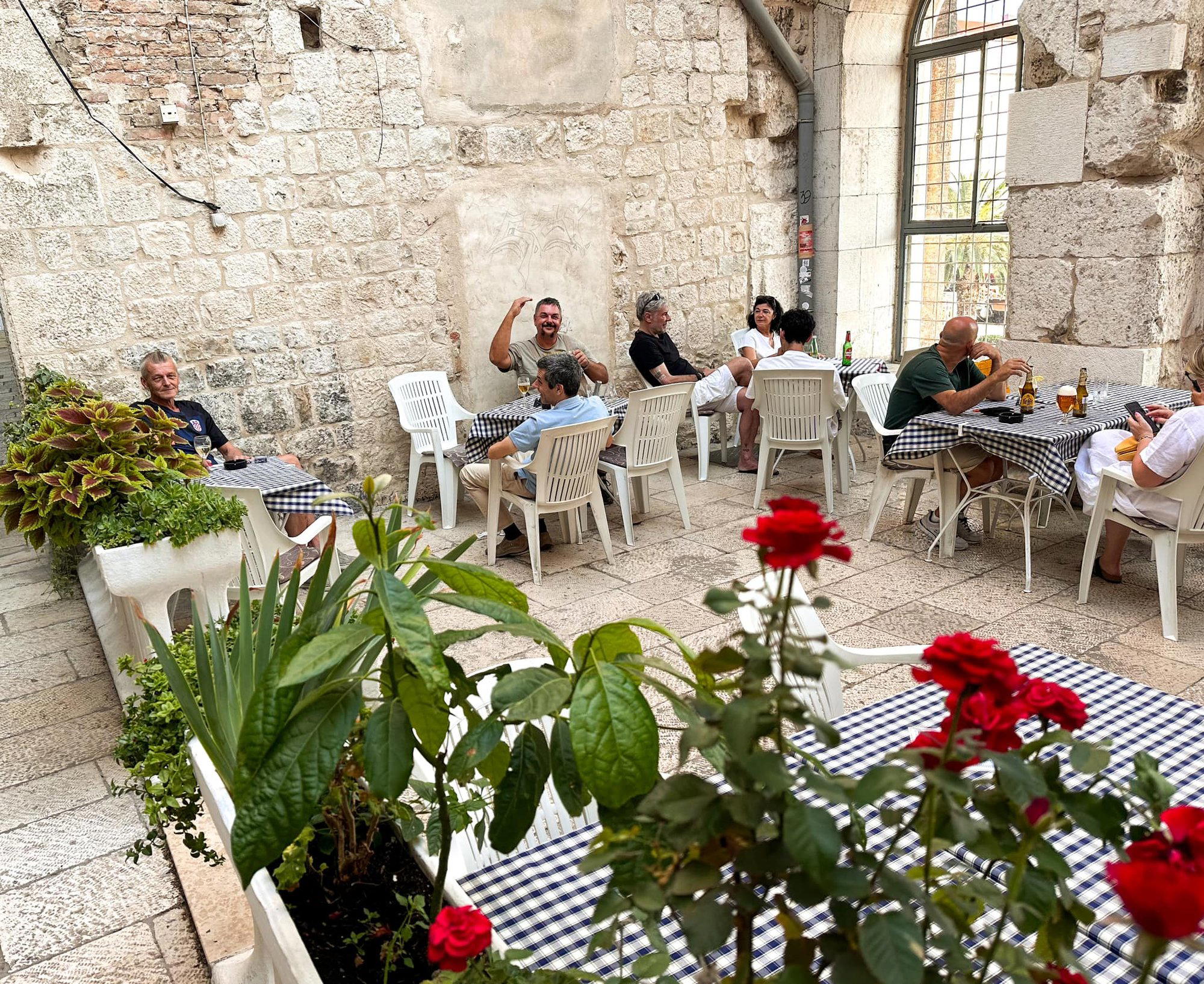
Simple beautifully kept dining room with cozy interior patio and inviting street-facing terrace.