Kombinat Gastro-Brewery occupies a distinctive position in Sibiu's eating and drinking scene, pairing an in-house brewing operation with a kitchen rooted in local sourcing. Set on Strada Berăriei, the address itself signals the venue's industrial-brewing heritage. For visitors working through Transylvania's mid-sized cities, it represents one of the more considered gastro-brewery formats in the region.
Pearl is the En Primeur Club membership app — saves, bookings, and concierge access live there. Same editors, same standards.
- Address
- Strada Berăriei FN, Sibiu 550173, Romania
- Phone
- +40730354789
- Website
- kombinat.ro
- Directions
- Get directions
 Saves & bookings on Pearl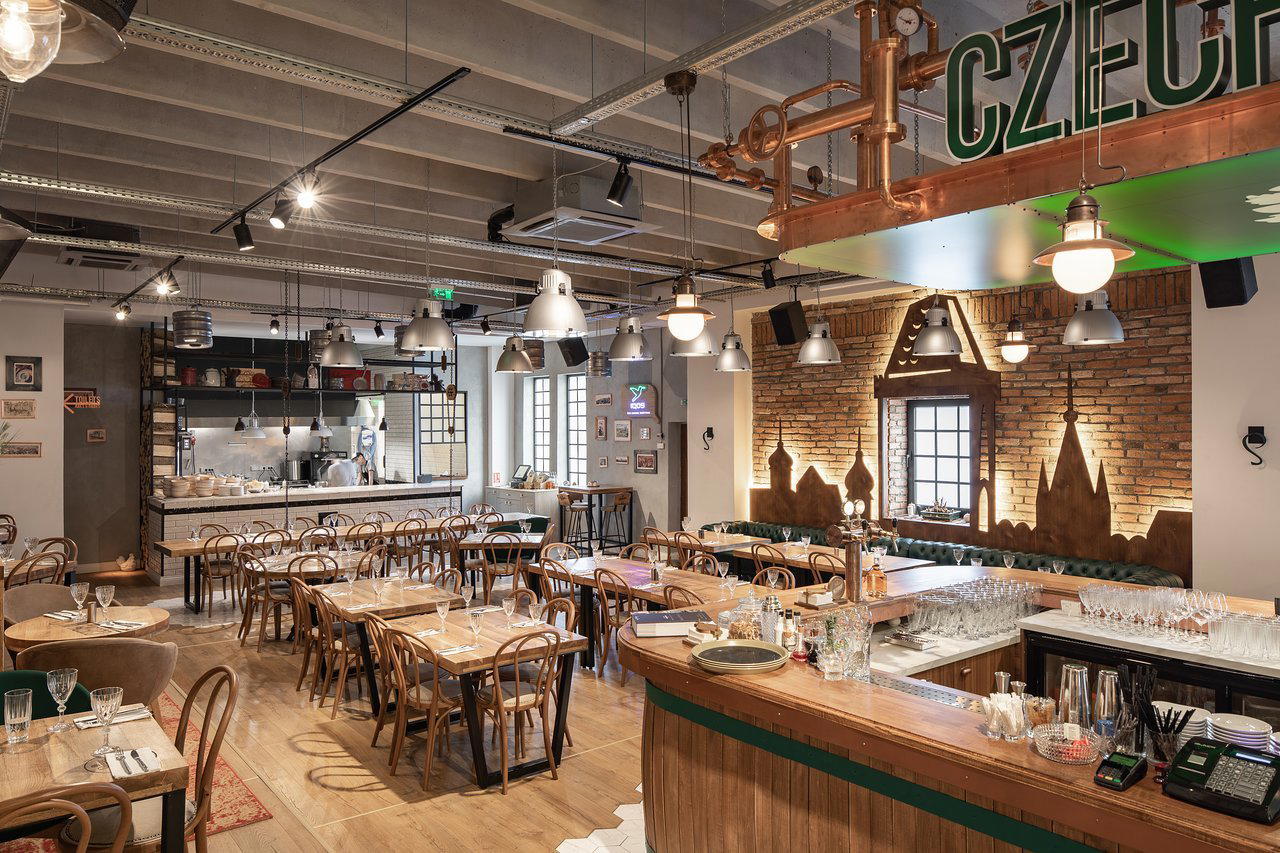
Where Brewing and Sourcing Converge in Transylvania
Kombinat Gastro-Brewery in Sibiu pairs house-brewed beer with regionally sourced Transylvanian cooking. While Bucharest draws most of the national attention, venues like Caru' cu bere in Bucuresti and Bogdania Bistro in Bucharest have become reference points for the capital's range, Transylvania's mid-sized cities have been building their own dining infrastructure at a different pace and with a different character. Sibiu, in particular, has positioned itself as a city where craft culture and regional ingredient identity reinforce each other. Kombinat Gastro-Brewery sits squarely inside that pattern.
The address, Strada Berăriei, translates loosely as Brewery Street, and the name alone suggests a longer relationship between this part of Sibiu and fermentation culture than any single venue could claim. That historical framing matters when considering what Kombinat represents: not an imported concept, but something that draws on a genuinely local tradition of brewing and positions it alongside a kitchen program oriented toward regional sourcing.
The Gastro-Brewery Format in the Romanian Context
Across Romania's secondary cities, the gastro-brewery format has emerged as one of the more coherent ways to anchor a mid-market dining operation. It solves a specific problem: in cities where neither fine dining nor fast-casual has fully taken hold, a brewery provides an identity anchor that can carry both the beverage program and the kitchen. You see a version of this pattern in Oradea, where Eat IT casual gourmet kitchen occupies a comparable position in terms of format ambition, and in Timisoara, where Cartofisserie has built recognition around a focused, repeatable concept.
What distinguishes the better examples of this format is the relationship between what is brewed and what is cooked. When the kitchen uses spent grain, adjusts dishes to pair with house ferments, or sources from suppliers who also supply the brewing operation, the integration feels genuine rather than cosmetic. Kombinat's positioning on Strada Berăriei places it in a context where that integration is plausible and expected rather than aspirational.
Ingredient Sourcing as Editorial Lens
Transylvania's agricultural diversity is not incidental to its restaurant scene. The Sibiu region sits at the intersection of Saxon, Hungarian, and Romanian food traditions, and the raw materials that fed those traditions, mountain cheeses, cured meats, foraged mushrooms, river fish, heritage grain varieties, remain available at scales that make farm-direct sourcing genuinely practical for a kitchen of this size and format. This is the sourcing context that the better Sibiu operations work within, and it is one useful frame for understanding what a gastro-brewery in this city should be doing.
At the level of brewing, local grain sourcing has a particular logic. Romanian barley and wheat cultivation in the Transylvanian basin has a long commercial history, and smaller maltsters operating in the region have made it increasingly possible for craft breweries to source malt with regional specificity. That traceability, when it exists, changes the character of the beer program from a generic craft offering into something with genuine geographic identity. It is the brewing equivalent of what appellations do for wine, a claim that place matters, and that the product reflects it.
Lo Sfizio in Targu Mures has built its reputation around a similar tension between imported format and local ingredient, while venues like Cofeels in Cluj-Napoca show how a focused concept can anchor a broader dining identity in a Transylvanian city context. At the higher end of the national scene, operations with more resources, such as, demonstrate what full supply-chain integration looks like when budget and scale allow it. The lesson from those examples is that sourcing discipline, not sourcing budget, is what produces coherent menus.
The Sibiu Dining Scene: Competitive Context
Within Sibiu itself, Kombinat operates in a scene that has several distinct tiers. At the more formal end, venues such as L'ATELIER and NOUA represent the city's push toward a Romanian Modern idiom, with tasting menus and a closer relationship to the country's emerging fine-dining conversation. Le Bistrot Français and STUP occupy a French-influenced middle register. Kupaj Fine Wines and Gourmet Tapas anchors the wine-forward end of the casual premium market.
Kombinat occupies a different position in this set: looser in format, more focused on the beer program as a co-equal protagonist, and more legible to visitors who want a full evening rather than a structured tasting experience. That positioning is not a compromise, it reflects a different set of priorities, and in a city where tourism volume is meaningful but not overwhelming, it has a clear audience. Visitors arriving from Cartofisserie in Brasov or those coming through the Saxon village circuit will find the format familiar and the local identity more pronounced than at a generic brew-pub.
Planning a Visit
Sibiu is accessible by train from Bucharest in approximately four hours, or by road from Cluj-Napoca in under two hours. Casa Baimareana in Baia Mare or venues in Ploiesti and Iasi if you are covering Romania's secondary cities in depth. For those building a broader Romanian itinerary, the contrast with coastal options like Vatos Restaurant in Agigea or event venues like Butterfly Events in Chiscani underlines how different the inland Transylvanian dining character is from what you find on the Black Sea corridor. La Boheme Noblesse in Bascov and Cocteleria Urban Garden in Floresti represent yet another register, closer to the Bucharest urban-suburban model, that clarifies how Sibiu's approach differs in texture and pace.
At-a-Glance Comparison
Comparable venues nearby, for context on price, style, and recognition.
| Venue | Cuisine | Price | Notes |
|---|---|---|---|
| Kombinat Gastro-BreweryThis venue — the venue you are viewing | Modern Neo-Romanian Gastro-Brewery | $$ | Not listed |
| Restaurant Seoul | Authentic Korean Barbecue | $$$ | Sector 1 |
| Alouette | Modern European Bistro | $$$ | Old Town |
| K Food | Korean | $$ | Centru |
| Cartofisserie Iulius Mall | Belgian-French Loaded Fries | $ | Marasti |
| Old Shanghai Restaurant | Authentic Shanghai Chinese | $$ | Centru |
At a Glance
- Cozy
- Rustic
- Industrial
- Date Night
- Group Dining
- Casual Hangout
- Open Kitchen
- Terrace
- Beer Program
- Farm To Table
- Local Sourcing
Current opening hours
- Monday
- 12 PM–12 AM
- Tuesday
- 12 PM–12 AM
- Wednesday
- 12 PM–12 AM
- Thursday
- 12 PM–12 AM
- Friday
- 12 PM–12 AM
- Saturday
- 12 PM–12 AM
- Sunday
- 12 PM–12 AM
Hours can change for holidays and private events. Last verified .
Cozy, warm, and friendly atmosphere with terrace seating and views of the open kitchen.