One of Bucharest's most recognisable dining addresses, Caru' cu bere occupies a cathedral-scaled beer hall on Str. Stavropoleos, its neo-Gothic interior a register of late-nineteenth-century Wallachian ambition. The kitchen draws on the Romanian larder, the kind of produce-driven, region-rooted cooking that makes the room worth more than a single visit. Reservations are advisable, particularly on weekends and during peak tourist season.
Pearl is the En Primeur Club membership app — saves, bookings, and concierge access live there. Same editors, same standards.
- Address
- Str. Stavropoleos nr. 5 (între Calea Victoriei și str. Poștei), 030081 București
- Directions
- Get directions
 Saves & bookings on Pearl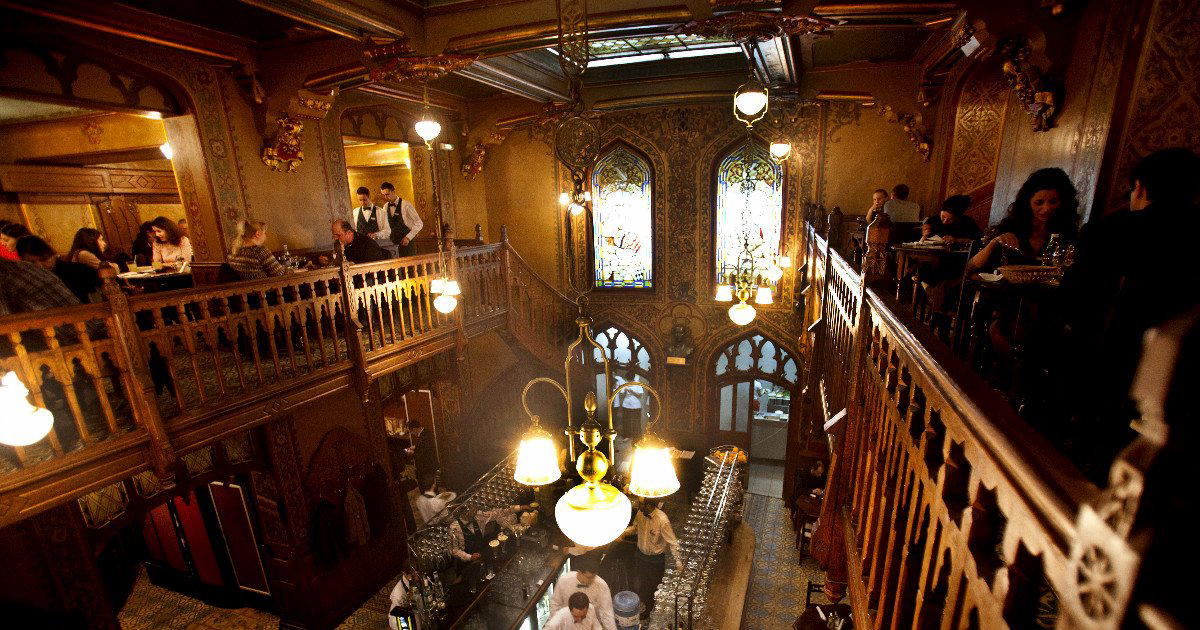
A Beer Hall Built Like a Church
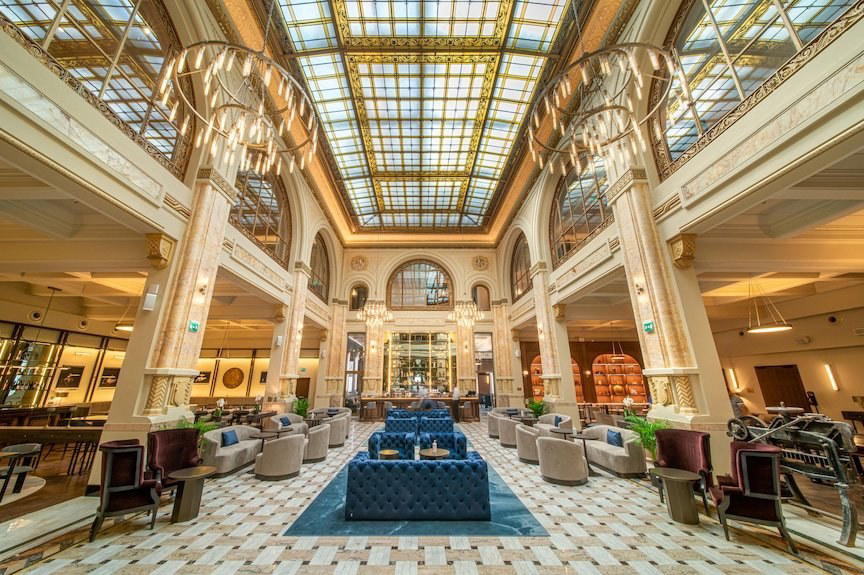
Walking into Caru' cu bere from the relative quiet of Str. Stavropoleos, the scale of the interior registers before anything else. The ceiling vaults upward in ribbed neo-Gothic arches; stained-glass panels filter afternoon light into amber; carved woodwork climbs the walls in tiers. Bucharest built this kind of room in the 1870s and 1880s with deliberate ambition, when the city was positioning itself as a western-facing capital and the grand brasserie was the architectural language of civic confidence. The building opened in 1879, and its physical fabric has been carefully restored rather than approximated. That distinction matters in a city where many interiors of similar vintage were either demolished or stripped during the communist period. What survives here is the real thing: a room that trained generations of Bucharest residents in the idea that eating well and drinking well were public acts, performed in shared space.
Romanian Ingredients in an Old-World Frame
Caru' cu bere's kitchen draws on Romanian brasserie traditions, with slow-cooked meats, fermented and pickled accompaniments, and preparations shaped by Ottoman and Austro-Hungarian influence. Romanian cuisine at this register draws heavily on the agricultural geography of the country, the Carpathian foothills, the Danube plain, the Transylvanian plateau, a landscape that historically produced sheep, pork, game, freshwater fish, root vegetables, and forest mushrooms rather than the olive oil and citrus that define Mediterranean registers. The kitchen at Caru' cu bere sits within that tradition. Dishes lean on slow-cooked meats, fermented and pickled accompaniments, and preparations that stretch back to Ottoman and Austro-Hungarian culinary influence, the kind of layered provenance that makes Romanian cooking considerably more complex to read than its profile in international food media might suggest.
That sourcing tradition matters for two reasons. First, it situates the kitchen within a specific regional larder rather than a generic European one. Second, it creates a natural counterweight to the grandeur of the room: the food is not trying to match the architecture in decorative terms. It is, at its core, produce-led and land-connected, closer in spirit to the Transylvanian farmhouse table than the Parisian brasserie, even if the room suggests otherwise. For diners comparing the restaurant to more contemporary Bucharest addresses, that distinction is worth holding onto. Kaiamo operates at the other end of the interpretive spectrum, applying technical modern frameworks to the same Romanian ingredient base. Blank and Epoque Restaurant represent the city's more globally inflected registers. The restaurant commits instead to the kind of cooking that is recognisably, specifically Romanian.
Where It Sits in the Bucharest Dining Map
Bucharest's restaurant scene has reorganised significantly over the past decade. The city now contains a credible set of modern European and international addresses, Restaurant Seoul for Korean cooking, and a growing cohort of technically serious kitchens throughout the centre. Against this backdrop, the restaurant occupies an unusual position: it is simultaneously one photographed dining room in the city and among the more historically grounded. The address on Str. Stavropoleos, between Calea Victoriei and Str. Poștei, places it at the centre of the old merchant quarter, within a few hundred metres of the Lipscani district and the historic core. That location is not incidental. The beer halls, coffeehouses, and taverns of this neighbourhood defined Bucharest's public social life for most of the nineteenth century. The restaurant is one legible survivor of that period.
Across Romania, a broader wave of food-serious venues has raised expectations significantly. Artegianale in Brasov, Kupaj Fine Wines and Gourmet Tapas in Cluj-Napoca, and STUP in Simon each represent the country's growing appetite for produce-driven, regionally anchored cooking. The restaurant predates that wave by well over a century, which gives it a different kind of authority, not the authority of innovation but of continuity. For readers tracking Romanian dining more broadly, Andalu Gastrobar in Iasi, L'ATELIER in Bucharest, and Cafeneaua Nației in Ploiesti each offer a different angle on how Romanian hospitality is evolving. Epoca Steak house in Craiova, Bistro Caffe Moțu in Baia Sprie, Butterfly Events in Chiscani, and Cartofisserie in Suceava and Cartofisserie in Timisoara extend the picture across multiple cities.
Planning a Visit
The restaurant sits at Str. Stavropoleos nr. 5, in the historic centre, reachable on foot from most of the city's central hotels within fifteen to twenty minutes. The venue is large by Bucharest standards, a grand hall of this scale has capacity that smaller contemporary restaurants do not, but weekend evenings and high-season lunch services fill quickly, and walk-ins during those windows carry risk. Booking in advance is the direct move for anyone treating this as a planned meal rather than a casual stop. The building alone justifies arriving early to observe the room before service accelerates. Dress is informal by most accounts, reflecting the brasserie tradition rather than a formal dining code. For international context, those familiar with the great beer halls of central Europe or the heritage brasseries of Paris will recognise the type immediately. The restaurant is an argument for scale as a dining virtue.
Comparable Spots, Quickly
Comparable venues nearby, for context on price, style, and recognition.
| Venue | Cuisine | Price | Notes |
|---|---|---|---|
| Caru' cu bereThis venue — the venue you are viewing | Traditional Romanian | $$ | Not listed |
| Epoque Restaurant | Modern Romanian | $$$$ | Sector 1 |
| Kaiamo | Modern Romanian Fine Dining | $$$$ | District 1, Dorobanți |
| Blank | Traditional Romanian | $$ | Old Town |
| Restaurant Seoul | Authentic Korean Barbecue | $$$ | Sector 1 |
| Restaurant Savarin | International & Modern Romanian | $$ | CFR |
Continue exploring
More in Bucharest
Restaurants in Bucharest
Browse all →
Bars in Bucharest
Browse all →
At a Glance
- Lively
- Classic
- Well Known
- Historic
- Group Dining
- Celebration
- Casual Hangout
- Live Music
- Historic Building
- Beer Program
Lively and historic with richly decorated Neo-Gothic interiors featuring stained glass, mosaics, carved panelings, and live traditional folk music creating a lively cultural atmosphere.