Vatos Restaurant sits on Emil Racoviță street in Agigea, a coastal commune on Romania's Black Sea littoral where the dining scene draws from some of the country's most productive agricultural and maritime zones. The address places it within reach of both Constanța's urban pull and the quieter character of the Dobrogea hinterland, making it a reference point for understanding how this stretch of coast eats.
Pearl is the En Primeur Club membership app — saves, bookings, and concierge access live there. Same editors, same standards.
- Address
- Emil Racoviță 65, Agigea 907015, Romania
- Phone
- +40770663311
- Website
- vatos-restaurant.ro
- Directions
- Get directions
 Saves & bookings on Pearl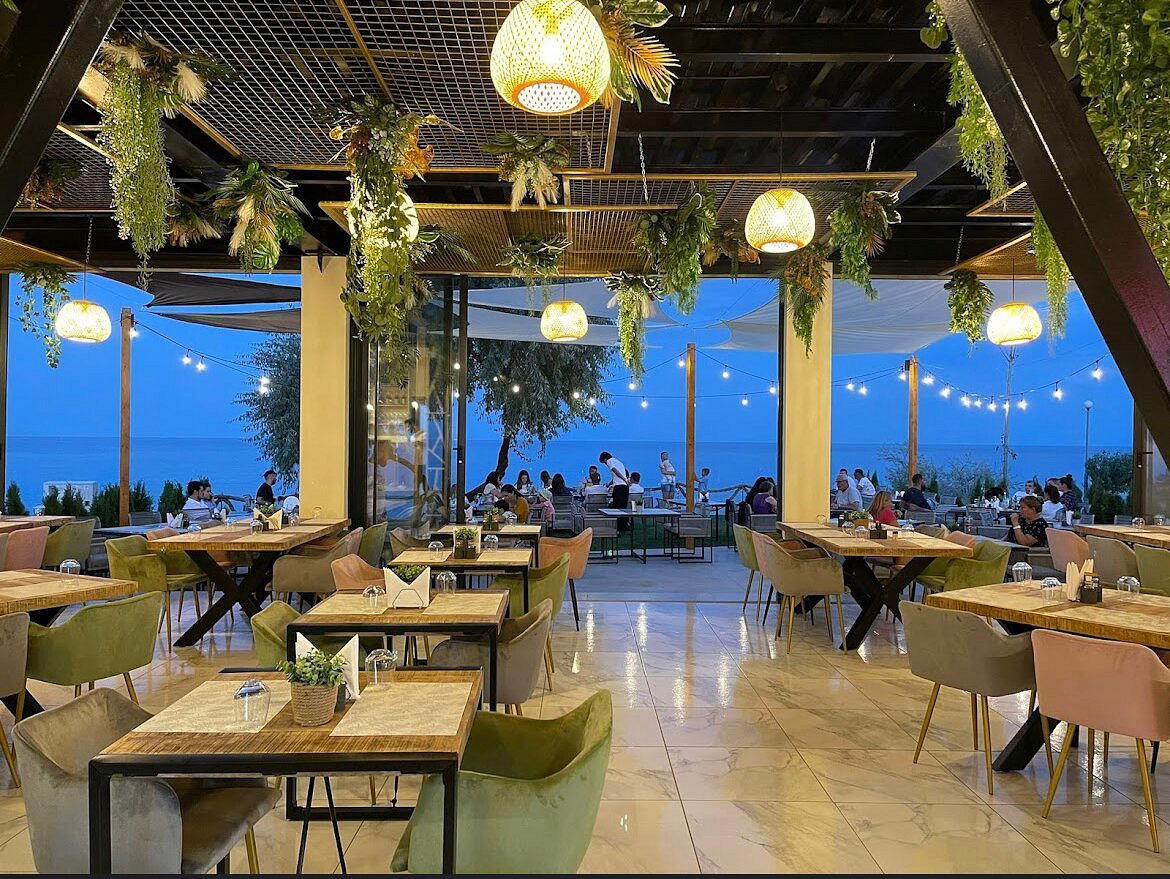
Where the Black Sea Coast Eats
Vatos Restaurant is a casual seafood and Mediterranean restaurant in Agigea, Romania,543 reviews. Agigea occupies a specific position on Romania's Black Sea coastline: close enough to Constanța to share its economic gravity, far enough from the resort strip of Mamaia to operate outside the summer-tourism frenzy that defines dining culture further north. The restaurants that hold ground here tend to draw on a different logic than the seasonal beach operations. They serve a local population year-round, which means the relationship between kitchen and supply chain matters more than the relationship between kitchen and Instagram. Vatos Restaurant, on Emil Racoviță street in Agigea, sits inside that year-round pattern. Its address alone signals something: this is not a venue positioned for the summer rush, but for the longer rhythms of a community close to both the sea and the agricultural plains of Dobrogea.
The Dobrogea region, which surrounds Agigea and stretches inland toward the Danube Delta, is one of Romania's most agriculturally distinct zones. The combination of Black Sea proximity, a continental-leaning climate, and flat, sun-exposed terrain produces lamb, sheep's milk cheeses, river fish, and vegetables with a character that differs measurably from the produce of the Carpathian highlands or the Moldavian plains. Restaurants rooted in this geography, when they take that geography seriously, can offer something that urban venues in Bucharest or Cluj cannot reproduce regardless of sourcing effort. The question worth asking of any Agigea address is whether it draws on that proximity or merely occupies it. For readers planning around ingredient sourcing and regional specificity, the Dobrogea pantry represents one of the stronger cases in Romanian dining for place-driven cooking.
The Setting and Approach
The address on Emil Racoviță puts Vatos in a residential-adjacent part of Agigea rather than on a commercial strip or promenade. Venues in this position in Romanian coastal towns typically occupy converted properties, with interiors that read more domestic than designed. The approach to the building tends to be quiet, the street relatively unhurried. That register, common to dining in smaller coastal communes across the Black Sea littoral, sets different expectations than a Mamaia terrace operation. The atmosphere is more local and less curated, which in the context of sourcing-led cooking is often the point. A kitchen that prioritises where ingredients come from tends to occupy spaces where the décor is not doing the persuasion.
Romania's dining culture in smaller coastal towns has historically operated in the shadow of the resort strip, but there's a counter-movement underway. Venues away from the tourist concentration are increasingly attracting interest precisely because they're not performing for a transient audience. That shift is visible in cities like Constanța and in the network of smaller communes around it, where local operators are building reputations through consistency and supply relationships rather than seasonal marketing. For comparison, the same dynamic is at work in Romanian cities further from the coast: Bogdania Bistro in Bucharest and Caru' cu bere in Bucuresti both illustrate how anchoring to local identity, whether through ingredient sourcing or historical continuity, gives a venue traction beyond seasonal traffic.
Dobrogea's Ingredient Geography
The case for Agigea as a dining destination rests substantially on what the surrounding region produces. Dobrogea lamb, grazed on steppe grassland near the Danube, has a mineral quality that reflects the terrain. Black Sea fish, particularly species like goby (known locally as guvid), grey mullet, and Black Sea turbot, arrive at this stretch of coast fresher than they reach Bucharest by a significant margin. Sheep's milk dairy from smallholders in the Dobrogea plateau, including fresh cheese and aged varieties, circulates through local markets in ways that don't scale to national distribution. A kitchen in Agigea that builds its menu around these materials is working with supply lines that urban venues can rarely replicate at the same quality or cost structure.
That ingredient specificity is what separates regional Romanian dining from the broader trend of Romanian modern cuisine visible in larger cities. Restaurants like L'ATELIER and NOUA, operating in Bucharest, work with Romanian produce but through the lens of urban fine dining and imported technique. What's available in Agigea is something different: the same ingredients before they travel, closer to the source and therefore closer to the reason they matter. This is the argument for eating on the coast rather than reading about coastal ingredients on a Bucharest menu.
The Wider Romanian Dining Context
Understanding Vatos in Agigea requires placing it inside the broader Romanian dining scene, which has diversified sharply over the past decade. The country's most talked-about addresses remain concentrated in Bucharest, Cluj-Napoca, and Timișoara, with venues like Eat IT casual gourmet kitchen in Oradea and Kombinat Gastro-Brewery in Sibiu representing a secondary tier of cities where serious dining culture is taking hold. The Black Sea coast, by contrast, has been slower to develop a dining reputation that survives beyond August. Agigea, operating slightly outside the resort infrastructure, may be better positioned to build something durable than the Mamaia strip itself.
Regional dining across Romania is also shaped by format diversity. The country supports everything from casual operations focused on a single product category, like Cartofisserie in Timisoara, Cartofisserie in Suceava, and Cartofisserie in Brasov, to more layered bistro formats like Lo Sfizio in Targu Mures and event-anchored spaces like Butterfly Events in Chiscani. The range demonstrates that Romania's dining culture is no longer converging on a single model. Coastal venues that identify their own logic, whether around ingredient geography, community dining, or seasonal specificity, can find coherent positioning within that diversity.
For readers tracking where Romanian dining is moving, venues further from the capital but closer to primary ingredient sources represent a thread worth following. The Danube Delta, the Dobrogea steppe, and the Black Sea shelf together constitute one of Europe's more distinctive larders. Kitchens that sit inside that geography and treat it as a resource rather than a backdrop are doing something that venues in Cofeels in Cluj-Napoca or Cafeneaua Nației in Ploiesti cannot reproduce on the same terms.
Planning Your Visit
Agigea sits immediately south of Constanța, connected by a short drive along the coastal road. Visitors arriving at Constanța by train from Bucharest can reach Agigea by local transport or taxi. The summer months bring increased traffic throughout the region, and visiting outside July and August allows engagement with the year-round local character that defines venues like Vatos rather than the seasonal resort mode.
The value is in proximity to source, in a dining culture that has not yet been intermediated by the infrastructure of fine dining. That's a particular kind of appeal, and it's one the Dobrogea coast, at this moment, still offers.
In Context: Similar Options
Comparable venues nearby, for context on price, style, and recognition.
| Venue | Cuisine | Price | Notes |
|---|---|---|---|
| Vatos RestaurantThis venue — the venue you are viewing | Seafood and Mediterranean | $$ | Not listed |
| Caru' cu bere | Traditional Romanian | $$ | Old Town |
| Pizza Radu | Pizza | $$ | Strada Griviței |
| Restaurant Seoul | Authentic Korean Barbecue | $$$ | Sector 1 |
| Sushi Master | Japanese Sushi | $$ | central Galati |
| Oddity | :null | $$ | Centru |


At a Glance
- Scenic
- Romantic
- Date Night
- Casual Hangout
- Terrace
- Waterfront
- Waterfront
Current opening hours
- Monday
- 11:30 AM–9:30 PM
- Tuesday
- 11:30 AM–9:30 PM
- Wednesday
- 11:30 AM–9:30 PM
- Thursday
- 11:30 AM–9:30 PM
- Friday
- 11:30 AM–10 PM
- Saturday
- 11:30 AM–10 PM
- Sunday
- 11:30 AM–9:30 PM
Hours can change for holidays and private events. Last verified .
Relaxed terrace atmosphere with sea breeze, nice music, and romantic sunset views.