Restaurant Seoul brings Korean dining to Bucharest's Arcul de Triumf quarter, one of the city's more composed residential neighbourhoods north of the centre. The address on Str. Aviator Mircea Zorileanu places it away from the tourist circuit, making it a destination rather than an impulse stop. For Bucharest diners curious about Korean culinary traditions, it represents a rare point of reference in a city still building its Asian dining vocabulary.
Pearl is the En Primeur Club membership app — saves, bookings, and concierge access live there. Same editors, same standards.
- Address
- Str. Aviator Mircea Zorileanu nr. 89, sector 1 (Zona Arcul de Triumf), 012054 București
- Website
- restaurantkorean.ro
- Directions
- Get directions
 Saves & bookings on Pearl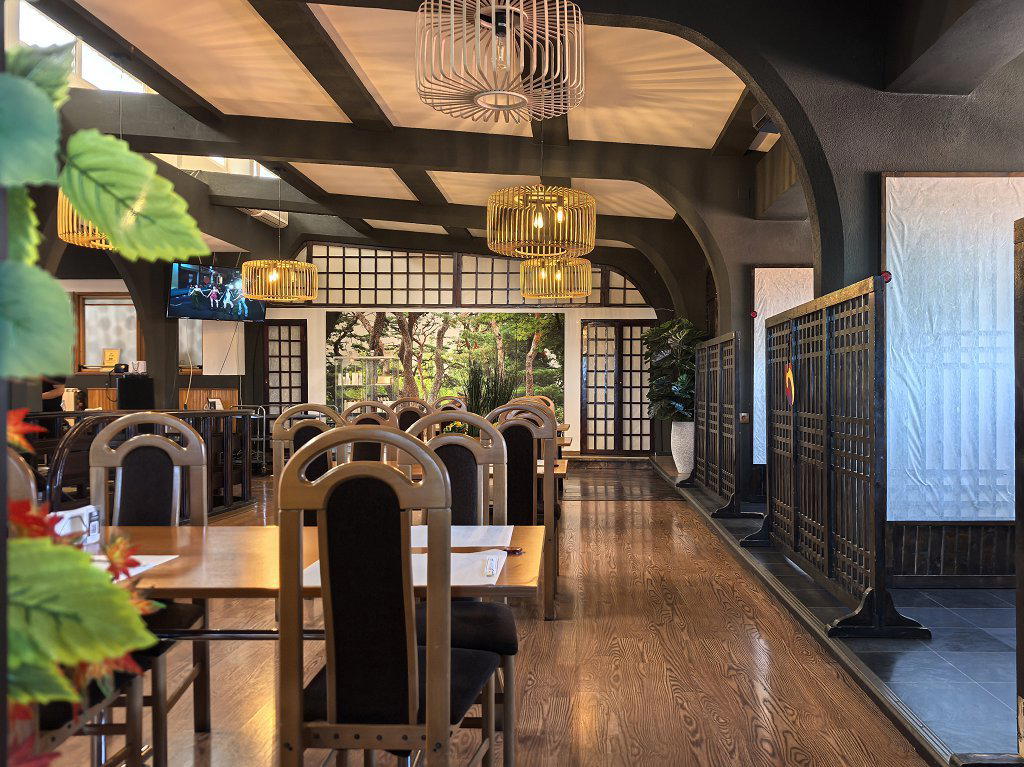
Korean Dining Ritual in a City Still Finding Its Asian Register
Restaurant Seoul is an authentic Korean barbecue restaurant in București, with a price tier of about $25 per person. The Arcul de Triumf quarter in Sector 1 is not where Bucharest goes to eat on a whim. The streets around the triumphal arch are residential and deliberate, lined with interwar villas and embassies, and the restaurants that survive here tend to do so because locals return by habit rather than because foot traffic carries them in. Str. Aviator Mircea Zorileanu sits in this register, and arriving at Restaurant Seoul means arriving with intent. That quality shapes the experience before you cross the threshold.
Korean restaurant culture operates on a logic that differs substantially from the European formats most Bucharest diners know. The meal is not sequential in the Western sense. Banchan, the array of small side dishes, arrives with the main order and persists through the meal, replenished rather than cleared. The table becomes a range of simultaneous textures and temperatures: fermented vegetables alongside fresh, cool alongside hot, mild alongside sharp. For diners encountering this format for the first time, the instinct to eat course by course actively works against the experience. The Korean dining ritual rewards breadth over linearity.
Bucharest's Asian dining scene has expanded considerably over the past decade, but Korean food occupies a distinct and still-limited position within it. Japanese formats, particularly sushi and ramen, have captured more of the city's attention, partly because they translate more easily into the individual-plate grammar that European diners default to. Korean cooking, with its emphasis on shared tables, fermented bases, and interactive elements like tabletop grilling, asks more of the room and more of the diner. Venues willing to maintain that format in full, rather than softening it for local expectations, are sparse. Restaurant Seoul's address in a neighbourhood with an established local clientele rather than a tourist-dependent one suggests a dining room built around regulars who have made peace with the format's demands.
The Architecture of a Korean Meal
Understanding how to eat at a Korean restaurant matters as much as knowing what to order. The meal typically opens with banchan distributed across the table before the central dishes arrive. These are not starters to be finished before the main course appears; they run concurrently and function as a textural and flavour counterpoint throughout. Kimchi in various stages of fermentation, namul (seasoned vegetables), japchae (glass noodles), and pickled preparations create a rotating set of reference points for the palate between bites of the central dish.
If tabletop grilling is part of the format, the pacing shifts again. Galbi (short rib) or samgyeopsal (pork belly) cooked at the table introduces a timing element that belongs to the diner rather than the kitchen. Meat comes off the grill in small pieces, wrapped in perilla leaf or lettuce with a dab of ssamjang paste and a sliver of raw garlic. The portion is assembled at the table, consumed in two bites, and repeated. It is a format that makes conversation slower and more interrupted, and that is considered correct rather than awkward.
Soups and stews, often served in stone bowls that retain heat through the meal, add another layer. Doenjang jjigae (fermented soybean paste stew) or sundubu jjigae (soft tofu stew) arrive at a boil and settle into a deep simmer over the course of eating. These are not dishes designed to be finished quickly. The Korean meal, at its fullest, is an exercise in sustained attention rather than efficient consumption, and restaurants that commit to that format tend to attract diners who come back specifically because the experience does not compress into forty-five minutes.
Where It Sits in Bucharest's Dining Map
Bucharest's most-discussed restaurants in 2024 and 2025 have tended to cluster around either fine-dining Romanian formats or European bistro approaches. Kaiamo represents the contemporary Romanian end of that spectrum, while Blank and Epoque Restaurant occupy a cosmopolitan European register. Caru' cu bere anchors the historic end of the city's dining conversation. Korean cuisine sits outside all of these reference points, and for a city still building the critical mass needed to support a genuine Asian dining quarter, that means each Korean venue operates with limited competitive pressure and limited critical framework.
For diners approaching the restaurant from outside Bucharest, the city's broader restaurant scene rewards some advance research. Elsewhere in Romania, the range extends from Bogdania Bistro in Bucharest to Kombinat Gastro-Brewery in Sibiu and Cofeels in Cluj-Napoca, reflecting a national dining scene in active development. For international reference points on Korean fine dining at its most formally recognised tier, Atomix in New York City offers a benchmark for where the cuisine operates when it has the full critical infrastructure behind it.
Planning the Visit
The address, Str. Aviator Mircea Zorileanu nr. 89, Sector 1, places the restaurant within the Arcul de Triumf zone, accessible by taxi or rideshare from central Bucharest in under fifteen minutes during off-peak hours. The neighbourhood is not well-served by metro, so public transport adds complexity. Booking ahead is advisable given the residential character of the area and the likely limited capacity of a Korean specialist in this part of the city; walk-in availability is plausible on weekday evenings but less certain on weekends.
Cuisine and Awards Snapshot
Comparable venues nearby, for context on price, style, and recognition.
| Venue | Cuisine | Price | Notes |
|---|---|---|---|
| Restaurant SeoulThis venue — the venue you are viewing | Authentic Korean Barbecue | $$$ | Not listed |
| Caru' cu bere | Traditional Romanian | $$ | Old Town |
| Blank | Traditional Romanian | $$ | Old Town |
| Epoque Restaurant | Modern Romanian | $$$$ | Sector 1 |
| Kaiamo | Modern Romanian Fine Dining | $$$$ | District 1, Dorobanți |
| Jeonjuu Korean BBQ | Authentic Korean BBQ | $$ | Old Town |
Continue exploring
More in Bucharest
Restaurants in Bucharest
Browse all →
Bars in Bucharest
Browse all →
At a Glance
- Cozy
- Romantic
- Date Night
- Open Kitchen
Cozy setting with traditional Korean decor, though some guests note it feels slightly outdated.