TOKIODELIC
Our verdict
TOKIODELIC occupies a Lafayette Street address in Lower Manhattan, sitting at the intersection where New York's downtown creative culture meets Japanese-inflected dining. The space itself is the editorial statement, a SoHo-adjacent room that positions the experience within the neighbourhood's shift from gallery district to destination dining corridor. Check EP Club's full New York City guide for booking context and peer comparisons.

Pearl is the En Primeur Club membership app, where members save venues, book tables and use the concierge.
The menu
What to order
- Tokiodelic Roll
- DIY Sushi Handroll Set
- Delic Fries
Lafayette Street and the Architecture of Encounter
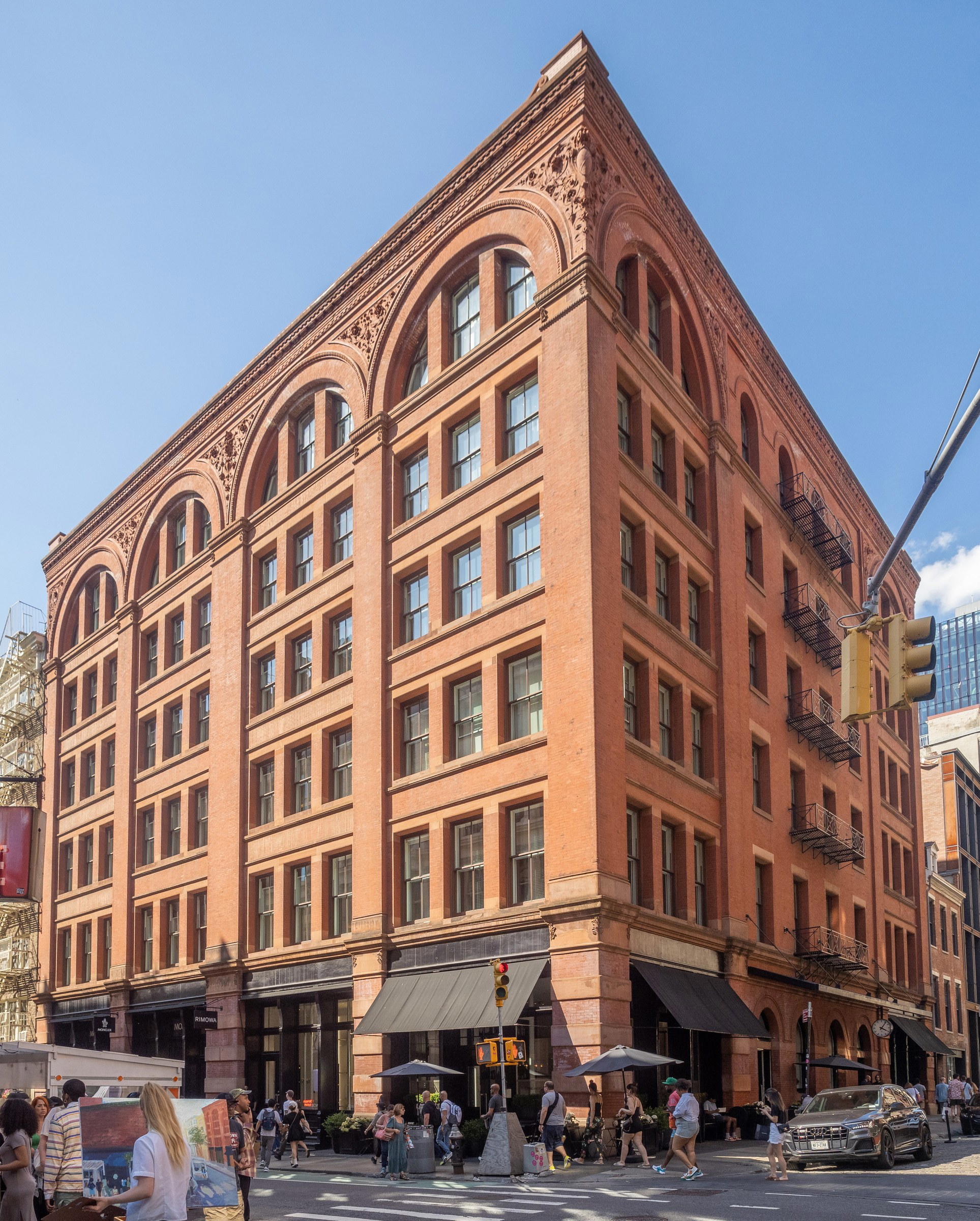
SoHo and its immediate surroundings have spent the better part of two decades sorting themselves out. Cast-iron facades that once housed artist studios now contain some of Manhattan's more considered dining rooms, and the blocks radiating from Lafayette Street sit at the centre of that transition. The address at 177 Lafayette places TOKIODELIC squarely in this corridor, a stretch where the physical container of a restaurant carries as much argumentative weight as its menu. In a neighbourhood where interiors are read as intent, the design of a space is effectively its opening statement.
Downtown Manhattan's restaurant design has moved through several registers since the early 2000s. The raw-industrial phase, exposed brick, salvaged wood, pendant Edison bulbs, gave way to something more considered: rooms that borrow from Japanese spatial discipline, Scandinavian restraint, or the studied minimalism of East Asian hospitality culture. What these approaches share is an understanding that atmosphere is not decoration; it is structure. The room organises the meal before a single dish arrives.
The Japanese-Downtown Axis in New York Dining
New York's appetite for Japanese culinary references has never been straightforwardly about sushi or ramen. At the higher end of the market, the influence runs deeper: into the logic of how a room is arranged, how materials age and communicate, and how a kitchen's discipline extends outward into service and space. Venues like Masa at the top of the market operate around the principle that the counter, the timber, and the light source are as deliberate as the rice temperature. Even outside pure Japanese formats, this spatial philosophy has shaped how ambitious downtown rooms think about themselves.
TOKIODELIC's name signals that synthesis directly. The compound, Tokyo and psychedelic, or delic as in delight, points at a specific cultural register: not authentic Japanese, but Japanese-informed, filtered through a downtown New York sensibility that has always been comfortable with hybridity. This is the same cultural zone that produced fusion before fusion became a pejorative, and then kept producing interesting results after the word fell out of fashion.
Compared to the rigidly category-defined rooms at the top of New York's dining hierarchy, the French classicism of Le Bernardin, the tasting-menu architecture of Per Se, the Korean-progressive format of Atomix, a venue operating in this hybrid zone occupies a different position.
SoHo-Adjacent: What the Address Implies
The specific block of Lafayette Street where TOKIODELIC sits functions as a hinge between SoHo, Nolita, and Chinatown, three neighbourhoods with distinct food cultures that have been in productive conversation for years. Chinatown's density and price compression exist within walking distance of SoHo's higher-ticket restaurant rooms, and the blocks between them have historically supported venues that draw from both: serious kitchens operating without the full overhead of a Spring Street address, pulling a clientele that spans the creative industries, the downtown finance adjacency, and the food-literate tourist who has moved beyond Midtown.
Across the United States, this type of address, city-centre but neighbourhood-specific, recognisable without being a marquee location, has produced some of the more interesting rooms of the last decade. Lazy Bear in San Francisco operates on a similar spatial logic: the address is not the destination, but it frames the experience. Alinea in Chicago made the West Loop into a culinary reference point rather than the reverse. The venue shapes the block's identity, not just the other way around.
Design as Editorial Argument
In rooms that have thought carefully about their physical container, the design choices are legible as positions. A high counter that faces the kitchen makes an argument about transparency and craft. A low-lit room with close-set tables argues for density and energy. A spare, material-led interior, concrete, untreated wood, ceramic, argues for restraint and longevity over trend. Each of these is a legible position, and sophisticated diners in a city like New York read them fluently.
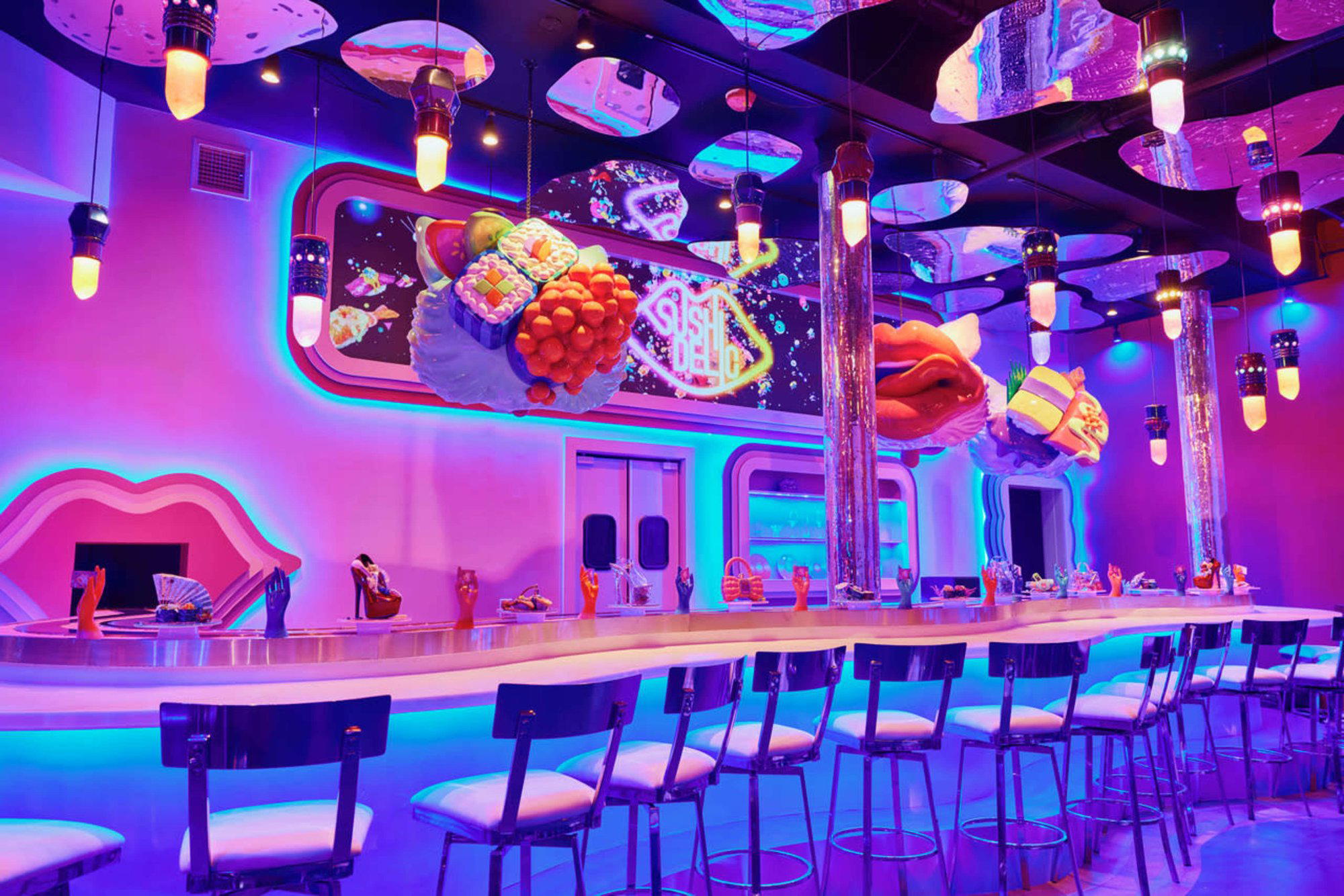
The name TOKIODELIC suggests a room that is not arguing for restraint alone. The psychedelic register implies colour, sensory layering, and a certain confidence about atmosphere, closer in spirit to a creative studio than a meditative dining room. This is a different posture from the austere Japanese-influenced rooms that have become common in the premium tier. It positions the space within the downtown creative tradition rather than the uptown fine-dining tradition, and that is a meaningful editorial distinction.
For context on how American restaurants at various price points have handled the relationship between design ambition and culinary identity, the range runs from the farm-to-table pastoral of Blue Hill at Stone Barns to the classical grandeur of The French Laundry in Napa to the contemporary Southern register of Bacchanalia in Atlanta. Each makes a spatial argument that precedes the menu. TOKIODELIC's argument, from its name and address alone, is about cultural synthesis in a specifically downtown New York key.
Planning Your Visit
TOKIODELIC is located at 177 Lafayette Street, New York, NY 10013, placing it within easy reach of the 6 train at Spring Street or the N/R/W at Prince Street. The surrounding blocks support an evening that extends beyond the meal: Nolita's bar scene to the north, and Chinatown's late-night options to the south. For broader context on New York's dining scene and comparable venues, see our full New York City restaurants guide.
Those building a longer itinerary around serious American dining might also consider Providence in Los Angeles, Single Thread Farm in Healdsburg, Addison in San Diego, Emeril's in New Orleans, or The Inn at Little Washington for a sense of how regional fine dining operates outside New York. International reference points at the top of the market include 8½ Otto e Mezzo Bombana in Hong Kong and Alain Ducasse at Louis XV in Monte Carlo.
New York's Korean-progressive dining corridor, represented by Jungsik New York, offers the closest thematic parallel to the kind of East-West synthesis that TOKIODELIC's positioning implies, and is worth considering as a reference point for the city's appetite for Asian-inflected fine dining formats.
Quick reference: 177 Lafayette St, New York, NY 10013. Confirm hours, booking method, and format directly with the venue.
Frequently asked questions
What dish is TOKIODELIC famous for?
How far ahead should I plan for TOKIODELIC?
What kind of dining experience does TOKIODELIC offer compared to other downtown New York restaurants?
Price and Positioning
Comparable venues nearby, for context on price, style, and recognition.
| Venue | Cuisine | Price | Notes |
|---|---|---|---|
| TOKIODELICThis venue (the venue you are viewing) | Japanese Fusion Kawaii Café | $30–50 | Not listed |
| Sushi Damo | Modern Japanese Sushi & Omakase | $50–100 | Upper West Side-Lincoln Square, Modern Japanese Sushi & Omakase |
| NONONO | Japanese Yakitori Grill | $50–100 | Midtown South-Flatiron-Union Square, Japanese Yakitori Grill |
| Sushi Beauu | Traditional Japanese Omakase | $100–150 | Midtown South-Flatiron-Union Square, Traditional Japanese Omakase |
| Fushimi Bay Ridge | Japanese-French Fusion | $30–50 | Bay Ridge, Japanese-French Fusion |
Continue exploring
More in New York City
Restaurants in New York City
All restaurants in New York City →

Bars in New York City
All bars in New York City →






Details
- Trendy
- Lively
- Whimsical
- Modern
- Casual Hangout
- Date Night
- Group Dining
- Design Destination
- Craft Cocktails
- A La Carte
- Small Plates
- Craft Cocktails
- Sake Program
- Vegetarian Friendly
Current opening hours
- Monday
- Closed
- Tuesday
- 11 AM–4 PM, 5–10 PM
- Wednesday
- 11 AM–4 PM, 5–10 PM
- Thursday
- 11 AM–4 PM, 5–10 PM
- Friday
- 11 AM–4 PM, 5–11 PM
- Saturday
- 11 AM–4 PM, 5–11 PM
- Sunday
- 11 AM–6 PM
Hours can change for holidays and private events. Hours as of .
Lively and playful with bright Harajuku colors, kawaii aesthetic, and lively downtown energy.