

Esquire Best New Restaurants
Our verdict
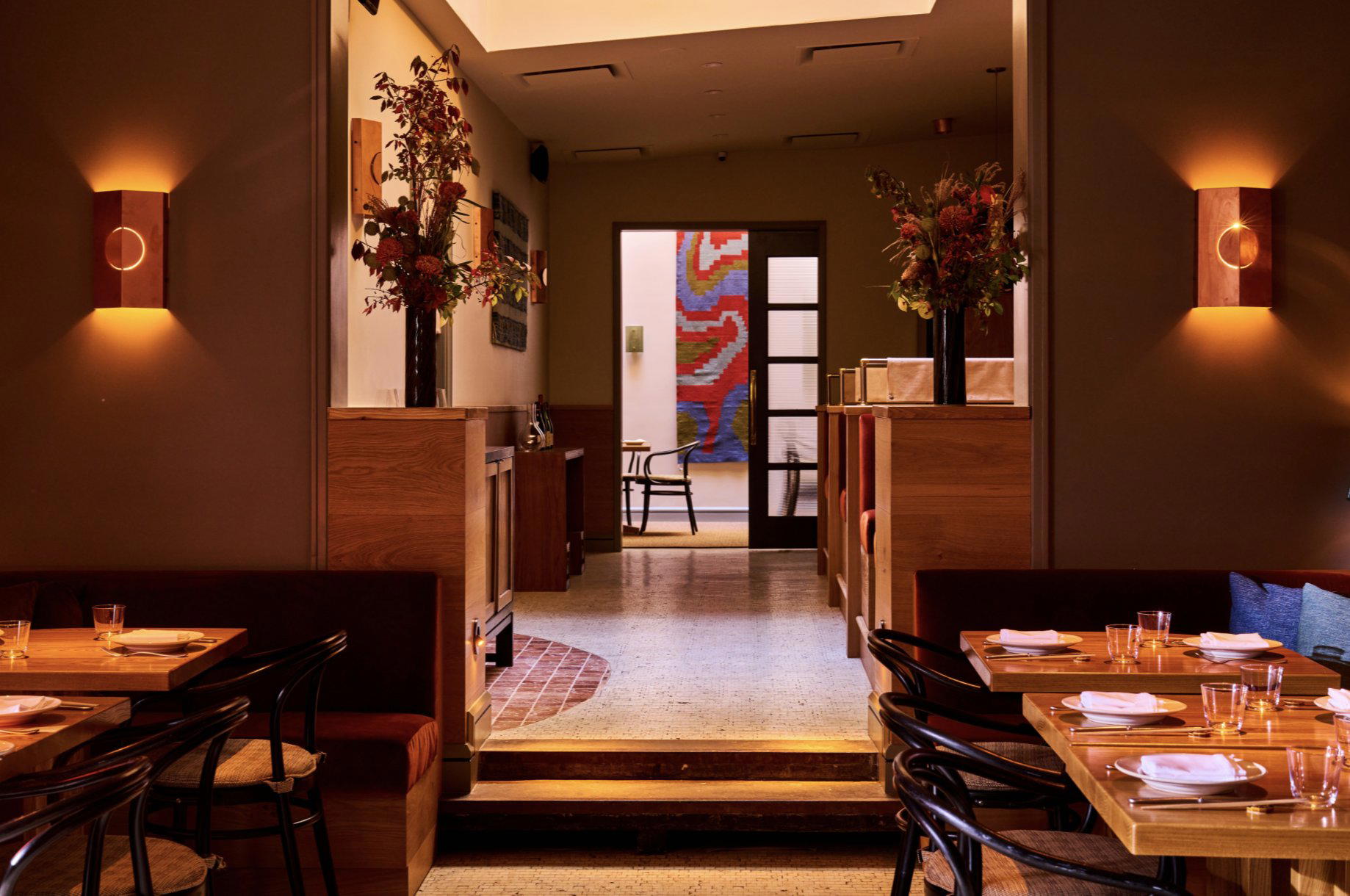
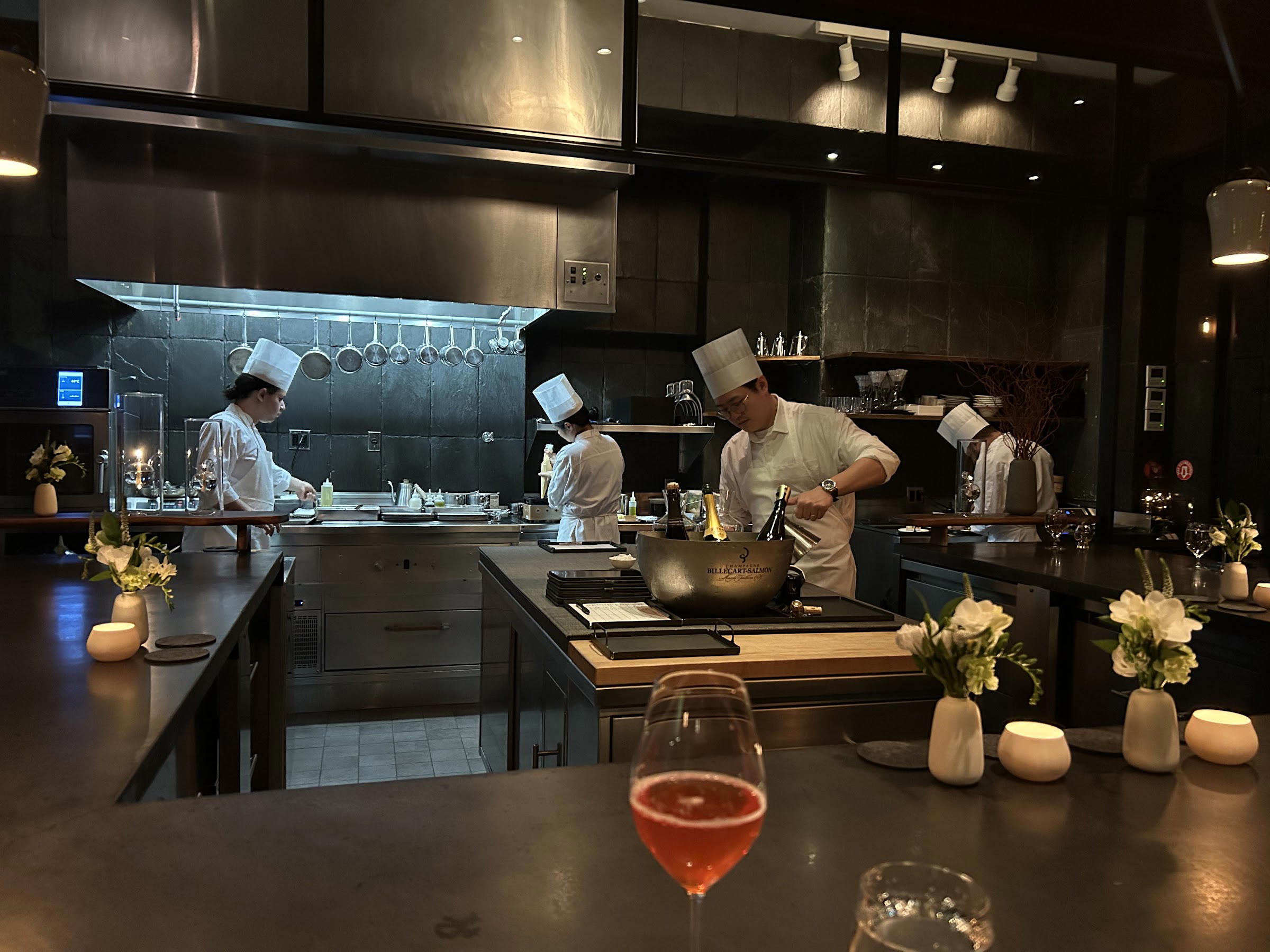
KIKO brings an Asian-inflected perspective to Hudson Square, where chef Alex Chang and sommelier Lina Goujjane have built a menu that moves between global technique and Asian reference points with deliberate fluency. The Spring Street address puts it at the quieter southern edge of Manhattan's dining map, away from the Michelin-dense corridors to the north. It reads as a considered alternative within the city's crowded modern-Asian space.

Pearl is the En Primeur Club membership app — saves, bookings, and concierge access live there. Same editors, same standards.
The menu
What to order
- Dungeness crab temaki
- Lobster crispy rice
- Tuna tartare
Hudson Square and the Geography of New York's Asian-Inflected Dining
Downtown Manhattan's dining identity has shifted considerably over the past decade. The zone bounded by Tribeca to the south and SoHo to the north, with Hudson Square sitting in between, has accumulated a cluster of serious restaurants that operate at some remove from the Michelin-dense midtown corridor where Le Bernardin, Per Se, and Eleven Madison Park hold court. That geographic distance is not a liability. It signals a different kind of ambition: less institutional, more willing to occupy a niche defined by approach rather than category.
KIKO at 307 Spring Street sits inside that pattern. The restaurant draws on Asian culinary reference points without anchoring itself to a single national tradition, a format that has grown into one of New York's more active dining conversations. Where Atomix pursues a rigorous Korean fine-dining vocabulary and Masa operates at the absolute apex of Japanese omakase, KIKO occupies a different register: globally assembled technique filtered through an Asian sensibility, aiming for the intersection of comfort and invention rather than the austere heights of the tasting-menu circuit.
The Logic of Asian Accents on a Global Framework
The broader culinary tendency that KIKO represents has an identifiable lineage. Across American cities, a cohort of chefs has spent time in European or American fine-dining kitchens before reorienting their work around Asian flavor architecture. The result is a category that defies direct labeling: not fusion in the pejorative sense, not strictly regional, but a kind of applied fluency where soy, miso, dashi, fish sauce, or citrus preparations native to East and Southeast Asia arrive via classical Western technique. You find versions of this at Lazy Bear in San Francisco and at Providence in Los Angeles, where the Pacific Rim inflects the thinking without dominating the plate.
At KIKO, chef Alex Chang and sommelier Lina Goujjane have positioned the menu around that overlap point. The pairing of a chef-sommelier partnership in the founding structure is itself telling: the wine program is integral to the concept from the start rather than an afterthought, which raises the ceiling on how the restaurant can perform as a complete dining experience. In New York's modern-Asian space, that kind of front-of-house investment typically separates the project-driven rooms from the purely kitchen-led ones.
What the Menu Framework Signals
Describing a menu as blending innovation, comfort, and creativity runs the risk of saying nothing, but those three words do map onto a genuine tension in contemporary Asian-inflected cooking. Innovation here means technical borrowing from Western kitchens: emulsification, controlled fermentation, precise temperature work. Comfort means that the flavor memory being activated is broadly Asian, familiar at a sensory level even when the execution is unfamiliar. Creativity, in this context, is the editor's function, the decisions about what to pull from each tradition and how to sequence it on the plate.
That framework positions KIKO closer to the mid-tier of New York's contemporary Asian dining scene in terms of approachability, while the downtown location and the sommelier-led beverage program push it upmarket in atmosphere. It is not competing directly with the prix-fixe austerity of Atomix or the ceremony of Masa. Comparable ambitions are visible at Alinea in Chicago and Single Thread Farm in Healdsburg, though both operate in different price brackets and with different culinary traditions at their center.
Placing KIKO in Its Competitive Set
New York's dining map now has several registers of Asian-influenced dining operating simultaneously. At the formal end, multi-course tasting menus with Japanese or Korean frameworks command prices that match or exceed the city's classic French houses. Below that, a wider band of chef-driven rooms offers shorter formats, a la carte optionality, and price points that allow for repeat visits rather than once-a-year occasions. KIKO reads as positioned in that second tier, where the cooking ambition is high but the format remains accessible enough to function as a regular dining destination rather than a special-occasion institution.
The Hudson Square address reinforces this reading. The neighborhood draws a local professional crowd rather than destination tourists, which pressures any serious restaurant to perform consistently at lunch and dinner rather than coasting on occasion-driven traffic. Restaurants that survive and build reputations in that environment, as opposed to the high-profile corridors of midtown or the West Village, tend to do so on the strength of repeat custom. That is a harder test than the tourist trade, and it shapes the kind of cooking that works: technically engaged but not exhausting, seasonally responsive, and legible enough that a regular can bring a first-time guest without extensive explanation.
Planning a Visit
KIKO sits on Spring Street in Hudson Square, convenient to both the A/C/E trains at Spring Street and the 1 train at Houston Street. The neighborhood is walkable from SoHo, Tribeca, and the West Village, which expands the practical options for combining a meal with drinks or a hotel stay nearby. For hotel options in the area, our full New York City hotels guide covers the relevant choices by neighborhood. For pre- or post-dinner drinks, our New York City bars guide maps the downtown options with the same editorial rigor.
| Venue | Cuisine Focus | Price Tier | Format |
|---|---|---|---|
| KIKO | Asian-inflected, global | Not confirmed | Chef-driven, a la carte |
| Atomix | Modern Korean | $$$$ | Prix-fixe tasting menu |
| Masa | Japanese sushi omakase | $$$$ | Counter omakase |
| Le Bernardin | French seafood | $$$$ | Prix-fixe and tasting menu |
For a broader view of where KIKO sits within the city's full dining picture, our full New York City restaurants guide maps the field across cuisine type, neighborhood, and price tier. Further afield, for context on how Asian-inflected technique plays at the international level, 8½ Otto e Mezzo Bombana in Hong Kong and Alain Ducasse at Louis XV in Monte Carlo show how cross-cultural technique operates in different luxury contexts. For domestic comparisons, Emeril's in New Orleans and The French Laundry in Napa anchor the American fine-dining conversation at a different register. You can also explore New York City wineries and experiences in New York City to build out a fuller visit.
Frequently asked questions
What's KIKO's location?
KIKO is located at 307 Spring St, New York, NY 10013, New York City.
What awards or recognition does KIKO have?
KIKO has received recognition including: Asian-influenced restaurant in downtown New York's Hudson Square, from chef Alex Chang and sommelier Lina Goujjane. The menu harmoniously blends globally inspired dishes with Asian accents, balancing innovation, comfort, and creativity.
What do regulars order at KIKO?
What the menu framework does signal, according to the available record, is a kitchen that moves between globally sourced technique and Asian flavor reference points, balancing innovation, comfort, and creativity. That range suggests a menu where lighter, accent-driven plates sit alongside more grounding options.
Do I need a reservation for KIKO?
Booking ahead is advisable. Chef-driven rooms in Manhattan's Hudson Square corridor fill quickly, and KIKO's format, led by chef Alex Chang and sommelier Lina Goujjane, places it firmly in the category where walk-in availability is not guaranteed. Securing a table before arrival is the practical approach.
What is KIKO known for?
KIKO is an Asian-influenced restaurant at 307 Spring Street in Hudson Square, built around a menu that uses globally inspired technique as a frame for Asian flavor references. The project is led by chef Alex Chang and sommelier Lina Goujjane, whose combined roles signal a kitchen and wine program developed in deliberate tandem. The menu is described as balancing innovation, comfort, and creativity.
Is KIKO allergy-friendly?
Asian-inflected menus frequently involve fermented condiments, soy, shellfish, and other common allergens across multiple courses. Contacting the restaurant directly before visiting is the most reliable approach for anyone with dietary restrictions.
Comparable Spots, Quickly
Comparable venues nearby, for context on price, style, and recognition.
| Venue | Cuisine | Price | Awards | Notes |
|---|---|---|---|---|
| KIKOThis venue (the venue you are viewing) | Modern Japanese Small Plates | Not listed | Esquire Best New Restaurants | Not listed |
| Yakiniku Gen East Village | Japanese | Not listed | Not listed | East Village |
| Odo East Village | Kaiseki Izakaya | $50–100 | Michelin Plate | East Village |
| Sushi Sen-Nin | Traditional Japanese Sushi & Yakitori | $30–50 | Not listed | Midtown South-Flatiron-Union Square |
| Fushimi Williamsburg | Modern Japanese Fusion | $50–100 | Not listed | Williamsburg |
Recognition history
Dated appearances from independent guides and award organizations, with the underlying list record or original source where available.
Opinionated About Dining Casual in North America Recommended
Opinionated About Dining
Esquire Best New Restaurants
Esquire
Continue exploring
More in New York City
Restaurants in New York City
All restaurants in New York City →
Bars in New York City
All bars in New York City →





Details
- Cozy
- Modern
- Elegant
- Intimate
- Date Night
- Casual Hangout
- Special Occasion
- Standalone
- Craft Cocktails
- Small Plates
- A La Carte
Current opening hours
- Monday
- 5–10:30 PM
- Tuesday
- 5–10:30 PM
- Wednesday
- 5–10:30 PM
- Thursday
- 5–11 PM
- Friday
- 5–11 PM
- Saturday
- 5–11 PM
- Sunday
- 5–9 PM
Hours can change for holidays and private events. Last verified .