
KITCHEN TAKANO places Yokohama ramen in its compact, counter-led form: a 10-seat Oguchi room focused on tsukemen and ramen rather than ceremony. Its selection for Tabelog Ramen KANAGAWA “Tabelog 100” in 2024 and 2025 gives it a clear signal in Kanagawa’s crowded noodle field, especially for travelers willing to build a meal around timing rather than reservations.
Pearl is the En Primeur Club membership app — saves, bookings, and concierge access live there. Same editors, same standards.
- Address
- 11-5 Oguchidori, Kanagawa Ward, Yokohama, Kanagawa 221-0002, Japan
- Phone
- +81 45-716-8388
- Website
- twitter.com
- Directions
- Get directions
 Saves & bookings on Pearl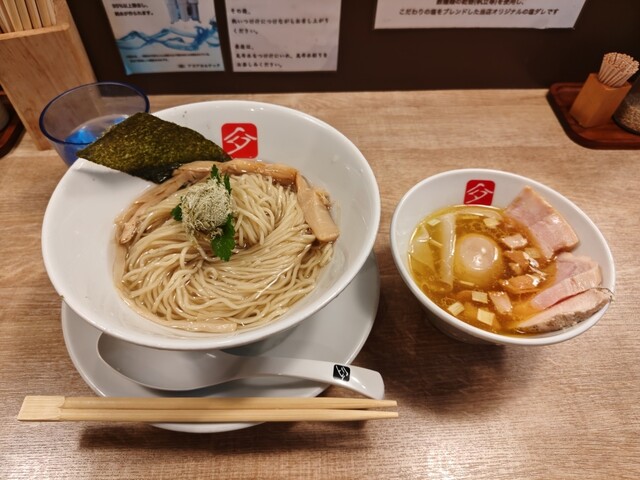
Oguchi is not the Yokohama of waterfront hotels and postcard promenades. It is a rail-stop neighborhood of small shopfronts, local errands, and quick meals that have to justify themselves immediately. That setting suits ramen. The format rewards precision without ceremony: a counter, a short decision window, a bowl or dipping-noodle set, and a turnover rhythm that leaves little room for theatrical dining.
Within that frame, KITCHEN TAKANO belongs to the compact, serious end of Yokohama’s ramen scene. The public signals are unusually clear for a casual noodle shop: tsukemen and ramen are the listed categories, seating is counter-only, and Tabelog selected it for Ramen KANAGAWA “Tabelog 100” in both 2024 and 2025. In Japan’s ramen culture, that matters less as a trophy than as a sorting device. It tells a visitor that this is not merely a convenient lunch stop near a station, but part of Kanagawa’s tighter conversation around noodles, broth, dipping sauce, and queue discipline.
A 10-seat counter in Yokohama's serious noodle tier
Ramen in greater Tokyo and Kanagawa has split into several recognizable lanes: old-school neighborhood bowls, specialty shops built around a single broth logic, tsukemen counters where dipping intensity drives the meal, and hybrid formats that blur ramen with broader Chinese-noodle technique. Yokohama has long had its own gravity in this field, partly because the city absorbs commuters, port-city influences, and suburban regulars rather than relying only on destination dining.
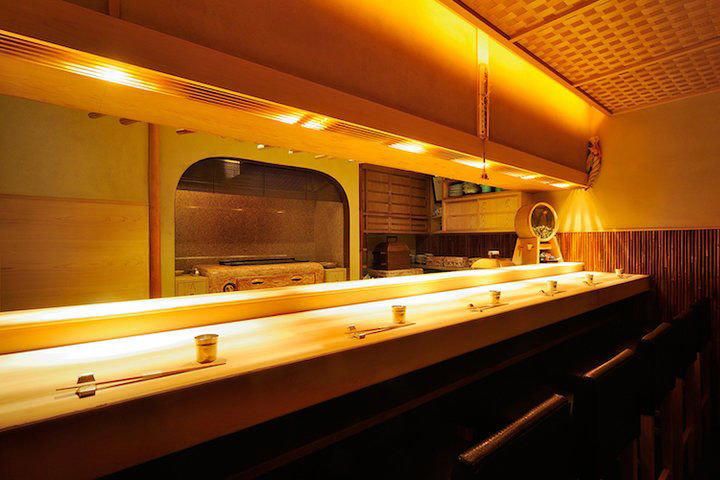
KITCHEN TAKANO sits in the category where scale is part of the argument. Ten counter seats create a different experience from a larger ramen hall: the room is built for solo diners, pairs who can eat at pace, and families comfortable with counter seating rather than table service. That configuration also clarifies expectations. This is not a long, lingering meal; it is a focused stop where the food format carries the value.
The comparison set around Yokohama reinforces the point. Chuka Soba Takano appears in the same broad price band and gives the name a useful reference point, while Kuri Yama, Sari Sari Curry, Torakichi Ya Hikaru, and Boulangerie 14 Ku show how much of the city’s everyday dining strength sits below luxury-restaurant pricing. The common thread is not cheapness for its own sake. It is specialization at accessible spend, the kind of dining Japan does with uncommon discipline.
Tsukemen, ramen, and the decision to plan around a casual meal
Tsukemen changes the pace of a noodle meal. Instead of broth and noodles arriving as one integrated bowl, dipping noodles put texture, temperature contrast, and sauce concentration at the center of the format. That distinction is useful for travelers because it affects appetite and timing: tsukemen often reads as more deliberate and filling than a quick soup ramen, while ramen offers the cleaner one-bowl cadence that suits a faster lunch or evening stop.
The selection by Tabelog’s Ramen KANAGAWA list in consecutive years gives the shop a stronger trust signal than social-media heat alone. Tabelog’s Hyakumeiten lists are not Michelin-style star systems, but they function as a credible Japanese dining filter, especially in categories such as ramen where local users compare shops at high volume and with granular attention. A 3.74 Tabelog score also places the shop in serious territory for a genre where ratings tend to be compressed and heavily contested.
The practical logic is simple: come prepared for a counter meal, not a full-service restaurant experience. Reservations are unavailable, so the better mindset is to treat the visit as a timed food stop rather than a fixed appointment. The shop is close enough to Oguchi Station to make a dedicated detour realistic, and the lack of parking pushes the decision toward rail. Payment flexibility is better than at many older ramen counters, with transport IC, several electronic-money options, and QR payments accepted, while credit cards are not accepted.
How to place it in a Yokohama food day
For a visitor building a day around Yokohama eating, this is the kind of stop that works better before or after heavier sightseeing rather than as the climax of a formal evening. The room size, counter format, and noodle focus all point to a meal with a clean beginning and end. It is also a useful corrective to the idea that Yokohama dining is only Chinatown, harbor-view restaurants, or hotel dining rooms. Some of the city’s sharper food experiences sit in ordinary neighborhoods where the menu is narrow and the margin for error is small.
Travelers mapping a broader itinerary can use Our full Yokohama restaurants guide for dining context, then cross-check stays in Our full Yokohama hotels guide, drinking plans in Our full Yokohama bars guide, wine-focused detours in Our full Yokohama wineries guide, and non-restaurant planning through Our full Yokohama experiences guide. Nearby and regional contrasts include 1000 (Yakitori (Grilled chicken skewers)), Aichun, Ajowan, Alpenjiro Honten, and Anzen Shokudo.
For wider Japan planning, the useful comparisons are not only ramen shops. -Grilled beef Sukiyaki- KAMAKURA TANUKIAN 鎌倉 たぬき庵 in Kamakura shows a more formal regional meal structure. 鮪と炭火焼き うお炭 秋葉原店 in Tokyo points toward seafood and charcoal in a capital-city register.cafe in Osaka and.know in Kumamoto widen the casual-dining lens, while (Shoku) Vietnam in Kawasaki and [Curry Senmon Ten] Maruyama Kyoju. in Sapporo show how single-category restaurants work across Japanese cities. For North American contrasts in Japanese casual formats, Jōdo Saké Bar in Los Angeles and Onigiri Time in Pasadena make the differences in service style and specialization easier to read.
The editorial case for KITCHEN TAKANO is not that it turns ramen into luxury. It does the opposite: it keeps the category compact, affordable, and format-driven, then earns attention through recognition in a competitive Kanagawa noodle field. For travelers who understand that planning around a casual counter can be as rewarding as chasing a tasting menu, that is the point.
Category Peers
Comparable venues by cuisine and price in the same metro.
| Venue | Cuisine | Price | Notes |
|---|---|---|---|
| KITCHEN TAKANOThis venue — the venue you are viewing | Modern chicken tsukesoba ramen | $$ | Not listed |
| Yoshokuya Ki Luck | Japanese-style Western (yoshoku) restaurant | $$ | Nishi |
| RAMAI Yokohama isezaki mo-ru ten | Hokkaido-style soup curry & Indonesian-inspired curry | $$ | Naka |
| Alpenjiro Honten | Soup and steak curry house | $$ | Naka |
| Tonkatsu Souki | Specialty Tonkatsu (Pork Cutlet) Restaurant | $$ | Kōnan |
| Ramen Garaku | Japanese Ramen | $$ | Aoba |
Recognition history
Dated appearances from independent guides and award organizations, with the underlying list record or original source where available.
Tabelog 100 #33 · No. 33
Tabelog · Tabelog 100 - Ramen - KANAGAWA - 2025










At a Glance
- Cozy
- Lively
- Modern
- Solo
- Casual Hangout
- After Work
- Chefs Counter
- Standalone
Current opening hours
- Monday
- 11 AM–2 PM, 6–9 PM
- Tuesday
- 11 AM–2 PM, 6–9 PM
- Wednesday
- 11 AM–2 PM, 6–9 PM
- Thursday
- 11 AM–2 PM, 6–9 PM
- Friday
- 11 AM–2 PM, 6–9 PM
- Saturday
- Closed
- Sunday
- 11 AM–3 PM, 6–9 PM
Hours can change for holidays and private events. Last verified .
A compact, counter-only ramen shop near Oguchi Station with a modern yet unpretentious feel, focused on efficient service and careful noodle preparation rather than decor, creating a bustling but warmly welcoming atmosphere.