



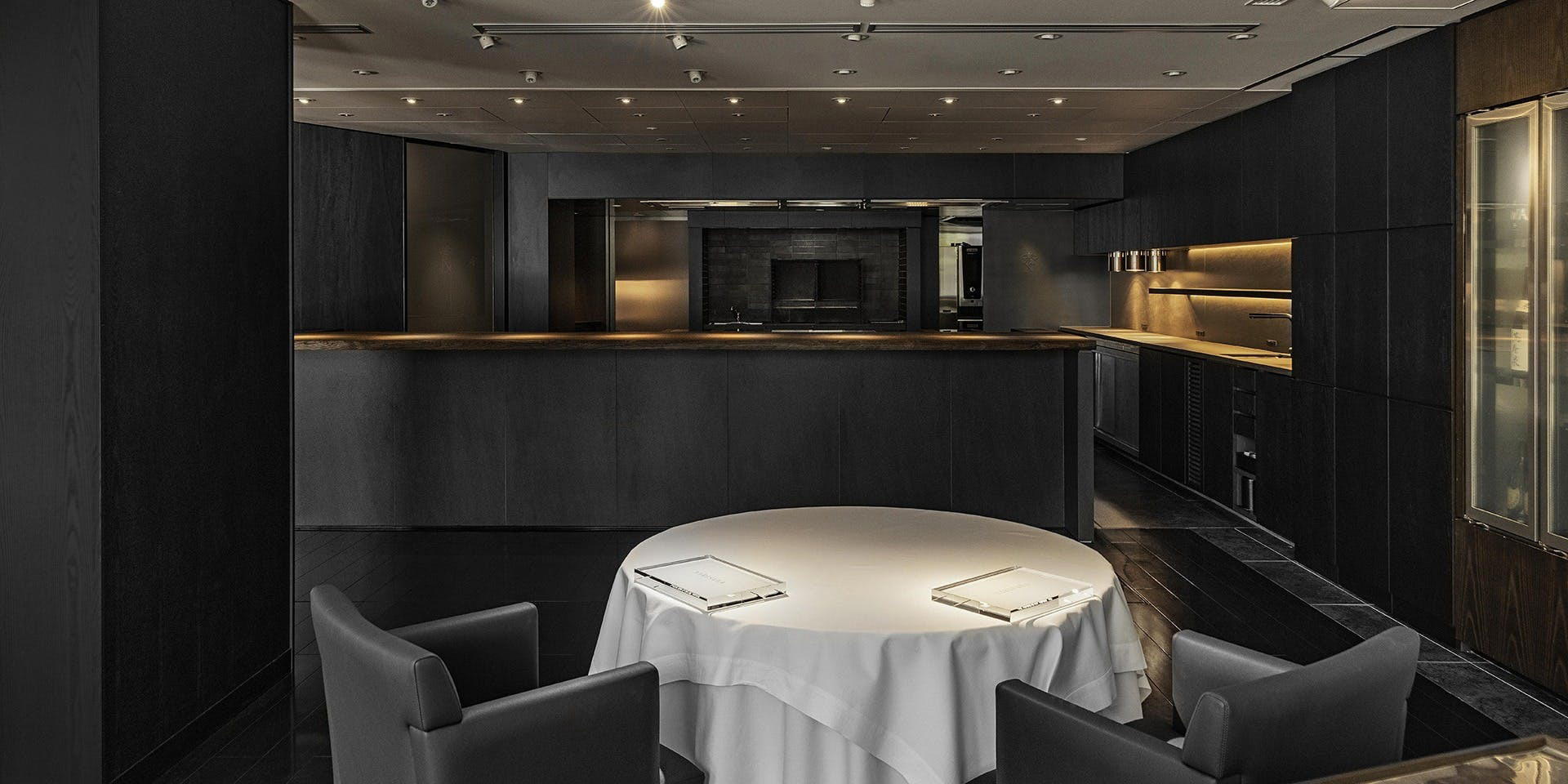
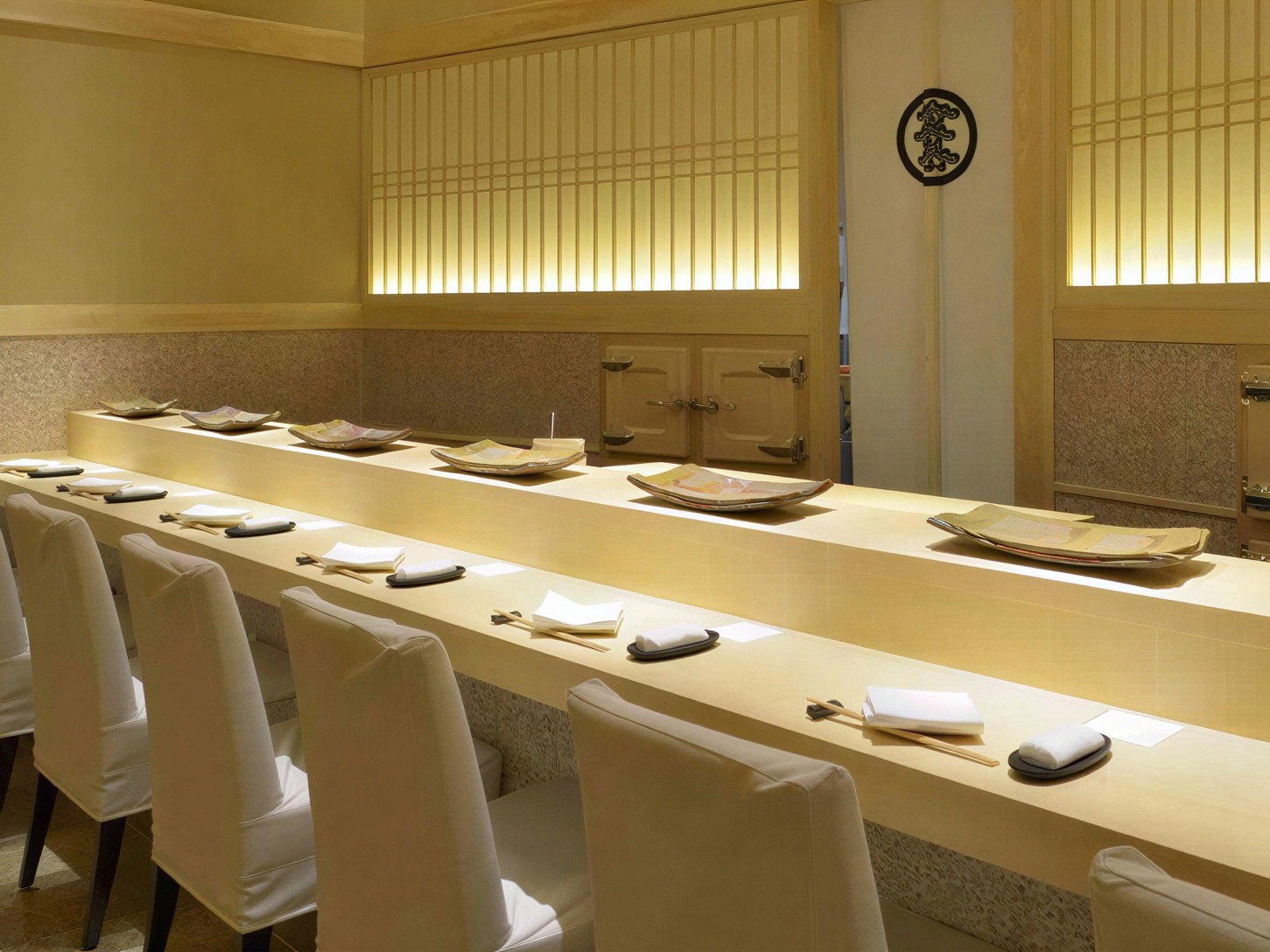
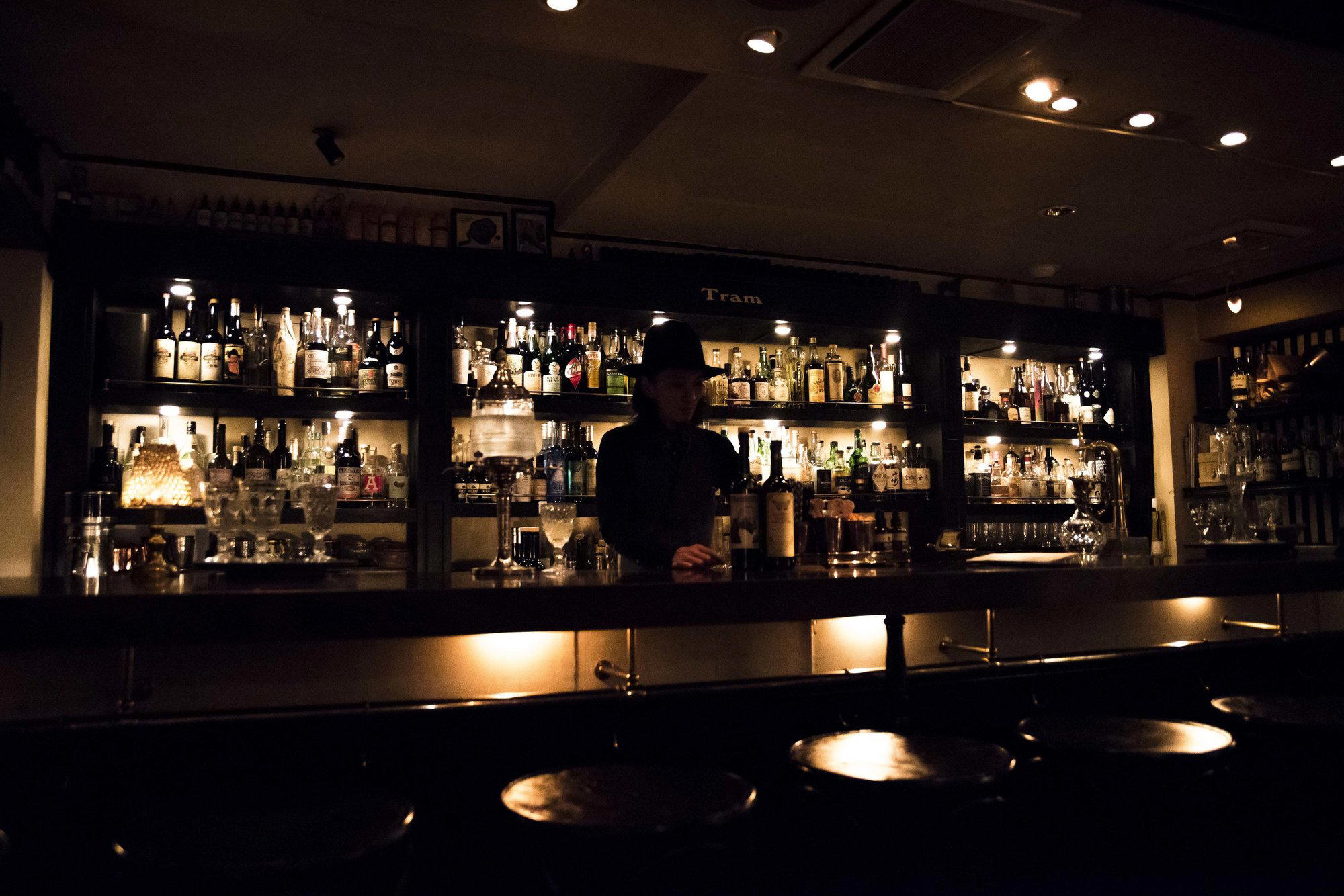
A 10-seat counter in Nishiazabu where a French-born chef trained at a Kyoto ryotei structures his prix fixe menu in two movements: Japanese technique first, French classicism second. The volcanic stone and hinoki wood interior, framed by a single Hiroshi Sugimoto photograph, makes KIBUN one of Tokyo's more considered rooms for a meal that marks a specific occasion. Michelin Plate recognition in 2025.
Pearl is the En Primeur Club membership app — saves, bookings, and concierge access live there. Same editors, same standards.
- Address
- Japan, 〒106-0031 Tokyo, Minato City, Nishiazabu, 4 Chome−11−28 2F
- Phone
- +81 3-6433-5063
- Website
- kibuntokyo.com
- Directions
- Get directions
 Saves & bookings on Pearl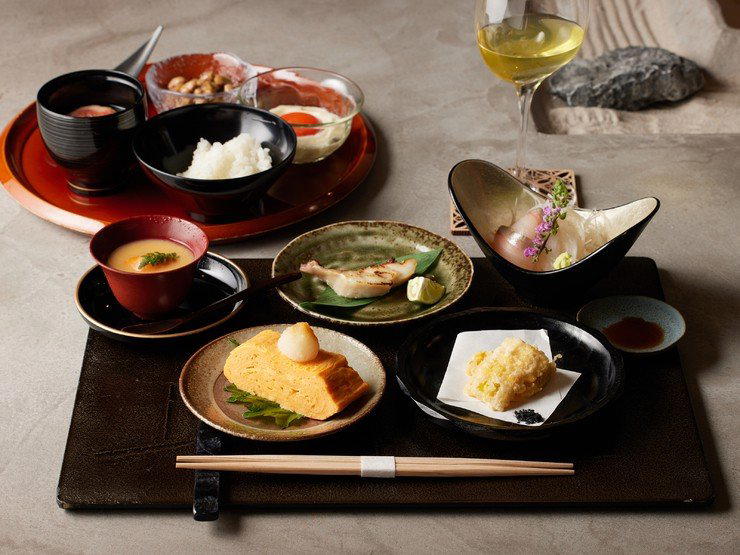
A Counter Built for Meals That Matter
Nishiazabu has long operated as Tokyo's quieter alternative to the Roppongi dining circuit just to the north. The neighbourhood draws a clientele that prefers discretion over spectacle, and its restaurant stock reflects that preference: small rooms, deliberate formats, counters where the cooking is the theatre. KIBUN fits that pattern with precision. This Michelin-starred restaurant in Tokyo's Nishiazabu offers a 10-seat counter and a prix fixe menu at about $200 per person. Occupying the second floor of a converted wine bar on a side street in Minato City, the space was reworked into a 10-seat counter defined by volcanic stone surfaces, a blond hinoki wood bar, and a single Hiroshi Sugimoto photograph on the wall. There is nothing incidental about that selection of materials or that choice of artwork. The room signals an occasion before anything has been plated.
Tokyo's counter-dining culture has diversified considerably over the past decade. Where the dominant model was once defined by Japanese culinary lineages, kaiseki, sushi, tempura, the city now hosts a tier of counters shaped by chefs who trained across multiple national traditions. At venues like nôl and HYÈNE, the framework is contemporary with European inflections. KIBUN occupies a more structured position within that conversation: the menu is explicitly divided into two movements, one Japanese, one French, in that sequence. The architecture of the meal is the editorial statement.
The Two-Movement Menu
The prix fixe format at KIBUN is structured around a deliberate progression. The first half draws on Japanese techniques and references, including preparations in the register of sushi. The second half pivots to French cuisine, with particular attention to sauces, the element that, in classical French cooking, carries technical and expressive weight. The sequencing is not arbitrary. Beginning with Japan and ending with France traces a biographical path through two culinary systems, and the structure gives each half room to operate on its own terms rather than fusing them into a hybrid that dilutes both.
This approach sits within a broader pattern in Tokyo's contemporary dining category. Kitchens like FUSOU and JULIA also work across culinary registers, and the challenge in each case is the same: sequential clarity versus integration. KIBUN chooses clarity. The menu does not ask its two halves to negotiate with each other mid-service. It presents Japan, then presents France. For guests marking a significant occasion, that structure offers something a fused menu cannot.
Context Within Tokyo's Counter-Dining Tier
At ¥¥¥, KIBUN prices below the upper tier of Tokyo counter dining. Venues like hakunei, and comparison points such as Harutaka at ¥¥¥¥ or RyuGin at ¥¥¥¥, occupy a different cost bracket and a different register of expectation. The three-star counters in that upper tier carry institutional weight, they are reference points for the category. KIBUN, with one Michelin star, is a smaller presence. That is not a limitation; it is a positioning. A 10-seat counter without decades of press infrastructure operates on directness. The room is small enough that the chef's presence throughout service is not optional, and the format is compact enough that the cooking has nowhere to hide.
The ¥¥¥ price tier in Tokyo's contemporary segment also includes Den, a two-star venue that has built a reputation for technically accomplished, slightly playful Japanese-influenced cooking. KIBUN's formal two-part structure puts it in a different temperamental register from Den's more fluid approach, but both sit within the same price band and serve a guest who wants considered cooking without the formality ceiling of the four-symbol tier. For an occasion dinner where the priority is a specific, coherent dining experience rather than institutional prestige, that middle tier often delivers more focused attention per cover.
The French-Japan Training Arc and What It Produces at the Counter
The culinary tradition that KIBUN's chef, Ugo Perret-Gallix, draws on is a specific one: formal grounding in French technique, followed by an apprenticeship at a Kyoto ryotei. That sequence matters because a ryotei is not a generic introduction to Japanese cooking. It is among the more codified restaurant formats in Japan, built around seasonal kaiseki service, precise knife work, and hospitality protocols that are as much about timing and atmosphere as they are about the food itself. A chef who passed through that environment carries a particular set of instincts about pacing, presentation, and restraint.
French chefs in Tokyo are not rare, the city has sustained a French dining culture since the 1960s, and several of its three-star kitchens (L'Effervescence being the prominent current example) operate in that tradition. What is less common is a format that explicitly structures the meal around both identities in sequence, rather than merging them into a single contemporary voice. That structural choice also connects to a wider question being asked across contemporary dining in Japan: how precisely can a menu acknowledge two culinary heritages without shortchanging either? Restaurants like HAJIME in Osaka and akordu in Nara work within adjacent frameworks, each finding a different answer to the same question of synthesis or sequence.
Occasion Dining in a 10-Seat Room
The case for using KIBUN as an occasion venue rests on several converging factors. KIBUN is open Monday through Saturday from 6:30 to 10 PM and closed on Sunday, so reservations are essential. The room holds ten people. At that scale, a milestone meal, an anniversary, a significant birthday, a dinner that needs to mean something, is not absorbed into a busy service. The single Hiroshi Sugimoto photograph on the wall is not decorative coincidence: Sugimoto's work deals explicitly with time, duration, and the visible trace of historical process. In a room designed around an intimate progression from one culinary world to another, that image choice functions as a kind of frame for what the meal is doing.
Tokyo's market for occasion dining is competitive and stratified. At the leading, three-Michelin-star venues like Crony (two stars, ¥¥¥¥) and the French and kaiseki houses in the ¥¥¥¥ bracket command the institutional occasion. Below them, in the ¥¥¥ range, the selection is more varied and often more personal. A 10-seat counter with a structured dual-cuisine format and a specific visual and material identity offers a different kind of occasion: one where the intimacy of the room and the architecture of the menu do the work that spectacle does at larger venues. For guests who want something more considered for a specific meal, that trade-off is worth weighing carefully.
Internationally, the format has analogues. César in New York City and Jungsik in Seoul each work within the contemporary category with clear structural frameworks. The shared logic across these rooms is that a coherent menu architecture, executed at small scale, can carry occasion weight that more anonymous large-room dining cannot. KIBUN's version of that logic is specific to the French-Japanese axis, which gives it a clear identity within Tokyo's dense contemporary counter scene. See also Gion Sasaki in Kyoto, Goh in Fukuoka, 1000 in Yokohama, and 6 in Okinawa for comparable small-counter occasion formats across Japan.
Know Before You Go
- Address: 4 Chome-11-28 2F, Nishiazabu, Minato City, Tokyo 106-0031
- Seats: 10-seat counter
- Format: Prix fixe, two movements (Japanese then French)
- Price range: ¥¥¥
- Recognition: Michelin Plate 2025 6 from 18 reviews
- Booking: Reservations are essential.
Awards and Standing
Comparable venues nearby, for context on price, style, and recognition.
| Venue | Cuisine | Price | Awards | Notes |
|---|---|---|---|---|
| KIBUNThis venue — the venue you are viewing | Modern Japanese-French Fusion | $$$$ | Michelin 1 Star | Not listed |
| ShinoiS | Chinese Cuisine | $$$$ | Michelin 1 Star | Minato |
| Oniku Karyu | Wagyu Kaiseki Omakase | $$$$ | Michelin 1 Star | Chūō |
| LATURE | Modern French Game Meat Fine Dining | $$$$ | Michelin 1 Star | Shibuya |
| Fukamachi | Edo-mae Tempura Omakase | $$$ | Michelin 1 Star | Chūō |
| Sushi Hashimoto | Michelin-Starred Edomae Sushi Omakase | $$$$ | Michelin 1 Star | Chūō |
Recognition history
Dated appearances from independent guides and award organizations, with the underlying list record or original source where available.
Michelin 1 Star
Michelin
Opinionated About Dining Top Restaurants in Japan Recommended
Opinionated About Dining
Star Wine List
Star Wine List
Michelin Plate
Michelin
The Best Chef One Knife
The Best Chef
Michelin Plate
Michelin









At a Glance
- Elegant
- Intimate
- Sophisticated
- Modern
- Special Occasion
- Business Dinner
- Date Night
- Chefs Counter
- Open Kitchen
- Extensive Wine List
- Sake Program
- Sommelier Led
Current opening hours
- Monday
- 6:30–10 PM
- Tuesday
- 6:30–10 PM
- Wednesday
- 6:30–10 PM
- Thursday
- 6:30–10 PM
- Friday
- 6:30–10 PM
- Saturday
- 6:30–10 PM
- Sunday
- Closed
Hours can change for holidays and private events. Last verified .
Chic, calm hideaway with stylish, relaxing space featuring a lively counter and table seating in volcanic stone and hinoki wood.