
Kawaguchi Ya places Nagoya’s wagashi tradition in a compact, takeaway-led format rather than a café ritual. Its Tabelog 100 selection for Japanese traditional sweets and sweets across multiple years gives it unusual weight in a category often treated as an afternoon errand, not a serious dining stop.
Pearl is the En Primeur Club membership app — saves, bookings, and concierge access live there. Same editors, same standards.
- Address
- 3 Chome-13-12 Nishiki, Naka Ward, Nagoya, Aichi 460-0003, Japan
- Phone
- +81 52-971-3389
- Website
- instagram.com
 Saves & bookings on Pearl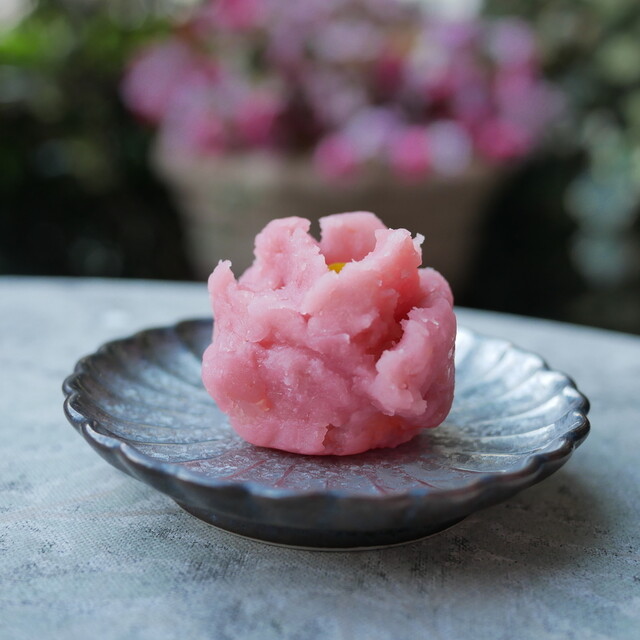
Nishiki changes by the block: office workers, department-store traffic, late-night dining signs, and quieter daytime errands that keep central Nagoya functioning between meals. Here, wagashi moves differently from sushi counters or kappo rooms. It is bought with intention, carried away, and often eaten later, making the craft less theatrical but no less exacting. Kawaguchi Ya belongs to an older Japanese sweets culture, where the measure is not a long meal but the discipline of a small purchase.
Nagoya’s dining conversation often favours miso-katsu, hitsumabushi, kishimen, and tebasaki, foods with strong civic branding. Wagashi works more quietly, between gift culture, tea practice, seasonal calendar, and neighbourhood habit. That quieter role is why this address matters: it redirects attention to a craft category visitors can miss when planning only around dinner reservations.
Wagashi as a city habit, not a dessert course
Japanese traditional sweets are not simply the end of a meal. In Nagoya, as in Kyoto and Tokyo, they are tied to calendar shifts, formal gifting, tea, and short daytime stops. The format rewards restraint: a small range, quick service, and the expectation that the customer understands the purchase. This is luxury based on repetition and precision rather than performance.
Kawaguchi Ya’s recognition by Tabelog 100 for Japanese traditional sweets / Japanese sweets cafe EAST 2023 places it in a national sweets conversation, not just a local errand circuit. Earlier Tabelog 100 selections for sweets in 2018, 2020, and 2022 show continuity across changing dining fashions. For a category built on daily consistency, repeat selection matters more than one burst of attention.
The takeaway-only format also explains how wagashi functions. No extended dining-room narrative is needed; value sits in production, selection, and timing. That separates it from central Nagoya’s sit-down hierarchy, where Kikkou operates in a formal, higher-spend lane, while Udon Nishiki occupies the low-cost noodle end of the same city-centre ecosystem. These places do not compete directly; they show that Nagoya’s serious food culture includes both a composed counter meal and a purchase that may last minutes.
That distinction helps visitors read Nishiki more accurately. The district is not only nightlife and business dining; it also supports daytime specialists, casual staples, and small-format food shops measured by regular use. Sukhontha Nishiki ten and Gyoza Senmon Ten Karaya Nishiki ten show another side of that spectrum: accessible, quick, social, and price-conscious. Wagashi sits beside that daily-food world, but with a ceremonial charge casual lunch spots do not carry.
A craft category that has changed without becoming flashy
The evolution is subtle. Japanese sweets have moved from local, often generational buying patterns into searchable, award-indexed dining culture. A Tabelog 100 listing gives an old category a modern discovery mechanism, especially for travellers scanning for ramen, izakaya, or omakase. Yet the form resists over-explanation. The better shops do not need a long origin story on the plate.
Kawaguchi Ya reflects the tension between old habit and contemporary visibility. It has markers that matter to today’s traveller: a recognised sweets category, central Nagoya location, non-smoking status, and takeaway service rather than lingering. But the experience remains closer to a neighbourhood purchase than a staged culinary event. That is useful in a city where visitors can over-plan meals and under-plan the smaller food moments that define a day.
The absence of a named chef in the public profile also fits the genre. Wagashi houses are often judged less by chef celebrity than by product discipline and customer trust. In restaurant media, that makes them harder to write about because there is no protagonist. Editorially, that is the appeal: the craft becomes the subject, and the shop shows a city maintaining a refined sweets tradition in ordinary daylight.
For a Nagoya food itinerary, this is not a substitute for a full meal. It is a calibration stop. Pairing a sweets specialist with a broader city crawl gives a more accurate sense of Nagoya than booking only formal dinners. The same logic applies across EP Club’s wider Japan coverage, from Our full Nagoya restaurants guide to city-specific entries such as 1022, 451, Aaron, Alan., and All Day Dining Montmartre. Together, they show how broad the city’s eating map becomes when small-format specialists are treated as seriously as restaurants.
How to place it in a Nagoya itinerary
Use a wagashi stop as part of the day’s structure, not an afterthought. Central Nagoya rewards clustering: a daytime sweets purchase, casual lunch, later bar, and hotel base that keeps transit simple. For that wider planning layer, Our full Nagoya hotels guide, Our full Nagoya bars guide, Our full Nagoya wineries guide, and Our full Nagoya experiences guide make more sense than treating sweets as an isolated detour.
There is a broader Japan lesson here. Small, focused formats often explain local food culture more clearly than destination dining rooms. The same applies beyond Nagoya, whether regional Japanese cooking at -Grilled beef Sukiyaki- KAMAKURA TANUKIAN 鎌倉 たぬき庵 in Kamakura, a Tokyo charcoal-and-tuna address such as. 鮪と炭火焼き うお炭 秋葉原店 in Tokyo, a compact urban café like.cafe in Osaka, or regional specialists including.know in Kumamoto, (Shoku) Vietnam in Kawasaki, and [Curry Senmon Ten] Maruyama Kyoju. in Sapporo. Even outside Japan, tightly defined formats such as Jōdo Saké Bar in Los Angeles and Onigiri Time in Pasadena show how a narrow brief can carry cultural weight.
The restaurant is strongest read this way: not as a grand occasion, but as a precise expression of Nagoya’s daytime food culture. Its Tabelog 100 history gives the address a clear trust signal, while takeaway keeps the encounter modest. That combination is the reason to pay attention. In a city often reduced to hearty regional dishes, wagashi adds a quieter register, measured in seasonality, gift logic, and craft held inside a small box.
Quick Comparison
Comparable options at the same price tier.
| Venue | Cuisine | Price | Notes |
|---|---|---|---|
| Kawaguchi YaThis venue — the venue you are viewing | Japanese confectionery shop | $ | Not listed |
| Kanmidokoro Shibafuku | Japanese Sweets | $ | Naka |
| Nakamura So | Traditional Takayama ramen (chuka soba) | $ | Naka |
| Takumi Mitsukoshi ten | Japanese Curry Counter by Nagoya Takumi | $ | Naka |
| Kurokawa Yuuan Tei | Japanese (washoku) restaurant | $ | Kita |
| Niboshi Chuka Soba Gyogyo | Niboshi-focused Ramen & Tsukemen | $ | Kita |
Recognition history
Dated appearances from independent guides and award organizations, with the underlying list record or original source where available.
Tabelog 100 #91 · No. 91
Tabelog · Tabelog 100 - Japanese traditional sweets / Japanese sweets cafe - EAST - 2023
Continue exploring
More in Nagoya
Restaurants in Nagoya
Browse all →


At a Glance
- Solo
- Casual Hangout
- After Work
- Standalone
Current opening hours
- Monday
- 9:30 AM–5:30 PM
- Tuesday
- 9:30 AM–5:30 PM
- Wednesday
- 9:30 AM–5:30 PM
- Thursday
- 9:30 AM–5:30 PM
- Friday
- 9:30 AM–5:30 PM
- Saturday
- 9:30 AM–5:30 PM
- Sunday
- Closed
Hours can change for holidays and private events. Last verified .