

Tabelog Bronze #171
Our verdict
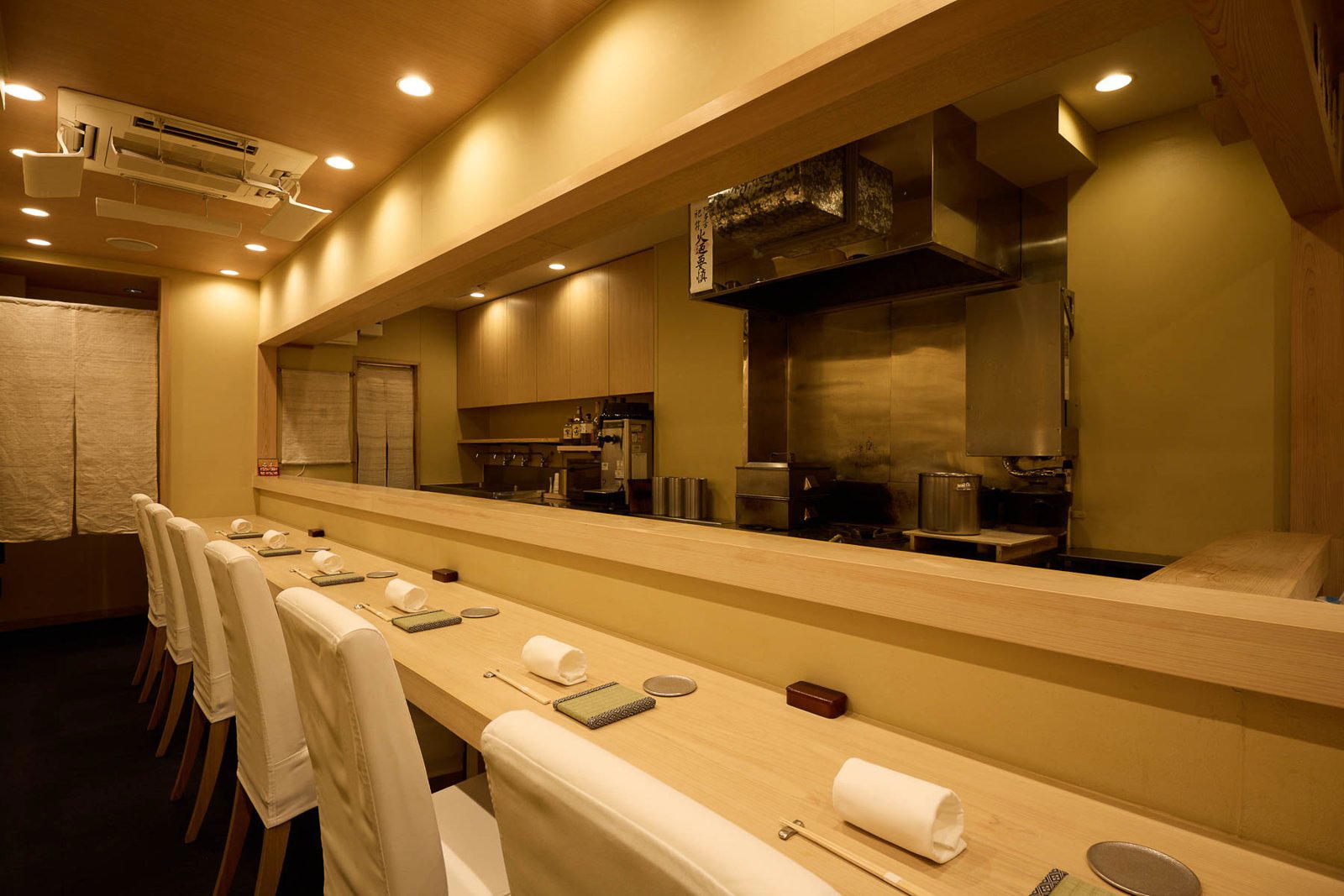
A seven-seat counter in Nihonbashi Ningyocho, Kawada carries the lineage of the respected Isetsu tradition and has earned Tabelog Bronze recognition every year from 2021 through 2026, alongside three consecutive selections for the Tabelog Japanese Cuisine Tokyo 100. Dinner runs approximately three hours at JPY 40,000–49,999 per person. Reservation only, with strict personal attendance required.

Pearl is the En Primeur Club membership app — saves, bookings, and concierge access live there. Same editors, same standards.
The menu
What to order
- Simmered Yodo daikon
- Taro stalks
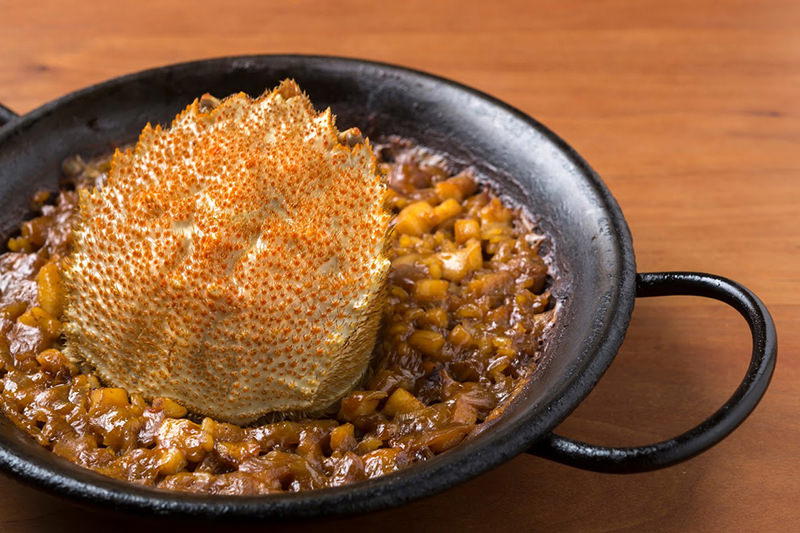
- Matsuba crab
- Seasonal rice course
A Counter in Ningyocho Where the Meal Has a Shape
Nihonbashi Ningyocho sits at an unusual intersection in Tokyo's dining geography: close enough to the financial core of Chuo to draw the city's most serious dining clientele, yet rooted in a neighbourhood that has been cooking and trading since the Edo period. The streets around Ningyocho Station still carry the character of a working commercial district, and the restaurants that earn lasting reputations here tend to do so through rigorous consistency rather than visual spectacle. Kawada, occupying a basement room at 1-5-5 Nihonbashi Ningyocho, operates inside that tradition. The room holds seven seats. Dinner takes approximately three hours. The format is omakase, and the approach is described in Tabelog's own sourced material as presenting ingredients in their purest form, a phrase that in Tokyo's premium washoku context carries specific meaning: no heavy sauce work, no technique-forward theatrics, but instead precise seasonal sourcing and the kind of restraint that reveals rather than transforms.
Isetsu Lineage and What It Signals
Among Tokyo's premium Japanese cuisine counters, provenance matters in a way that differs from Western fine dining. Chefs don't merely train somewhere — they inherit a way of reading seasons, selecting produce, and pacing a meal that carries the specific identity of their mentor's house. The Isetsu lineage implies a prioritisation of ingredient fidelity and classical sequencing: the arc of a meal that moves logically from lighter preparations toward richer ones, building and then releasing, with each course reflecting what the market offered that week. That structure is the editorial subject here. Kawada operates within it, and the seven-seat counter format enforces the intimacy that such a progression requires. Compare this with kaiseki-adjacent peers like Kizan or Kashiwade no Tsukasa Suikouan, where the spatial and format dynamics shape the meal differently.
The Tasting Progression: How the Meal Unfolds
In Japanese cuisine at this price point — dinner averages JPY 40,000 to JPY 49,999, roughly USD 260–330 at current rates, the pacing of courses is as considered as the food itself. A well-executed omakase in the washoku tradition typically opens with small, delicate preparations that orient the palate: something preserved, something raw, something that establishes the seasonal register the chef is working in. The middle passages carry the meal's weight, with fish, simmered preparations, and grilled courses arriving in sequence. The close comes with rice and pickles, a deliberate return to simplicity after complexity, a structural move that distinguishes Japanese haute cuisine from the Western tendency to end on sweetness and richness.
At a seven-seat counter, the chef controls the room entirely. Every course arrives when the kitchen decides, the interval between dishes is calibrated, and the diner's role is to follow rather than direct. This is a different contract from à la carte dining, and the three-hour service window signals that Kawada maintains that contract firmly. Comparable high-format counters in Tokyo, RyuGin in Roppongi at Michelin three stars, or Den in Jimbocho with its more playful approach to innovation, occupy different points on the formality spectrum, but all share this fundamental structure of total chef authorship over the sequence. Kawada's Tabelog score of 3.96 and its repeated Bronze award status across 2021, 2022, 2025, and 2026 suggest that the market rates this execution highly and consistently.
For visitors who want to understand how the washoku progression reads across different regional expressions, Gion Sasaki in Kyoto and Mitsuyasu in Kyoto offer instructive contrast. Kyoto kaiseki tends toward a more codified sequence with stronger visual presentation conventions; Tokyo's leading washoku counters, including Kawada, often compress the format without abandoning its logic, reflecting a city where time is short and restraint reads as confidence rather than omission.
Recognition Record and Peer Positioning
Tabelog's rating architecture puts a 3.96 score in a category that most Tokyo restaurants never approach. The platform's Bronze tier, which Kawada has held across four separate award years, represents the third tier of a system whose leading awards cover only a small fraction of Tokyo's estimated 80,000-plus food establishments. The concurrent Tabelog Japanese Cuisine Tokyo 100 designation, held in 2021, 2023, and 2025, identifies Kawada as one of the hundred most-regarded Japanese cuisine restaurants in the city, a list that spans everything from ultra-formal kaiseki houses to specialised single-ingredient counters. Holding both the Bronze award and the Top 100 designation across multiple non-consecutive cycles indicates a consistency that is harder to achieve than a single year's peak performance. For reference, properties like Jigen Do and L'Orangerie Koh-An occupy neighbouring tiers in Tokyo's broader premium dining ecosystem, each with distinct format identities. Kawada's score places it closer to the boundary where Tabelog Gold begins, without yet crossing it, a positioning that makes it one of the more interesting counters for serious diners who track these gradations.
Nationally, the contrast is instructive. HAJIME in Osaka operates in three-Michelin-star French-Japanese fusion territory; Goh in Fukuoka applies creative Japanese technique in a regional context. Kawada's positioning is more classical, more Tokyo-centric, and more rooted in the washoku lineage that Isetsu represents.
The Ningyocho Context
Arriving at Kawada from Ningyocho Station, the restaurant is a two-minute walk from Exit A6, sets a specific tone. The neighbourhood has none of the high-design theatrics of Ginza or the destination-restaurant density of Roppongi. Ningyocho reads as a place people actually use: the street-level mix of long-running shops, traditional craft businesses, and decades-old eating establishments creates a context where serious dining feels less performative and more embedded. A basement room in this neighbourhood signals something about the restaurant's priorities. The cooking is expected to carry the room; the room is not expected to carry the cooking. In Tokyo's premium washoku category, that posture often correlates with the strongest kitchens. For visitors building a multi-day Tokyo dining plan, Onarimon Haru offers a useful stylistic counterpoint nearby, and the broader Tokyo restaurant guide maps the full range of options across the city.
Planning Your Visit
Kawada operates on a reservation-only basis with a firm policy: the person who made the reservation must attend in person. Proxy bookings are not accepted, and arrivals more than 30 minutes late result in cancellation. Dinner service runs from 17:30 to 21:00, Monday through Friday. Saturday adds a lunch seating from 12:00 to 14:30 with a second dinner service. Sunday is closed. The total visit lasts approximately three hours. Reservations are handled via the contact address kawada_ningyocho@omakase-japan.zen. BYO drinks are permitted with a corkage fee. The dress code asks guests to avoid strong fragrances, a request to be communicated to all members of the party. Credit cards are accepted across major international networks. The restaurant is available for private hire when full-buyout terms apply.
For further context on Tokyo's hotel and bar options around a visit, see our full Tokyo hotels guide, our full Tokyo bars guide, and our full Tokyo experiences guide. Travellers combining a Tokyo visit with wider Japan itineraries may also find value in akordu in Nara, 1000 in Yokohama, 6 in Okinawa, and Beppu Hirokado in Oita.
Quick reference: Kawada, 1-5-5 Nihonbashi Ningyocho B1F, Chuo City, Tokyo. Seven seats. Dinner JPY 40,000–49,999. Reservation only. Two-minute walk from Ningyocho Station Exit A6. Closed Sunday.
Frequently asked questions
Where exactly is Kawada?
Kawada is located at Japan, 〒105-0003 Tokyo, Minato City, Nishishinbashi, 3 Chome−5−9 HOYOビル 2階, Tokyo.
What kind of recognition has Kawada received?
Kawada has received recognition including: {"Year":"2026","Award Source":"Tabelog","Award Type":"The Tabelog Award","Award Group":"bronze","Award Group Rank":"171","Restaurant Name":"Kawada","Score":"3.96","Budget":"Dinner: JPY 40,000 - JPY 49,999; Lunch: JPY 40,000 - JPY 49,999","B….
What do regulars order at Kawada?
The format is omakase — Keisuke Kawada determines the full sequence, and there is no à la carte option. What guests are effectively selecting is the sitting itself. At JPY 40,000–49,999 per person, the meal runs approximately three hours across the seven-seat counter.
Is Kawada chef-led?
The chef associated with Kawada is Keisuke Kawada.
What's the best way to book Kawada?
Reservations are made by contacting kawada_ningyocho@omakase-japan.zen. Walk-ins are not accepted, the person who made the reservation must attend in person, and arriving more than 30 minutes late results in automatic cancellation. Plan for a three-hour visit.
What has Kawada built its reputation on?
The restaurant carries the Isetsu lineage, a classical Japanese cuisine tradition centred on presenting ingredients in their purest form rather than through technique-led transformation. That foundation has earned Kawada a 3.96 Tabelog score, four Bronze Awards (2021, 2022, 2025, 2026), and three consecutive selections for the Tabelog Japanese Cuisine Tokyo 100.
Awards and Standing
Comparable venues nearby, for context on price, style, and recognition.
| Venue | Cuisine | Price | Awards | Notes |
|---|---|---|---|---|
| KawadaThis venue — the venue you are viewing | Traditional Japanese Omakase | $300–500 | Tabelog Bronze #171 | Not listed |
| Sushi Suzuki | Orthodox Edomae Omakase | $200–300 | Tabelog Bronze #438 | Chūō |
| Sushi Takahashi | Edomae Omakase Sushi | $500+ | Tabelog 100 #61 | Chūō |
| Rokkan | Traditional Japanese Kappo with Soft-Shelled Turtle | $300–500 | Tabelog Bronze | Chūō |
| Tatsumi | Tempura Bar | $200–300 | Tabelog 100 #87 | Meguro |
| Sushisho Masa | Traditional Japanese Omakase Sushi | $200–300 | Not listed | Minato |
Recognition history
Dated appearances from independent guides and award organizations, with the underlying list record or original source where available.
Opinionated About Dining Top Restaurants in Japan Recommended
Opinionated About Dining
Tabelog Bronze #171
Tabelog
Full recognition history (5 entries)
Opinionated About Dining Top Restaurants in Japan Ranked #564
Opinionated About Dining
Tabelog Bronze
Tabelog
Tabelog 100 #29 · No. 29
Tabelog · Tabelog 100 - Japanese cuisine - TOKYO - 2025
Continue exploring
More in Tokyo
Restaurants in Tokyo
All restaurants in Tokyo →
Bars in Tokyo
All bars in Tokyo →

Details
- Intimate
- Elegant
- Sophisticated
- Quiet
- Special Occasion
- Date Night
- Celebration
- Chefs Counter
- Open Kitchen
- Historic Building
- Sake Program
- Local Sourcing
- Omakase
- Counter Dining
- Tasting Menu
- Sake
- Wine
- Whiskey
- Allergy Accommodating
Current opening hours
- Monday
- 7–10:30 PM
- Tuesday
- 7–10:30 PM
- Wednesday
- 7–10:30 PM
- Thursday
- 7–10:30 PM
- Friday
- 7–10:30 PM
- Saturday
- 7–10:30 PM
- Sunday
- 7–10:30 PM
Hours can change for holidays and private events. Last verified .
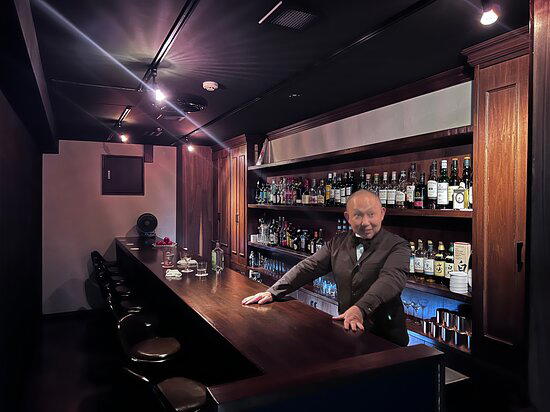
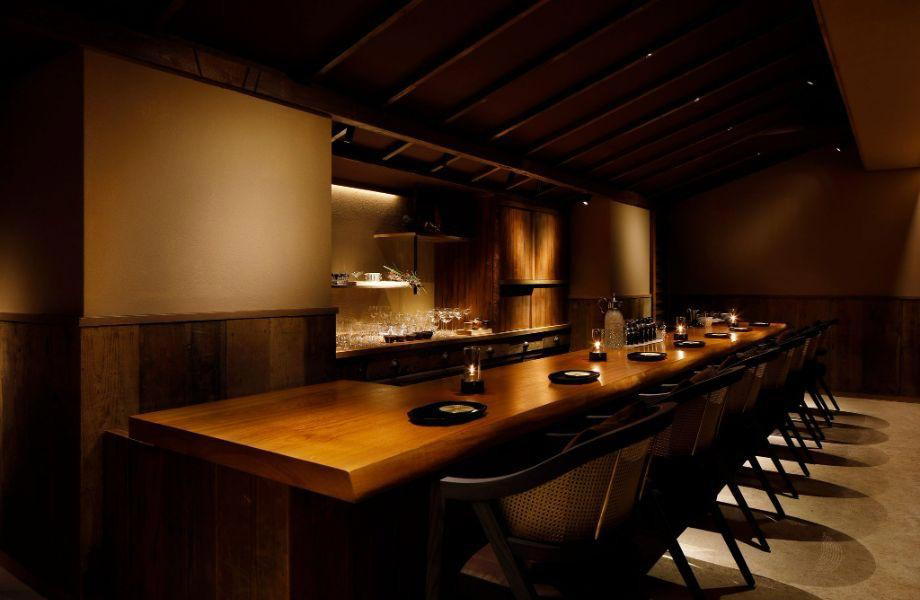
Intimate basement counter setting with warm, personal interaction between chef and guests; minimalist Japanese aesthetic with carefully curated antique glassware and historic tableware creating a refined, museum-like atmosphere.