


Murcia's Japanese dining scene is thin, which makes Kappou Makoto's disciplined commitment to Asian cuisine all the more notable. The room is spare and the bar impressive; the menu moves through raw preparations and carefully crafted hot dishes, with an omakase format built around the day's best available ingredients. For a city defined by its huerta produce and Mediterranean tradition, this is a deliberate counter-programme.
Pearl is the En Primeur Club membership app — saves, bookings, and concierge access live there. Same editors, same standards.
- Address
- C. Historiador Juan Torres Fontes, 20, 30011 Murcia, Spain
- Phone
- +34 627 65 67 67
- Directions
- Get directions
 Saves & bookings on Pearl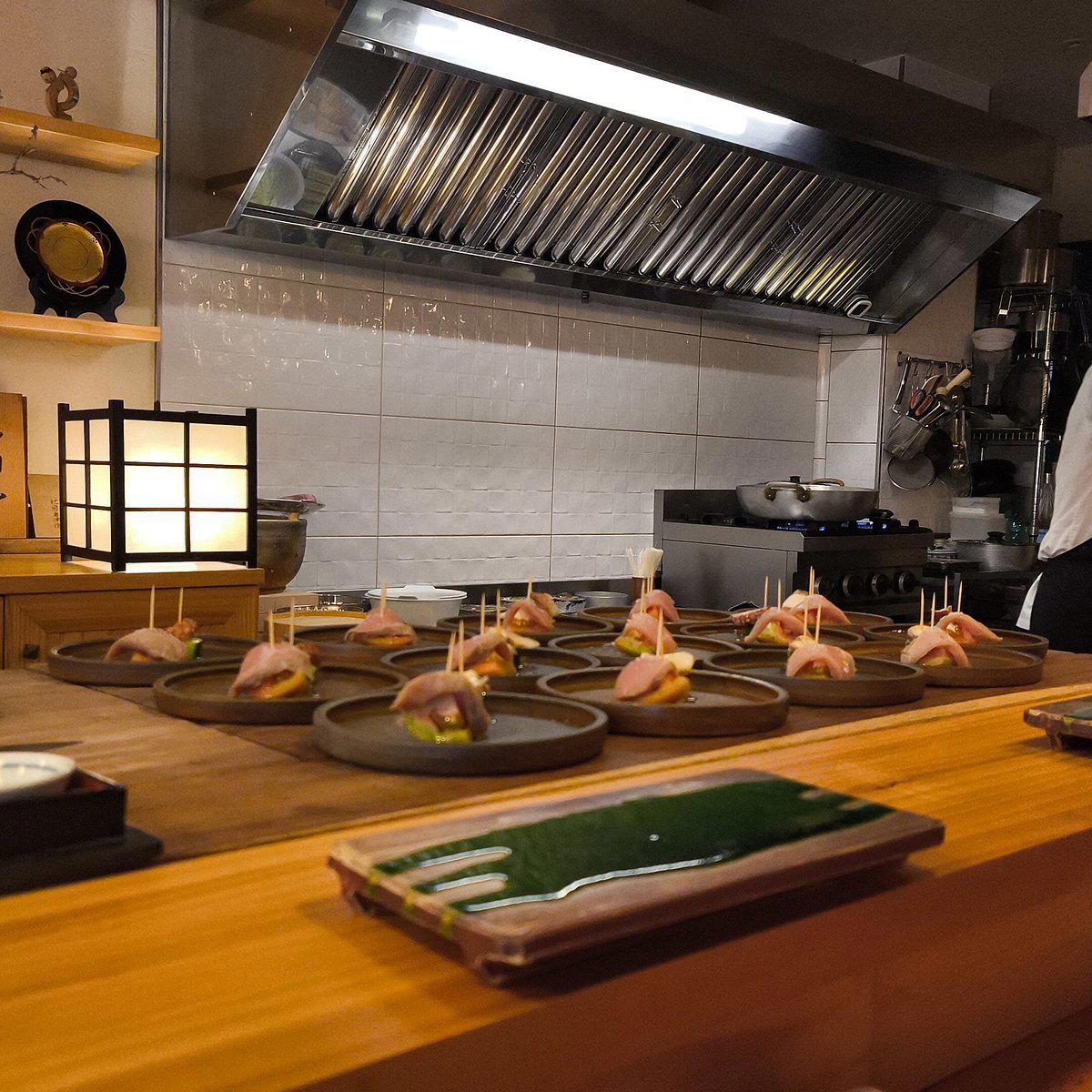
The Room Sets the Terms
Murcia's restaurant culture runs deep on Spanish regionalism: the huerta produces some of the country's most celebrated vegetables, and the city's dining rooms from Alborada through to Demo tend to reflect that geography. Kappou Makoto does not. The space on Calle Historiador Juan Torres Fontes reads as deliberately austere, sparse surfaces, no decorative clutter, with an impressive bar as the room's anchor. In a regional dining scene where warmth and abundance are the default register, austerity is its own editorial statement.
Menu Architecture: Two Registers, One Logic
The structure of the menu at Kappou Makoto follows a logic familiar to Japanese dining but relatively rare in southern Spain: a dual-track format that holds raw preparations and hot dishes in deliberate balance. Neither side dominates the other. The raw section covers the expected kappou range, sliced fish, shellfish, preparations where temperature, cut, and sourcing do most of the work. The hot section extends that discipline rather than departing from it, with dishes that reviewers describe as well crafted and carefully presented rather than theatrical.
This kind of menu architecture reveals something about how the kitchen thinks. Restaurants that lead heavily with cooked food often use heat to compensate for ingredient limitations or to demonstrate technical range. Kitchens confident in raw preparation tend to be confident in sourcing. When both halves of a menu are given equal weight and equal discipline, as they are here, the implicit argument is that sourcing and execution are consistent across temperature and technique. That is a harder position to sustain than it sounds, and it distinguishes Kappou Makoto within Murcia's dining offer.
For comparison, the Michelin-recognised restaurants in the city, including Almo de Juan Guillamón, Frases, and Magoga, all operate within the contemporary Spanish or modern Mediterranean framework. None of them works in this culinary register. The restaurant occupies a category of its own in the city.
The Omakase Format as the Kitchen's Real Argument
The omakase menu is where the kitchen's stated commitment becomes testable. Omakase, in its strictest sense, removes the diner's choice entirely and replaces it with the chef's judgment about what is worth eating on a given day. The format is common across Japan and has grown in visibility in Spain through high-profile addresses in Madrid and Barcelona. At DiverXO in Madrid or Cocina Hermanos Torres in Barcelona, tasting menus are built around creative vision and sustained over months. An omakase format built around daily best-available ingredients is a different proposition: it requires the kitchen to make good decisions under supply uncertainty, every service.
The restaurant's omakase is prepared using high-quality ingredients available on the day. That framing places the emphasis squarely on sourcing intelligence rather than fixed creative vision. The format itself signals that the kitchen treats procurement as a daily discipline. In the context of Spanish dining, where the huerta-driven kitchen has refined vegetable sourcing into something close to a regional identity, there is a parallel logic at work here, applied to a different culinary tradition.
The omakase format also functions as the clearest signal of where the restaurant positions itself relative to the international Japanese dining tier. Restaurants like Atomix in New York City operate omakase at the highest technical and cultural register, with sourcing programmes and chef lineages that define the format globally. The restaurant is not in that conversation by geography or by documented award tier. What it represents is a serious regional execution of a demanding format in Murcia.
Murcia's Japanese Dining Gap
Spanish cities vary significantly in how developed their Japanese dining scenes are. San Sebastián's Basque kitchens, including Arzak, have long absorbed Japanese technique into their own frameworks, and Madrid's restaurant density supports multiple tiers of Japanese and Japanese-influenced dining. Murcia, despite its agricultural wealth and growing culinary profile, has not historically been a destination for Asian cuisine at any serious level. The presence of a kappou-format restaurant with an omakase menu and a clearly articulated two-register structure is, in that context, a meaningful gap-fill rather than a luxury addition.
That gap also explains the restaurant's positioning. It does not need to compete with the Michelin-starred contemporary Spanish kitchens in the city; it serves a different purpose. Diners who know what kappou means and who have eaten omakase elsewhere will arrive with calibrated expectations. Diners discovering the format for the first time in Murcia will find that the spare room and the structured menu do the explanatory work that a busier, more decorative space would undercut. Spain's broader fine dining scene, from Aponiente in El Puerto de Santa María to Azurmendi in Larrabetzu and El Celler de Can Roca in Girona, is built on kitchens that defined their own terms. The restaurant does the same thing at a regional level, in a city that did not previously have this category.
Planning a Visit
The restaurant is located at Calle Historiador Juan Torres Fontes 20 in Murcia. Given the omakase format and the kitchen's focus on daily sourcing, advance booking is essential. Current pricing is about $95 per person, and the restaurant keeps Tuesday, Wednesday, Thursday, Friday, and Saturday services in the afternoon, with late-night service on Thursday and Friday.
Credentials Lens
Comparable venues nearby, for context on price, style, and recognition.
| Venue | Cuisine | Price | Awards | Notes |
|---|---|---|---|---|
| Kappou MakotoThis venue — the venue you are viewing | Modern Japanese Omakase | $$$ | Michelin Plate | Not listed |
| Keki | Modern Mediterranean with Asian Influences | $$ | Michelin Plate | Cathedral district |
| Local de Ensayo | Contemporary Spanish Fine Dining | $$$ | Michelin Plate | Historic Center |
| El Baret Wine Bar | Spanish Wine Bar & Rice Restaurant | $$$ | Not listed | Not listed |
| Demo | Contemporary Spanish Mediterranean | $$$ | Michelin Plate | Murcia city center |
| Tándem | Modern Spanish Tapas | $$$$ | Bib Gourmand | Centro |
Recognition history
Dated appearances from independent guides and award organizations, with the underlying list record or original source where available.
Guía Repsol 1 Sol
Guía Repsol
Macarfi 8.5 Food Rating
Macarfi
Michelin Plate
Michelin
Continue exploring
More in Murcia
Restaurants in Murcia
Browse all →
Bars in Murcia
Browse all →
Wineries in Murcia
Browse all →
At a Glance
- Intimate
- Minimalist
- Cozy
- Elegant
- Date Night
- Special Occasion
- Celebration
- Chefs Counter
- Open Kitchen
- Sake Program
- Sommelier Led
- Local Sourcing
Current opening hours
- Monday
- Closed
- Tuesday
- 2:30–5 PM
- Wednesday
- 2:30–5 PM
- Thursday
- 2:30–5 PM, 9:30–11:30 PM
- Friday
- 2:30–5 PM, 9:30–11:30 PM
- Saturday
- 2–5 PM
- Sunday
- Closed
Hours can change for holidays and private events. Last verified .
Minimalist and austere with warm wooden decor, creating an authentic Japanese izakaya atmosphere with an impressive open bar where diners observe the chef's precise, methodical preparation.