




2 Michelin Stars · La Liste Top Restaurants · Macarfi 8.8 Food Rating
Our verdict
A two-Michelin-star creative restaurant in Murcia's El Palmar, Cabaña Buenavista holds 94 points on La Liste 2026 and operates in partnership with IMIDA to grow and revive near-extinct regional species on-site. Chef Pablo González frames Murcia's agricultural heritage through two tasting menus served across a garden, a living research lab, and a thatched modern dining room overlooking a lake. Price range: €€€€.

Pearl is the En Primeur Club membership app — saves, bookings, and concierge access live there. Same editors, same standards.
- Address
- Urbanización Colonia Buenavista, Finca Buenavista S/N, 30120 El Palmar O Lugar De Don Juan, Murcia, Spain
- Phone
- +34 968 88 90 06
- Hours
- Mon–Wed 1–3 PMThu 1–3 PM, 8–9 PMFri 1:30–3 PMSat–Sun Closed
- Website
- restaurantelacabana.com
- Directions
- Get directions
- Booking
- Book on CoverManager
The menu
What to order
- Chato Murciano pork with olla fresca
- Grilled prawns
- Pigeon
- Regional cheese selection
- Cheese ice cream
Where the Huerta Feeds the Kitchen Directly
Spain's two-Michelin-star tier has, over the past decade, concentrated in a small number of metropolitan and coastal nodes: the Basque Country, Catalonia, the Valencia arc, and Madrid's expanding fine dining circuit. Murcia sits outside that cluster, which makes the presence of a two-star kitchen in El Palmar, a small town south of the regional capital, a genuinely interesting editorial fact rather than a footnote. Our full El Palmar restaurants guide maps the broader scene, but Cabaña Buenavista operates at a tier with no local peer.
The restaurant earns its place in that tier partly through technique and presentation, but its most structurally interesting feature is what happens before service begins. The kitchen works in active partnership with IMIDA, the Murcia Institute for Agrarian and Environmental Research and Development, to cultivate near-extinct native cultivars on the property: the Ciezana aubergine, the Flor de Baladre tomato, cowpea varieties that have largely disappeared from commercial agriculture in the region. That relationship reframes the question of ingredient sourcing at the highest level of Spanish fine dining. Rather than sourcing rare produce from specialist suppliers or importing reference ingredients, the kitchen is directly involved in bringing those ingredients back into existence.
The Living Lab as a Dining Stage
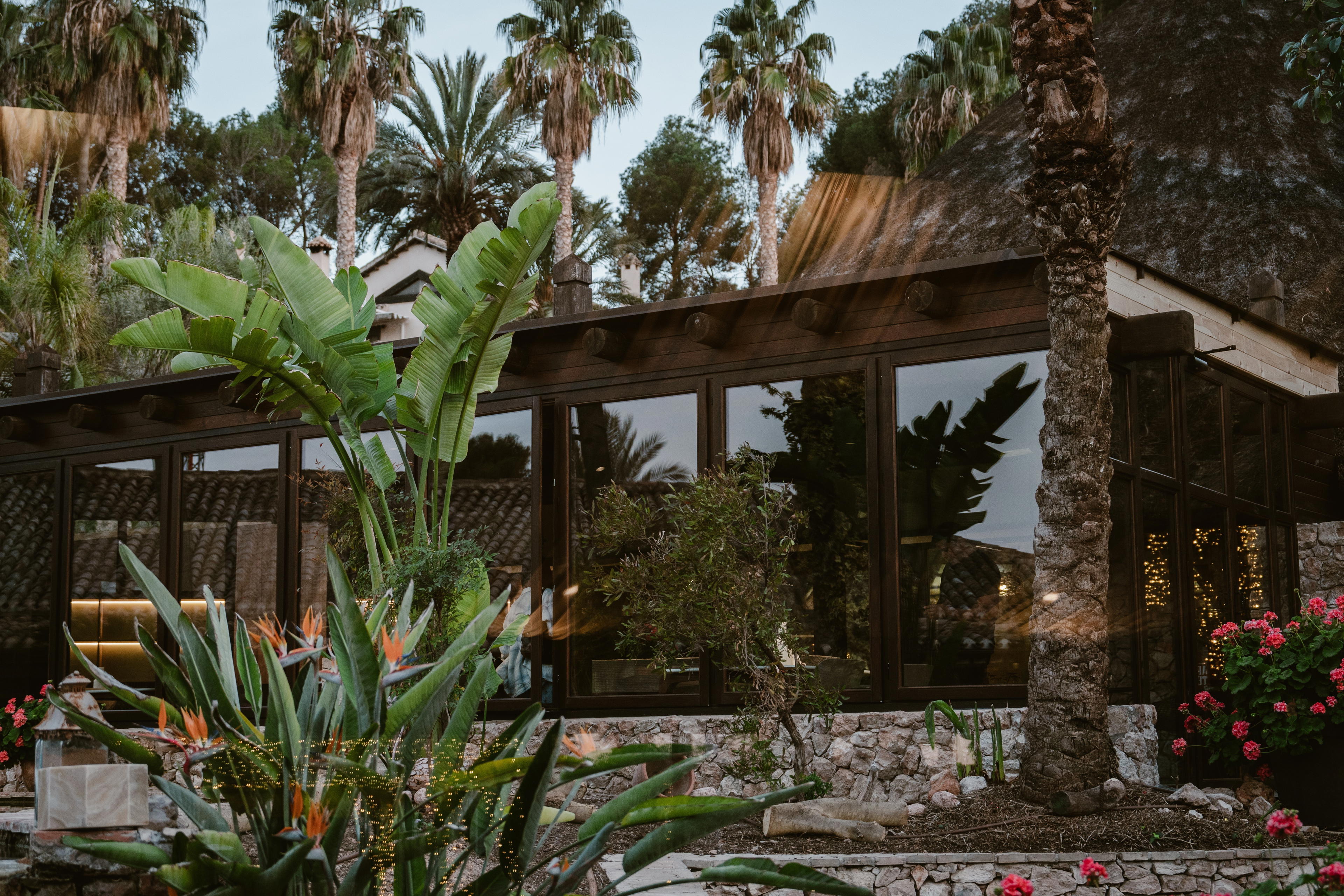
The sequence at Cabaña Buenavista is spatial as well as culinary. Guests move through the property in stages: appetisers in the garden, then into the Living Lab where the IMIDA collaboration is visibly at work, and finally into the main dining room, a large thatched structure with a setting that sits at an unusual point between rural Murcian architecture and contemporary restaurant design. The terrace, where dessert and coffee are served, overlooks a lake.
This kind of multi-space progression has become one of the more interesting structural questions in high-end Spanish dining. At Azurmendi in Larrabetzu, the journey through greenhouse, garden, and dining room is calibrated to reinforce the kitchen's relationship with the Basque landscape. At Cabaña Buenavista, the same logic applies to the Murcian huerta, one of the most historically important agricultural zones in Iberia, but one that has received far less fine-dining attention than the Basque terroir or the Valencian coast. The progression here is not theatrical ornamentation; it is the argument the restaurant is making about where the food comes from and why that geography matters.
What the Menus Are Actually About
Chef Pablo González runs two tasting menus, named Olivo and Experience. Both are structured around Murcia's culinary traditions, using regional reference points not as nostalgic gestures but as anchors for contemporary creative cooking. The Chato Murciano, a native Murcian pig breed, appears in the main course sequence alongside the traditional olla fresca preparation, with a pork jowl sandwich served as an accompanying element. That kind of move — placing a formal tasting menu dish and a regional street-food format in the same course — signals a kitchen that is confident enough in its identity to resist the pressure toward a purely European fine-dining register.
The IMIDA-cultivated ingredients feed directly into this structure. When the Flor de Baladre tomato or the Ciezana aubergine appears on a plate, it is not presented as an exotic rarity imported from elsewhere; it is, in some cases, a variety that was grown on the same property where you are sitting. That specificity of provenance is difficult to replicate and gives the menus a grounding that goes beyond sourcing philosophy.
Spain's €€€€ creative tier includes some of the most technically ambitious restaurants in Europe. DiverXO in Madrid operates in an entirely different register, prioritising maximalist technique and Asiatic reference. Arzak in San Sebastián and Martin Berasategui in Lasarte-Oria anchor their work in Basque identity with global recognition. El Celler de Can Roca in Girona and Cocina Hermanos Torres in Barcelona represent the Catalan axis. Cabaña Buenavista sits in none of these established clusters, which is both its competitive disadvantage in terms of international visibility and the source of its editorial interest.
The closest geographic peer in terms of a regional kitchen working with near-extinct coastal and agricultural species might be Aponiente in El Puerto de Santa María, where Ángel León's three-star kitchen has made the recovery of forgotten marine species its structural premise. The comparison is not about proximity but about methodology: both kitchens have made ingredient recovery the foundation of the menu argument, rather than a marketing layer applied over it. Quique Dacosta in Dénia offers another regional parallel, working from the Valencia coast with the same level of Michelin recognition and a similarly strong sense of place.
Awards and Positioning
Cabaña Buenavista holds two Michelin stars, confirmed in both the 2024 and 2025 Spain and Portugal guides. On La Liste 2025 the restaurant scored 94.5 points; the 2026 edition returns a score of 94 points. The alignment between institutional recognition and broad audience response points to a kitchen that manages both the demands of the tasting menu format and the expectations of guests who may be visiting a two-star restaurant for the first time.
Within Spain's two-star cohort, Cabaña Buenavista occupies a position that is genuinely distinct: a property-based creative kitchen in a non-metropolitan region, with an active research partnership that makes the sourcing argument structural rather than decorative. That positioning puts it in a different conversation from the urban Spanish restaurants at the same award level, and closer to the small group of European restaurants, including Mugaritz in Errenteria, where the intellectual framework of the kitchen is as legible as the cooking itself.
For the creative fine dining category internationally, the framing also connects to Paris-based houses such as Arpège and Alléno Paris au Pavillon Ledoyen, where ingredient provenance and cultivation have become first-order restaurant identity markers rather than supporting narrative.
Getting There and Planning the Visit
El Palmar is a small municipality in the Murcia region, accessible from the city of Murcia, which has its own airport with connections to major Spanish hubs and a number of European cities. The restaurant is located on Finca Buenavista within the Urbanización Colonia Buenavista, a rural estate setting that requires a car or taxi from the city centre. The multi-space format of the meal, which moves from garden to Living Lab to dining room to terrace, means that visits run at a pace set by the kitchen rather than the clock, and guests should expect an extended evening.
The €€€€ price category places Cabaña Buenavista at the top tier of Spanish fine dining spend. Given the two-star status and the awards recognition, booking lead times are significant; the restaurant's limited rural footprint means seat count is not large. For visitors building an itinerary around the Murcia region, our El Palmar hotels guide covers accommodation options. Those looking to extend their time in the area will find context in our El Palmar bars guide, our El Palmar wineries guide, and our El Palmar experiences guide. For a contrast in register, Arrocería Maribel represents the local rice tradition that sits at the other end of the El Palmar dining spectrum. A broader view of the region's food scene is mapped in Ricard Camarena in València, a two-star reference point for the wider Levante creative arc. Also see our full El Palmar restaurants guide for the complete picture.
Frequently asked questions
Is Cabaña Buenavista good for families?
The format is a multi-stage tasting menu at €€€€ pricing, structured around extended progression through the garden, the Living Lab, and the main dining room. That sequence rewards patience and engagement with regional culinary context, making it more practical for adults with a focused interest in creative and traditional Murcian cooking than for younger children.
What's the overall feel of Cabaña Buenavista?
Formally serious in its credentials — two Michelin stars held across both the 2024 and 2025 guides, and 94.5 points on La Liste 2025 — yet grounded in a setting that is agricultural and spatial rather than metropolitan. Guests eat inside a large thatched structure and finish on a terrace overlooking a lake, which gives the experience a rural gravity that contrasts sharply with the precision of the cooking.
Is Cabaña Buenavista Michelin-listed?
Cabaña Buenavista has received recognition including: La Liste Top Restaurants (2026): 94pts; A culinary experience in every sense! From the moment you enter you are guided through a surprising sequence of flavours and sensations that include stunning appetisers in the garden and the Living La….
What dish is Cabaña Buenavista famous for?
The Chato Murciano pork course draws the most consistent documentation: it pairs the breed with the traditional olla fresca preparation and is served alongside a pork jowl sandwich. It is the clearest expression of Pablo González's method — a protected regional ingredient treated through both its historical recipe context and contemporary technique.
What does dinner at Cabaña Buenavista typically cost?
Pricing at Cabaña Buenavista is listed as €€€€.
Where is Cabaña Buenavista located?
Cabaña Buenavista is located at Urbanización Colonia Buenavista, Finca Buenavista S/N, 30120 El Palmar O Lugar De Don Juan, Murcia, Spain, El Palmar.
Cost Snapshot
| Venue | Cuisine | Price | Awards |
|---|---|---|---|
| Cabaña BuenavistaThis venue — the venue you are viewing | Modern Murcian Creative Cuisine | $150–200 | 2 Michelin Stars · La Liste Top Restaurants |
| Aponiente | Progressive - Seafood, Creative | Not listed | Michelin 3 Star |
| Arzak | Modern Basque, Creative | Not listed | Michelin 3 Star |
| DiverXO | Progressive - Asian, Creative | Not listed | Michelin 3 Star |
| El Celler de Can Roca | Progressive Spanish, Creative | Not listed | Michelin 3 Star |
| Quique Dacosta | Creative | Not listed | Michelin 3 Star |
Recognition history
Dated appearances from independent guides and award organizations, with the underlying list record or original source where available.
Michelin 2 Stars
Michelin
La Liste Top Restaurants
La Liste
Guía Repsol 3 Soles
Guía Repsol
Macarfi 8.8 Food Rating
Macarfi
The Best Chef One Knife
The Best Chef
Full recognition history (8 entries)
La Liste Top Restaurants
La Liste
Michelin 2 Stars
Michelin
Michelin 2 Stars
Michelin
Continue exploring
More in El Palmar
Restaurants in El Palmar
Browse all →
Bars in El Palmar
Browse all →
Hotels in El Palmar
Browse all →

Details
- Elegant
- Romantic
- Sophisticated
- Scenic
- Intimate
- Celebration
- Date Night
- Special Occasion
- Group Dining
- Open Kitchen
- Garden
- Terrace
- Private Dining
- Design Destination
- Sommelier Led
- Farm To Table
- Local Sourcing
- Organic
- Garden
- Waterfront
- Tasting Menu
- Set Menu
- Wine
- Regional Products
- Vegetarian Friendly
- Vegan Options
- Gluten Free Options
- Allergy Accommodating
Current opening hours
- Monday
- 1–3 PM
- Tuesday
- 1–3 PM
- Wednesday
- 1–3 PM
- Thursday
- 1–3 PM, 8–9 PM
- Friday
- 1:30–3 PM
- Saturday
- Closed
- Sunday
- Closed
Hours can change for holidays and private events. Last verified .
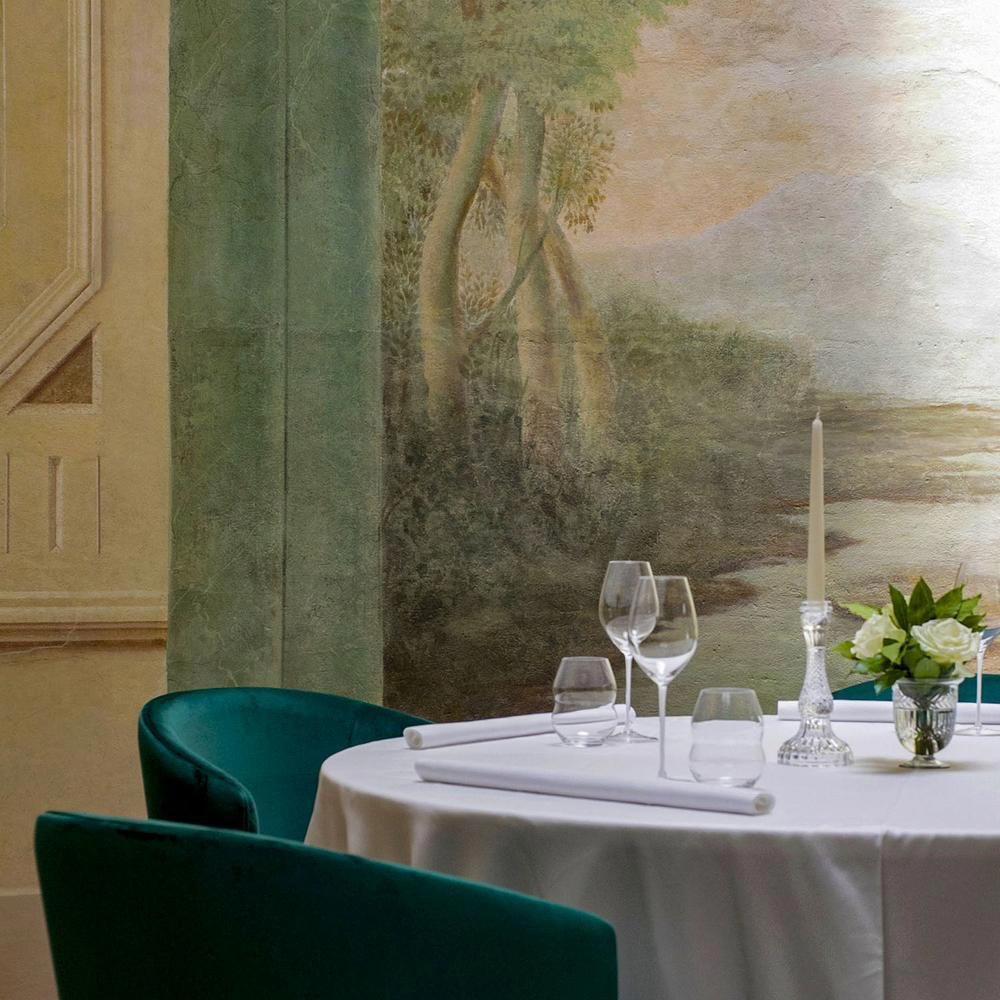
Modern, elegant dining room housed in a striking African-style thatched hut with warm natural lighting, complemented by garden and terrace spaces overlooking a lake; sophisticated yet welcoming atmosphere with theatrical food presentations.