


1 Michelin Star · Guía Repsol 1 Sol · Macarfi 8.6 Food Rating
Our verdict
Frases holds a Michelin star on one of Murcia's most characterful streets, opposite the church of San Lorenzo, where exposed brick and a towering arch set the stage for tasting menus built on regional memory. The kitchen, led by Marco Antonio Iniesta, translates Murcian ingredients and local history into tasting menu courses — Origen and Tierra — that sit at the more accessible end of the city's starred dining tier.

Pearl is the En Primeur Club membership app — saves, bookings, and concierge access live there. Same editors, same standards.
- Address
- C. San Lorenzo, 5, Bajo Derecha, 30001 Murcia, Spain
- Phone
- +34 697 91 44 92
- Hours
- Mon–Wed ClosedThu–Fri 2–4 PM, 9–10:30 PMSat 2–4:30 PM, 9–10:30 PMSun 2–4 PM
- Website
- frasesrestaurante.com
- Directions
- Get directions
- Booking
- Book on CoverManager
The menu
What to order
- Chato murciano
- Red prawn tartare
- Jamón
San Lorenzo's Most Considered Address
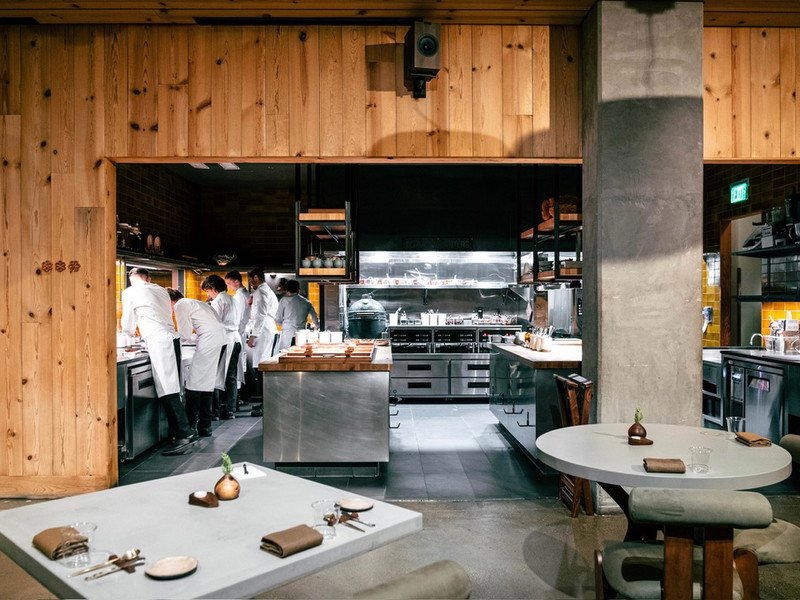
The street outside Frases tells you something about the kind of restaurant it wants to be. Calle San Lorenzo is a tight, atmospheric corridor in central Murcia, with the baroque façade of the church of the same name anchoring the view from the entrance. The restaurant's own frontage — a towering arch opening onto exposed brick walls — reads as a deliberate visual statement about the relationship between old fabric and contemporary intent. This is not the gleaming anonymity of a destination restaurant dropped into a neutral space. The building does interpretive work before a plate arrives.
That sensitivity to place is a pattern across Murcia's more considered dining addresses. In a city that has historically been underrepresented in Spain's fine dining conversation, despite its agricultural depth and Michelin presence in the surrounding region, a generation of chefs and operators has started building restaurants that make a case for Murcian identity specifically, not just Mediterranean cuisine in general. Frases, with its Michelin star awarded in 2024, sits at the sharper end of that argument.
The Logic of the Tasting Menu Format
Frases operates exclusively through tasting menus: Origen and Tierra. The format is a clear editorial choice. In a city where mid-range dining often defaults to à la carte spreads of regional produce served without much narrative framing, a fixed-sequence menu allows the kitchen to build something closer to a coherent argument. The restaurant's name makes the logic explicit: gastronomy as language, each dish as a sentence, the full menu as a text connected to personal memory and local history.
That framing might read as programmatic, but the execution, according to Michelin's inspectors, carries it off with a kind of elegance that avoids becoming a lecture. The Jamón course, for instance, is described as producing flavour combinations reminiscent of a traditional Murcian cocido stew, a reference that will land differently for a local diner than for a visitor, which is partly the point. The Chato murciano course, a terrine built from roasted pork cheeks and jowl, draws on a regional pig breed that isn't widely known outside the huerta. These aren't fusion gestures; they are translations of something specific into a fine dining register.
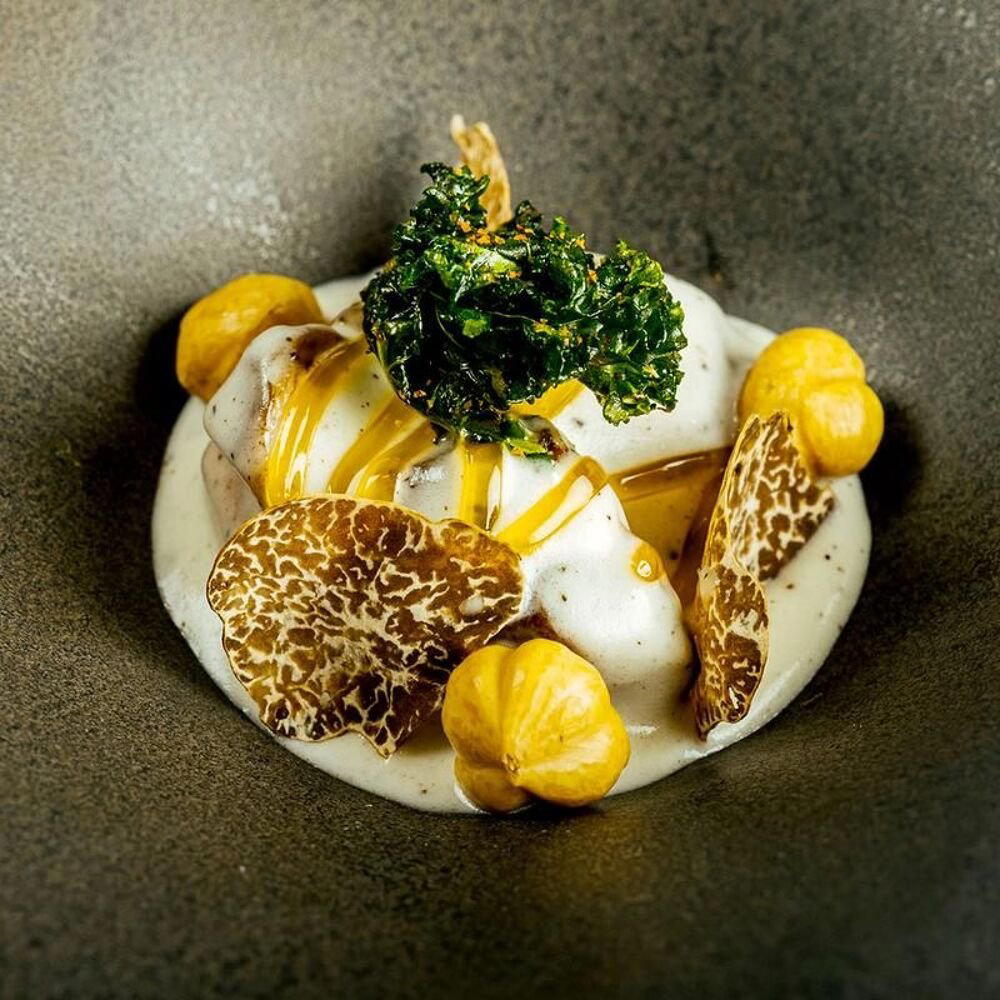
Other dishes from the Michelin record point toward the same sensibility: a cheese fritter using the Abuelo Ruperto variety with quince emulsion and beetroot; a "mojete" preparation using Murcia tomato with green herb oil, foam and tuna belly; a tartare of red Águilas prawn with codium and a caldero jus. The prawn from Águilas, a coastal town in the south of the Murcia region, and the caldero, a rice-and-fish dish native to the Mar Menor coast, are regional references precise enough to anchor the menu in a geography rather than a generic Mediterranean idiom.
Where Frases Sits in Murcia's Starred Tier
Murcia now has a cluster of Michelin-recognised addresses that represent different approaches to the city's culinary identity. Magoga operates at the €€€ tier and takes a broadly contemporary approach; Almo de Juan Guillamón holds its own star at the same €€ price tier as Frases, working through a modern cuisine lens; Alborada anchors the traditional cuisine end without a Michelin star. Polea and Por Herencia complete the picture of a city that has moved from a single notable address to a genuine dining scene in a relatively short period.
Within that set, Frases occupies a specific niche: Michelin-starred, mid-range on price, tasting menu only, and rooted in the kind of hyper-regional sourcing that positions it closer to territory-driven projects elsewhere in Spain. The comparison isn't with the headline names at Spain's international table, El Celler de Can Roca in Girona, Arzak in San Sebastián, or DiverXO in Madrid, but with the wave of single-star restaurants across Spain that have made a case for regional specificity at an accessible price point. Aponiente in El Puerto de Santa María and Azurmendi in Larrabetzu represent the upper end of that Spanish tradition; Frases operates several tiers below in price and scale, but with a comparable clarity of territorial focus.
For context at the contemporary fine dining level globally, the commitment to place-rooted identity at this price tier mirrors what restaurants like Cocina Hermanos Torres in Barcelona achieve at a larger scale, and what internationally recognised addresses such as Jungsik in Seoul and César in New York City pursue through different cultural registers. The format, fixed menu, ingredient-led narrative, strong sense of place, has become a shared grammar for serious single-star restaurants operating with limited seats and high booking pressure.
Service, Hours, and Planning the Visit
The front of house at Frases is led by María Egea, and Michelin's inspectors make a point of noting the warmth of service, an observation that carries weight in this tier, where attentive but unstuffy service is harder to achieve consistently than precise cooking. In a restaurant built around the idea of gastronomy as communication, the interaction between the room and the kitchen matters more than in a straightforwardly product-led dining room.
The operating schedule reflects a kitchen that prioritises depth over volume. Frases closes Monday and Tuesday entirely. Wednesday also sees no service. Thursday and Friday run lunch from 2 PM to 4 PM and dinner from 9 PM to 10:30 PM; Saturday extends the lunch window slightly to 4:30 PM and runs the same dinner hours; Sunday operates lunch only, from 2 PM to 4 PM. That adds up to ten service windows across a five-day week, which is a deliberate constraint at a restaurant of this profile. Booking ahead is advisable for any weekend slot, and the Thursday-Friday dinner windows offer the most flexibility for visitors building a Murcia itinerary around the meal.
Address on Calle San Lorenzo places it within easy walking distance of the cathedral and the central historic grid, making it a natural anchor for a day in Murcia's compact old town. Guests staying in the city can find hotel options surveyed in our full Murcia hotels guide, and the broader dining scene is mapped in our full Murcia restaurants guide. Those extending their time in the city can explore drinking and wine culture through our full Murcia bars guide, our full Murcia wineries guide, and our full Murcia experiences guide.
That ratio, more reviews per cover than a high-volume address would accumulate, suggests a room that generates strong word of mouth within the city rather than relying on passing tourist trade.
What Frases Represents for Murcia
Spain's regional dining scene has historically been weighted toward the north: the Basque Country, Catalonia, and Galicia have held the majority of the country's critical attention, with Murcia treated as a supplier of produce for other regions' kitchens rather than a destination in its own right. The huerta murciana, one of Europe's most productive agricultural zones, has long fed the rest of Spain while the region's own restaurant culture developed more quietly.
What's changed in the past decade is that Murcia's kitchen talent has begun turning that produce into a local argument rather than an export. Frases, with its insistence on named regional ingredients, fixed tasting menus, and a conceptual framework tied to memory and place, is among the clearest articulations of that shift. The Michelin recognition in 2024 positions it within Spain's broader single-star conversation, but the more meaningful context is local: a city demonstrating that serious, specific, identity-driven cooking can happen outside the traditional centres of Spanish gastronomic prestige.
Frequently asked questions
What's the pricing like at Frases?
Pricing at Frases is listed as €€.
What distinctions does Frases have?
Frases has received recognition including: This centrally located restaurant opposite the church of San Lorenzo, in an attractive venue that catches the eye with its towering arch and exposed brick walls, gastronomy is viewed as its own language and each of its dishes as a sentence ….
What dish is Frases famous for?
Frases is most closely associated with its Chato murciano, a terrine of roasted pork cheeks and jowl that draws directly on the region's pork-curing traditions. The Jamón preparation, which recalls the layered flavours of a traditional stew, is another recurring reference point on the tasting menus. Both dishes reflect chef Marco Antonio Iniesta's approach: Murcian ingredients reframed through contemporary technique rather than reinvented wholesale. The full context for either dish is the Origen or Tierra tasting menu format, the only way to eat at Frases.
The Quick Read
| Venue | Cuisine | Price | Awards | Notes |
|---|---|---|---|---|
| FrasesThis venue — the venue you are viewing | Modern Murcian Fine Dining | Not listed | 1 Michelin Star · Guía Repsol 1 Sol | Not listed |
| Almo de Juan Guillamón | Modern Mediterranean | $50–100 | 1 Michelin Star · Guía Repsol 2 Soles | Modern Cuisine |
| Magoga | Contemporary Mediterranean with Murcian Roots | $100–150 | 1 Michelin Star · Macarfi 8.7 Food Rating | Contemporary |
| Alborada | Traditional Spanish Mediterranean | $50–100 | Michelin Plate · Macarfi 7.6 Food Rating | Traditional Cuisine |
| Demo | Contemporary Spanish Mediterranean | $50–100 | Michelin Plate · Macarfi 7.7 Food Rating | Farm to table |
| Tándem | Modern Spanish Tapas | $30–50 | Michelin Bib Gourmand · Macarfi 8.2 Food Rating | Mediterranean Cuisine |
Recognition history
Dated appearances from independent guides and award organizations, with the underlying list record or original source where available.
Michelin 1 Star
Michelin
Guía Repsol 1 Sol
Guía Repsol
Macarfi 8.6 Food Rating
Macarfi
Full recognition history (5 entries)
Michelin 1 Star
Michelin
Michelin 1 Star
Michelin
Continue exploring
More in Murcia
Restaurants in Murcia
Browse all →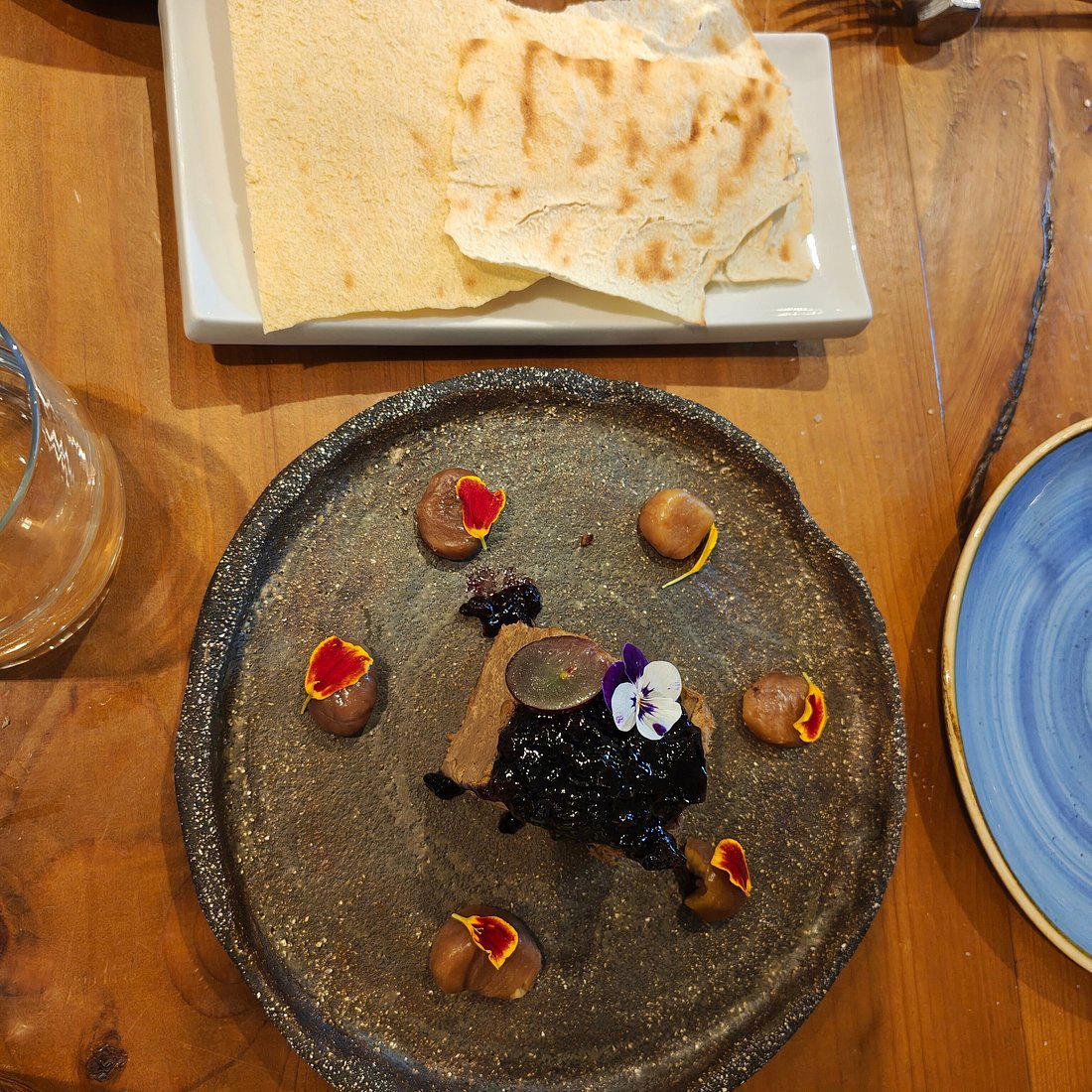
Bars in Murcia
Browse all →
Hotels in Murcia
Browse all →

Details
- Elegant
- Cozy
- Intimate
- Sophisticated
- Date Night
- Special Occasion
- Open Kitchen
- Local Sourcing
- Tasting Menu
- A La Carte
Current opening hours
- Monday
- Closed
- Tuesday
- Closed
- Wednesday
- Closed
- Thursday
- 2–4 PM, 9–10:30 PM
- Friday
- 2–4 PM, 9–10:30 PM
- Saturday
- 2–4:30 PM, 9–10:30 PM
- Sunday
- 2–4 PM
Hours can change for holidays and private events. Last verified .
Warm, welcoming, and elegant with cozy intimate seating and sophisticated yet inviting atmosphere.