




2 Michelin Stars · La Liste Top Restaurants · Macarfi 8.3 Food Rating
Our verdict
Two Michelin stars in a small Castilian city tells you something important about how Spain's regional fine dining has shifted. Maralba, run by chef Fran Martínez and sommelier Cristina Díaz, anchors its creative menu in Manchego tradition while pulling fresh fish daily from the Mediterranean coast — a positioning that earned 94 points from La Liste in 2025 and a place among Europe's top 600 restaurants by Opinionated About Dining.

Pearl is the En Primeur Club membership app — saves, bookings, and concierge access live there. Same editors, same standards.
- Address
- C. Violeta Parra, 5, 02640 Almansa, Albacete, Spain
- Phone
- +34 967 31 23 26
- Hours
- Mon–Tue ClosedWed–Thu 1:30–4 PMFri 1:30–11:30 PMSat 1:30–4 PM, 9–11:30 PMSun 1:30–4 PM
- Website
- maralbarestaurante.es
- Directions
- Get directions
- Booking
- Book on the venue's website
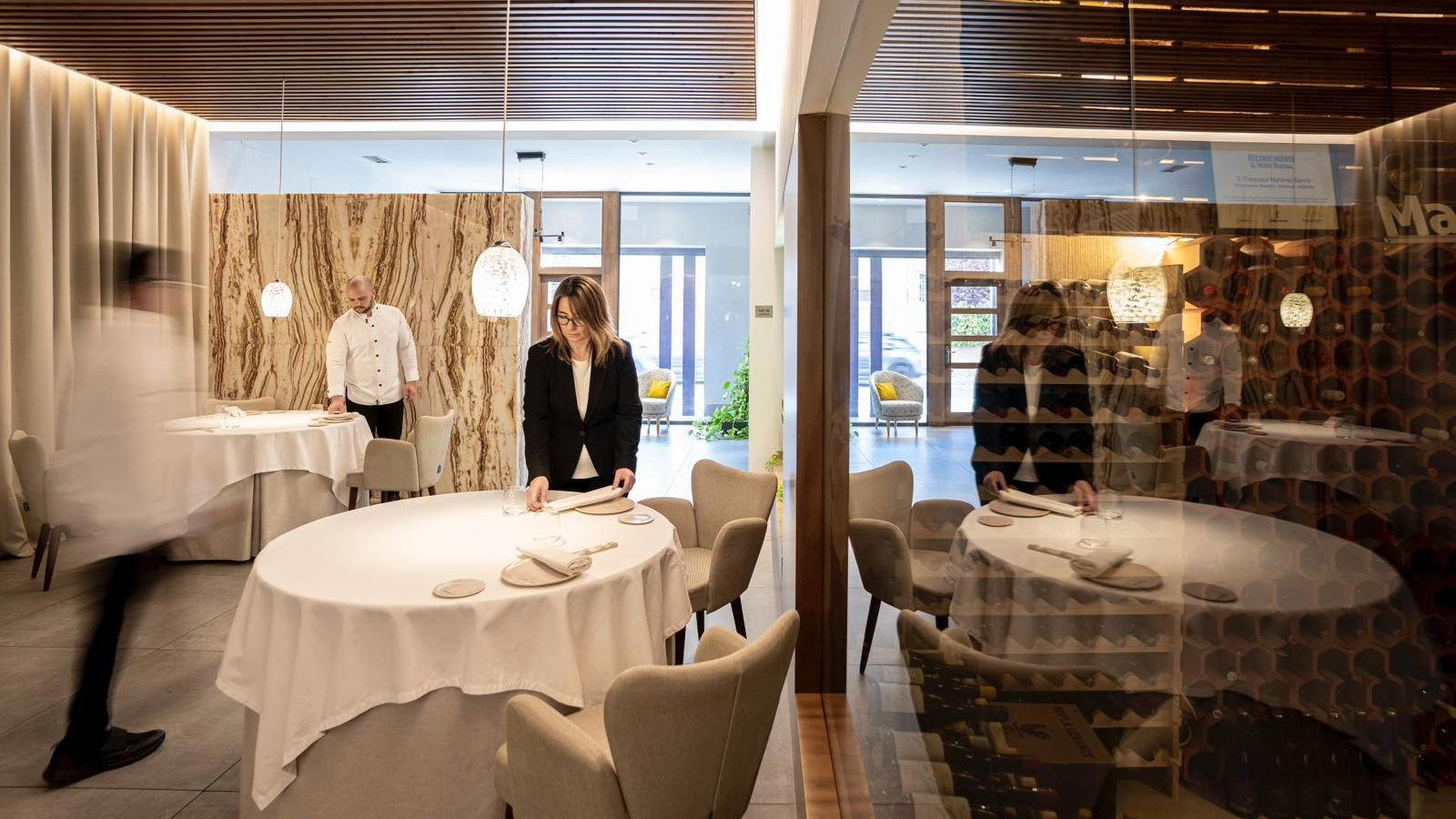
A Two-Star Room in an Unlikely City
Almansa is not the kind of city that appears on most Spanish fine-dining itineraries. The town sits in the far southeast of Castilla-La Mancha, closer to the Valencian coast than to Toledo, and its culinary reputation has historically rested on the same saffron, game, and flatbread traditions that define the wider Manchego interior. That context matters, because it is precisely what makes the presence of a two-Michelin-star restaurant here — one that has held those stars across both 2024 and 2025 — a meaningful statement about how Spain's regional creative scene has spread beyond its traditional poles in the Basque Country, Catalonia, and Valencia.
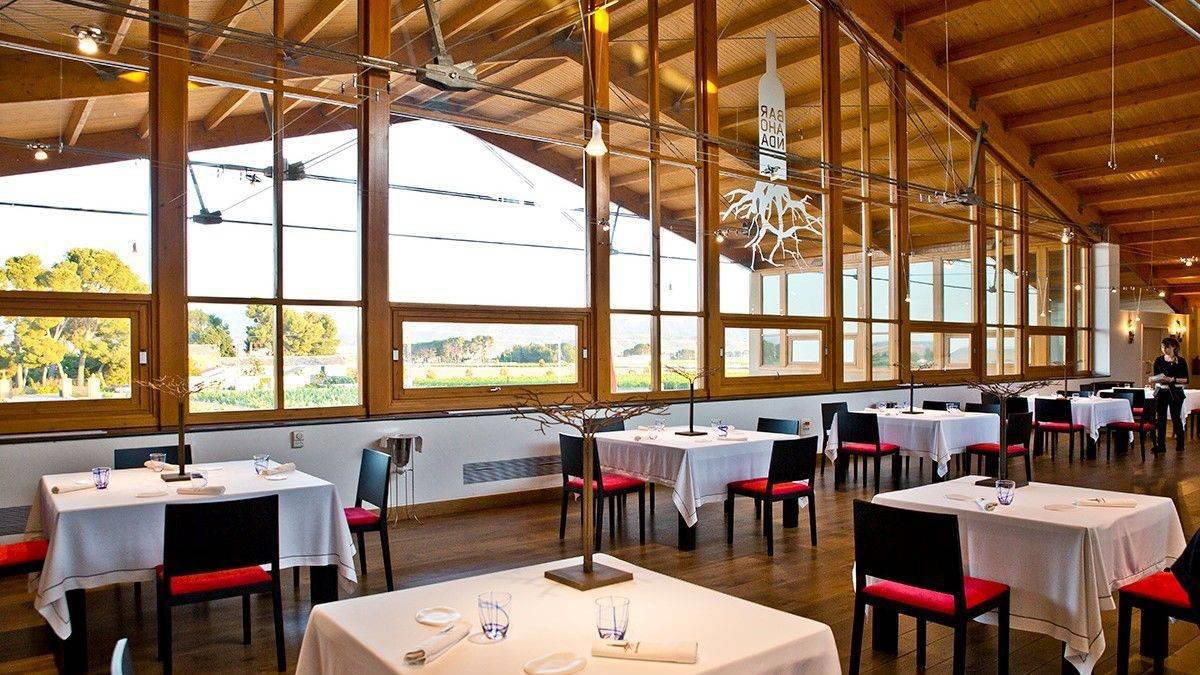
Spain's two- and three-star tier is dominated by venues in major urban centres or well-established gastronomic destinations: Arzak in San Sebastián, El Celler de Can Roca in Girona, DiverXO in Madrid, Disfrutar in Barcelona. Maralba earns its place in that conversation from a town of roughly 25,000 people, in a province, Albacete, that most international visitors pass through rather than stop in. The room itself signals that this is deliberate: an elegant dining space with a glass-walled wine cellar anchoring the interior, the kind of architectural choice that communicates permanence and seriousness rather than a temporary pop-up ambition.
Manchego Cuisine with Mediterranean Reach
The phrase the restaurant has settled on, Manchego cuisine with glimpses of the Mediterranean, does more editorial work than it might first appear. La Mancha's culinary canon is land-bound: gachamiga (a dense, fried breadcrumb preparation), ajopringue (a pork offal paste traditionally made after the matanza), mojete (a roasted pepper and tomato salad eaten cold). These are dishes tied to subsistence agriculture and seasonal necessity, not to the kind of refined produce chains that supply coastal creative kitchens. Fran Martínez preserves these names and their underlying logic, giving them modern technique without erasing what they are, a disciplined approach that sidesteps both nostalgic reproduction and arbitrary reinvention.
The Mediterranean dimension arrives primarily through fish. The restaurant sources fresh fish daily from the market in La Vila Joiosa, a fishing town on the Alicante coast roughly 130 kilometres to the east. Notably, the sourcing includes what the trade calls discarded fish, species or cuts that commercial markets routinely reject because they are unfashionable, misshapen, or difficult to portion. This connects Maralba to a broader movement in Spanish coastal and near-coastal cooking: Aponiente in El Puerto de Santa María has built a three-star identity partly around undersea ingredients that conventional kitchens overlook. At Maralba, the logic is slightly different, bringing coastal abundance inland and treating it with the same respect as the local pantry, but the underlying commitment to looking past prestige produce is recognisably part of the same conversation.
The Family Structure Behind the Menu
Spanish creative restaurants at this level tend to follow one of two operational models: a named chef running a relatively large professional brigade, or a tightly controlled family unit where the kitchen and dining room are managed as a single, integrated project. Maralba belongs clearly to the second category. Cristina Díaz operates as both front-of-house lead and sommelier, and the wine pairing she curates is treated as a substantive part of the offer rather than an add-on. That dual role, emotional intelligence of a host combined with technical depth of a specialist, is harder to maintain than splitting the functions, and it gives the service a coherence that larger operations sometimes struggle to match.
The chef's own trajectory follows a pattern seen across Spain's second-tier city restaurant scene: Albacete-born, trained within the broader Spanish creative tradition, then returning to a home region not as a fallback but as a deliberate anchoring. The result is cooking that reads as insider knowledge of a specific territory rather than a generic application of contemporary technique. This is not incidental to the restaurant's critical reception, it is central to it. Michelin's regional recognition in Spain has increasingly rewarded exactly this kind of rootedness, as the guide has expanded its starred coverage into provinces that a decade ago had little to no representation.
Three Menus, One Argument
The tasting menu structure at Maralba operates across three formats: Tempo, Alma, and the longer Gran Menú bearing Fran Martínez's name. This tiered approach is now standard at ambitious Spanish creative restaurants, Quique Dacosta in Dénia, Ricard Camarena in València, and Azurmendi in Larrabetzu all operate variations of this model, and it serves a commercial function as much as an artistic one: it allows the kitchen to run a coherent creative narrative while accommodating different appetite levels and budget ranges within a single evening's service. The wine pairing, overseen by Cristina Díaz, can be added to any format, which effectively turns the meal into a guided tasting across both kitchen and cellar.
One detail from the awards record worth flagging: the bread, made in-house, is explicitly called out in La Liste's annotation as distinguishing. In the context of a list entry that covers the full arc of the restaurant's identity, singling out bread signals that it functions as more than a neutral carrier between courses, it is treated as part of the culinary argument, consistent with the restaurant's commitment to craft across the full meal.
Recognition and Where It Positions Maralba
The awards profile here is specific enough to establish competitive placement without ambiguity. Michelin two stars held across 2024 and 2025 confirms consistency, not a single strong year. La Liste placed Maralba at 94 points in 2025, dropping to 93 points in the 2026 edition, still well within the upper tier of that list's global ranking. Opinionated About Dining, which aggregates critic scores across Europe, ranked Maralba 571st in Europe in 2025, not just Spain's.
Compared to the highest-profile Spanish creative kitchens, Martin Berasategui in Lasarte-Oria, Mugaritz in Errenteria, Maralba operates with less international profile but with comparable critical seriousness. For European reference, the restaurant occupies a similar creative tier to Alléno Paris au Pavillon Ledoyen and Enrico Bartolini in Milan in terms of recognition profile, though with a regional specificity that neither of those venues shares.
For the city itself, Maralba is the most decorated restaurant in Almansa by a significant margin. Visitors planning a broader exploration of what the town's dining scene offers should note that traditional Manchego cooking is well represented elsewhere, Mesón de Pincelín provides a reliable reference point for the more conventional end of the local culinary tradition. A full picture of where to eat, drink, and stay in the area is available through our full Almansa restaurants guide, our full Almansa hotels guide, our full Almansa bars guide, our full Almansa wineries guide, and our full Almansa experiences guide.
Planning a Visit
Almansa sits approximately 80 kilometres southwest of Valencia and around 300 kilometres southeast of Madrid, making it accessible by road from both cities without requiring an overnight stay for travellers already in the region, though given the length of the Gran Menú format, booking accommodation in Almansa is the more sensible approach for those planning a full evening. The restaurant is located at C. Violeta Parra, 5, in central Almansa. Specific hours, booking policies, and current menu pricing are best confirmed directly with the restaurant, as operational details at this level shift seasonally and in response to demand.
Frequently asked questions
Is Maralba expensive?
Pricing at Maralba is listed as €€€.
What part of town is Maralba in?
Maralba is located at C. Violeta Parra, 5, 02640 Almansa, Albacete, Spain, Almansa.
Is Maralba reservation-only?
At two Michelin stars with three structured tasting menus — Tempo, Alma, and the Gran Menú — Maralba operates at a level where walk-in availability is highly unlikely. Booking ahead is advisable; the restaurant's contact details are best confirmed directly via their current website or local directories, as phone and online booking information is not listed here.
Comparable Spots, Quickly
| Venue | Cuisine | Price | Awards |
|---|---|---|---|
| MaralbaThis venue — the venue you are viewing | Modern Manchego with Mediterranean Influences | $50–100 | 2 Michelin Stars · La Liste Top Restaurants |
| Aponiente | Progressive - Seafood, Creative | Not listed | Michelin 3 Star |
| Arzak | Modern Basque, Creative | Not listed | Michelin 3 Star |
| DiverXO | Progressive - Asian, Creative | Not listed | Michelin 3 Star |
| El Celler de Can Roca | Progressive Spanish, Creative | Not listed | Michelin 3 Star |
| Quique Dacosta | Creative | Not listed | Michelin 3 Star |
Recognition history
Dated appearances from independent guides and award organizations, with the underlying list record or original source where available.
Michelin 2 Stars
Michelin
La Liste Top Restaurants
La Liste
Guía Repsol 3 Soles
Guía Repsol
Macarfi 8.3 Food Rating
Macarfi
Opinionated About Dining Top Restaurants in Europe Recommended
Opinionated About Dining
Full recognition history (9 entries)
La Liste Top Restaurants
La Liste
Michelin 2 Stars
Michelin
Opinionated About Dining Top Restaurants in Europe Ranked #571
Opinionated About Dining
Michelin 2 Stars
Michelin
Continue exploring
More in Almansa
Restaurants in Almansa
Browse all →
Details
- Elegant
- Sophisticated
- Intimate
- Celebration
- Special Occasion
- Date Night
- Wine Cellar
- Extensive Wine List
- Sommelier Led
- Local Sourcing
- Tasting Menu
- Wine Pairing
- Gluten Free Options
- Vegetarian Friendly
- Vegan Options
Current opening hours
- Monday
- Closed
- Tuesday
- Closed
- Wednesday
- 1:30–4 PM
- Thursday
- 1:30–4 PM
- Friday
- 1:30–11:30 PM
- Saturday
- 1:30–4 PM, 9–11:30 PM
- Sunday
- 1:30–4 PM
Hours can change for holidays and private events. Last verified .
Elegant dining area with glass-walled wine cellar, cozy and tranquil atmosphere with welcoming light.