
Michelin Plate
Our verdict
At KAMINOZA in Osaka's Chuo Ward, traditional Japanese dishes are prepared with a dashi process that mirrors coffee-drip precision, seasoned only with salt to preserve natural flavour. The name translates as 'gathering of the gods', and the kitchen's reverence for ingredients is matched by its presentation on vessels from contemporary ceramic artists. Michelin Plate recognition in both 2024 and 2025 confirms its standing in the city's mid-to-upper Japanese dining tier.

Pearl is the En Primeur Club membership app, where members save venues, book tables and use the concierge.
The menu
What to order
- Clear Dashi Drip Consommé
- Salt-Seasoned Tai Sashimi
- Charcoal-Grilled Ayu
The Noninbashi neighbourhood sits at a remove from the tourist corridors of Dotonbori and the grand kaiseki addresses of Kitashinchi. Streets here are quieter, the signage more discreet. This is the kind of Osaka block where you understand, before you've opened the door, that the room inside will ask something of you: attention, patience, a willingness to slow down. KAMINOZA belongs to that register. The name translates roughly as 'gathering of the gods', a phrase drawn from the Japanese concept of gratitude, a signal about what the kitchen considers its primary obligation.
Japanese Dining Between Traditions
Osaka's Japanese restaurant scene in 2025 spans a wide arc. At the summit sit three-Michelin-star kaiseki houses like Kashiwaya Osaka Senriyama, where multi-course precision and deep seasonal ritual define the offer. Further along the spectrum, addresses like Miyamoto and Tenjimbashi Aoki bring their own formal or specialised Japanese frameworks. What these houses share is a commitment to structure: the meal unfolds according to rules the diner receives rather than participates in shaping.
KAMINOZA occupies a different position. Its format is rooted in the spirit of traditional Japanese cooking, but the approach bends toward the present tense. The chef recreates traditional dishes while presenting them on vessels made by modern ceramic artists, a pairing that places the cooking in conversation with living craft rather than frozen heritage. At the ¥¥¥ price tier, it sits in the same bracket as Yugen and Oimatsu Hisano, restaurants where serious intent doesn't require the full ceremony of four-star kaiseki. This is a meaningful tier: it's where Osaka's most interesting conversations about Japanese cooking are currently happening.
The Dashi and the Detail
Among the technical choices documented about KAMINOZA's kitchen, one stands out for what it implies about the chef's priorities. The process for drawing dashi, the foundational stock of Japanese cooking, the base on which soups and sauces depend, is described as resembling a coffee drip. In practical terms, this means a slow, careful extraction rather than a rapid boil, preserving aromatic compounds that high heat would dissipate. That single process decision tells you more about the kitchen's philosophy than any list of dishes could.
From that dashi base, the seasoning strategy is equally deliberate: salt only. No layering of umami-forward condiments, no additional amplification. This kind of restraint is harder to execute than its simplicity suggests. The natural flavour of the dashi has to be worth tasting on its own terms, which means the sourcing and preparation of the base ingredients bear the full weight of the dish. It's an approach that connects KAMINOZA to a broader pattern visible in Japan's most considered kitchens, a movement away from accumulation toward extraction, where excellence lies in what is removed rather than what is added.
For context, this restraint-led methodology appears across Japan's serious Japanese dining tier. Harutaka in Tokyo applies comparable discipline to sushi preparation, and Gion Sasaki in Kyoto has long demonstrated that traditional Japanese formats contain enough internal complexity to support cooking of the highest order without external embellishment. KAMINOZA's position in Osaka fits into that national pattern.
Ceramics as Context
The decision to serve food on vessels by contemporary ceramic artists is not decorative, it's editorial. Japanese ceramics are not a static art form, and the choice to use modern makers rather than established heritage pieces signals that the kitchen sees the meal as a conversation between past and present. The dish and the vessel together express, in the kitchen's stated framing, 'the Japan of today'. This matters in a dining culture where the choice of tableware carries as much communicative weight as the food placed on it.
This approach echoes a trend visible across Kansai's more thoughtful tables. Craft objects are increasingly used to ground contemporary Japanese cooking in local artisan networks, creating a coherence between what is eaten and what it is served on. At akordu in Nara, the integration of regional craft into the dining experience follows similar logic. The table becomes a curated environment, not just a surface for plates.
Where KAMINOZA Sits in Osaka's Dining Map
Michelin's Plate designation, awarded in both 2024 and 2025, places KAMINOZA in a specific tier. The Plate is not a star; it indicates a kitchen that Michelin's inspectors judge to be serving good food, a recognition that positions the restaurant above casual dining without placing it in the starred competitive set occupied by Kashiwaya or the French-Japanese crossover houses at the top of the Osaka ranking. Two consecutive Plate awards signal consistency, which in Michelin's framework is as significant as the level of the designation itself.
For a restaurant of this type, that number suggests the attentiveness described in its Michelin entry, 'meticulous food preparation and attentive service', translates into the actual room rather than staying on paper.
For readers building an Osaka dining itinerary, the city's full range is covered in our full Osaka restaurants guide. Those also planning time in Fukuoka or Okinawa can cross-reference with Goh in Fukuoka and 6 in Okinawa for comparable Japanese cooking at the serious end of each city's offer. In Tokyo, Myojaku and Azabu Kadowaki represent parallel positions in the capital's Japanese dining tier, as does 1000 in Yokohama for those spending time in Kanagawa.
The Communal Register
Japanese dining culture has always maintained a spectrum between private ceremony and shared table. Izakaya culture sits at the communal end: food and drink arrive to share, conversation shapes the pace, and the act of eating is openly social. KAMINOZA's framing, gratitude expressed through meticulous preparation and attentive service, has more in common with that spirit than with the austere remove of high kaiseki. The name itself, a gathering of the gods, implies collective presence rather than solitary contemplation.
This framing is worth holding when considering the restaurant's audience. Guests who arrive expecting the rigidity of a starred kaiseki progression may find the atmosphere warmer and less formal than anticipated. Those who approach it as a serious izakaya-adjacent experience, where the cooking is demanding but the room does not demand that you be demanded, will likely leave with a different, and perhaps more satisfying, impression.
Know Before You Go
| Address | 3 Chome-1-25 Noninbashi, Chuo Ward, Osaka, 540-0011, Japan |
|---|---|
| Cuisine | Japanese (traditional dishes, contemporary presentation) |
| Price | ¥¥¥ |
| Recognition | |
| Booking | |
| Area context | Noninbashi, Chuo Ward; quieter than Dotonbori, accessible from central Osaka |
| Also in Osaka | Our full Osaka hotels guide | Our full Osaka bars guide | Our full Osaka wineries guide | Our full Osaka experiences guide |
Frequently asked questions
How much does it cost to eat at KAMINOZA?
Pricing at KAMINOZA is listed as ¥¥¥.
Is KAMINOZA reservation-only?
Contacting the restaurant directly or checking current reservation platforms before your visit is advisable.
Where the Accolades Land
| Venue | Cuisine | Price | Awards | Notes |
|---|---|---|---|---|
| KAMINOZAThis venue (the venue you are viewing) | Modern Kaiseki | $150–200 | Michelin Plate | Not listed |
| HAJIME | Avant-Garde Japanese Fine Dining | $300–500 | 3 Michelin Stars · World's 50 Best #83 | French, Innovative |
| La Cime | Modern French with Japanese Ingredients | $150–200 | 2 Michelin Stars · World's 50 Best #13 | French |
| Kashiwaya Osaka Senriyama | Seasonal Kaiseki Omakase | $200–300 | 3 Michelin Stars · La Liste Top Restaurants | Japanese |
| Taian | Traditional Japanese Kaiseki Omakase | $150–200 | 3 Michelin Stars · La Liste Top Restaurants | Kaiseki, Japanese |
| Fujiya 1935 | Modern Japanese with European influences | $100–150 | 2 Michelin Stars · La Liste Top Restaurants | Innovative |
Recognition history
Dated appearances from independent guides and award organizations, with the underlying list record or original source where available.
Michelin Plate
Michelin
Full recognition history (3 entries)
Michelin Plate
Michelin
Michelin Plate
Michelin
Continue exploring
More in Osaka
Restaurants in Osaka
All restaurants in Osaka →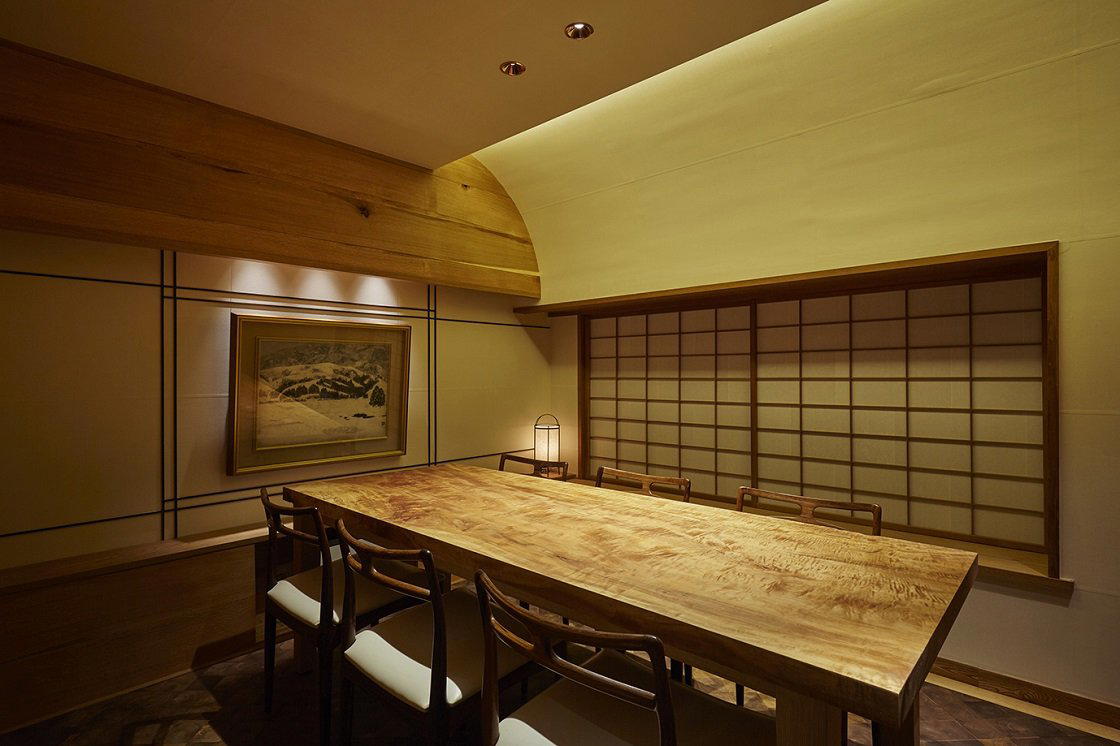



Bars in Osaka
All bars in Osaka →


Hotels in Osaka
All hotels in Osaka →


Wineries in Osaka
Browse all →
Details
- Intimate
- Elegant
- Serene
- Sophisticated
- Minimalist
- Date Night
- Special Occasion
- Business Dinner
- Chefs Counter
- Open Kitchen
- Sake Program
- Sommelier Led
- Local Sourcing
- Tasting Menu
- Omakase
- Sake
- Wine
- Vegetarian Friendly
Current opening hours
- Monday
- Closed
- Tuesday
- 6:30–10:30 PM
- Wednesday
- 6:30–10:30 PM
- Thursday
- 6:30–10:30 PM
- Friday
- 6:30–10:30 PM
- Saturday
- 6:30–10:30 PM
- Sunday
- 12–2:30 PM
Hours can change for holidays and private events. Hours as of .
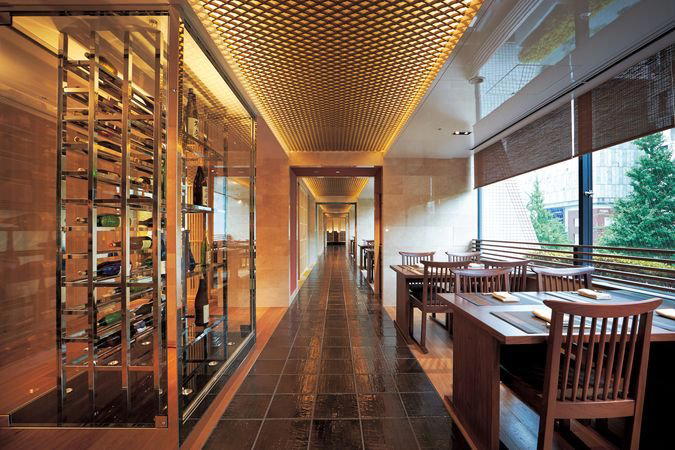
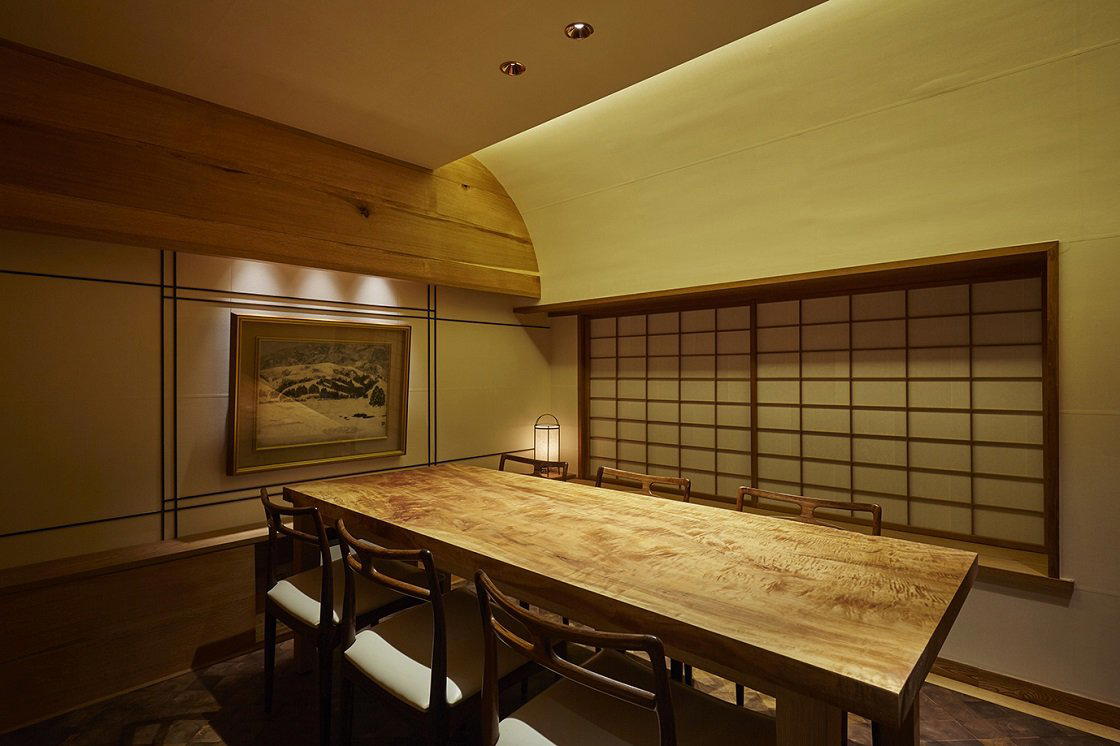
Serene space with blonde wood, soft lighting, handcrafted tableware, and hushed attentive service.