Kadak occupies a mid-Yonge Street address that places it at an interesting remove from Toronto's most publicized dining corridors. The name alone signals a departure from the city's dominant European and Japanese fine-dining codes, kadak, meaning strong or sharp in South Asian vernacular, suggests a kitchen operating on its own terms. For Toronto diners tracking how the city's subcontinental food culture is repositioning itself, this is a address worth understanding.
Pearl is the En Primeur Club membership app — saves, bookings, and concierge access live there. Same editors, same standards.
- Address
- 2088 Yonge St, Toronto, ON M4S 2A3, Canada
- Phone
- +14163226227
- Website
- kadak.ca
- Directions
- Get directions
 Saves & bookings on Pearl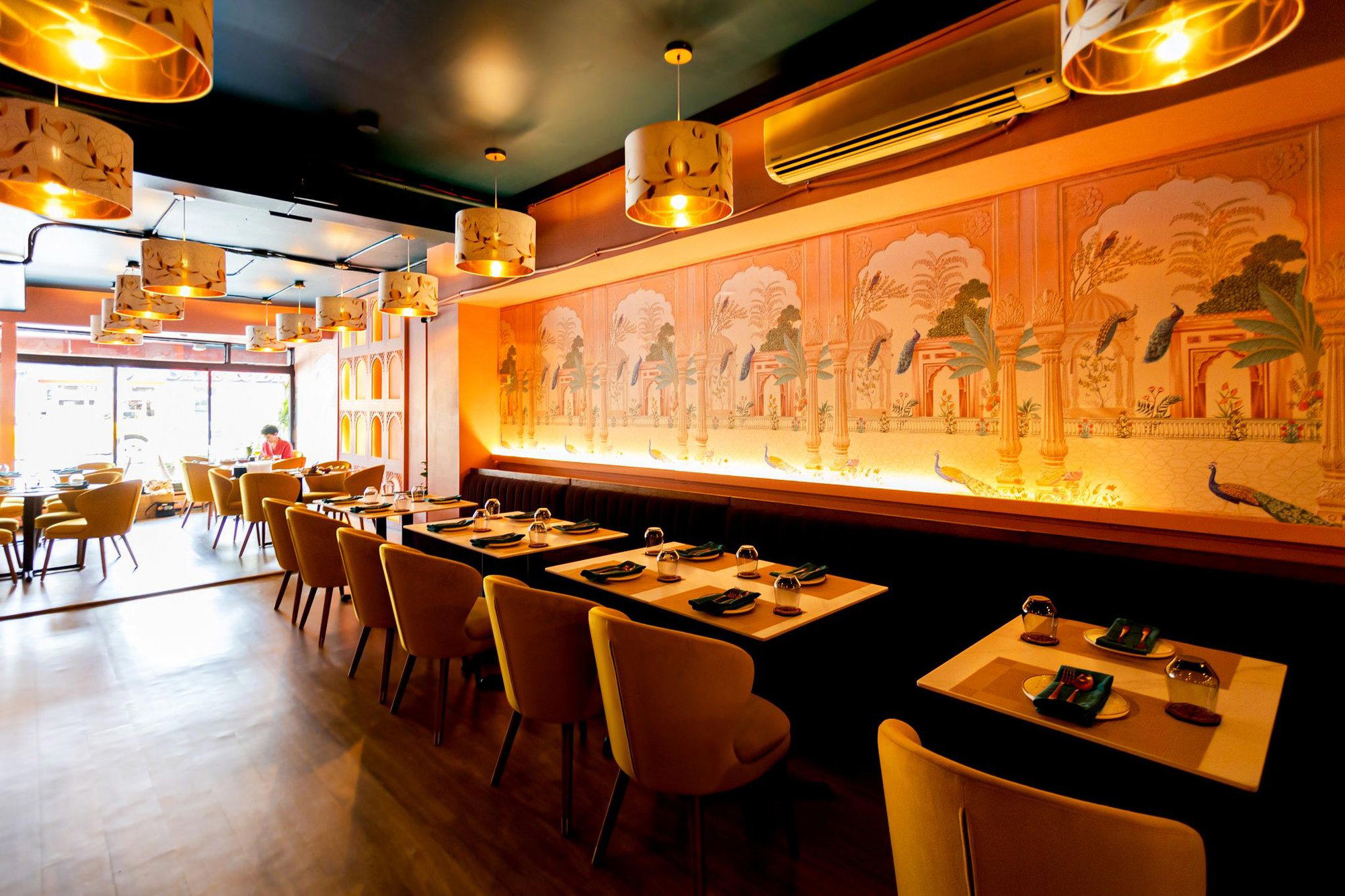
Yonge Street's Shifting Register
Toronto's restaurant geography has long sorted itself by corridor: King West for volume and buzz, Ossington for independent energy, the Annex for affordability. Yonge Street north of Davisville operates differently. It is a working neighbourhood strip rather than a dining destination, which means the restaurants that choose 2088 Yonge St are doing so for reasons other than foot-traffic theatre. Kadak is one of those choices, a South Asian-inflected address on a stretch that doesn't announce itself as a food scene, and that tension between address and ambition is exactly where the story begins.
South Asian dining in Toronto has shifted over the past decade. The city's Indian and Pakistani restaurant culture, long concentrated in Brampton and Scarborough with Gerrard Street East as its downtown anchor, has been quietly developing a second tier: smaller, more considered rooms that treat the cuisine as a serious culinary framework rather than a price-accessible ethnic category. Kadak sits in that evolving space, occupying a Yonge Street address that carries none of the historic associations of Gerrard's Little India but also none of its inherited constraints.
The Name as Editorial Statement
In Hindi and Urdu, kadak carries a specific charge. Applied to tea, it means strong, sharp, brewed without apology. Applied to a person, it implies backbone. As a restaurant name, it functions as a positioning statement before a single dish arrives, this is not a kitchen interested in softening its reference points for a non-South-Asian audience. That posture represents a broader shift in how younger-generation South Asian restaurateurs are framing their projects across North American cities. The contrast with the accommodating, buffet-oriented model of an earlier era is deliberate and readable.
The evolution of South Asian fine dining in Canada's major cities tracks a recognizable arc. First-generation establishments built accessibility and volume. Second-generation operators, often trained abroad or in non-South-Asian kitchens, began importing technique without abandoning source material. The current cohort is working through a different question: what does it mean to treat daal, chaat, or a slow-cooked korma as the subject of serious culinary attention rather than the backdrop to it? Kadak enters that conversation at what feels like a transitional moment for the city's understanding of South Asian food.
Where Kadak Sits in Toronto's Wider Dining Tier
Contextualizing Kadak against Toronto's recognized fine-dining tier reveals how different its frame of reference is. Restaurants like Alo (Contemporary) and Sushi Masaki Saito operate in the city's leading price bracket, with Michelin recognition and omakase or tasting-menu formats that set an established set of expectations around pacing, seat count, and spend. Aburi Hana and DaNico occupy a similar upper register, as does Don Alfonso 1890 with its European classical anchoring. Kadak is not competing in that tier, at least not through the same formal mechanisms. Its competitive set is the emerging cohort of serious-but-informal South Asian addresses that are beginning to appear across Toronto, Montreal, and Vancouver, restaurants that Toronto's food press is only now beginning to map with the same attention it gives to their European-leaning peers.
Across Canada's restaurant scene more broadly, the shift toward regional and cultural specificity has accelerated. Tanière³ in Quebec City has made hyperlocal northern terroir its structural logic. AnnaLena in Vancouver works within Pacific Northwest frameworks. Jérôme Ferrer's Europea in Montreal anchors itself in European fine-dining tradition. The question for Kadak is whether a South Asian address on a mid-Yonge Street strip can claim culinary authority. Internationally, comparisons are easier to locate: Atomix in New York City demonstrated that a cuisine outside the European canon could occupy the highest critical tier if the format and execution were uncompromising.
The Reinvention Question
For a restaurant named Kadak on Yonge Street in 2024, evolution is the right frame. South Asian food in Toronto has not historically been reviewed by the same critics, listed in the same round-ups, or positioned in the same comparable venues as the city's European or Japanese fine-dining addresses. The reinvention that matters here is not a single restaurant pivoting its menu but an entire culinary tradition redefining how it is read by a city's food infrastructure. Kadak's address, name, and apparent positioning all suggest a kitchen that understands this shift and is choosing to be part of it rather than adjacent to it.
For comparison, consider how Korean fine dining moved through a similar repositioning in New York: years of critical undervaluation followed by a rapid reappraisal once formats became legible to existing fine-dining frameworks. Le Bernardin in New York City represents the French-classical extreme of that critical infrastructure, a benchmark against which any serious dining room is implicitly measured. The distance between that model and what Kadak is proposing is real, but so is the direction of travel.
Planning Your Visit
The address at 2088 Yonge St places the restaurant in the Davisville Village area.
Peer Comparison: Toronto Dining at a Glance
| Venue | Cuisine | Price Range | Format |
|---|---|---|---|
| Kadak | South Asian (emerging) | Not confirmed | Not confirmed |
| Alo | Contemporary | $$$$ | Tasting menu |
| Sushi Masaki Saito | Sushi, Japanese | $$$$ | Omakase counter |
| Aburi Hana | Kaiseki, Japanese | $$$$ | Kaiseki tasting |
| Don Alfonso 1890 | Contemporary Italian | $$$$ | À la carte / tasting |
For those building a wider Canadian itinerary, Restaurant Pearl Morissette in Lincoln, The Pine in Creemore, Eigensinn Farm in Singhampton, and Barra Fion in Burlington offer regional reference points outside the city. Further afield, Narval in Rimouski, Aux Anciens Canadiens in Quebec, and Bearspaw Golf Club in Calgary fill out the national picture.
Accolades, Compared
Comparable venues nearby, for context on price, style, and recognition.
| Venue | Cuisine | Price | Notes |
|---|---|---|---|
| KadakThis venue — the venue you are viewing | Lively Modern Indian | $$ | Not listed |
| Ambiyan On Yonge | Modern Indian | $$ | Deer Park |
| Leela - Dundas West | Modern Indian Street Food and Curries | $$ | The Junction |
| Bindia Indian Bistro | Modern Indian Bistro | $$ | Church-Yonge Corridor |
| The Grand Indian Dining | Authentic Indian | $$ | Kensington-Chinatown |
| Holy Chuck | Gourmet Burgers | $$ | Deer Park |
Continue exploring
More in Toronto
Restaurants in Toronto
Browse all →
Bars in Toronto
Browse all →
Hotels in Toronto
Browse all →

At a Glance
- Lively
- Trendy
- Modern
- Date Night
- Group Dining
- Family
- Casual Hangout
- Open Kitchen
- Private Dining
- Local Sourcing
Current opening hours
- Monday
- 5–10 PM
- Tuesday
- 5–10 PM
- Wednesday
- 12–3 PM, 5–10 PM
- Thursday
- 12–3 PM, 5–10 PM
- Friday
- 12–3 PM, 5–10:30 PM
- Saturday
- 12–10:30 PM
- Sunday
- 12–10 PM
Hours can change for holidays and private events. Last verified .
Warm lively oasis with coral-painted walls, peacock-patterned wallpaper, golden velvet chairs, and colorful plating.