On Market Street in Toronto's St. Lawrence neighbourhood, Bindia Indian Bistro sits within one of the city's most historically layered dining corridors. The restaurant brings Indian bistro cooking into a neighbourhood more associated with market-hall provisions and heritage architecture than subcontinental cuisine, making it a counterintuitive but well-placed presence in the downtown core.
Pearl is the En Primeur Club membership app — saves, bookings, and concierge access live there. Same editors, same standards.
- Address
- 16 Market St., Toronto, ON M5E 1M6, Canada
- Phone
- +14168630000
- Website
- bindia.ca
- Directions
- Get directions
 Saves & bookings on Pearl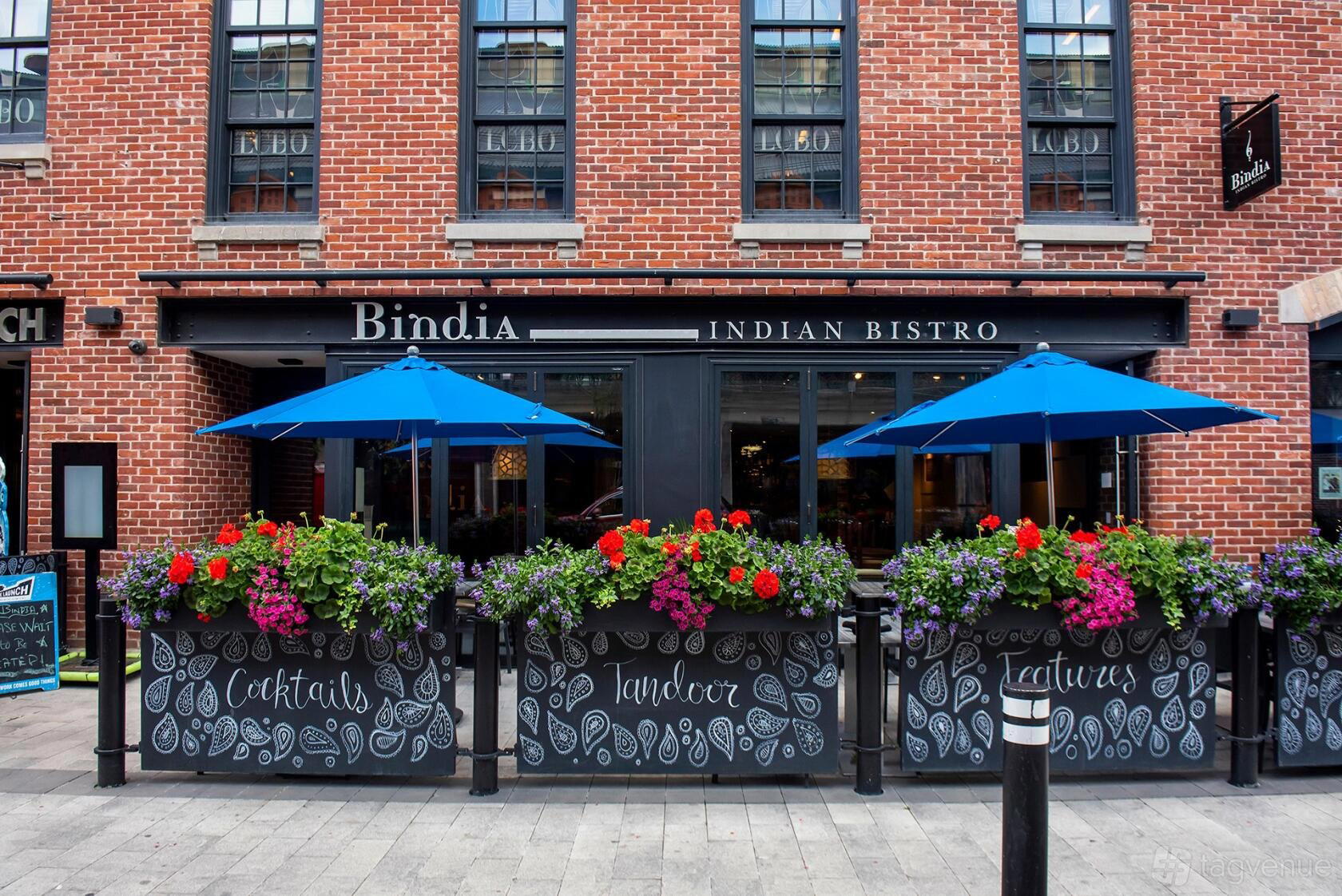
Indian Bistro Cooking in the St. Lawrence Corridor
Bindia Indian Bistro is a Modern Indian Bistro at 16 Market St. The area around Market Street draws its identity from the historic market hall, weekend food vendors, and a cluster of restaurants serving the weekday office crowd and weekend tourists in roughly equal measure. Indian cooking has historically been more concentrated in the Gerrard Street East corridor, the district long associated with the city's South Asian community, or scattered across the inner suburbs. A bistro-format Indian restaurant at 16 Market Street represents a different kind of positioning: midtown sensibility transplanted into a heritage neighbourhood, aimed at a lunch and dinner crowd that moves between the Financial District and the waterfront.
That geographical specificity matters for understanding what Bindia Indian Bistro is doing and for whom. The St. Lawrence market area attracts a cross-section of downtown Toronto: office workers looking for something faster than a tasting menu, visitors oriented by the market, and residents of the adjacent condo towers. Indian bistro cooking, a format that sits somewhere between the speed of a curry house and the formality of a full-service restaurant, is a reasonable fit for that audience. The cuisine's spice-driven complexity and capacity for vegetarian depth make it adaptable to the kind of mixed-group dining that urban bistro formats serve well.
What the Bistro Format Signals About the Cuisine
The term "bistro" applied to Indian cooking carries its own set of expectations. In the Canadian context, it tends to signal a move away from the buffet-and-naan model that dominated the 1990s Indian restaurant wave, toward plated service, a shorter and more considered menu, and a room that reads as a neighbourhood restaurant rather than an event space. It does not necessarily mean fusion or reinterpretation, many Indian bistros in Toronto operate firmly within regional Indian culinary traditions, presenting Punjabi, South Indian, or pan-regional cooking in a format that prioritises quality of execution over breadth of offering.
Across Toronto's broader dining spectrum, this kind of mid-register Indian cooking occupies a space that the city's Michelin-oriented tier, represented by counters like Sushi Masaki Saito or kaiseki programmes like Aburi Hana, does not address. The Indian bistro format answers a different question: how to serve cuisine with genuine spice intelligence and regional specificity at a pace and price point that works for a working neighbourhood. It is a format with its own discipline, and one that rewards kitchens willing to commit to consistency over novelty.
The Atmosphere of Market Street
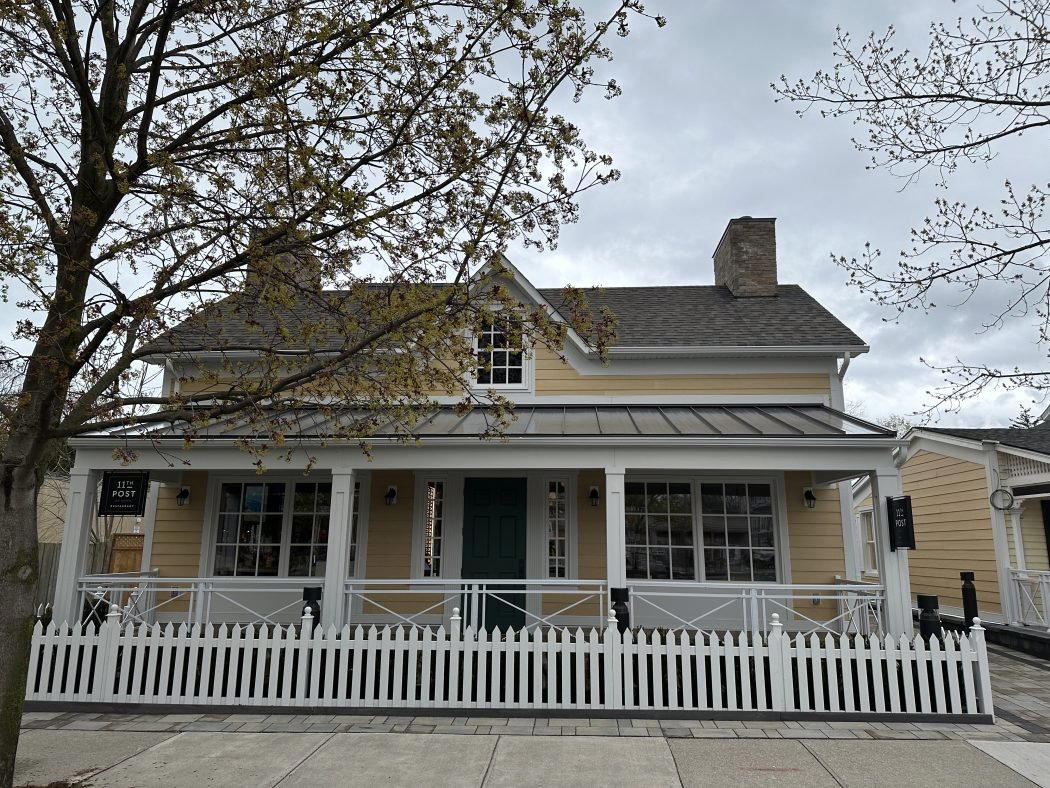
Approaching 16 Market Street, the physical context does significant work. The street itself runs south from Front Street toward the lake, framed by the bulk of the St. Lawrence Market on one side and a mix of commercial and residential architecture on the other. The area has a particular weekend-morning energy when the market is operating, and a quieter, more transactional character on weekday lunchtimes. A restaurant on this block is absorbing that rhythm whether it chooses to or not.
Indian cooking has a sensory immediacy, cumin tempering in hot oil, cardamom in dairy-based sauces, the char notes of a tandoor, that can create a strong counterpoint to the more neutral smells of a market-adjacent street. That contrast, between the cold-air produce character of the market area and the warm-spice interior of an Indian kitchen, is part of what makes this kind of restaurant identifiable from the street in a way that more restrained cuisines are not. It is a form of atmospheric signalling that works in the restaurant's favour in a neighbourhood not strongly associated with subcontinental cooking.
Where Bindia Sits in Toronto's Indian Dining Conversation
Toronto's Indian restaurant sector is more stratified than it appears from the outside. At one end, the Gerrard Street corridor retains its function as the city's longest-established South Asian dining district, with restaurants ranging from regional specialists to high-volume banquet halls. At the other, a newer generation of upscale Indian restaurants has appeared in the King West and downtown core areas, positioning against the city's broader fine-dining scene. The Indian bistro format, shorter menus, plated service, neighbourhood pricing, occupies a productive middle ground that neither of those poles covers.
For context on how Toronto's dining scene distributes across price tiers and formats, the range is wide: from the tasting-menu formality of Alo and the Italian rigour of Don Alfonso 1890 down through the neighbourhood-focused Italian cooking at DaNico. The Indian bistro sits outside that competitive set entirely, which is precisely its positioning advantage: it is not competing with the city's premium tier but serving a dining occasion those restaurants are not designed for.
Within the broader Canadian dining conversation, cities like Montreal and Quebec City have developed their own registers for non-French cuisines, with restaurants like Jérôme Ferrer - Europea in Montreal and Tanière³ in Quebec City anchoring local fine-dining identities. Toronto's strength has always been its multicultural density, and the Indian bistro format is one expression of how that density generates distinctive mid-register dining options that other Canadian cities cannot easily replicate.
Bindia Indian Bistro is located at 16 Market St. Toronto, ON M5E 1M6, in the St. Lawrence neighbourhood, a short walk from Union Station and the St. Lawrence Market. Reservations are recommended. Dress: smart casual. Budget: about US$30 per person. Accessibility: Market Street is flat and accessible from both Front Street and The Esplanade.
For those planning wider Ontario travel, Eigensinn Farm in Singhampton, The Pine in Creemore, and Restaurant Pearl Morissette in Lincoln represent the province's destination-dining tier outside the city.
Cuisine Lens
Comparable venues nearby, for context on price, style, and recognition.
| Venue | Cuisine | Price | Notes |
|---|---|---|---|
| Bindia Indian BistroThis venue — the venue you are viewing | Modern Indian Bistro | $$ | Not listed |
| The Grand Indian Dining | Authentic Indian | $$ | Kensington-Chinatown |
| Curryish Tavern | Modern Indian Gastropub | $$ | Trinity Bellwoods |
| Lahore Tikka House | Authentic North Indian & Pakistani | $$ | Little India |
| Urban Maharajas | Authentic Organic Indian | $$$ | Saint Lawrence |
| Utsav | Authentic Indian | $$ | Yorkville |
Continue exploring
More in Toronto
Restaurants in Toronto
Browse all →
Bars in Toronto
Browse all →
Hotels in Toronto
Browse all →


At a Glance
- Cozy
- Sophisticated
- Modern
- Date Night
- Group Dining
- Family
- Casual Hangout
- Open Kitchen
- Historic Building
- Craft Cocktails
- Local Sourcing
- Street Scene
Current opening hours
- Monday
- 11 AM–9 PM
- Tuesday
- 11 AM–9 PM
- Wednesday
- 11 AM–9 PM
- Thursday
- 11 AM–9 PM
- Friday
- 11 AM–9:30 PM
- Saturday
- 11 AM–9:30 PM
- Sunday
- 11 AM–9 PM
Hours can change for holidays and private events. Last verified .
Open-concept design with historic charm, European-inspired cobblestone street views, calming blues and warm wood tones, enhanced by live jazz on select nights.