Holy Chuck occupies a well-worn stretch of Yonge Street in midtown Toronto, operating in the casual end of a city whose restaurant range now spans omakase counters to backyard-style grills. On a dining strip where price points climb steeply toward tasting-menu territory, it holds a different position, one built around the burger rather than the tasting course.
Pearl is the En Primeur Club membership app — saves, bookings, and concierge access live there. Same editors, same standards.
- Address
- 1450 Yonge St, Toronto, ON M4T 1Y7, Canada
- Phone
- +1 416 962 4825
- Website
- holychuckburgers.com
- Directions
- Get directions
 Saves & bookings on Pearl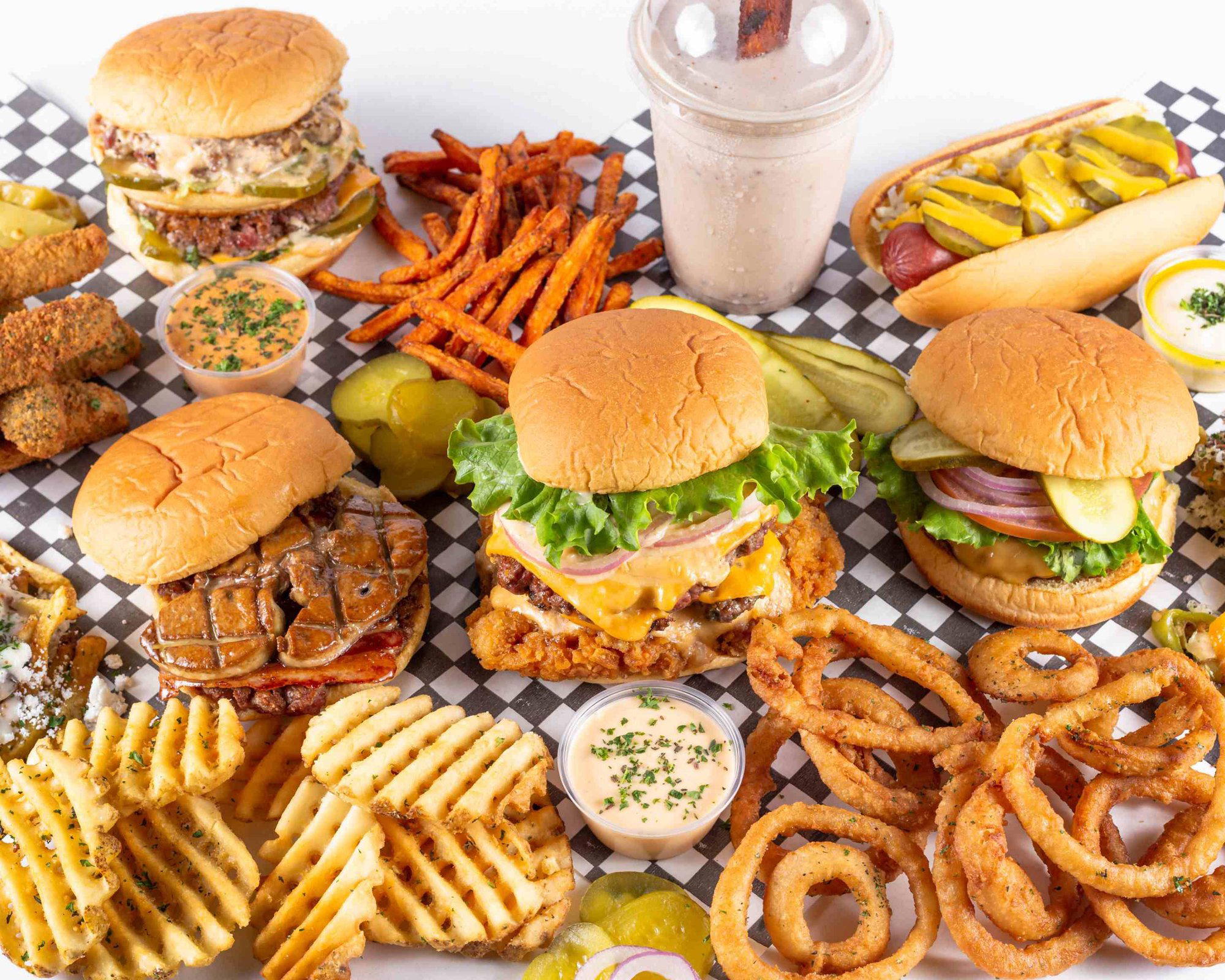
Yonge Street's Casual Register
Holy Chuck is a casual restaurant in Toronto, Canada, serving Gourmet Burgers at about US$20 per person. Toronto's dining geography sorts itself with reasonable clarity. The tasting-menu tier, represented by addresses like Alo and the kaiseki formality of Aburi Hana, occupies one end of the spectrum. The other end belongs to the kind of place where the counter is laminate, the lighting is functional, and the menu fits on a chalkboard. Holy Chuck at 1450 Yonge Street sits firmly in that second register, in a part of midtown that transitions between the density of Davisville and the quieter residential blocks pushing north toward St. Clair.
That positioning matters because Toronto's casual dining tier has fragmented considerably over the past decade. The city now sustains a range of burger-focused operations, from fast-casual chains with national footprints to independent counters that treat the format with the same ingredient seriousness applied to more expensive cuisines. Holy Chuck belongs to the independent end of that range, and on Yonge Street specifically, it occupies a neighbourhood where the lunch and dinner crowd is reliably local rather than destination-driven.
The Burger as a Serious Format
In cities with active food cultures, the burger has undergone a fairly consistent arc over the past fifteen years: from diner staple to gourmet novelty to something approaching a settled craft category. Toronto followed that arc, and its current crop of serious burger spots tends to compete on sourcing specificity, grind and fat ratio, and bun construction rather than on spectacle or novelty toppings.
The restaurant sits within that craft tier. The address has built a following in midtown on the basis of consistency and a format that keeps the focus on the core product rather than expanding into territory that dilutes the offer. Across Canadian cities, the operators who have done leading in this category, think of how the same discipline applies to barbecue specialists like Busters Barbeque in Kenora, working a different protein but the same logic of format discipline, tend to be the ones who resist the temptation to become everything to everyone.
The contrast with Toronto's upper price tiers is instructive. At Sushi Masaki Saito or DaNico, the entire service model is built around extended time at the table, pacing, and a front-of-house team working in close coordination with the kitchen. The restaurant operates on a different axis entirely, where the transaction is faster and the team dynamic is less about choreography and more about throughput without sacrificing quality at the counter. Both models require genuine operational discipline; they just express it differently.
Team Dynamics at the Casual End
The editorial angle that often gets applied to fine dining, the collaboration between kitchen, floor, and service, has a less glamorised but equally functional equivalent in the casual format. At a counter-service or fast-casual burger operation, the kitchen-to-front relationship is compressed: orders move quickly, communication happens in real time across a short distance, and consistency depends on the team executing the same build to the same standard across every ticket. There is no sommelier here, no elaborate pairing conversation, but the coordination between the person at the grill and the person taking the order is no less consequential for the quality of what arrives in front of the customer.
This is worth naming because it corrects a bias in food writing that treats team collaboration as a concept exclusive to tasting-menu formats. The front-of-house at a burger counter that handles a lunch rush without errors is running a different kind of operation, but one that depends just as heavily on communication and shared standards. The restaurant's longevity on Yonge Street suggests that operational consistency has been achieved and maintained, which in a competitive city like Toronto is not a given in this category.
Where Holy Chuck Sits in the Toronto Context
Toronto's restaurant range is wide enough that comparisons across price tiers can feel abstract, but they are useful for placing a venue accurately. The city supports a full spectrum: at the leading, multi-course formats like Don Alfonso 1890 operate at a price point that positions them against international peers rather than local casual options. Further along the Canadian dining spectrum, destination-format experiences like Fogo Island Inn Dining Room or the farm-to-table commitment at Eigensinn Farm in Singhampton represent a different kind of intentionality entirely.
The restaurant is not in conversation with any of those addresses, nor should it be. Its midtown location and format discipline make it the kind of operation that anchors neighbourhoods.
For comparison across Canadian markets, the casual-but-serious format appears in cities from Vancouver (where AnnaLena shows a different expression of the same accessible-but-considered ethos) to Montreal (where Jérôme Ferrer's Europea anchors a much higher price point). The point is not that these venues are comparable, but that every city worth eating in sustains a full range, and the casual end of that range requires its own form of excellence.
Planning Your Visit
The restaurant is located at 1450 Yonge Street in midtown Toronto, and it is walk-in friendly. For visitors building a broader Toronto itinerary, the full Toronto restaurants guide maps the city's dining range across price points and cuisines. Those extending a Canadian trip beyond Toronto might consider the tasting format at Tanière³ in Quebec City or the wine-country dining at Restaurant Pearl Morissette in Lincoln, both operating in a different register but worth noting for itinerary planning. Closer to Toronto, The Pine in Creemore offers a day-trip format for those willing to leave the city. For reference points outside Canada, the craft-over-spectacle philosophy that defines the better casual operators here has parallels in how Lazy Bear in San Francisco applies format discipline at a different price tier, or how Le Bernardin in New York City demonstrates that sustained consistency is the hardest thing to achieve at any level. And if budget allows a side trip north to British Columbia, Cafe Brio in Victoria represents a further point on the accessible-but-considered spectrum worth bookmarking.
Peers Worth Knowing
Comparable venues nearby, for context on price, style, and recognition.
| Venue | Cuisine | Price | Notes |
|---|---|---|---|
| Holy ChuckThis venue — the venue you are viewing | Gourmet Burgers | $$ | Not listed |
| The Grapefruit Moon | American Comfort Diner | $$ | Annex |
| Pickle Barrel | Classic Canadian Deli | $$ | Uptown Yonge |
| The Stockyards Smokehouse & Larder | American BBQ & Fried Chicken | $$ | Hillcrest |
| Uncle Betty's Diner | Classic American Diner | $$ | Uptown Yonge |
| Hugs and Sarcasm | Gluten-Free Comfort Food & Brunch | $$ | Trinity Bellwoods |
Continue exploring
More in Toronto
Restaurants in Toronto
Browse all →
Bars in Toronto
Browse all →
Hotels in Toronto
Browse all →

At a Glance
- Lively
- Trendy
- Casual Hangout
- Late Night
- Beer Program
Current opening hours
- Monday
- 11 AM–10 PM
- Tuesday
- 11 AM–10 PM
- Wednesday
- 11 AM–10 PM
- Thursday
- 11 AM–10 PM
- Friday
- 11 AM–10 PM
- Saturday
- 11 AM–10 PM
- Sunday
- 12–8 PM
Hours can change for holidays and private events. Last verified .
Casual and energetic fast-food atmosphere well-suited for burger lovers seeking a greasy, satisfying pig-out.